Midterm Elections: The President's High-Stakes Gamble and the Republican Party's Frequent Failure to Reach Red Lines
2026-05-12 18:06:10
By May 2026, Donald Trump's governing fundamentals will present an extreme contradiction:
According to an AP-NORC poll, Trump's approval rating is nearing a "freezing point." Affected by the continued inflation and soaring prices caused by the increased tariffs and the war with Iran, Trump's national approval rating has fallen from 38% in March to 33% this month, with his economic policy approval rating also falling from 38% in March to 30%.
The neutrality he built up for the 2024 election is rapidly being eroded by the cost of living crisis.
But Trump stands at the "apex" of power, and despite his declining public image, he has established an unprecedented "pricing power" within the party.
Last week was arguably his most productive week in months: in Indiana, he forcefully purged party members who defied redistricting directives.
Meanwhile, a Virginia court rejected the Democratic Party's district arbitrage plan.
This signifies that Trump has completely gained absolute control over the Republican Party's "operational machinery."
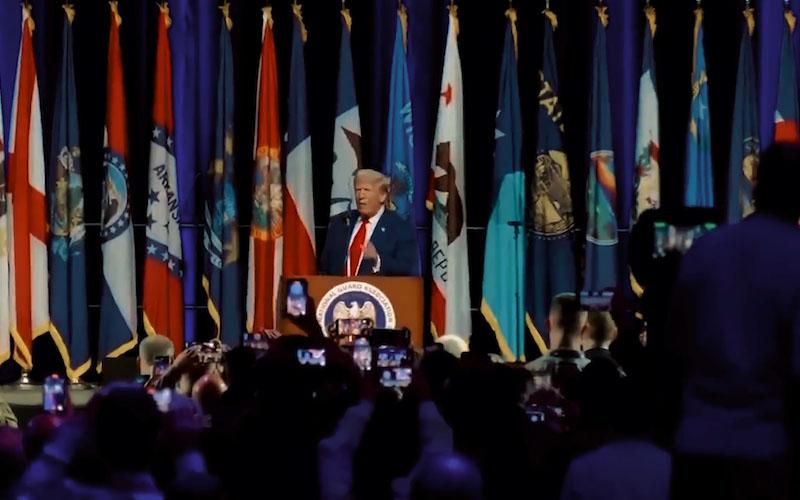
In response to the risk of a collapse due to low approval ratings, Trump did not choose to repair the fundamentals, but instead opted to directly change the "rules of the game":
He first used physical methods to lock up seats, bypassing voter sentiment and directly pressuring Republicans in the Southern states to redraw House districts. By splitting up Democratic strongholds, he attempted to mathematically "create" more safe Republican seats.
Defensive maneuvering: Trump's insistence on redistricting is primarily motivated by a desire to avoid a third impeachment.
He knew that once the Republicans lost the House of Representatives and the protection of the "majority," all his actions in the judicial and executive branches would face a full-scale attack from the Democrats.
In 2024, Trump successfully tapped into the minority race, attracting a large number of young Black voters dissatisfied with Harris's economic policies. However, the situation is now reversing:
The black voter base that gained momentum in 2024 has run into trouble, currently experiencing a staggering 73 percentage point pullback.
This method of forcibly changing the vote has presented the Republican Party with a serious problem—in order to gain seats in the short term through redistricting (which weakens the influence of Black members of Congress in their original districts), they are precisely "shorting" the territory of senior African American members of Congress (such as Clyburn).
This practice is seen as a plundering of the political rights of minorities, pushing previously wavering Black voters back to the Democratic Party, and could even lead to a complete purging of this group from the Republican Party within the next decade.
March-September 2026: The primary elections in each state, a crucial period for Trump to purge "disloyalists" within the party and finalize his candidate list.
May 2026: The final stage of the redistricting process, with Southern states (such as South Carolina and Louisiana) deciding whether to implement Trump's radical redistricting plan.
November 3, 2026: The official voting day, when all 435 seats in the House of Representatives and about one-third of the seats in the Senate will be up for re-election.
January 3, 2027: The 120th Congress is officially sworn in.
From the perspective of bargaining, Trump's actions are highly speculative:
This has spurred the affected population to lean towards the Democratic Party: Trump's aggressive tactics in racially charged districts are becoming the best "bullish material" for the Democrats.
Liberal voters, who had lost enthusiasm due to Harris's lackluster performance, are now being mobilized again by the narratives of "protecting democracy" and "racial equality."
While redistricting may give the Republican Party a few more seats in the midterm elections, it undermines the interests of all races and is a "poison pill" that could lead to a significant shift in existing voter bases, such as the votes of young Black men.
Long-term assets will also depreciate, which could very well be a losing deal for the Republican Party as a whole.
In an effort to safeguard Trump's personal political security, the Republican Party is sacrificing the party's brand value. This trade might benefit Trump personally, but for long-time Republican supporters, it means facing the defection of many more.
The 2026 midterm elections will not only be a battle for seats between the two parties, but also the ultimate showdown between Trump's "personal will" and "American political tradition." The key to victory or defeat will not lie in where the electoral district lines are drawn, but in whether voters are willing to pay for inflation as high as 30% and radical racial politics.
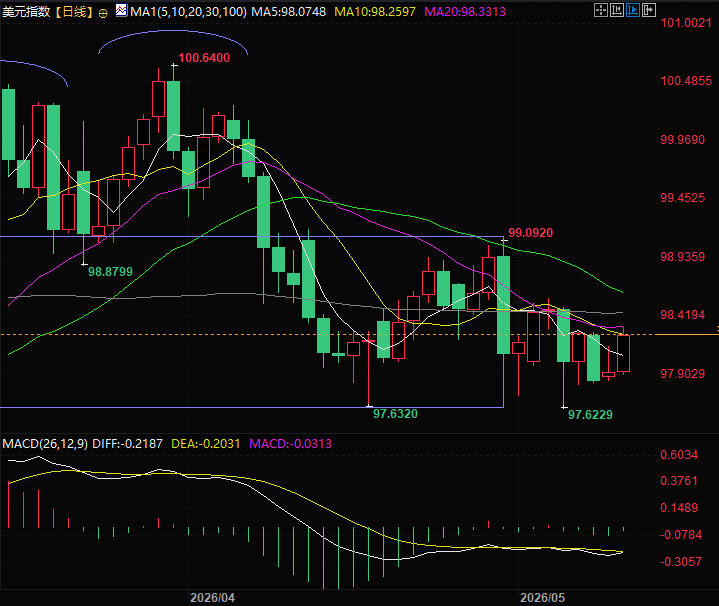
(US Dollar Index Daily Chart, Source: FX678)
At 18:04 Beijing time, the US dollar index is currently at 98.26.
According to an AP-NORC poll, Trump's approval rating is nearing a "freezing point." Affected by the continued inflation and soaring prices caused by the increased tariffs and the war with Iran, Trump's national approval rating has fallen from 38% in March to 33% this month, with his economic policy approval rating also falling from 38% in March to 30%.
The neutrality he built up for the 2024 election is rapidly being eroded by the cost of living crisis.
But Trump stands at the "apex" of power, and despite his declining public image, he has established an unprecedented "pricing power" within the party.
Last week was arguably his most productive week in months: in Indiana, he forcefully purged party members who defied redistricting directives.
Meanwhile, a Virginia court rejected the Democratic Party's district arbitrage plan.
This signifies that Trump has completely gained absolute control over the Republican Party's "operational machinery."
Trump's "efforts": electoral district relocation and impeachment defense
In response to the risk of a collapse due to low approval ratings, Trump did not choose to repair the fundamentals, but instead opted to directly change the "rules of the game":
He first used physical methods to lock up seats, bypassing voter sentiment and directly pressuring Republicans in the Southern states to redraw House districts. By splitting up Democratic strongholds, he attempted to mathematically "create" more safe Republican seats.
Defensive maneuvering: Trump's insistence on redistricting is primarily motivated by a desire to avoid a third impeachment.
He knew that once the Republicans lost the House of Representatives and the protection of the "majority," all his actions in the judicial and executive branches would face a full-scale attack from the Democrats.
The core game: The Republican Party's "purge crisis" against its Black voter base.
In 2024, Trump successfully tapped into the minority race, attracting a large number of young Black voters dissatisfied with Harris's economic policies. However, the situation is now reversing:
The black voter base that gained momentum in 2024 has run into trouble, currently experiencing a staggering 73 percentage point pullback.
This method of forcibly changing the vote has presented the Republican Party with a serious problem—in order to gain seats in the short term through redistricting (which weakens the influence of Black members of Congress in their original districts), they are precisely "shorting" the territory of senior African American members of Congress (such as Clyburn).
This practice is seen as a plundering of the political rights of minorities, pushing previously wavering Black voters back to the Democratic Party, and could even lead to a complete purging of this group from the Republican Party within the next decade.
2026 Midterm Election Schedule
March-September 2026: The primary elections in each state, a crucial period for Trump to purge "disloyalists" within the party and finalize his candidate list.
May 2026: The final stage of the redistricting process, with Southern states (such as South Carolina and Louisiana) deciding whether to implement Trump's radical redistricting plan.
November 3, 2026: The official voting day, when all 435 seats in the House of Representatives and about one-third of the seats in the Senate will be up for re-election.
January 3, 2027: The 120th Congress is officially sworn in.
Assessment: Will it be a profitable venture or a margin call?
From the perspective of bargaining, Trump's actions are highly speculative:
This has spurred the affected population to lean towards the Democratic Party: Trump's aggressive tactics in racially charged districts are becoming the best "bullish material" for the Democrats.
Liberal voters, who had lost enthusiasm due to Harris's lackluster performance, are now being mobilized again by the narratives of "protecting democracy" and "racial equality."
While redistricting may give the Republican Party a few more seats in the midterm elections, it undermines the interests of all races and is a "poison pill" that could lead to a significant shift in existing voter bases, such as the votes of young Black men.
Long-term assets will also depreciate, which could very well be a losing deal for the Republican Party as a whole.
In an effort to safeguard Trump's personal political security, the Republican Party is sacrificing the party's brand value. This trade might benefit Trump personally, but for long-time Republican supporters, it means facing the defection of many more.
The 2026 midterm elections will not only be a battle for seats between the two parties, but also the ultimate showdown between Trump's "personal will" and "American political tradition." The key to victory or defeat will not lie in where the electoral district lines are drawn, but in whether voters are willing to pay for inflation as high as 30% and radical racial politics.
(US Dollar Index Daily Chart, Source: FX678)
At 18:04 Beijing time, the US dollar index is currently at 98.26.
- Risk Warning and Disclaimer
- The market involves risk, and trading may not be suitable for all investors. This article is for reference only and does not constitute personal investment advice, nor does it take into account certain users’ specific investment objectives, financial situation, or other needs. Any investment decisions made based on this information are at your own risk.