Political uncertainty in the UK, coupled with rising expectations of a hawkish stance from the Federal Reserve, put downward pressure on the pound against the dollar.
2026-05-22 10:45:57
The pound traded in a narrow range against the dollar (GBP/USD) during Friday's Asian session, fluctuating within a narrow range of 1.3425 to 1.3430. While the pound is still expected to see slight gains this week, a strong dollar and domestic uncertainty in the UK continue to limit any upside potential.
Recently, there has been a clear divergence in the market regarding the future policy path of the Bank of England. Swati Dingra, an external member of the Bank of England's Monetary Policy Committee (MPC), stated that if rising energy prices only produce a limited second round of inflation, the Bank of England may not need to raise interest rates further.
However, another committee member, Catherine Mann, warned that the high inflation risk at the end of 2026 could be further embedded in the 2027 wage agreement, leading to persistent long-term inflationary pressures. Significant disagreement within the Bank of England regarding the future direction of interest rates has resulted in a lack of clarity in the market regarding the outlook for UK monetary policy . This policy uncertainty has led to a lack of sustained upward momentum for the pound in the short term.
Meanwhile, Bank of England Governor Andrew Bailey stated that the rise in market interest rates since the outbreak of the Middle East conflict has actually given the Bank of England more time to observe the impact of the war on the economy. The market interprets this as meaning the Bank of England may continue to maintain a wait-and-see approach in the short term. Nevertheless, the market currently still expects at least one more rate hike by the Bank of England in 2026. With energy prices remaining high, the risk of inflation in the UK has not truly subsided.
Besides monetary policy, domestic political risks in the UK are also keeping markets cautious. Current Prime Minister Keir Starmer faces significant leadership pressure, and markets are concerned that declining political stability could impact the implementation of future fiscal and economic policies. This political uncertainty is weakening market risk appetite for sterling assets. Especially given the overall strength of the US dollar, funds are more inclined to flow into higher-yielding and more liquid dollar-denominated assets.
On the other hand, hawkish expectations in the US continue to support the dollar. The minutes of the Fed's April meeting showed that most officials believed the Fed might need to further tighten policy if inflation persists above the 2% target. The market has now readjusted its expectations for the Fed's policy path. Traders now expect the probability of further rate hikes by the Fed this year to have risen to about 60% . This change has kept US Treasury yields high and driven the dollar index to near a six-week high.
Furthermore, the complex situation in the Middle East continues to reinforce the safe-haven appeal of the US dollar. While the market maintains some expectations for a de-escalation of US-Iran relations, serious disagreements remain between the two sides on uranium enrichment and control of the Strait of Hormuz. The Strait of Hormuz handles approximately 20% of global seaborne crude oil transport , making the market highly sensitive to risks in the region. Geopolitical uncertainty not only drives up energy prices but also further enhances the demand for the US dollar as a safe haven.
From a market sentiment perspective, the British pound is currently consolidating at high levels against the US dollar. The market is facing concerns about UK economic and political risks on one hand, and is also pressured by the strong dollar on the other, resulting in a noticeable increase in caution among bullish investors.
From the daily chart, the GBP/USD pair has repeatedly tested resistance near the 100-day exponential moving average (EMA) recently, but has failed to break through effectively, indicating that selling pressure remains strong. Currently, the exchange rate remains within a medium- to long-term upward channel, but short-term upward momentum has clearly slowed. The daily MACD indicator is showing signs of a death cross at high levels, and the red momentum bars are continuously narrowing, indicating that the previous upward trend is weakening. The RSI indicator has gradually fallen from the overbought zone to around 55, showing that the market's bullish power has cooled somewhat, but it has not yet fully entered a bearish structure. The key support level is currently around 1.3380. If this area is broken, the exchange rate may further test the 1.3320 and 1.3260 levels; while the resistance is concentrated at 1.3450 and the 100-day EMA area at 1.3480. A successful break above this level could lead to a retest of the 1.3520 to 1.3550 range.
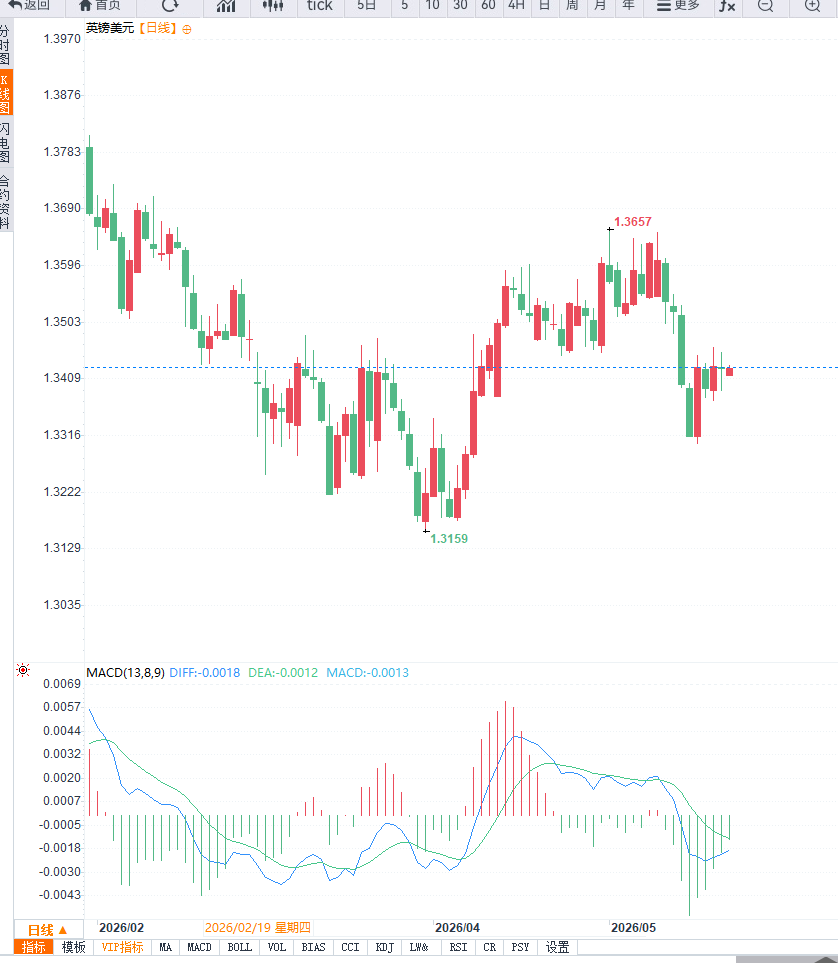
It's worth noting that a small converging triangle pattern has formed on the 4-hour chart, suggesting a potential directional breakout is imminent. If the US dollar continues to strengthen while political and economic pressures in the UK increase, the pound/dollar pair may break below its consolidation range. However, if the Bank of England subsequently signals a more hawkish interest rate hike, it could push the exchange rate back up to test the 1.3500 area.
Overall, the daily trend for GBP/USD remains neutral to bullish, but the 4-hour chart has entered a consolidation phase, with the market awaiting new macroeconomic drivers.
Editor's Summary : The core logic behind the current GBP/USD exchange rate movement revolves around a strong US dollar and internal uncertainty in the UK. Hawkish expectations from the Federal Reserve, high US Treasury yields, and continued safe-haven demand are supporting the dollar, while policy disagreements within the Bank of England and political risks are limiting the pound's upside potential. From a technical perspective, the daily trend has not yet fully weakened, but there are clear signs of consolidation at higher levels in the short term. Going forward, the market will focus on UK economic data, the Fed's policy direction, and developments in the Middle East. If the dollar continues its strength, GBP/USD may further test key support levels in the short term.
Recently, there has been a clear divergence in the market regarding the future policy path of the Bank of England. Swati Dingra, an external member of the Bank of England's Monetary Policy Committee (MPC), stated that if rising energy prices only produce a limited second round of inflation, the Bank of England may not need to raise interest rates further.
However, another committee member, Catherine Mann, warned that the high inflation risk at the end of 2026 could be further embedded in the 2027 wage agreement, leading to persistent long-term inflationary pressures. Significant disagreement within the Bank of England regarding the future direction of interest rates has resulted in a lack of clarity in the market regarding the outlook for UK monetary policy . This policy uncertainty has led to a lack of sustained upward momentum for the pound in the short term.
Meanwhile, Bank of England Governor Andrew Bailey stated that the rise in market interest rates since the outbreak of the Middle East conflict has actually given the Bank of England more time to observe the impact of the war on the economy. The market interprets this as meaning the Bank of England may continue to maintain a wait-and-see approach in the short term. Nevertheless, the market currently still expects at least one more rate hike by the Bank of England in 2026. With energy prices remaining high, the risk of inflation in the UK has not truly subsided.
Besides monetary policy, domestic political risks in the UK are also keeping markets cautious. Current Prime Minister Keir Starmer faces significant leadership pressure, and markets are concerned that declining political stability could impact the implementation of future fiscal and economic policies. This political uncertainty is weakening market risk appetite for sterling assets. Especially given the overall strength of the US dollar, funds are more inclined to flow into higher-yielding and more liquid dollar-denominated assets.
On the other hand, hawkish expectations in the US continue to support the dollar. The minutes of the Fed's April meeting showed that most officials believed the Fed might need to further tighten policy if inflation persists above the 2% target. The market has now readjusted its expectations for the Fed's policy path. Traders now expect the probability of further rate hikes by the Fed this year to have risen to about 60% . This change has kept US Treasury yields high and driven the dollar index to near a six-week high.
Furthermore, the complex situation in the Middle East continues to reinforce the safe-haven appeal of the US dollar. While the market maintains some expectations for a de-escalation of US-Iran relations, serious disagreements remain between the two sides on uranium enrichment and control of the Strait of Hormuz. The Strait of Hormuz handles approximately 20% of global seaborne crude oil transport , making the market highly sensitive to risks in the region. Geopolitical uncertainty not only drives up energy prices but also further enhances the demand for the US dollar as a safe haven.
From a market sentiment perspective, the British pound is currently consolidating at high levels against the US dollar. The market is facing concerns about UK economic and political risks on one hand, and is also pressured by the strong dollar on the other, resulting in a noticeable increase in caution among bullish investors.
From the daily chart, the GBP/USD pair has repeatedly tested resistance near the 100-day exponential moving average (EMA) recently, but has failed to break through effectively, indicating that selling pressure remains strong. Currently, the exchange rate remains within a medium- to long-term upward channel, but short-term upward momentum has clearly slowed. The daily MACD indicator is showing signs of a death cross at high levels, and the red momentum bars are continuously narrowing, indicating that the previous upward trend is weakening. The RSI indicator has gradually fallen from the overbought zone to around 55, showing that the market's bullish power has cooled somewhat, but it has not yet fully entered a bearish structure. The key support level is currently around 1.3380. If this area is broken, the exchange rate may further test the 1.3320 and 1.3260 levels; while the resistance is concentrated at 1.3450 and the 100-day EMA area at 1.3480. A successful break above this level could lead to a retest of the 1.3520 to 1.3550 range.
It's worth noting that a small converging triangle pattern has formed on the 4-hour chart, suggesting a potential directional breakout is imminent. If the US dollar continues to strengthen while political and economic pressures in the UK increase, the pound/dollar pair may break below its consolidation range. However, if the Bank of England subsequently signals a more hawkish interest rate hike, it could push the exchange rate back up to test the 1.3500 area.
Overall, the daily trend for GBP/USD remains neutral to bullish, but the 4-hour chart has entered a consolidation phase, with the market awaiting new macroeconomic drivers.
Editor's Summary : The core logic behind the current GBP/USD exchange rate movement revolves around a strong US dollar and internal uncertainty in the UK. Hawkish expectations from the Federal Reserve, high US Treasury yields, and continued safe-haven demand are supporting the dollar, while policy disagreements within the Bank of England and political risks are limiting the pound's upside potential. From a technical perspective, the daily trend has not yet fully weakened, but there are clear signs of consolidation at higher levels in the short term. Going forward, the market will focus on UK economic data, the Fed's policy direction, and developments in the Middle East. If the dollar continues its strength, GBP/USD may further test key support levels in the short term.
- Risk Warning and Disclaimer
- The market involves risk, and trading may not be suitable for all investors. This article is for reference only and does not constitute personal investment advice, nor does it take into account certain users’ specific investment objectives, financial situation, or other needs. Any investment decisions made based on this information are at your own risk.