The British pound is hovering around 1.3450 against the US dollar, awaiting directional guidance.
2026-06-01 10:33:51
The British pound (GBP/USD) traded sideways against the US dollar during Asian trading hours on Monday, hovering around 1.3450. Following the previous sharp fluctuations, market risk sentiment has become cautious, with investors awaiting new fundamental factors to drive the exchange rate out of its current trading range.
Recent market focus remains on diplomatic negotiations between the United States and Iran. US President Trump is seeking to revise parts of the previously proposed agreement to end the conflict between the US, Israel, and Iran, involving key issues such as shipping arrangements in the Strait of Hormuz and the handling of highly enriched uranium. Meanwhile, Iranian Foreign Minister Araqchi stated that negotiations and information exchanges between Tehran and Washington are ongoing, but it is not yet possible to assess the outcome. Due to significant differences between the two sides on several core issues, market expectations for a short-term agreement have cooled.
The lack of substantial breakthroughs in US-Iran negotiations has allowed the market to maintain a geopolitical risk premium, driving some safe-haven funds towards the US dollar. As the world's main reserve currency, the dollar typically attracts more funds during periods of heightened international uncertainty, which also puts downward pressure on the pound against the dollar. In addition to geopolitical factors, the independence of the Federal Reserve has recently become a new focus of market attention. Former Fed Chairman Jerome Powell stated that if the US president could arbitrarily dismiss Fed officials due to policy disagreements, it would damage public trust in the US monetary policy system and affect long-term economic stability.
Currently, the U.S. Supreme Court is considering a case concerning the appointment of Federal Reserve Governor Lisa Cook. The market believes that the Fed's policy independence is crucial for the long-term credibility of the dollar and the stability of global financial markets. Although the events have not yet directly affected the direction of monetary policy, investors generally believe that the Fed is still highly likely to maintain a relatively hawkish stance in the future. At the same time, the risk of rising energy prices due to the situation in the Middle East has also made the market wary of the U.S. inflation outlook.
In contrast, the pound has recently faced more internal pressure. The latest UK economic data shows that inflation has slowed, while the unemployment rate unexpectedly rose to 5.0% in April, reflecting signs of a cooling in the UK labor market. The market has significantly lowered its expectations for further interest rate hikes by the Bank of England. With easing inflationary pressures and weak economic growth, investors believe that the Bank of England is increasingly likely to adopt a more cautious policy stance in the near term.
Bank of England Governor Andrew Bailey said last week that the Bank of England is in no hurry to raise interest rates further given the uncertainty surrounding the outcome of the Iranian conflict and continued weak economic growth in the UK. Bailey stated, "We must closely monitor how the situation in the Middle East affects the UK economy and inflation, and adjust our policy accordingly."
Market analysts point out that the Bank of England's recent statements reflect a greater inclination to observe economic and inflation changes rather than rushing into further tightening measures. This shift in policy expectations has weakened some of the support the pound had previously gained from expectations of high interest rates. From a global market perspective, the current exchange rate of the pound against the dollar is being influenced by two factors. On the one hand, increased demand for safe-haven assets in the US and hawkish expectations from the Federal Reserve are supporting the dollar; on the other hand, slowing UK economic growth and cooling expectations of interest rate hikes are dragging down the pound.
Against the backdrop of readjusted policy expectations from the two major central banks, the pound sterling is likely to continue its volatile pattern against the dollar in the short term. The market needs more economic data to confirm the economic and inflation trends of both countries before a clearer directional choice can be made.
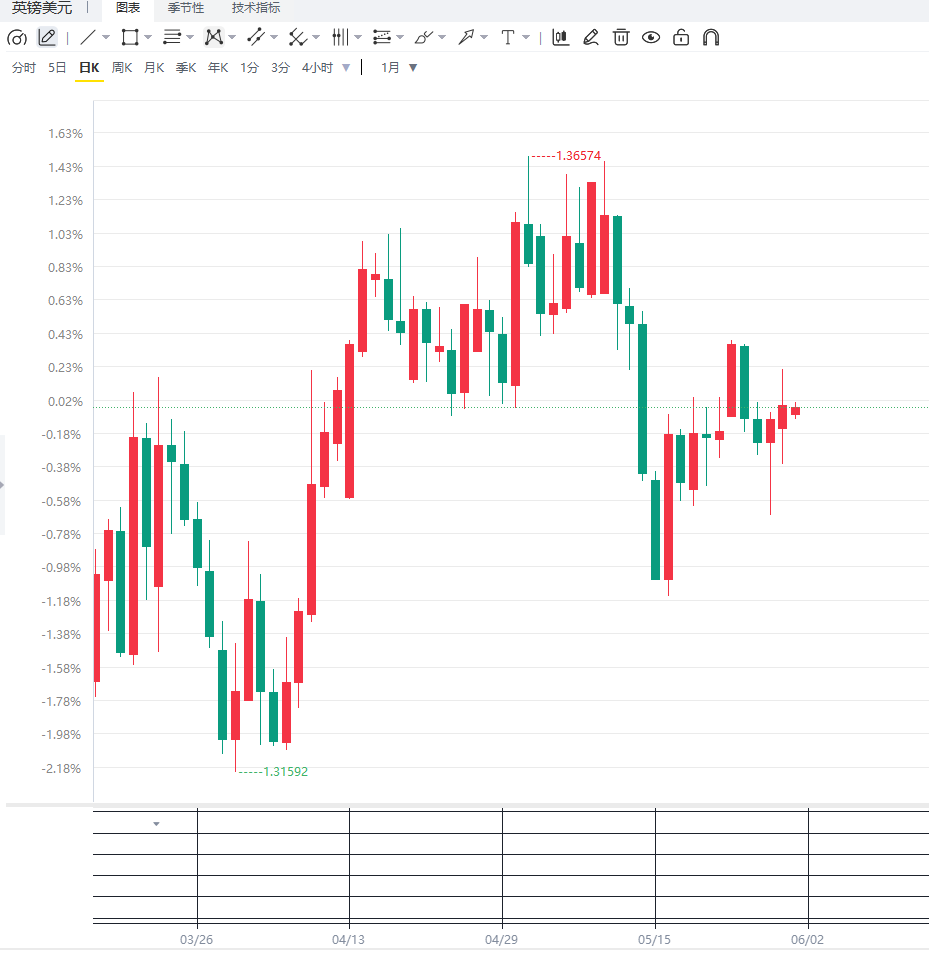
From the daily chart, the GBP/USD pair maintains its medium-term upward structure, but the upward momentum has slowed. The exchange rate is currently trading near major moving averages, with bullish and bearish forces gradually balancing. The 1.3400 area forms a key support level, while the 1.3500-1.3550 area constitutes a key resistance zone. A break above 1.3550 could lead to a further test of the highs near 1.3650; a break below 1.3400 could trigger a deeper correction. The RSI indicator has fallen back to near neutral territory, indicating that market momentum is leveling off. The MACD histogram continues to narrow, reflecting a cooling of the upward trend.
From the 4-hour chart, the exchange rate has been trading within a range recently. Short-term moving averages are gradually flattening, indicating a lack of clear market direction. The MACD indicator is fluctuating around the zero line, showing strong short-term investor caution. The RSI indicator is hovering around 50, suggesting a balanced market. Short-term support levels are located in the 1.3420 and 1.3400 area, while resistance is around 1.3500; a break above this level could lead to a further challenge of the 1.3550 area. Overall, the GBP/USD pair is expected to continue trading within a range in the short term.
Editor's Summary : This week, market focus will initially be on the US ISM Manufacturing PMI data and subsequent US employment data. If US economic data continues to be strong, the market may further reinforce expectations that the Federal Reserve will maintain high interest rates, thereby pushing the dollar higher. Conversely, weak data could alleviate the dollar's rise and provide an opportunity for a rebound in the pound. Furthermore, progress in US-Iran negotiations and changes in the Middle East situation will continue to influence market risk appetite and capital flows.
Recent market focus remains on diplomatic negotiations between the United States and Iran. US President Trump is seeking to revise parts of the previously proposed agreement to end the conflict between the US, Israel, and Iran, involving key issues such as shipping arrangements in the Strait of Hormuz and the handling of highly enriched uranium. Meanwhile, Iranian Foreign Minister Araqchi stated that negotiations and information exchanges between Tehran and Washington are ongoing, but it is not yet possible to assess the outcome. Due to significant differences between the two sides on several core issues, market expectations for a short-term agreement have cooled.
The lack of substantial breakthroughs in US-Iran negotiations has allowed the market to maintain a geopolitical risk premium, driving some safe-haven funds towards the US dollar. As the world's main reserve currency, the dollar typically attracts more funds during periods of heightened international uncertainty, which also puts downward pressure on the pound against the dollar. In addition to geopolitical factors, the independence of the Federal Reserve has recently become a new focus of market attention. Former Fed Chairman Jerome Powell stated that if the US president could arbitrarily dismiss Fed officials due to policy disagreements, it would damage public trust in the US monetary policy system and affect long-term economic stability.
Currently, the U.S. Supreme Court is considering a case concerning the appointment of Federal Reserve Governor Lisa Cook. The market believes that the Fed's policy independence is crucial for the long-term credibility of the dollar and the stability of global financial markets. Although the events have not yet directly affected the direction of monetary policy, investors generally believe that the Fed is still highly likely to maintain a relatively hawkish stance in the future. At the same time, the risk of rising energy prices due to the situation in the Middle East has also made the market wary of the U.S. inflation outlook.
In contrast, the pound has recently faced more internal pressure. The latest UK economic data shows that inflation has slowed, while the unemployment rate unexpectedly rose to 5.0% in April, reflecting signs of a cooling in the UK labor market. The market has significantly lowered its expectations for further interest rate hikes by the Bank of England. With easing inflationary pressures and weak economic growth, investors believe that the Bank of England is increasingly likely to adopt a more cautious policy stance in the near term.
Bank of England Governor Andrew Bailey said last week that the Bank of England is in no hurry to raise interest rates further given the uncertainty surrounding the outcome of the Iranian conflict and continued weak economic growth in the UK. Bailey stated, "We must closely monitor how the situation in the Middle East affects the UK economy and inflation, and adjust our policy accordingly."
Market analysts point out that the Bank of England's recent statements reflect a greater inclination to observe economic and inflation changes rather than rushing into further tightening measures. This shift in policy expectations has weakened some of the support the pound had previously gained from expectations of high interest rates. From a global market perspective, the current exchange rate of the pound against the dollar is being influenced by two factors. On the one hand, increased demand for safe-haven assets in the US and hawkish expectations from the Federal Reserve are supporting the dollar; on the other hand, slowing UK economic growth and cooling expectations of interest rate hikes are dragging down the pound.
Against the backdrop of readjusted policy expectations from the two major central banks, the pound sterling is likely to continue its volatile pattern against the dollar in the short term. The market needs more economic data to confirm the economic and inflation trends of both countries before a clearer directional choice can be made.
From the daily chart, the GBP/USD pair maintains its medium-term upward structure, but the upward momentum has slowed. The exchange rate is currently trading near major moving averages, with bullish and bearish forces gradually balancing. The 1.3400 area forms a key support level, while the 1.3500-1.3550 area constitutes a key resistance zone. A break above 1.3550 could lead to a further test of the highs near 1.3650; a break below 1.3400 could trigger a deeper correction. The RSI indicator has fallen back to near neutral territory, indicating that market momentum is leveling off. The MACD histogram continues to narrow, reflecting a cooling of the upward trend.
From the 4-hour chart, the exchange rate has been trading within a range recently. Short-term moving averages are gradually flattening, indicating a lack of clear market direction. The MACD indicator is fluctuating around the zero line, showing strong short-term investor caution. The RSI indicator is hovering around 50, suggesting a balanced market. Short-term support levels are located in the 1.3420 and 1.3400 area, while resistance is around 1.3500; a break above this level could lead to a further challenge of the 1.3550 area. Overall, the GBP/USD pair is expected to continue trading within a range in the short term.
Editor's Summary : This week, market focus will initially be on the US ISM Manufacturing PMI data and subsequent US employment data. If US economic data continues to be strong, the market may further reinforce expectations that the Federal Reserve will maintain high interest rates, thereby pushing the dollar higher. Conversely, weak data could alleviate the dollar's rise and provide an opportunity for a rebound in the pound. Furthermore, progress in US-Iran negotiations and changes in the Middle East situation will continue to influence market risk appetite and capital flows.
- Risk Warning and Disclaimer
- The market involves risk, and trading may not be suitable for all investors. This article is for reference only and does not constitute personal investment advice, nor does it take into account certain users’ specific investment objectives, financial situation, or other needs. Any investment decisions made based on this information are at your own risk.