June 5th Financial Breakfast: Lebanon and Israel reach ceasefire agreement; gold price hovers around 4470 awaiting non-farm payrolls; oil price falls by over 3%.
2026-06-05 07:25:19
On Friday (June 5th, Beijing time) in early Asian trading, spot gold was trading around $4469 per ounce. Gold prices rose on Thursday, mainly driven by a ceasefire agreement between Israel and Lebanon. Market optimism about an end to the conflict with Iran pressured the dollar and lowered US Treasury yields, thus increasing the attractiveness of gold. Oil prices fell more than 3% on Thursday due to the ceasefire agreement between Israel and Lebanon, with US crude oil currently trading around $92.87 per barrel.

U.S. stocks closed higher on Thursday, with the Dow Jones Industrial Average hitting a record closing high, mainly driven by positive investor sentiment following developments in the end of the war with Iran; however, weaker-than-expected Broadcom earnings triggered a sell-off in chip stocks, limiting the Nasdaq's gains.
The Dow Jones Industrial Average rose 1.73% to close at 51,562.16; the S&P 500 gained 0.41% to 7,584.82; and the Nasdaq Composite dipped 0.07% to 26,834.26. Healthcare and financial sectors led the Dow's gains, while chipmaker Broadcom's stock plummeted after missing revenue expectations, dragging down peers such as Marvell Technology, AMD, Micron Technology, and Qualcomm.
On the economic data front, initial jobless claims unexpectedly rose 6.1%, labor costs and production data were revised downwards, and companies announced a surge of 11% in layoffs in May to 97,006, with nearly 40% of those layoffs attributed to artificial intelligence.
In addition, the stock price of cybersecurity company CrowdStrike plummeted due to rising quarterly operating expenses, while SpaceX launched its investor roadshow in preparation for its record IPO on June 12.
Gold prices rose more than 1% on Thursday, with spot gold closing at $4,475.18 per ounce, mainly driven by a ceasefire agreement between Israel and Lebanon. Market optimism about an end to the conflict with Iran pressured the dollar and lowered US Treasury yields, thus increasing the attractiveness of gold. Independent precious metals trader Tai Wong said the ceasefire news put pressure on the dollar and US Treasury yields, helping gold prices stay above the key 200-day moving average; however, he also pointed out that unless a clear and lasting ceasefire with Iran is reached and the Strait of Hormuz is reopened, thereby lowering energy prices and easing market concerns about rising interest rates, the likelihood of gold prices reaching new highs this year is increasingly low.
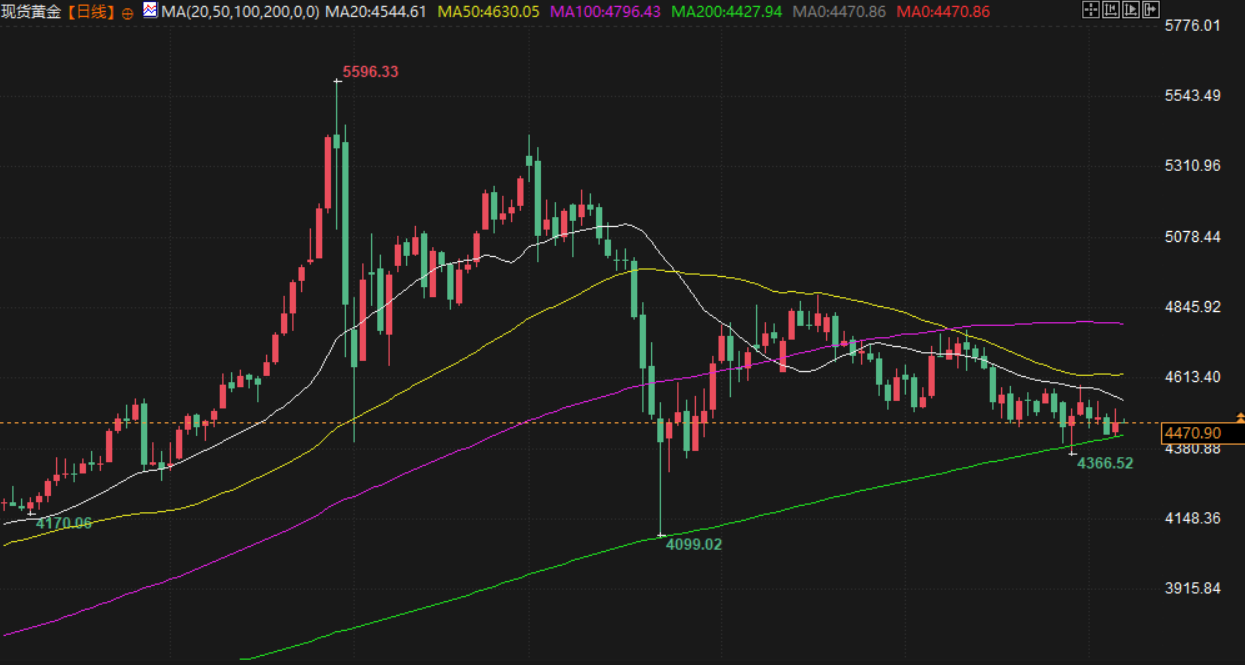
Investors are currently focused on Friday's U.S. May jobs report for clues about the Federal Reserve's future monetary policy. Spot silver rose 1.7% to $73.95, platinum rose 2.1%, and palladium rose 1.4%.
Oil prices fell more than 3% on Thursday, with US crude oil closing down 3.42% at $92.91. This was mainly due to the ceasefire agreement reached between Israel and Lebanon, which fueled market expectations that the war between the US, Israel, and Iran could end and the Strait of Hormuz could reopen, completely shaking the bullish argument.
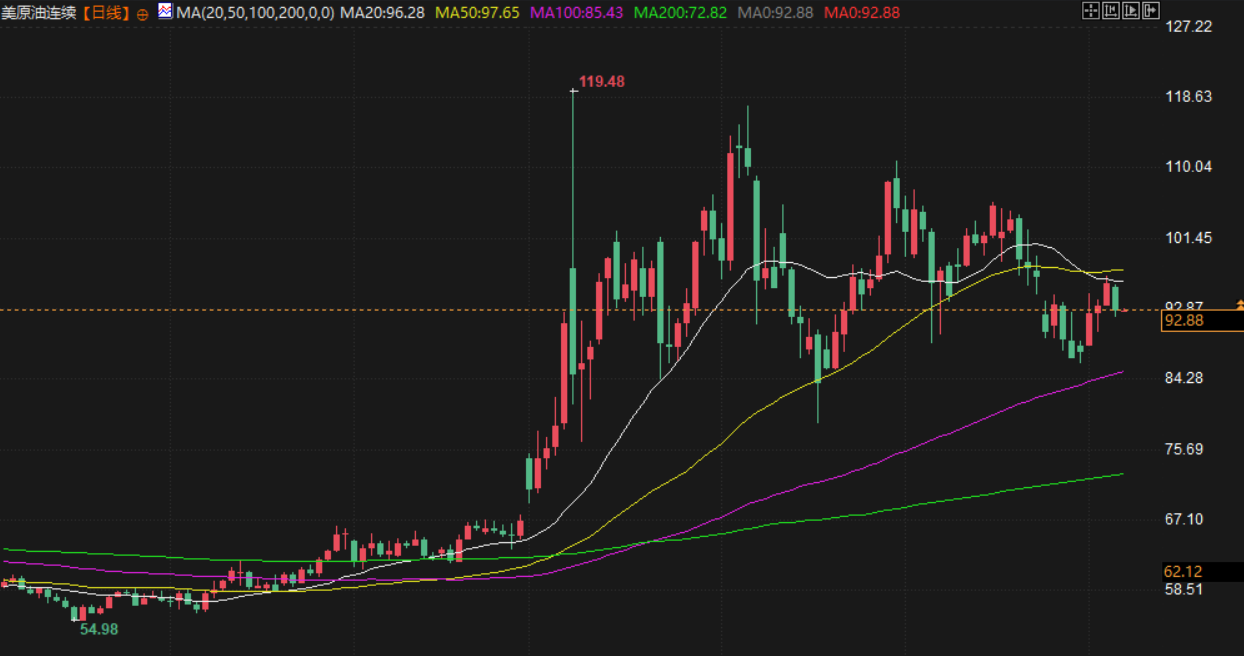
Despite a larger-than-expected drop of 8 million barrels in U.S. crude oil inventories last week, Russia's admission that crude oil production declined due to refinery maintenance, and OPEC's continued expectation of strong demand growth, expectations of easing geopolitical tensions dominated the day's oil price decline.
Despite optimistic market expectations, Iran's Supreme Leader's military advisor, Rezaei, stated that if Israel advances towards Dahiya in Lebanon, all of Iran's missiles will be ready to fire. If this happens, Iran will inflict heavy costs on Israel. Furthermore, he stated that the Strait of Hormuz is open for trade, not for military deployment. If the United States claims to support trade, then it should abandon its military blockade.
The dollar retreated from a two-month high on Thursday, with the dollar index falling 0.08% to 99.44, as market optimism grew regarding a ceasefire in Lebanon.
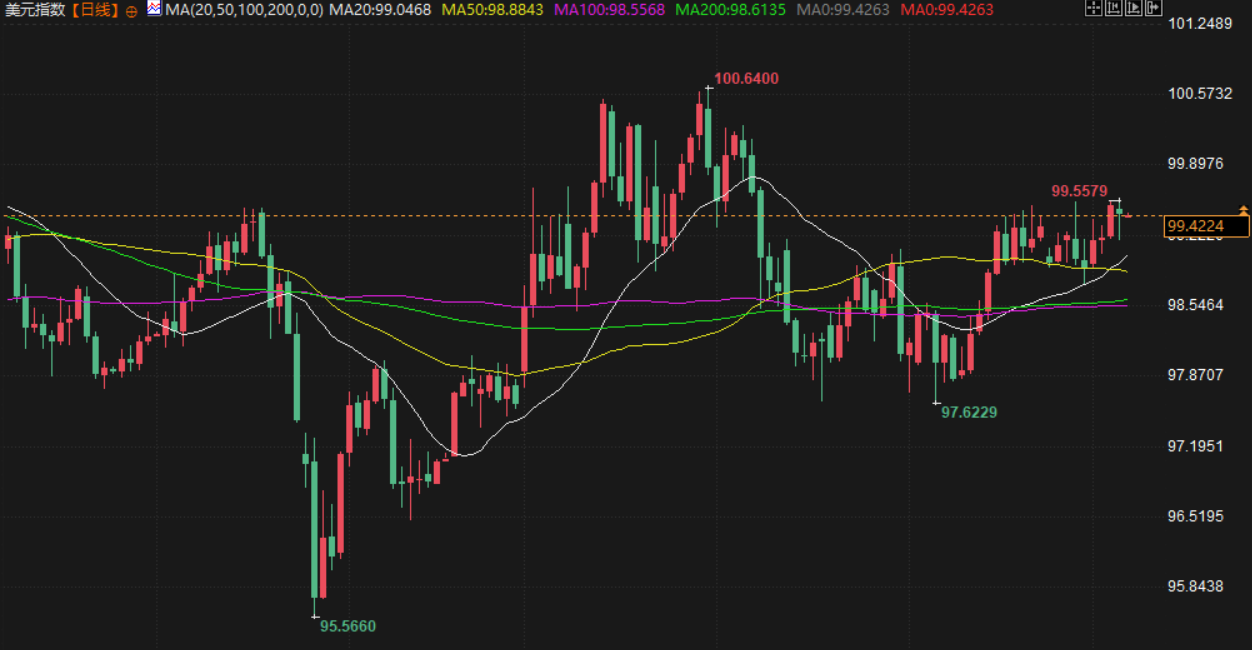
The dollar touched the 160 level against the yen, hovering within intervention territory, prompting verbal warnings from authorities. Markets are focused on expectations of a June rate hike by the Bank of Japan, as the energy shock exacerbates inflation risks.
The euro rose 0.12% to $1.1609, the pound edged up 0.03% to $1.3420, while the risk-sensitive Australian dollar fell 0.13% to $0.7133.
Despite the Lebanese president's statement that the ceasefire agreement would take effect within 24 hours, the pro-Iranian Hezbollah rejected the plan, and Israel continued its airstrikes in southern Lebanon; Iran stated that the Lebanese ceasefire was a key step toward advancing broader peace negotiations.
Trump said he would not rule out meeting with Iran's Supreme Leader if an agreement is reached.
On April 4th local time, US President Trump stated that he would not rule out a meeting with Iran's new Supreme Leader if the US and Iran ultimately reach an agreement. He reiterated that the US would never allow Iran to possess nuclear weapons, and claimed that the previous US strikes on Iranian nuclear facilities had "completely destroyed" the facilities. Trump also stated that the US had considered sending troops to the site of Iran's nuclear facilities to remove enriched uranium, but ultimately abandoned this plan to avoid a prolonged ground operation and potential casualties for US troops. He said such an operation would require one to two weeks and would involve a large amount of heavy equipment and airlift capabilities, thus posing a high risk. (CCTV News)
Trump claims some progress has been made in the Lebanon-Israel peace talks.
On April 4th local time, US President Trump stated that although Hezbollah in Lebanon had previously rejected the US-brokered peace plan, negotiations were still ongoing and had made some progress. Trump indicated that the situation in Lebanon was interconnected with the Iranian issue. He revealed that relevant parties had proactively contacted the US to discuss a ceasefire. "They called us and asked if it was possible to stop the conflict," Trump said. Trump stated that he had communicated with Israeli Prime Minister Netanyahu on this issue and had also contacted Hezbollah. (CCTV News)
Putin is willing to negotiate with Ukraine based on the Russia-US summit.
Russian President Vladimir Putin stated on April 4th, during a meeting with heads of major international news agencies, that Russia would defeat Ukraine on the battlefield if necessary, but was also "fully prepared to reach an agreement with Ukraine peacefully, based on the discussions held last August in Anchorage, Alaska, with US President Donald Trump." Putin stated, "During the Anchorage meeting, Russia was asked to consider certain compromises, and Russia is willing to accept the compromises discussed in Anchorage. However, Ukraine must also agree to these compromises, and then the conflict will naturally and quickly be resolved." However, Putin believes that due to its domestic political situation, Ukraine is not yet ready to reach an agreement. (CCTV International News)
World Gold Council: Fed rate hikes may unexpectedly benefit gold.
In its gold market commentary report released on June 4th, the World Gold Council wrote that looking ahead, the Federal Reserve may need to raise interest rates as inflationary pressures rise. We believe that when rate hikes occur, they may counterintuitively benefit gold. Historical data shows that gold has performed positively after rate hikes in over 50% of cases. The importance of the US dollar to gold's price movement appears to outweigh that of interest rates. The convergence of medium-term growth and yields, along with the trend of diversification from US assets, has paved the way for a weaker dollar in the future. Other factors also support gold: the structurally lower sensitivity of gold purchases by major gold-consuming countries like China and India, as well as by global central bank gold purchases, may provide further support for gold in the future.
Interest rate futures indicate a 51.4% probability of a Federal Reserve rate hike this year.
According to CME's "FedWatch": The probability of the Federal Reserve keeping interest rates unchanged by June is 96.4%, and the probability of a cumulative rate cut of 25 basis points is 3.6%. The probability of the Federal Reserve keeping interest rates unchanged by July is 88.5%, the probability of a cumulative rate hike of 25 basis points is 8.2%, and the probability of a cumulative rate cut of 25 basis points is 3.2%. The probability of the Federal Reserve keeping interest rates unchanged by December is 47%, the probability of a rate hike of at least 25 basis points is 51.4%, and the probability of a rate cut of 25 basis points is 1.7%.
Hezbollah leader: Rejects the outcome of direct negotiations between Lebanon and Israel, insists on a comprehensive ceasefire and the withdrawal of Israeli troops.
Hezbollah's leader stated that he rejects the results of direct negotiations between Lebanon and Israel, demanding that the ceasefire must cover southern Lebanon and insisting on a comprehensive ceasefire and the withdrawal of Israeli troops from the south. He called on officials to end this "farce and humiliation" of direct negotiations and criticized the US statement as "a roadmap to the extermination of a portion of the Lebanese people." He emphasized that Hezbollah has never pledged not to resist aggression or not to respond, and refuses to link its presence with a ceasefire or Israeli withdrawal. As long as Israeli aggression continues, resistance will not cease, and northern Israel will not be safe.
World Economic Forum: Geoeconomic fragmentation could cost the world over $300 billion annually.
A report released by the World Economic Forum on June 4 stated that geoeconomic fragmentation will accelerate in 2025 and 2026, driven by geopolitical tensions, economic security concerns, and changes in trade relations among major economies, and is expected to cause $213 billion to $307 billion in losses to the global economy annually. The report points out that tariff increases, investment restrictions, and retaliatory measures are increasingly impacting traditional economies, including the United States, the European Union, Canada, Japan, and South Korea, pushing up business costs and increasing uncertainty in cross-border investment. If fragmentation worsens further, global economic losses could reach $6.9 trillion, accounting for 6.4% of global GDP. The report predicts that existing industrial fragmentation policies will push global inflation up by 0.2 to 0.3 percentage points and weaken household purchasing power. Emerging markets and developing economies will be particularly hard hit, with output losses potentially reaching as high as 10.7% in extreme scenarios. (CCTV)
The world's largest offshore converter station, "Heart of the Sea Breeze," has been successfully installed at sea.
Today, the world's largest offshore converter station, "Haifeng Zhixin" (Heart of the Sea Wind), successfully completed its offshore floating installation in Yangjiang, Guangdong, after a 1,090-nautical-mile voyage. It has officially entered the overall commissioning phase before operation, laying a crucial foundation for the grid connection and power transmission of large-capacity offshore wind power in deep-sea areas. It is understood that after "Haifeng Zhixin" is put into operation, the electricity generated by the 163 wind turbines of the Three Gorges Yangjiang Qingzhou Phase V and VII offshore wind farms will all be gathered at this converter station. After a series of processes including voltage boosting and AC/DC conversion, the electricity will be transmitted to the onshore power grid via submarine cables, delivering approximately 6 billion kilowatt-hours of green electricity annually. (CCTV News)
Oil prices have been lowered, saving 20.5 yuan when filling up a tank . The National Development and Reform Commission (NDRC) announced that the domestic refined oil price adjustment window will open at 24:00 on June 4th. According to the NDRC Price Monitoring Center, international oil prices first fell and then rose during this price adjustment cycle. Starting at 24:00 today, domestic gasoline and diesel prices will be reduced by 525 yuan and 505 yuan per ton respectively. On average nationwide, the price of 92-octane gasoline, 95-octane gasoline, and 0-grade diesel will decrease by 0.41 yuan, 0.44 yuan, and 0.43 yuan per liter respectively. CCTV Finance reporters calculated that filling a 50-liter tank with 92-octane gasoline will cost 20.5 yuan less. Logistics industry costs will also decrease. Taking a heavy-duty truck that travels 10,000 kilometers per month with a fuel consumption of 38 liters per 100 kilometers as an example, the fuel cost per vehicle will decrease by approximately 763 yuan in the next two weeks. (CCTV)
Key Focus Today
stock market
U.S. stocks closed higher on Thursday, with the Dow Jones Industrial Average hitting a record closing high, mainly driven by positive investor sentiment following developments in the end of the war with Iran; however, weaker-than-expected Broadcom earnings triggered a sell-off in chip stocks, limiting the Nasdaq's gains.
The Dow Jones Industrial Average rose 1.73% to close at 51,562.16; the S&P 500 gained 0.41% to 7,584.82; and the Nasdaq Composite dipped 0.07% to 26,834.26. Healthcare and financial sectors led the Dow's gains, while chipmaker Broadcom's stock plummeted after missing revenue expectations, dragging down peers such as Marvell Technology, AMD, Micron Technology, and Qualcomm.
On the economic data front, initial jobless claims unexpectedly rose 6.1%, labor costs and production data were revised downwards, and companies announced a surge of 11% in layoffs in May to 97,006, with nearly 40% of those layoffs attributed to artificial intelligence.
In addition, the stock price of cybersecurity company CrowdStrike plummeted due to rising quarterly operating expenses, while SpaceX launched its investor roadshow in preparation for its record IPO on June 12.
Gold Market
Gold prices rose more than 1% on Thursday, with spot gold closing at $4,475.18 per ounce, mainly driven by a ceasefire agreement between Israel and Lebanon. Market optimism about an end to the conflict with Iran pressured the dollar and lowered US Treasury yields, thus increasing the attractiveness of gold. Independent precious metals trader Tai Wong said the ceasefire news put pressure on the dollar and US Treasury yields, helping gold prices stay above the key 200-day moving average; however, he also pointed out that unless a clear and lasting ceasefire with Iran is reached and the Strait of Hormuz is reopened, thereby lowering energy prices and easing market concerns about rising interest rates, the likelihood of gold prices reaching new highs this year is increasingly low.
Investors are currently focused on Friday's U.S. May jobs report for clues about the Federal Reserve's future monetary policy. Spot silver rose 1.7% to $73.95, platinum rose 2.1%, and palladium rose 1.4%.
oil market
Oil prices fell more than 3% on Thursday, with US crude oil closing down 3.42% at $92.91. This was mainly due to the ceasefire agreement reached between Israel and Lebanon, which fueled market expectations that the war between the US, Israel, and Iran could end and the Strait of Hormuz could reopen, completely shaking the bullish argument.
Despite a larger-than-expected drop of 8 million barrels in U.S. crude oil inventories last week, Russia's admission that crude oil production declined due to refinery maintenance, and OPEC's continued expectation of strong demand growth, expectations of easing geopolitical tensions dominated the day's oil price decline.
Despite optimistic market expectations, Iran's Supreme Leader's military advisor, Rezaei, stated that if Israel advances towards Dahiya in Lebanon, all of Iran's missiles will be ready to fire. If this happens, Iran will inflict heavy costs on Israel. Furthermore, he stated that the Strait of Hormuz is open for trade, not for military deployment. If the United States claims to support trade, then it should abandon its military blockade.
Foreign exchange market
The dollar retreated from a two-month high on Thursday, with the dollar index falling 0.08% to 99.44, as market optimism grew regarding a ceasefire in Lebanon.
The dollar touched the 160 level against the yen, hovering within intervention territory, prompting verbal warnings from authorities. Markets are focused on expectations of a June rate hike by the Bank of Japan, as the energy shock exacerbates inflation risks.
The euro rose 0.12% to $1.1609, the pound edged up 0.03% to $1.3420, while the risk-sensitive Australian dollar fell 0.13% to $0.7133.
Despite the Lebanese president's statement that the ceasefire agreement would take effect within 24 hours, the pro-Iranian Hezbollah rejected the plan, and Israel continued its airstrikes in southern Lebanon; Iran stated that the Lebanese ceasefire was a key step toward advancing broader peace negotiations.
International News
Trump said he would not rule out meeting with Iran's Supreme Leader if an agreement is reached.
On April 4th local time, US President Trump stated that he would not rule out a meeting with Iran's new Supreme Leader if the US and Iran ultimately reach an agreement. He reiterated that the US would never allow Iran to possess nuclear weapons, and claimed that the previous US strikes on Iranian nuclear facilities had "completely destroyed" the facilities. Trump also stated that the US had considered sending troops to the site of Iran's nuclear facilities to remove enriched uranium, but ultimately abandoned this plan to avoid a prolonged ground operation and potential casualties for US troops. He said such an operation would require one to two weeks and would involve a large amount of heavy equipment and airlift capabilities, thus posing a high risk. (CCTV News)
Trump claims some progress has been made in the Lebanon-Israel peace talks.
On April 4th local time, US President Trump stated that although Hezbollah in Lebanon had previously rejected the US-brokered peace plan, negotiations were still ongoing and had made some progress. Trump indicated that the situation in Lebanon was interconnected with the Iranian issue. He revealed that relevant parties had proactively contacted the US to discuss a ceasefire. "They called us and asked if it was possible to stop the conflict," Trump said. Trump stated that he had communicated with Israeli Prime Minister Netanyahu on this issue and had also contacted Hezbollah. (CCTV News)
Putin is willing to negotiate with Ukraine based on the Russia-US summit.
Russian President Vladimir Putin stated on April 4th, during a meeting with heads of major international news agencies, that Russia would defeat Ukraine on the battlefield if necessary, but was also "fully prepared to reach an agreement with Ukraine peacefully, based on the discussions held last August in Anchorage, Alaska, with US President Donald Trump." Putin stated, "During the Anchorage meeting, Russia was asked to consider certain compromises, and Russia is willing to accept the compromises discussed in Anchorage. However, Ukraine must also agree to these compromises, and then the conflict will naturally and quickly be resolved." However, Putin believes that due to its domestic political situation, Ukraine is not yet ready to reach an agreement. (CCTV International News)
World Gold Council: Fed rate hikes may unexpectedly benefit gold.
In its gold market commentary report released on June 4th, the World Gold Council wrote that looking ahead, the Federal Reserve may need to raise interest rates as inflationary pressures rise. We believe that when rate hikes occur, they may counterintuitively benefit gold. Historical data shows that gold has performed positively after rate hikes in over 50% of cases. The importance of the US dollar to gold's price movement appears to outweigh that of interest rates. The convergence of medium-term growth and yields, along with the trend of diversification from US assets, has paved the way for a weaker dollar in the future. Other factors also support gold: the structurally lower sensitivity of gold purchases by major gold-consuming countries like China and India, as well as by global central bank gold purchases, may provide further support for gold in the future.
Interest rate futures indicate a 51.4% probability of a Federal Reserve rate hike this year.
According to CME's "FedWatch": The probability of the Federal Reserve keeping interest rates unchanged by June is 96.4%, and the probability of a cumulative rate cut of 25 basis points is 3.6%. The probability of the Federal Reserve keeping interest rates unchanged by July is 88.5%, the probability of a cumulative rate hike of 25 basis points is 8.2%, and the probability of a cumulative rate cut of 25 basis points is 3.2%. The probability of the Federal Reserve keeping interest rates unchanged by December is 47%, the probability of a rate hike of at least 25 basis points is 51.4%, and the probability of a rate cut of 25 basis points is 1.7%.
Hezbollah leader: Rejects the outcome of direct negotiations between Lebanon and Israel, insists on a comprehensive ceasefire and the withdrawal of Israeli troops.
Hezbollah's leader stated that he rejects the results of direct negotiations between Lebanon and Israel, demanding that the ceasefire must cover southern Lebanon and insisting on a comprehensive ceasefire and the withdrawal of Israeli troops from the south. He called on officials to end this "farce and humiliation" of direct negotiations and criticized the US statement as "a roadmap to the extermination of a portion of the Lebanese people." He emphasized that Hezbollah has never pledged not to resist aggression or not to respond, and refuses to link its presence with a ceasefire or Israeli withdrawal. As long as Israeli aggression continues, resistance will not cease, and northern Israel will not be safe.
World Economic Forum: Geoeconomic fragmentation could cost the world over $300 billion annually.
A report released by the World Economic Forum on June 4 stated that geoeconomic fragmentation will accelerate in 2025 and 2026, driven by geopolitical tensions, economic security concerns, and changes in trade relations among major economies, and is expected to cause $213 billion to $307 billion in losses to the global economy annually. The report points out that tariff increases, investment restrictions, and retaliatory measures are increasingly impacting traditional economies, including the United States, the European Union, Canada, Japan, and South Korea, pushing up business costs and increasing uncertainty in cross-border investment. If fragmentation worsens further, global economic losses could reach $6.9 trillion, accounting for 6.4% of global GDP. The report predicts that existing industrial fragmentation policies will push global inflation up by 0.2 to 0.3 percentage points and weaken household purchasing power. Emerging markets and developing economies will be particularly hard hit, with output losses potentially reaching as high as 10.7% in extreme scenarios. (CCTV)
Domestic News
The world's largest offshore converter station, "Heart of the Sea Breeze," has been successfully installed at sea.
Today, the world's largest offshore converter station, "Haifeng Zhixin" (Heart of the Sea Wind), successfully completed its offshore floating installation in Yangjiang, Guangdong, after a 1,090-nautical-mile voyage. It has officially entered the overall commissioning phase before operation, laying a crucial foundation for the grid connection and power transmission of large-capacity offshore wind power in deep-sea areas. It is understood that after "Haifeng Zhixin" is put into operation, the electricity generated by the 163 wind turbines of the Three Gorges Yangjiang Qingzhou Phase V and VII offshore wind farms will all be gathered at this converter station. After a series of processes including voltage boosting and AC/DC conversion, the electricity will be transmitted to the onshore power grid via submarine cables, delivering approximately 6 billion kilowatt-hours of green electricity annually. (CCTV News)
Oil prices have been lowered, saving 20.5 yuan when filling up a tank . The National Development and Reform Commission (NDRC) announced that the domestic refined oil price adjustment window will open at 24:00 on June 4th. According to the NDRC Price Monitoring Center, international oil prices first fell and then rose during this price adjustment cycle. Starting at 24:00 today, domestic gasoline and diesel prices will be reduced by 525 yuan and 505 yuan per ton respectively. On average nationwide, the price of 92-octane gasoline, 95-octane gasoline, and 0-grade diesel will decrease by 0.41 yuan, 0.44 yuan, and 0.43 yuan per liter respectively. CCTV Finance reporters calculated that filling a 50-liter tank with 92-octane gasoline will cost 20.5 yuan less. Logistics industry costs will also decrease. Taking a heavy-duty truck that travels 10,000 kilometers per month with a fuel consumption of 38 liters per 100 kilometers as an example, the fuel cost per vehicle will decrease by approximately 763 yuan in the next two weeks. (CCTV)
- Risk Warning and Disclaimer
- The market involves risk, and trading may not be suitable for all investors. This article is for reference only and does not constitute personal investment advice, nor does it take into account certain users’ specific investment objectives, financial situation, or other needs. Any investment decisions made based on this information are at your own risk.