The European Central Bank raised interest rates for the first time in three years, but the market remained unmoved: What are the bulls and bears afraid of behind the ECB's decision?
2026-06-11 20:25:29
On Thursday (June 11) at 20:15 Beijing time, the European Central Bank (ECB) announced an increase in its main interest rate from 2% to 2.25%, marking its first rate hike in nearly three years. The global market is currently experiencing inflationary pressures driven by energy price volatility, and investors had already adjusted their expectations regarding the easing paths of major central banks. The ECB's move is one of the first actions taken by developed economies to address rising inflation, providing a window for observing the policy direction of other central banks.

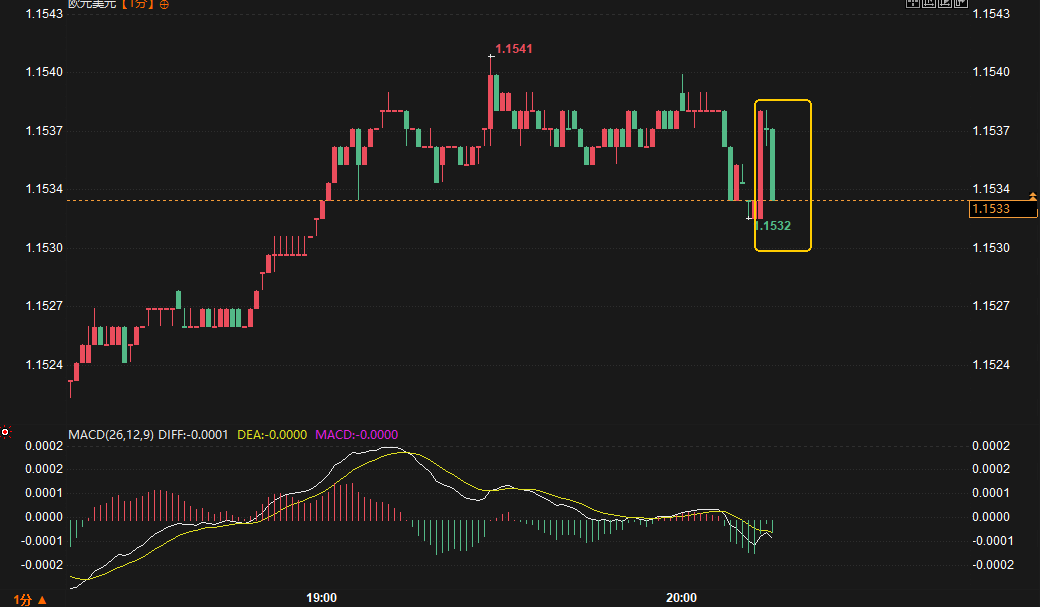
The decision was widely expected by the market, but it still triggered an immediate reaction in eurozone assets. The euro rose slightly by about 6 points against the dollar after the announcement, before falling back, with little overall change from before the decision. The yield on German two-year government bonds initially rose slightly after the statement, before falling back 1.5 basis points to 2.68%.
The European Central Bank's decision to raise interest rates stemmed directly from rising energy prices pushing eurozone inflation above 3%. This contrasts with historical trends: a similar energy shock in 2022 led to a more significant tightening of policies, while this rate hike is seen by the market as a "safety" precaution rather than the start of an aggressive tightening cycle.
From a fundamental perspective, the 25 basis point rate hike was in line with expectations, but it highlights the unique pressures facing the European economy. Compared to other major economies, the Eurozone's policy rate was already at a neutral level before the conflict, which provided room to initiate a rate hike cycle. Tomasz Wieladek, head of European macro strategy at prominent institutions such as T. Rowe Price, pointed out that this move aims to send a signal to households and businesses to avoid a repeat of 2022-style inflation. Laura Cooper, global investment strategist at Nuveen, also believes that the ECB is in a relatively advantageous position among major central banks because its policy rate has returned to neutral.
Before and after the ECB's decision was announced, institutional and retail investor opinions differed significantly. Prior to the decision, institutional accounts emphasized "in line with expectations and limited impact," with some macro fund managers believing the ECB still had room for further adjustments, but the pace would depend on economic growth data. Retail investor discussions were more fragmented, with some expecting the ECB to "maintain the status quo to support growth," while others worried about the energy transmission effect. After the decision was announced, institutional perspectives quickly shifted to "precautionary measures + focus on growth," with several investment bank research reports indicating the ECB might take further action in September, followed by a pause. Retail investor sentiment, however, became divided: some traders focused on short-term euro volatility, while others focused on changes in the government bond yield curve. Overall, concerns about long-term tightening eased somewhat, but discussions about a slowdown in economic growth increased.
From a technical perspective, the euro/dollar exchange rate saw limited volatility before and after the policy decision, indicating that the market had already priced in the main points. The latest quote remains within a relatively mild range compared to historical highs, without a clear trend breakout. This contrasts with the sharp fluctuations during the 2022 energy crisis, when the euro faced more significant downward pressure. This recent slight consolidation and pullback reflects a short-term balance between bullish and bearish forces: bulls are supported by interest rate hikes, while bears are concerned about weak economic growth data.
The slight decline in the yield on German two-year government bonds also confirms this balance. The initial rise followed by a fall in yields indicates that while investors are digesting the interest rate hike information, they remain cautious about the future growth outlook. Overall, signals of tightening fundamentals and a stable technical environment mutually reinforce each other, with the long-term logic pointing to a process of policy normalization, while the short-term trend is driven by data and exhibits a range-bound pattern.
The European economy contracted by 0.2% quarter-on-quarter in the first quarter, influenced by specific factors, but recent business surveys indicate that fuel prices dragged down demand. This contrasts with the relative resilience of the United States, which has benefited from technology investment and energy exports, and explains the differentiated choices the European Central Bank has in terms of policy space. Other central banks around the world, such as Australia and Norway, acted in May, and Japan faces a similar decision next week, further highlighting the interconnected impact of energy factors on the path of monetary policy.
Considering both fundamentals and technicals, Eurozone assets are expected to remain volatile in the short term. The euro/dollar exchange rate faces a two-way test near current levels; if subsequent economic growth data remains weak, the exchange rate may test lower support levels; conversely, if inflation transmission exceeds expectations, there is room for upward movement. The government bond yield curve is expected to maintain a cautiously volatile pattern, with no clear unidirectional trend likely in the short term.
In the medium term, the ECB's policy will gradually shift from addressing inflation to considering growth. There is a high probability of a potential rate hike in September followed by a pause, which will provide the market with more observation windows. The overall market logic is self-consistent: the current rate hike is a precautionary measure and has not changed the dual constraints of downside risks and inflationary pressures facing the European economy. Future trends will depend more on the evolution of energy prices and the recovery of end-user demand. Volatility is expected to remain in a neutral range, and continued monitoring of marginal changes in monthly economic indicators is necessary.
Q: Does the ECB's latest interest rate hike signal the start of a new tightening cycle?
A: Not at all. This 25 basis point rate hike is more interpreted as a precautionary insurance measure aimed at curbing the transmission of energy prices to wages and core commodities. Analysts believe that the ECB has relatively ample policy space, but with clear signs of slowing economic growth, its future pace will be more cautious. It is expected that the ECB may pause its observation period after September, rather than continuing aggressive rate hikes.
Q: What are the main differences between the views of institutional investors and retail investors before and after the resolution?
A: Before the resolution, institutions were more focused on "pricing within expectations" and policy space, while retail investors held differing views on growth support and inflation risks. After the resolution, institutions quickly focused on a framework of "prevention + shift to growth observation," while retail investor discussions shifted more towards the volatility of specific instruments and yield curves. The overall bias shifted from "uncertainty of expectations" to "data-driven cautious optimism."
Q: Why did the euro/dollar exchange rate remain largely unchanged after the decision?
A: This is mainly because the market had already fully priced in the 25 basis point rate hike, resulting in a clear pre-pricing effect. Technically, the price rose slightly before falling back, reflecting a balance between bulls and bears. While there are signs of tightening in the fundamentals, concerns about economic growth also exist, causing the exchange rate to remain range-bound, contrasting sharply with the dramatic reactions seen during historical energy shocks.
Q: What does the slight decline in the yield on German two-year government bonds indicate?
A: The yield curve rose initially before falling to 2.68%, indicating that investors reassessed growth risks after confirming the interest rate hike. In the short term, the yield curve is expected to continue to fluctuate based on data rather than trending upwards unilaterally. This aligns with the ECB's "insurance" approach to interest rate hikes and reflects the market's cautious expectations regarding the future policy path.
Q: What demonstration effect will this decision have on the policies of other central banks around the world?
A: As one of the first major central banks to take action, the European Central Bank has provided a model for addressing energy-driven inflation. Other developed economies, such as the Federal Reserve and the Bank of England, will likely remain on the sidelines next week, while central banks in developing countries have already taken some action. Overall, this move has reinforced the global policy divergence, and the future path will depend more on each economy's ability to withstand energy shocks and its resilience to growth.
The decision was widely expected by the market, but it still triggered an immediate reaction in eurozone assets. The euro rose slightly by about 6 points against the dollar after the announcement, before falling back, with little overall change from before the decision. The yield on German two-year government bonds initially rose slightly after the statement, before falling back 1.5 basis points to 2.68%.
Deep interconnect analysis
The European Central Bank's decision to raise interest rates stemmed directly from rising energy prices pushing eurozone inflation above 3%. This contrasts with historical trends: a similar energy shock in 2022 led to a more significant tightening of policies, while this rate hike is seen by the market as a "safety" precaution rather than the start of an aggressive tightening cycle.
From a fundamental perspective, the 25 basis point rate hike was in line with expectations, but it highlights the unique pressures facing the European economy. Compared to other major economies, the Eurozone's policy rate was already at a neutral level before the conflict, which provided room to initiate a rate hike cycle. Tomasz Wieladek, head of European macro strategy at prominent institutions such as T. Rowe Price, pointed out that this move aims to send a signal to households and businesses to avoid a repeat of 2022-style inflation. Laura Cooper, global investment strategist at Nuveen, also believes that the ECB is in a relatively advantageous position among major central banks because its policy rate has returned to neutral.
Before and after the ECB's decision was announced, institutional and retail investor opinions differed significantly. Prior to the decision, institutional accounts emphasized "in line with expectations and limited impact," with some macro fund managers believing the ECB still had room for further adjustments, but the pace would depend on economic growth data. Retail investor discussions were more fragmented, with some expecting the ECB to "maintain the status quo to support growth," while others worried about the energy transmission effect. After the decision was announced, institutional perspectives quickly shifted to "precautionary measures + focus on growth," with several investment bank research reports indicating the ECB might take further action in September, followed by a pause. Retail investor sentiment, however, became divided: some traders focused on short-term euro volatility, while others focused on changes in the government bond yield curve. Overall, concerns about long-term tightening eased somewhat, but discussions about a slowdown in economic growth increased.
From a technical perspective, the euro/dollar exchange rate saw limited volatility before and after the policy decision, indicating that the market had already priced in the main points. The latest quote remains within a relatively mild range compared to historical highs, without a clear trend breakout. This contrasts with the sharp fluctuations during the 2022 energy crisis, when the euro faced more significant downward pressure. This recent slight consolidation and pullback reflects a short-term balance between bullish and bearish forces: bulls are supported by interest rate hikes, while bears are concerned about weak economic growth data.
The slight decline in the yield on German two-year government bonds also confirms this balance. The initial rise followed by a fall in yields indicates that while investors are digesting the interest rate hike information, they remain cautious about the future growth outlook. Overall, signals of tightening fundamentals and a stable technical environment mutually reinforce each other, with the long-term logic pointing to a process of policy normalization, while the short-term trend is driven by data and exhibits a range-bound pattern.
The European economy contracted by 0.2% quarter-on-quarter in the first quarter, influenced by specific factors, but recent business surveys indicate that fuel prices dragged down demand. This contrasts with the relative resilience of the United States, which has benefited from technology investment and energy exports, and explains the differentiated choices the European Central Bank has in terms of policy space. Other central banks around the world, such as Australia and Norway, acted in May, and Japan faces a similar decision next week, further highlighting the interconnected impact of energy factors on the path of monetary policy.
Trend Outlook
Considering both fundamentals and technicals, Eurozone assets are expected to remain volatile in the short term. The euro/dollar exchange rate faces a two-way test near current levels; if subsequent economic growth data remains weak, the exchange rate may test lower support levels; conversely, if inflation transmission exceeds expectations, there is room for upward movement. The government bond yield curve is expected to maintain a cautiously volatile pattern, with no clear unidirectional trend likely in the short term.
In the medium term, the ECB's policy will gradually shift from addressing inflation to considering growth. There is a high probability of a potential rate hike in September followed by a pause, which will provide the market with more observation windows. The overall market logic is self-consistent: the current rate hike is a precautionary measure and has not changed the dual constraints of downside risks and inflationary pressures facing the European economy. Future trends will depend more on the evolution of energy prices and the recovery of end-user demand. Volatility is expected to remain in a neutral range, and continued monitoring of marginal changes in monthly economic indicators is necessary.
Frequently Asked Questions
Q: Does the ECB's latest interest rate hike signal the start of a new tightening cycle?
A: Not at all. This 25 basis point rate hike is more interpreted as a precautionary insurance measure aimed at curbing the transmission of energy prices to wages and core commodities. Analysts believe that the ECB has relatively ample policy space, but with clear signs of slowing economic growth, its future pace will be more cautious. It is expected that the ECB may pause its observation period after September, rather than continuing aggressive rate hikes.
Q: What are the main differences between the views of institutional investors and retail investors before and after the resolution?
A: Before the resolution, institutions were more focused on "pricing within expectations" and policy space, while retail investors held differing views on growth support and inflation risks. After the resolution, institutions quickly focused on a framework of "prevention + shift to growth observation," while retail investor discussions shifted more towards the volatility of specific instruments and yield curves. The overall bias shifted from "uncertainty of expectations" to "data-driven cautious optimism."
Q: Why did the euro/dollar exchange rate remain largely unchanged after the decision?
A: This is mainly because the market had already fully priced in the 25 basis point rate hike, resulting in a clear pre-pricing effect. Technically, the price rose slightly before falling back, reflecting a balance between bulls and bears. While there are signs of tightening in the fundamentals, concerns about economic growth also exist, causing the exchange rate to remain range-bound, contrasting sharply with the dramatic reactions seen during historical energy shocks.
Q: What does the slight decline in the yield on German two-year government bonds indicate?
A: The yield curve rose initially before falling to 2.68%, indicating that investors reassessed growth risks after confirming the interest rate hike. In the short term, the yield curve is expected to continue to fluctuate based on data rather than trending upwards unilaterally. This aligns with the ECB's "insurance" approach to interest rate hikes and reflects the market's cautious expectations regarding the future policy path.
Q: What demonstration effect will this decision have on the policies of other central banks around the world?
A: As one of the first major central banks to take action, the European Central Bank has provided a model for addressing energy-driven inflation. Other developed economies, such as the Federal Reserve and the Bank of England, will likely remain on the sidelines next week, while central banks in developing countries have already taken some action. Overall, this move has reinforced the global policy divergence, and the future path will depend more on each economy's ability to withstand energy shocks and its resilience to growth.
- Risk Warning and Disclaimer
- The market involves risk, and trading may not be suitable for all investors. This article is for reference only and does not constitute personal investment advice, nor does it take into account certain users’ specific investment objectives, financial situation, or other needs. Any investment decisions made based on this information are at your own risk.