Iran announces five ships broke through blockade, US troops on the front lines defy orders and refuse to lift blockade; is the US-Iran agreement doomed before it's even signed?
2026-06-16 09:09:56
On June 16 local time, several Iranian state media outlets released a major announcement, revealing that multiple Iranian vessels had successfully crossed the maritime blockade previously established by the United States. This development has once again sparked global discussion regarding the already uncertain status of the US-Iran armistice agreement.
Previously, the US and Iran officially announced a ceasefire memorandum of understanding, leading to widespread predictions that the blockade of the Strait of Hormuz would be fully lifted, restoring normal shipping order in the Gulf region and easing tensions in the global energy market. However, in reality, there is a clear gap between the terms of the agreement on paper and its implementation. The US, Iran, and third-party organizations have given drastically different answers regarding the lifting of the maritime blockade, putting this newly signed ceasefire agreement to its first substantial test.
As a crucial global energy transport route, the navigation status of the Strait of Hormuz affects the interests of all countries. The long-standing maritime standoff has not only caused a continuous deterioration in US-Iran relations but has also directly driven up crude oil transportation costs, exacerbating the risk of global inflation. The current dispute over vessel passage essentially stems from a disagreement between the two sides regarding the interpretation of the agreement's terms, and also exposes the trust deficit accumulated by the long-standing confrontation between the US and Iran.
In addition, external interference from neighboring countries such as Israel has further increased the obstacles to the implementation of the agreement. Global energy traders and observers from various countries are maintaining a wait-and-see attitude, awaiting clarification of the situation. This maritime passage incident has become the first key hurdle to assess the sincerity of the US-Iran ceasefire and verify the feasibility of the agreement's implementation.
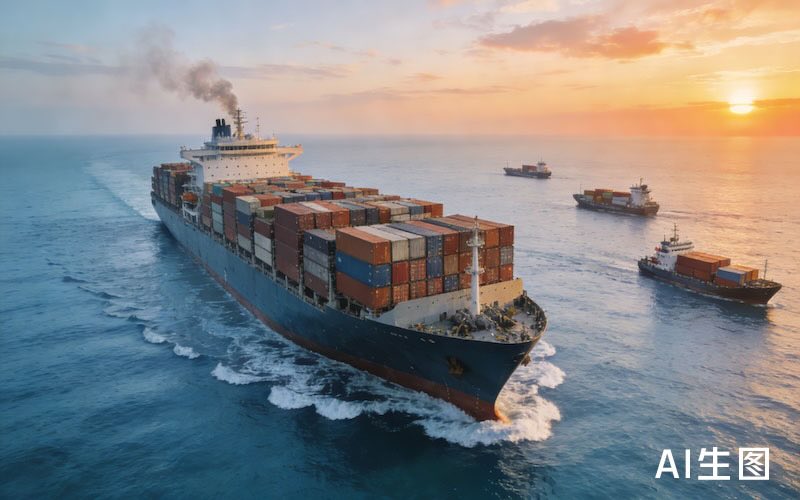
On June 16, Iran's two major official media outlets, Fars News Agency and Tasnim News Agency, successively released detailed reports, confirming from multiple perspectives that Iranian ships had broken through the maritime blockade and were carrying out normal shipping operations, sending a signal to the outside world that the situation was easing.
Fars News Agency separately disclosed three shipping routes, covering both import and export areas: a very large crude carrier (VLCC) departed from the high seas and sailed smoothly to a port in Iran to replenish domestic energy reserves; a civilian cargo ship carrying feed ingredients successfully passed through the blockade and entered the port to ensure the supply of domestic consumer goods; and another ocean-going oil tanker fully loaded with Iranian crude oil traversed the entire Sea of Oman and the blockade area to reach overseas consumer markets and complete its crude oil export mission.
Tasnim News Agency compiled overall passage data, confirming that a total of five vessels successfully completed the passage that day, including three oil tankers and two civilian cargo ships carrying basic supplies. Iranian state media's high-profile release of details and footage of the voyages serves two purposes: firstly, to demonstrate the effectiveness of the ceasefire agreement to the domestic public, stabilizing domestic public opinion and social sentiment; and secondly, to showcase Iran's ability to control regional waters to the international community, corroborating the US's commitment to lifting the blockade. This also serves to address external doubts about the stability of the agreement and reshape Iran's oil export channels.
However, Iranian media did not disclose the ship's specific coordinates, the time period it passed, or whether it encountered US interception during the voyage. The lack of relevant details has made this positive news controversial.
As early as June 14, the United States and Iran officially announced simultaneously that they had reached a memorandum of understanding on a ceasefire in the Gulf region, finalizing several core consensuses aimed at ending the long-standing maritime armed standoff and resolving regional geopolitical conflicts.
According to the schedule disclosed by both sides, this binding ceasefire document will be formally signed in Switzerland on June 19, marking a turning point in the years-long US-Iran standoff. Based on the draft memorandum, the core provisions of the agreement include a comprehensive lifting of the maritime blockade, a ceasefire across all fronts, and a gradual easing of sanctions against Iran. It also outlines a corresponding reconstruction plan for Iran, aiming to comprehensively ease bilateral tensions.
On the day of the official announcement, US President Trump posted directly on social media, publicly issuing an executive order ordering the US Navy to immediately end its maritime blockade of major Iranian ports and open the Strait of Hormuz for navigation.
According to the initial US plan, merchant ships and oil tankers would be able to pass through the Strait of Hormuz free of charge and without obstacles after the blockade was lifted, restoring pre-war shipping volumes in the short term. The Trump administration's intention was to fulfill its negotiating promises, push for the agreement's implementation, and simultaneously enhance its diplomatic record by mediating the Middle East conflict. However, the US internal division of responsibilities was unclear, the presidential executive orders and frontline naval execution standards were not synchronized, and the US had not yet clarified a specific timetable for lifting sanctions. These multiple problems combined directly resulted in the inaccurate implementation of high-level directives and sowed the seeds for future controversies surrounding the maritime blockade.
Just as Iran officially announced that its ships had broken through the blockade and US officials declared the lifting of the blockade, the actions of third-party organizations and the US military on the front lines completely overturned the existing favorable narrative and revealed a completely different situation on the ground.
On June 15, the UK's Office of Maritime Trade Operations forwarded an official notification from the Joint Maritime Information Centre, clearly stating that the US military is maintaining its existing control measures, the maritime blockade of Iranian ports has not been lifted, and the relevant control rules remain in effect. This notification also provides authoritative hedging reference for global shipping companies. Recordings from public radio channels provided by seafarers on merchant ships in the vicinity of the Strait of Hormuz show that US warships repeatedly and publicly hailed passing vessels, reiterating the effectiveness of the blockade of the Iranian coast and ports, strictly ordering some vessels approaching the target area to return to Iranian ports, and prohibiting unauthorized passage.
The divergence between the US military's frontline implementation and Trump's public statements is due to complex reasons. On one hand, senior US military officials believe that the memorandum has not yet completed the formal signing process and therefore lacks binding force, thus necessitating an immediate lifting of the blockade. On the other hand, hawkish forces within the US strongly oppose concessions to Iran and are attempting to use frontline military pressure to force Iran to compromise on additional issues such as the nuclear issue and the deployment of troops in the region. This contradictory approach has not only disrupted the global shipping market but also led to an awkward stalemate in the US-Iran ceasefire negotiations.
Iranian state media reported on June 16 that several oil tankers and cargo ships successfully crossed the Strait of Hormuz blockade, contrasting with Trump's executive order to lift the blockade. However, reports from the UK and statements from US troops on the front lines indicate that the blockade remains in effect. This apparent discrepancy in implementation exposes the trust deficit and internal coordination difficulties surrounding the US-Iran armistice memorandum of understanding prior to its formal signing (the Swiss ceremony on June 19). Although the agreement aims to restore free navigation through the strait and stabilize the global energy supply chain, the disconnect between high-level statements and military actions, coupled with external interference, presents the agreement with its first major test. The global energy market and shipping companies remain in a state of high uncertainty.
Q1: What are the specific details of the ship passage incident reported by Iranian media?
On June 16, Iran's Fars and Tasnim News Agencies reported that five vessels successfully crossed the US blockade that day, including three oil tankers and two civilian cargo ships. Specific examples included a very large crude carrier (VLCC) entering Iranian ports to replenish energy reserves, a fully loaded ocean-going oil tanker completing its export mission, and a cargo ship carrying feed to ensure the supply of civilian goods. Iran aimed to demonstrate the effectiveness of the agreement and stabilize domestic public opinion by releasing details and photographic evidence, but the precise coordinates and details regarding whether the vessels were intercepted remain unproven, and the veracity of the reports remains controversial.
Q2: What are the core contents and timeline of the US-Iran armistice memorandum of understanding?
The agreement was officially announced on June 14, with core provisions including the complete lifting of the maritime blockade, a comprehensive ceasefire, a gradual easing of sanctions, and a corresponding reconstruction plan for Iran. The formal signing ceremony is scheduled for June 19 in Switzerland. Trump immediately ordered the US Navy to end the blockade and open the Strait of Hormuz to free navigation, aiming to fulfill his promises and restore pre-war shipping levels. However, the agreement is currently still in the memorandum of understanding stage, with limited binding force and ambiguities regarding implementation details.
Q3: Why is there a contradiction between Iran's claim of successful passage and the US military's continued blockade?
The main reason is that the agreement has not yet been formally signed, and senior US military officials believe that the memorandum is not yet legally binding. At the same time, hawkish forces within the US oppose concessions and attempt to gain more concessions on nuclear issues and regional affairs through military pressure. Trump's executive orders and frontline naval execution have not been fully synchronized, resulting in a disconnect between presidential directives and military operations, directly leading to inconsistencies between on-site control and high-level statements.
Q4: What impact does the Strait of Hormuz passage dispute have on the global energy market?
As a crucial passage for nearly one-third of the world's crude oil transportation, the blockade of the Strait of Hormuz directly impacts transportation costs and energy prices. Iran's successful passage sends a signal of de-escalation and helps quell market panic; however, evidence of a continued blockade exacerbates uncertainty, leading shipping companies to adopt a wait-and-see approach, increasing insurance costs, and potentially pushing up global inflationary pressures. This event has become a critical juncture in testing the sincerity of the US-Iran ceasefire.
Q5: What does this event mean for the prospects of the US-Iran agreement and the regional situation?
The incident highlights the long-standing trust deficit and differing interpretations between the two sides, which, coupled with external factors such as Israel, have increased the obstacles to implementing the agreement. In the short term, it may delay the recovery of shipping and energy stability, while in the long term, it will test internal coordination within the United States and Iran's willingness to make concessions on issues such as nuclear weapons and proxies. If the conflict persists, the ceasefire process may be hindered, and the risk of renewed geopolitical tensions in the Middle East remains.
Previously, the US and Iran officially announced a ceasefire memorandum of understanding, leading to widespread predictions that the blockade of the Strait of Hormuz would be fully lifted, restoring normal shipping order in the Gulf region and easing tensions in the global energy market. However, in reality, there is a clear gap between the terms of the agreement on paper and its implementation. The US, Iran, and third-party organizations have given drastically different answers regarding the lifting of the maritime blockade, putting this newly signed ceasefire agreement to its first substantial test.
As a crucial global energy transport route, the navigation status of the Strait of Hormuz affects the interests of all countries. The long-standing maritime standoff has not only caused a continuous deterioration in US-Iran relations but has also directly driven up crude oil transportation costs, exacerbating the risk of global inflation. The current dispute over vessel passage essentially stems from a disagreement between the two sides regarding the interpretation of the agreement's terms, and also exposes the trust deficit accumulated by the long-standing confrontation between the US and Iran.
In addition, external interference from neighboring countries such as Israel has further increased the obstacles to the implementation of the agreement. Global energy traders and observers from various countries are maintaining a wait-and-see attitude, awaiting clarification of the situation. This maritime passage incident has become the first key hurdle to assess the sincerity of the US-Iran ceasefire and verify the feasibility of the agreement's implementation.
Iranian media reports in detail: Multiple oil tankers and cargo ships successfully passed through.
On June 16, Iran's two major official media outlets, Fars News Agency and Tasnim News Agency, successively released detailed reports, confirming from multiple perspectives that Iranian ships had broken through the maritime blockade and were carrying out normal shipping operations, sending a signal to the outside world that the situation was easing.
Fars News Agency separately disclosed three shipping routes, covering both import and export areas: a very large crude carrier (VLCC) departed from the high seas and sailed smoothly to a port in Iran to replenish domestic energy reserves; a civilian cargo ship carrying feed ingredients successfully passed through the blockade and entered the port to ensure the supply of domestic consumer goods; and another ocean-going oil tanker fully loaded with Iranian crude oil traversed the entire Sea of Oman and the blockade area to reach overseas consumer markets and complete its crude oil export mission.
Tasnim News Agency compiled overall passage data, confirming that a total of five vessels successfully completed the passage that day, including three oil tankers and two civilian cargo ships carrying basic supplies. Iranian state media's high-profile release of details and footage of the voyages serves two purposes: firstly, to demonstrate the effectiveness of the ceasefire agreement to the domestic public, stabilizing domestic public opinion and social sentiment; and secondly, to showcase Iran's ability to control regional waters to the international community, corroborating the US's commitment to lifting the blockade. This also serves to address external doubts about the stability of the agreement and reshape Iran's oil export channels.
However, Iranian media did not disclose the ship's specific coordinates, the time period it passed, or whether it encountered US interception during the voyage. The lack of relevant details has made this positive news controversial.
US-Iran agreement signed, Trump orders lifting of lockdown
As early as June 14, the United States and Iran officially announced simultaneously that they had reached a memorandum of understanding on a ceasefire in the Gulf region, finalizing several core consensuses aimed at ending the long-standing maritime armed standoff and resolving regional geopolitical conflicts.
According to the schedule disclosed by both sides, this binding ceasefire document will be formally signed in Switzerland on June 19, marking a turning point in the years-long US-Iran standoff. Based on the draft memorandum, the core provisions of the agreement include a comprehensive lifting of the maritime blockade, a ceasefire across all fronts, and a gradual easing of sanctions against Iran. It also outlines a corresponding reconstruction plan for Iran, aiming to comprehensively ease bilateral tensions.
On the day of the official announcement, US President Trump posted directly on social media, publicly issuing an executive order ordering the US Navy to immediately end its maritime blockade of major Iranian ports and open the Strait of Hormuz for navigation.
According to the initial US plan, merchant ships and oil tankers would be able to pass through the Strait of Hormuz free of charge and without obstacles after the blockade was lifted, restoring pre-war shipping volumes in the short term. The Trump administration's intention was to fulfill its negotiating promises, push for the agreement's implementation, and simultaneously enhance its diplomatic record by mediating the Middle East conflict. However, the US internal division of responsibilities was unclear, the presidential executive orders and frontline naval execution standards were not synchronized, and the US had not yet clarified a specific timetable for lifting sanctions. These multiple problems combined directly resulted in the inaccurate implementation of high-level directives and sowed the seeds for future controversies surrounding the maritime blockade.
British reports and US military statements indicate that the blockade remains in effect.
Just as Iran officially announced that its ships had broken through the blockade and US officials declared the lifting of the blockade, the actions of third-party organizations and the US military on the front lines completely overturned the existing favorable narrative and revealed a completely different situation on the ground.
On June 15, the UK's Office of Maritime Trade Operations forwarded an official notification from the Joint Maritime Information Centre, clearly stating that the US military is maintaining its existing control measures, the maritime blockade of Iranian ports has not been lifted, and the relevant control rules remain in effect. This notification also provides authoritative hedging reference for global shipping companies. Recordings from public radio channels provided by seafarers on merchant ships in the vicinity of the Strait of Hormuz show that US warships repeatedly and publicly hailed passing vessels, reiterating the effectiveness of the blockade of the Iranian coast and ports, strictly ordering some vessels approaching the target area to return to Iranian ports, and prohibiting unauthorized passage.
The divergence between the US military's frontline implementation and Trump's public statements is due to complex reasons. On one hand, senior US military officials believe that the memorandum has not yet completed the formal signing process and therefore lacks binding force, thus necessitating an immediate lifting of the blockade. On the other hand, hawkish forces within the US strongly oppose concessions to Iran and are attempting to use frontline military pressure to force Iran to compromise on additional issues such as the nuclear issue and the deployment of troops in the region. This contradictory approach has not only disrupted the global shipping market but also led to an awkward stalemate in the US-Iran ceasefire negotiations.
Editor's Summary
Iranian state media reported on June 16 that several oil tankers and cargo ships successfully crossed the Strait of Hormuz blockade, contrasting with Trump's executive order to lift the blockade. However, reports from the UK and statements from US troops on the front lines indicate that the blockade remains in effect. This apparent discrepancy in implementation exposes the trust deficit and internal coordination difficulties surrounding the US-Iran armistice memorandum of understanding prior to its formal signing (the Swiss ceremony on June 19). Although the agreement aims to restore free navigation through the strait and stabilize the global energy supply chain, the disconnect between high-level statements and military actions, coupled with external interference, presents the agreement with its first major test. The global energy market and shipping companies remain in a state of high uncertainty.
Frequently Asked Questions
Q1: What are the specific details of the ship passage incident reported by Iranian media?
On June 16, Iran's Fars and Tasnim News Agencies reported that five vessels successfully crossed the US blockade that day, including three oil tankers and two civilian cargo ships. Specific examples included a very large crude carrier (VLCC) entering Iranian ports to replenish energy reserves, a fully loaded ocean-going oil tanker completing its export mission, and a cargo ship carrying feed to ensure the supply of civilian goods. Iran aimed to demonstrate the effectiveness of the agreement and stabilize domestic public opinion by releasing details and photographic evidence, but the precise coordinates and details regarding whether the vessels were intercepted remain unproven, and the veracity of the reports remains controversial.
Q2: What are the core contents and timeline of the US-Iran armistice memorandum of understanding?
The agreement was officially announced on June 14, with core provisions including the complete lifting of the maritime blockade, a comprehensive ceasefire, a gradual easing of sanctions, and a corresponding reconstruction plan for Iran. The formal signing ceremony is scheduled for June 19 in Switzerland. Trump immediately ordered the US Navy to end the blockade and open the Strait of Hormuz to free navigation, aiming to fulfill his promises and restore pre-war shipping levels. However, the agreement is currently still in the memorandum of understanding stage, with limited binding force and ambiguities regarding implementation details.
Q3: Why is there a contradiction between Iran's claim of successful passage and the US military's continued blockade?
The main reason is that the agreement has not yet been formally signed, and senior US military officials believe that the memorandum is not yet legally binding. At the same time, hawkish forces within the US oppose concessions and attempt to gain more concessions on nuclear issues and regional affairs through military pressure. Trump's executive orders and frontline naval execution have not been fully synchronized, resulting in a disconnect between presidential directives and military operations, directly leading to inconsistencies between on-site control and high-level statements.
Q4: What impact does the Strait of Hormuz passage dispute have on the global energy market?
As a crucial passage for nearly one-third of the world's crude oil transportation, the blockade of the Strait of Hormuz directly impacts transportation costs and energy prices. Iran's successful passage sends a signal of de-escalation and helps quell market panic; however, evidence of a continued blockade exacerbates uncertainty, leading shipping companies to adopt a wait-and-see approach, increasing insurance costs, and potentially pushing up global inflationary pressures. This event has become a critical juncture in testing the sincerity of the US-Iran ceasefire.
Q5: What does this event mean for the prospects of the US-Iran agreement and the regional situation?
The incident highlights the long-standing trust deficit and differing interpretations between the two sides, which, coupled with external factors such as Israel, have increased the obstacles to implementing the agreement. In the short term, it may delay the recovery of shipping and energy stability, while in the long term, it will test internal coordination within the United States and Iran's willingness to make concessions on issues such as nuclear weapons and proxies. If the conflict persists, the ceasefire process may be hindered, and the risk of renewed geopolitical tensions in the Middle East remains.
- Risk Warning and Disclaimer
- The market involves risk, and trading may not be suitable for all investors. This article is for reference only and does not constitute personal investment advice, nor does it take into account certain users’ specific investment objectives, financial situation, or other needs. Any investment decisions made based on this information are at your own risk.