June 29th Financial Breakfast: Easing interest rate hike expectations boost gold prices; Iran's "30-day control" of the Strait of Hormuz supports oil prices; US-Iran Doha meeting imminent.
2026-06-29 09:28:54
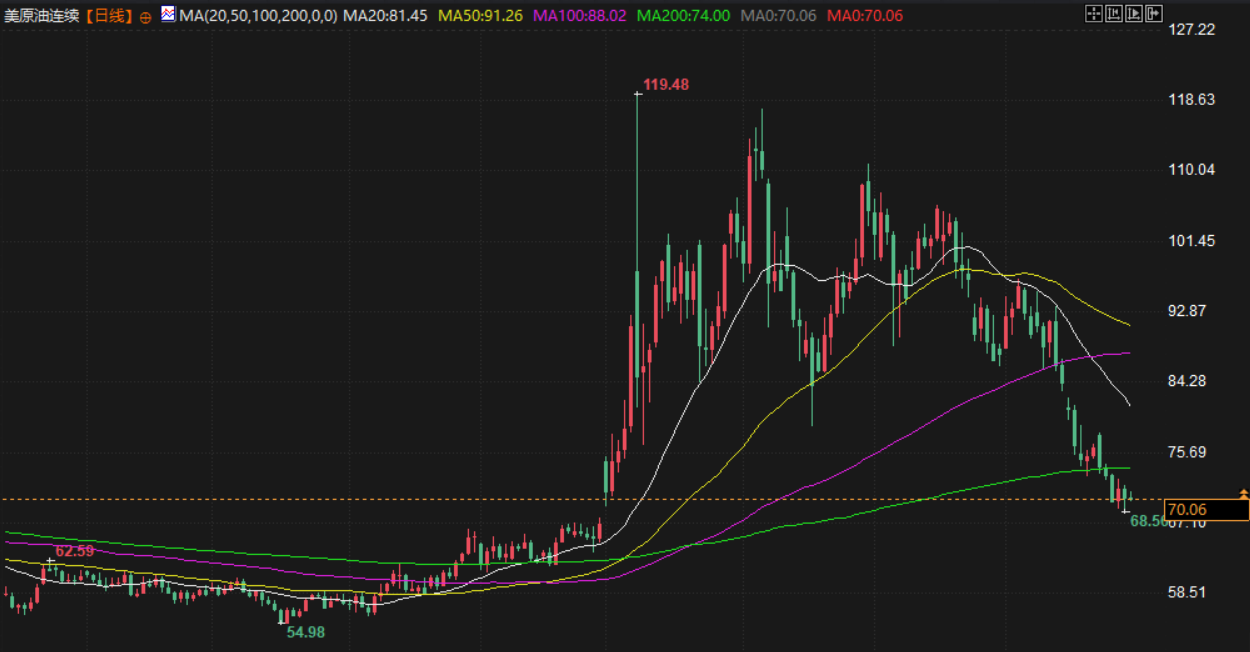
On Monday (June 29, Beijing time) in early Asian trading, spot gold traded around $4,069 per ounce, mainly boosted by a slight easing of interest rate hike expectations and a pullback in the US dollar from recent highs. US crude oil opened more than 1% higher, trading around $70 per barrel. Over the weekend, the US military again attacked Iranian targets, and Iran stated that it would have full control of the Strait of Hormuz for the next 30 days, and that intervention would delay its opening, increasing uncertainty. Meanwhile, it is reported that the US and Iran will hold a meeting in Doha on Tuesday.

The S&P 500 index closed slightly lower on Friday, down 0.05% to 7353.95 points, the Nasdaq index fell 0.24% to 25297.62 points, and the Dow Jones Industrial Average fell 0.09% to 51876.11 points. Last week, the S&P 500 fell 2.05% cumulatively, the Nasdaq plunged 4.7%, and the PHLX chip index plummeted 5.3% in a single day, with a weekly decline of 7.9%, marking its worst weekly performance since early April. This was mainly due to investor concerns about whether the huge capital expenditures on artificial intelligence data centers could be quickly recouped, while news that OpenAI was considering postponing its IPO to next year also dampened AI-related risk sentiment.
Despite Apple's 3.1% rebound after a sell-off triggered by price increases, chip stocks were generally under pressure. On Semiconductor's shares plummeted nearly 24% following its acquisition of Synaptics, which also fell 3.7%. The healthcare sector, however, rallied strongly, with Moderna surging nearly 13% to a new high for 2024 after investor activity.
Eight of the 11 sectors in the S&P 500 declined, with the industrials and materials sectors leading the losses, falling 3.41% and 2.45%, respectively.
On the economic front, U.S. inflation rose above 4% in May due to higher energy prices, keeping the possibility of a Fed rate hike alive. Apple’s price increase was also seen as a new signal of inflationary pressure. Although the easing of tensions in the Middle East subsequently led to a drop in oil prices and consumer confidence rebounded from historic lows in June, household concerns about the cost of living have not subsided. Traders expect at least one 25-basis-point rate hike this year, with a probability of another rate hike approaching 27%.
Gold prices rose on Friday, with spot gold closing 1.3% higher at $4,026.51 per ounce, mainly boosted by a pullback in the dollar from recent highs and a slight easing of expectations for a rate hike after the Fed’s preferred inflation gauge (May PCE rose 4.1% year-on-year) met expectations – traders’ bets on a September rate hike fell to about 59% from 64% previously.
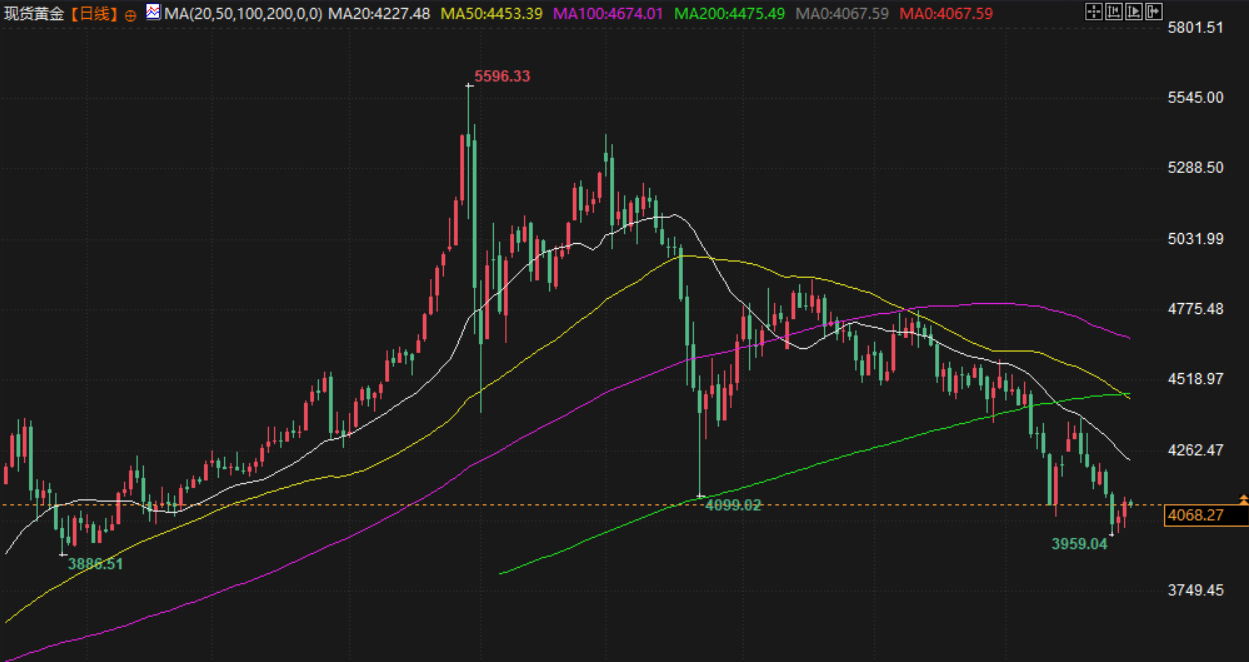
However, dragged down by hitting a more than seven-month low earlier last week, gold prices still fell 2.1% for the week, extending their fourth consecutive week of decline, as rising interest rates and tightening monetary policy continued to diminish the attractiveness of non-interest-bearing assets.
Other precious metals also rebounded in tandem, with spot silver, platinum and palladium rising by 2.2%, 2% and 2.5% respectively, although all three closed lower last week. In terms of physical demand, the price correction led to the first premium for gold in India in a month and a half.
Oil prices suffered a sharp drop on Friday, with both benchmark contracts closing lower – Brent crude fell 1.9% to $73.47 a barrel and WTI crude fell 1.72% to $70.24 a barrel, as more tankers continued to pass through the Strait of Hormuz, significantly easing supply concerns previously triggered by an attack on a cargo ship near Oman.
Meanwhile, Saudi Aramco resumed crude oil loading operations at its Rastanura terminal last Friday after a nearly four-month shutdown. Shipping data shows that several very large crude carriers have begun loading, and crude oil shipments through the Strait of Hormuz last week also rose to the highest level since the conflict between the US, Israel and Iran at the end of February, although overall traffic volume is still far below the pre-war daily average.
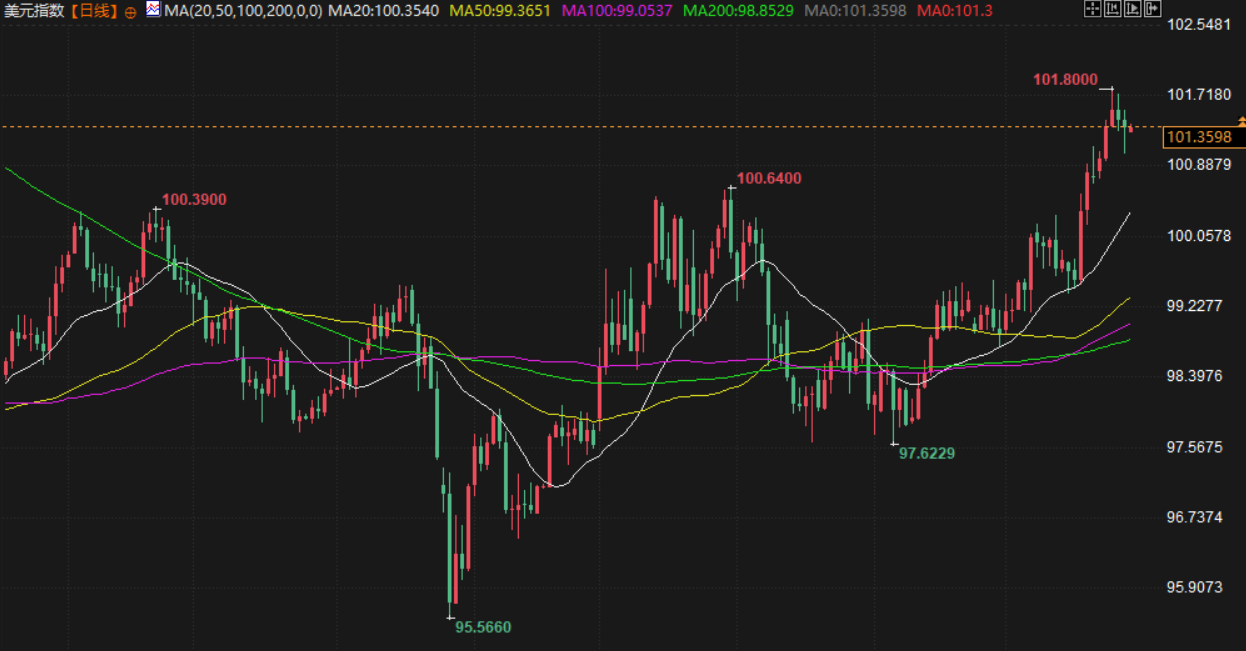
The dollar fell for a second straight session on Friday as key U.S. inflation data met expectations and lower oil prices slightly dampened market expectations for a Federal Reserve rate hike. However, the dollar index still rose last week, posting its biggest monthly gain since July. The dollar index fell 0.09% to 101.36, the euro rose 0.18% to 1.1389, the pound rose 0.09% to 1.3203, and the dollar edged down 0.02% to 161.74 against the yen, remaining close to its lowest level since 1986 at 161.96, as markets remained wary of potential intervention by Japanese authorities.
The University of Michigan's final consumer sentiment index for June rose to 49.5, slightly below the expected 50.0, indicating lingering inflation concerns. Federal Reserve officials Kashkari and Williams both expressed concern about inflationary pressures and the need for further interest rate hikes. Meanwhile, accelerated core inflation in Tokyo in June provided support for the yen. Wells Fargo suggests a strategic shorting of the USD/JPY pair ahead of this week's US jobs report, but maintains a bullish outlook on the dollar in the medium to long term.
The US and Iran agreed to halt airstrikes and met in Doha on Tuesday to salvage the broken ceasefire agreement.
Senior U.S. officials said the U.S. and Iran have agreed to cease attacks on each other and plan to meet in Doha on Tuesday to resolve the Strait of Hormuz dispute, attempting to solidify the ceasefire agreement that has already shown cracks after only 11 days in effect. One U.S. official told the media that both sides decided to "cease all military operations," while another official added that "ships can navigate freely" during technical negotiations. The ceasefire agreement has been jeopardized by renewed attacks in recent days, triggered by differing interpretations of the Straits clause in the memorandum of understanding. According to the memorandum, Iran pledged to ensure the safe passage of merchant ships through the Straits, while the U.S. lifted its blockade of Iranian ports. Last week, during negotiations in Switzerland, both sides agreed to establish a coordination hotline between the U.S. military and the Iranian Islamic Revolutionary Guard Corps, but as of Saturday, the hotline remained closed, with Iran reiterating that ships only need coordination for passage. The talks, originally scheduled for Switzerland, were moved to Doha due to the escalating situation, with the focus returning to the Strait of Hormuz. Nick Stewart, head of the U.S. technical team, is expected to attend the talks. The White House has not yet commented.
US strikes Iranian targets again in response to drone attacks on oil tankers
U.S. Central Command launched additional strikes against multiple Iranian targets on June 27, following a retaliatory strike by U.S. forces against Iran for its attack on the cargo ship "M/V EverLovely". Although Iran had an opportunity to comply with the ceasefire agreement, its forces launched a one-way attack drone strike in the early hours of June 28 (4:30 AM ET), hitting and destroying the Panamanian-flagged oil tanker "M/T Kiku" near the Strait of Hormuz, which was carrying over 2 million barrels of crude oil. In response, U.S. warplanes struck Iranian military surveillance facilities, communication systems, air defense sites, drone storage facilities, and mine-laying capabilities that day; merchant shipping through the strait continued, and the U.S. military remained on high alert and ready to respond at any time.
Iranian Foreign Minister: Iran will have full control of the Strait of Hormuz for the next 30 days; intervention will delay its opening.
During his visit to Iraq, Iranian Foreign Minister Araqchi stated that the Strait of Hormuz would be under Iranian control for the next 30 days, and that he had briefed the Iraqi Foreign Minister on the latest developments in the war and the progress of the US-Iran memorandum of understanding. He said that during this period, Iran would fully monitor and manage the strait, and would restore full navigational capacity once all obstacles were cleared—this is precisely the direction Iran is striving for. Araqchi emphasized that this responsibility rests solely with Iran, as clearly stipulated in the memorandum of understanding, and that any external interference or unilateral action would worsen the situation and delay the reopening of the strait.
Trump's threat against Iran may no longer exist.
On June 27 local time, US President Trump posted on social media, "US warplanes have just struck Iranian missile and drone storage facilities and coastal radar sites for another violation of the ceasefire agreement. They may never learn! There will come a day when we will no longer exercise restraint and will be forced to use military force to complete the operation we have successfully begun. If that comes to that, the Islamic Republic of Iran will cease to exist!" (CCTV International News)
Trump claims US military strikes Iranian missile and drone storage sites
US President Donald Trump stated on the 27th local time that the US military had just struck Iranian missile and drone storage sites, as well as coastal radar stations, because they had once again violated the ceasefire agreement. Trump also threatened, "There will come a day when we will no longer exercise restraint and will be forced to complete the operation we have successfully begun using military force. If that comes to that, the Islamic Republic of Iran will cease to exist!" The US Central Command issued a statement on social media on the 27th, stating that the US military carried out a new round of strikes against multiple targets inside Iran that day. The military strikes launched by the US military that day were a direct response to "Iran's continued targeting of merchant ships." US warplanes struck Iranian military surveillance facilities, communication systems, air defense positions, drone storage facilities, and mine-laying equipment, among other targets. (CCTV News)
The 32 teams for the World Cup have been determined, and AI predictions have been released: Tencent's Hunyuan team leads with 29/32.
On June 28th, the 32 teams advancing to the World Cup were finalized, and the prediction results from 12 AI models were officially released. In terms of performance, Tencent's Hunyuan ranked first with an accuracy rate of 29/32, followed by MiniMax and iFlytek Xinghuo with 28/32, and DeepSeek, Zhipu, and Lenovo Tianxi AI with 27/32. Overall, the AIs showed a high degree of consistency in their predictions of traditional powerhouses and the main teams that would advance. The discrepancies mainly came from teams on the verge of elimination (such as Bosnia and Herzegovina, Cape Verde, Democratic Republic of Congo, and Ghana) and teams predicted to be eliminated, such as Iran, South Korea, and Uruguay.
South Koreans hold an average of more than two stock accounts each, and the South Korean stock market is characterized by "foreign investors selling while retail investors leverage their positions to buy."
South Korean stocks have recently hit record highs, with the KOSPI index nearly doubling this year. However, on June 26, the KOSPI plunged by over 8% intraday, triggering the circuit breaker mechanism for the second time this week. Within a week, the South Korean stock market experienced two rollercoaster rides, drawing global attention. Data shows that retail investors account for a very high percentage of trading in South Korea. As of June 24, the total number of domestic stock trading accounts in South Korea was 108.77 million, while the total population of South Korea is only over 50 million. This means each person holds more than two stock accounts, and a large amount of capital has flowed in through highly leveraged ETFs. Last week, the Federal Reserve's hawkish monetary policy shift directly suppressed the highly valued technology sector. A report released by JPMorgan Chase shows that foreign capital has seen a net outflow of approximately $95 billion from the South Korean stock market this year. Meanwhile, retail investors have made net purchases of approximately $80 billion this year, becoming the main force supporting the market. This "foreign capital selling, retail investors buying with leverage" model is highly susceptible to forced liquidation during market volatility, leading to a partial failure of the pricing mechanism. (CCTV Finance)
Another major milestone! Three world-class high-performance carbon fiber production lines go into operation simultaneously.
On the 28th, it was learned from China National Building Materials Group (CNBM) that three world-class high-performance carbon fiber production lines of CNBM have commenced operation at the CNBM Shenying Lianyungang base, covering the three major categories of carbon fiber: general-purpose, high-strength, and high-modulus. This marks another significant milestone in the high-quality development of my country's carbon fiber industry. The three benchmark carbon fiber production lines, the largest in the world, each possess core advantages: a 5,000-ton-per-year large-tow carbon fiber production line, relying on pioneering dry-jet wet spinning technology, upgrades wind power-specific products, effectively reducing production costs and significantly improving the industry's scale manufacturing level; the world's first 4-meter-wide, thousand-ton-level T1100-grade production line, achieving a leapfrog increase in capacity and fully adapting to high-end and extreme scenarios such as aerospace and low-altitude aircraft; and a 600-ton-per-year high-modulus carbon fiber production line, empowering high-end equipment, 3C electronics, and other fields. The simultaneous commissioning of these three world-class production lines fills the gap in domestic high-end carbon fiber scale production capacity, driving the industry to move away from homogeneous scale competition and towards high-end and technological transformation. (CCTV News)
The C909 has been in commercial operation for ten years, with a cumulative delivery of 186 aircraft, accounting for 70% of the domestic regional jet fleet.
Today (June 28), COMAC announced that its domestically produced C909 commercial aircraft has been in commercial operation for 10 years, with a total of 186 aircraft delivered, accounting for 70% of the domestic regional jet fleet. After ten years of operation, the C909 has become a mainstay model in China's regional air transport market. (CCTV News)
Key Focus Today
stock market
The S&P 500 index closed slightly lower on Friday, down 0.05% to 7353.95 points, the Nasdaq index fell 0.24% to 25297.62 points, and the Dow Jones Industrial Average fell 0.09% to 51876.11 points. Last week, the S&P 500 fell 2.05% cumulatively, the Nasdaq plunged 4.7%, and the PHLX chip index plummeted 5.3% in a single day, with a weekly decline of 7.9%, marking its worst weekly performance since early April. This was mainly due to investor concerns about whether the huge capital expenditures on artificial intelligence data centers could be quickly recouped, while news that OpenAI was considering postponing its IPO to next year also dampened AI-related risk sentiment.
Despite Apple's 3.1% rebound after a sell-off triggered by price increases, chip stocks were generally under pressure. On Semiconductor's shares plummeted nearly 24% following its acquisition of Synaptics, which also fell 3.7%. The healthcare sector, however, rallied strongly, with Moderna surging nearly 13% to a new high for 2024 after investor activity.
Eight of the 11 sectors in the S&P 500 declined, with the industrials and materials sectors leading the losses, falling 3.41% and 2.45%, respectively.
On the economic front, U.S. inflation rose above 4% in May due to higher energy prices, keeping the possibility of a Fed rate hike alive. Apple’s price increase was also seen as a new signal of inflationary pressure. Although the easing of tensions in the Middle East subsequently led to a drop in oil prices and consumer confidence rebounded from historic lows in June, household concerns about the cost of living have not subsided. Traders expect at least one 25-basis-point rate hike this year, with a probability of another rate hike approaching 27%.
Gold Market
Gold prices rose on Friday, with spot gold closing 1.3% higher at $4,026.51 per ounce, mainly boosted by a pullback in the dollar from recent highs and a slight easing of expectations for a rate hike after the Fed’s preferred inflation gauge (May PCE rose 4.1% year-on-year) met expectations – traders’ bets on a September rate hike fell to about 59% from 64% previously.
However, dragged down by hitting a more than seven-month low earlier last week, gold prices still fell 2.1% for the week, extending their fourth consecutive week of decline, as rising interest rates and tightening monetary policy continued to diminish the attractiveness of non-interest-bearing assets.
Other precious metals also rebounded in tandem, with spot silver, platinum and palladium rising by 2.2%, 2% and 2.5% respectively, although all three closed lower last week. In terms of physical demand, the price correction led to the first premium for gold in India in a month and a half.
oil market
Oil prices suffered a sharp drop on Friday, with both benchmark contracts closing lower – Brent crude fell 1.9% to $73.47 a barrel and WTI crude fell 1.72% to $70.24 a barrel, as more tankers continued to pass through the Strait of Hormuz, significantly easing supply concerns previously triggered by an attack on a cargo ship near Oman.
Meanwhile, Saudi Aramco resumed crude oil loading operations at its Rastanura terminal last Friday after a nearly four-month shutdown. Shipping data shows that several very large crude carriers have begun loading, and crude oil shipments through the Strait of Hormuz last week also rose to the highest level since the conflict between the US, Israel and Iran at the end of February, although overall traffic volume is still far below the pre-war daily average.
Foreign exchange market
The dollar fell for a second straight session on Friday as key U.S. inflation data met expectations and lower oil prices slightly dampened market expectations for a Federal Reserve rate hike. However, the dollar index still rose last week, posting its biggest monthly gain since July. The dollar index fell 0.09% to 101.36, the euro rose 0.18% to 1.1389, the pound rose 0.09% to 1.3203, and the dollar edged down 0.02% to 161.74 against the yen, remaining close to its lowest level since 1986 at 161.96, as markets remained wary of potential intervention by Japanese authorities.
The University of Michigan's final consumer sentiment index for June rose to 49.5, slightly below the expected 50.0, indicating lingering inflation concerns. Federal Reserve officials Kashkari and Williams both expressed concern about inflationary pressures and the need for further interest rate hikes. Meanwhile, accelerated core inflation in Tokyo in June provided support for the yen. Wells Fargo suggests a strategic shorting of the USD/JPY pair ahead of this week's US jobs report, but maintains a bullish outlook on the dollar in the medium to long term.
International News
The US and Iran agreed to halt airstrikes and met in Doha on Tuesday to salvage the broken ceasefire agreement.
Senior U.S. officials said the U.S. and Iran have agreed to cease attacks on each other and plan to meet in Doha on Tuesday to resolve the Strait of Hormuz dispute, attempting to solidify the ceasefire agreement that has already shown cracks after only 11 days in effect. One U.S. official told the media that both sides decided to "cease all military operations," while another official added that "ships can navigate freely" during technical negotiations. The ceasefire agreement has been jeopardized by renewed attacks in recent days, triggered by differing interpretations of the Straits clause in the memorandum of understanding. According to the memorandum, Iran pledged to ensure the safe passage of merchant ships through the Straits, while the U.S. lifted its blockade of Iranian ports. Last week, during negotiations in Switzerland, both sides agreed to establish a coordination hotline between the U.S. military and the Iranian Islamic Revolutionary Guard Corps, but as of Saturday, the hotline remained closed, with Iran reiterating that ships only need coordination for passage. The talks, originally scheduled for Switzerland, were moved to Doha due to the escalating situation, with the focus returning to the Strait of Hormuz. Nick Stewart, head of the U.S. technical team, is expected to attend the talks. The White House has not yet commented.
US strikes Iranian targets again in response to drone attacks on oil tankers
U.S. Central Command launched additional strikes against multiple Iranian targets on June 27, following a retaliatory strike by U.S. forces against Iran for its attack on the cargo ship "M/V EverLovely". Although Iran had an opportunity to comply with the ceasefire agreement, its forces launched a one-way attack drone strike in the early hours of June 28 (4:30 AM ET), hitting and destroying the Panamanian-flagged oil tanker "M/T Kiku" near the Strait of Hormuz, which was carrying over 2 million barrels of crude oil. In response, U.S. warplanes struck Iranian military surveillance facilities, communication systems, air defense sites, drone storage facilities, and mine-laying capabilities that day; merchant shipping through the strait continued, and the U.S. military remained on high alert and ready to respond at any time.
Iranian Foreign Minister: Iran will have full control of the Strait of Hormuz for the next 30 days; intervention will delay its opening.
During his visit to Iraq, Iranian Foreign Minister Araqchi stated that the Strait of Hormuz would be under Iranian control for the next 30 days, and that he had briefed the Iraqi Foreign Minister on the latest developments in the war and the progress of the US-Iran memorandum of understanding. He said that during this period, Iran would fully monitor and manage the strait, and would restore full navigational capacity once all obstacles were cleared—this is precisely the direction Iran is striving for. Araqchi emphasized that this responsibility rests solely with Iran, as clearly stipulated in the memorandum of understanding, and that any external interference or unilateral action would worsen the situation and delay the reopening of the strait.
Trump's threat against Iran may no longer exist.
On June 27 local time, US President Trump posted on social media, "US warplanes have just struck Iranian missile and drone storage facilities and coastal radar sites for another violation of the ceasefire agreement. They may never learn! There will come a day when we will no longer exercise restraint and will be forced to use military force to complete the operation we have successfully begun. If that comes to that, the Islamic Republic of Iran will cease to exist!" (CCTV International News)
Trump claims US military strikes Iranian missile and drone storage sites
US President Donald Trump stated on the 27th local time that the US military had just struck Iranian missile and drone storage sites, as well as coastal radar stations, because they had once again violated the ceasefire agreement. Trump also threatened, "There will come a day when we will no longer exercise restraint and will be forced to complete the operation we have successfully begun using military force. If that comes to that, the Islamic Republic of Iran will cease to exist!" The US Central Command issued a statement on social media on the 27th, stating that the US military carried out a new round of strikes against multiple targets inside Iran that day. The military strikes launched by the US military that day were a direct response to "Iran's continued targeting of merchant ships." US warplanes struck Iranian military surveillance facilities, communication systems, air defense positions, drone storage facilities, and mine-laying equipment, among other targets. (CCTV News)
The 32 teams for the World Cup have been determined, and AI predictions have been released: Tencent's Hunyuan team leads with 29/32.
On June 28th, the 32 teams advancing to the World Cup were finalized, and the prediction results from 12 AI models were officially released. In terms of performance, Tencent's Hunyuan ranked first with an accuracy rate of 29/32, followed by MiniMax and iFlytek Xinghuo with 28/32, and DeepSeek, Zhipu, and Lenovo Tianxi AI with 27/32. Overall, the AIs showed a high degree of consistency in their predictions of traditional powerhouses and the main teams that would advance. The discrepancies mainly came from teams on the verge of elimination (such as Bosnia and Herzegovina, Cape Verde, Democratic Republic of Congo, and Ghana) and teams predicted to be eliminated, such as Iran, South Korea, and Uruguay.
South Koreans hold an average of more than two stock accounts each, and the South Korean stock market is characterized by "foreign investors selling while retail investors leverage their positions to buy."
South Korean stocks have recently hit record highs, with the KOSPI index nearly doubling this year. However, on June 26, the KOSPI plunged by over 8% intraday, triggering the circuit breaker mechanism for the second time this week. Within a week, the South Korean stock market experienced two rollercoaster rides, drawing global attention. Data shows that retail investors account for a very high percentage of trading in South Korea. As of June 24, the total number of domestic stock trading accounts in South Korea was 108.77 million, while the total population of South Korea is only over 50 million. This means each person holds more than two stock accounts, and a large amount of capital has flowed in through highly leveraged ETFs. Last week, the Federal Reserve's hawkish monetary policy shift directly suppressed the highly valued technology sector. A report released by JPMorgan Chase shows that foreign capital has seen a net outflow of approximately $95 billion from the South Korean stock market this year. Meanwhile, retail investors have made net purchases of approximately $80 billion this year, becoming the main force supporting the market. This "foreign capital selling, retail investors buying with leverage" model is highly susceptible to forced liquidation during market volatility, leading to a partial failure of the pricing mechanism. (CCTV Finance)
Domestic News
Another major milestone! Three world-class high-performance carbon fiber production lines go into operation simultaneously.
On the 28th, it was learned from China National Building Materials Group (CNBM) that three world-class high-performance carbon fiber production lines of CNBM have commenced operation at the CNBM Shenying Lianyungang base, covering the three major categories of carbon fiber: general-purpose, high-strength, and high-modulus. This marks another significant milestone in the high-quality development of my country's carbon fiber industry. The three benchmark carbon fiber production lines, the largest in the world, each possess core advantages: a 5,000-ton-per-year large-tow carbon fiber production line, relying on pioneering dry-jet wet spinning technology, upgrades wind power-specific products, effectively reducing production costs and significantly improving the industry's scale manufacturing level; the world's first 4-meter-wide, thousand-ton-level T1100-grade production line, achieving a leapfrog increase in capacity and fully adapting to high-end and extreme scenarios such as aerospace and low-altitude aircraft; and a 600-ton-per-year high-modulus carbon fiber production line, empowering high-end equipment, 3C electronics, and other fields. The simultaneous commissioning of these three world-class production lines fills the gap in domestic high-end carbon fiber scale production capacity, driving the industry to move away from homogeneous scale competition and towards high-end and technological transformation. (CCTV News)
The C909 has been in commercial operation for ten years, with a cumulative delivery of 186 aircraft, accounting for 70% of the domestic regional jet fleet.
Today (June 28), COMAC announced that its domestically produced C909 commercial aircraft has been in commercial operation for 10 years, with a total of 186 aircraft delivered, accounting for 70% of the domestic regional jet fleet. After ten years of operation, the C909 has become a mainstay model in China's regional air transport market. (CCTV News)
- Risk Warning and Disclaimer
- The market involves risk, and trading may not be suitable for all investors. This article is for reference only and does not constitute personal investment advice, nor does it take into account certain users’ specific investment objectives, financial situation, or other needs. Any investment decisions made based on this information are at your own risk.