Why is the US dollar so strong? Where is the turning point?
2026-07-06 21:36:20
With half of 2026 gone, the global foreign exchange market has delivered an unexpected performance.
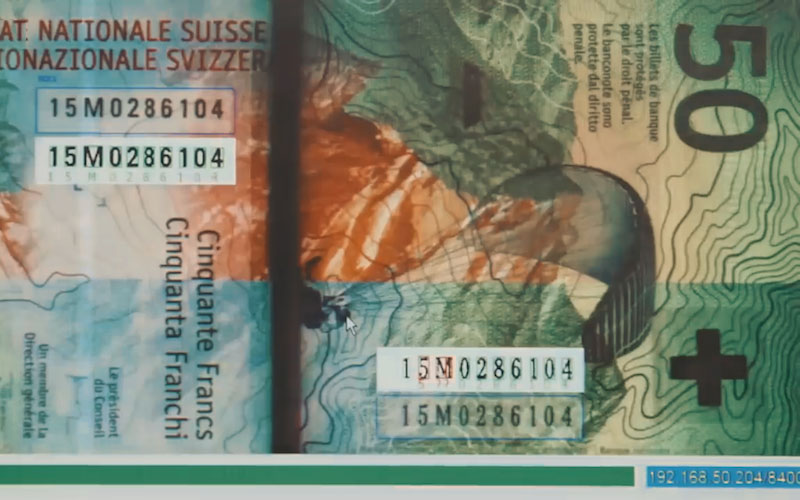
At the beginning of the year, the entire market was bearish and there were widespread expectations that the Federal Reserve would begin a rate-cutting cycle. However, the US dollar did not weaken. Instead, it boasted a cumulative increase of nearly 5% for the year, outperforming the rest of the world.
The traditional safe-haven currency, the Swiss franc, has lost its luster in this round of market activity. Major investment banks such as Société Générale have even predicted that the US dollar index could surge further to 103.6 by the end of the year, while the euro against the dollar will fall to a multi-year low of 1.11.
Why has the US dollar been so strong lately? Behind this is a "perfect resonance" of three core forces.
A dramatic reversal in monetary policy : After taking office, new Federal Reserve Chairman Kevin Warsh removed any expressions hinting at easing monetary policy.
Meanwhile, faced with persistently sticky inflation exceeding the established target, Warsh and Fed officials released extremely hawkish signals, with half of the dot plots showing a hawkish outlook.
Investors across the market have completely revised their expectations: the "interest rate cut" that was being discussed at the beginning of the year has not only vanished, but people are even starting to bet that the Federal Reserve will restart its interest rate hike cycle as early as October this year. This widening interest rate differential has made dollar assets a "super pump" for global funds.
The US economy stands out with its strong fundamentals , and exchange rates are a barometer of an economy's strength. US GDP growth exceeded 2% in the first quarter, with the manufacturing and service sectors demonstrating remarkable resilience.
More importantly, the investment boom in the AI industry will continue to heat up in 2026. In order to seize the technological high ground, massive amounts of overseas capital must first be converted into US dollars and then injected into US technology entities. This rigid cross-border capital inflow provides extremely solid fundamental support for the US dollar.
Global polarization is intensifying, and the "most cost-effective" safe havens are becoming increasingly apparent in comparison. In contrast, Europe and Switzerland are experiencing low inflation and sluggish growth, severely limiting the room for the European Central Bank and the Swiss National Bank to tighten policies.
Against this backdrop, global funds have abandoned traditional safe-haven assets that do not offer interest (such as the Swiss franc) and have flocked to the strong US dollar, which offers both "security" and "high-interest dividends".
The principle that what goes up must come down is an ironclad law of financial markets. The current logic behind the dollar's rise seems flawless, but to grasp the turning point in the second half of the year, close monitoring of the following three variables is essential:
Key economic data: "Disproving" or "confirming" expectations of an October rate hike
The current high valuation of the US dollar reflects market expectations of an October rate hike.
How to identify the turning point: Closely monitor US CPI inflation data and the non-farm payroll report. If subsequent inflation data shows an unexpected decline, or the labor market slows down (e.g., the unemployment rate breaks through a key threshold), the market will realize that the Federal Reserve is "fundamentally powerless to raise interest rates." Once the expectation of an October rate hike is proven false, the bullish support for the US dollar will instantly collapse.
The return on investment in the AI industry has reversed with the "risk appetite".
The current strength of the US dollar is driven by a strong technology bull market premium (capital inflows into US stocks and bonds).
How to identify the turning point: Pay attention to the financial reports of tech giants in the second half of the year and the monetization of AI capital expenditures. Once global risk appetite reverses rapidly (such as the bursting of a temporary bubble in the AI investment boom, or an unexpected hard landing of the US economy due to prolonged high interest rates), foreign investors will collectively take profits, and cross-border capital outflows will deal a fatal blow to the US dollar.
Geopolitical "backlash"
The international crude oil market is currently enjoying the cooling benefits of "supply easing" due to the US-Iran agreement and the full resumption of navigation in the Strait of Hormuz.
How to identify inflection points: Agreements may be good, but they are often fragile.
If the Doha talks falter and the situation in the Middle East deteriorates again, causing disruptions to key energy shipping routes, the panic over oil supply will reignite.
When the "geopolitical premium" returns to the oil market, it may push up global inflation, thereby forcing the Federal Reserve to take more aggressive actions, or directly triggering another major reshuffling of global risk aversion.
In summary, if AI shows signs of peaking, or if the July non-farm payrolls data indicates a deteriorating labor market, or if the US and Iran reach a nuclear agreement, these could all be turning points for the US dollar. Similarly, if the US dollar index starts to fall sharply, it is usually good for US stocks, but this time it may indicate that funds are starting to flow out of the US.
From a technical perspective, the US dollar index found support at the bottom of its trading range, but it broke below the 5-day moving average and failed to return to the 50% retracement level of the range, indicating signs of weakening.
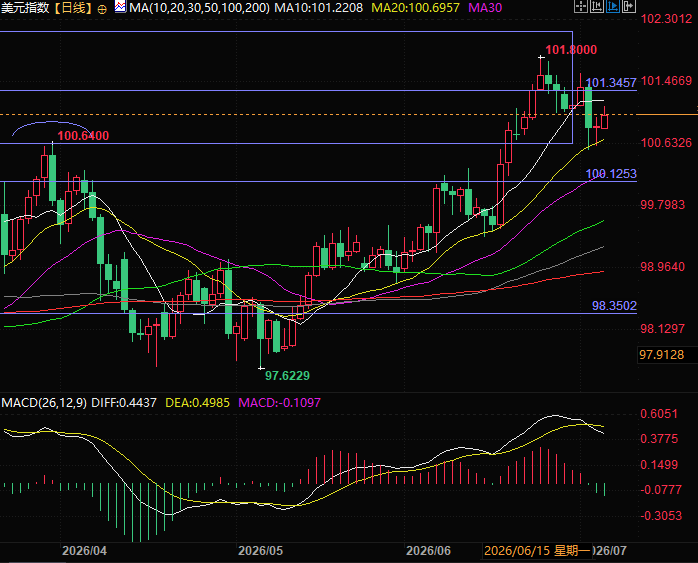
(US Dollar Index Daily Chart, Source: FX678)
At 21:32 Beijing time, the US dollar index is currently at 101.03.
At the beginning of the year, the entire market was bearish and there were widespread expectations that the Federal Reserve would begin a rate-cutting cycle. However, the US dollar did not weaken. Instead, it boasted a cumulative increase of nearly 5% for the year, outperforming the rest of the world.
The traditional safe-haven currency, the Swiss franc, has lost its luster in this round of market activity. Major investment banks such as Société Générale have even predicted that the US dollar index could surge further to 103.6 by the end of the year, while the euro against the dollar will fall to a multi-year low of 1.11.
Why has the US dollar been so strong lately? Behind this is a "perfect resonance" of three core forces.
Three core drivers of the soaring US dollar
A dramatic reversal in monetary policy : After taking office, new Federal Reserve Chairman Kevin Warsh removed any expressions hinting at easing monetary policy.
Meanwhile, faced with persistently sticky inflation exceeding the established target, Warsh and Fed officials released extremely hawkish signals, with half of the dot plots showing a hawkish outlook.
Investors across the market have completely revised their expectations: the "interest rate cut" that was being discussed at the beginning of the year has not only vanished, but people are even starting to bet that the Federal Reserve will restart its interest rate hike cycle as early as October this year. This widening interest rate differential has made dollar assets a "super pump" for global funds.
The US economy stands out with its strong fundamentals , and exchange rates are a barometer of an economy's strength. US GDP growth exceeded 2% in the first quarter, with the manufacturing and service sectors demonstrating remarkable resilience.
More importantly, the investment boom in the AI industry will continue to heat up in 2026. In order to seize the technological high ground, massive amounts of overseas capital must first be converted into US dollars and then injected into US technology entities. This rigid cross-border capital inflow provides extremely solid fundamental support for the US dollar.
Global polarization is intensifying, and the "most cost-effective" safe havens are becoming increasingly apparent in comparison. In contrast, Europe and Switzerland are experiencing low inflation and sluggish growth, severely limiting the room for the European Central Bank and the Swiss National Bank to tighten policies.
Against this backdrop, global funds have abandoned traditional safe-haven assets that do not offer interest (such as the Swiss franc) and have flocked to the strong US dollar, which offers both "security" and "high-interest dividends".
Three signals of a future turning point for the US dollar
The principle that what goes up must come down is an ironclad law of financial markets. The current logic behind the dollar's rise seems flawless, but to grasp the turning point in the second half of the year, close monitoring of the following three variables is essential:
Key economic data: "Disproving" or "confirming" expectations of an October rate hike
The current high valuation of the US dollar reflects market expectations of an October rate hike.
How to identify the turning point: Closely monitor US CPI inflation data and the non-farm payroll report. If subsequent inflation data shows an unexpected decline, or the labor market slows down (e.g., the unemployment rate breaks through a key threshold), the market will realize that the Federal Reserve is "fundamentally powerless to raise interest rates." Once the expectation of an October rate hike is proven false, the bullish support for the US dollar will instantly collapse.
The return on investment in the AI industry has reversed with the "risk appetite".
The current strength of the US dollar is driven by a strong technology bull market premium (capital inflows into US stocks and bonds).
How to identify the turning point: Pay attention to the financial reports of tech giants in the second half of the year and the monetization of AI capital expenditures. Once global risk appetite reverses rapidly (such as the bursting of a temporary bubble in the AI investment boom, or an unexpected hard landing of the US economy due to prolonged high interest rates), foreign investors will collectively take profits, and cross-border capital outflows will deal a fatal blow to the US dollar.
Geopolitical "backlash"
The international crude oil market is currently enjoying the cooling benefits of "supply easing" due to the US-Iran agreement and the full resumption of navigation in the Strait of Hormuz.
How to identify inflection points: Agreements may be good, but they are often fragile.
If the Doha talks falter and the situation in the Middle East deteriorates again, causing disruptions to key energy shipping routes, the panic over oil supply will reignite.
When the "geopolitical premium" returns to the oil market, it may push up global inflation, thereby forcing the Federal Reserve to take more aggressive actions, or directly triggering another major reshuffling of global risk aversion.
In summary, if AI shows signs of peaking, or if the July non-farm payrolls data indicates a deteriorating labor market, or if the US and Iran reach a nuclear agreement, these could all be turning points for the US dollar. Similarly, if the US dollar index starts to fall sharply, it is usually good for US stocks, but this time it may indicate that funds are starting to flow out of the US.
From a technical perspective, the US dollar index found support at the bottom of its trading range, but it broke below the 5-day moving average and failed to return to the 50% retracement level of the range, indicating signs of weakening.
(US Dollar Index Daily Chart, Source: FX678)
At 21:32 Beijing time, the US dollar index is currently at 101.03.
- Risk Warning and Disclaimer
- The market involves risk, and trading may not be suitable for all investors. This article is for reference only and does not constitute personal investment advice, nor does it take into account certain users’ specific investment objectives, financial situation, or other needs. Any investment decisions made based on this information are at your own risk.