Saudi Arabia's $11 cut in oil prices may just be the beginning of real pressure on the market.
2026-07-06 22:02:35
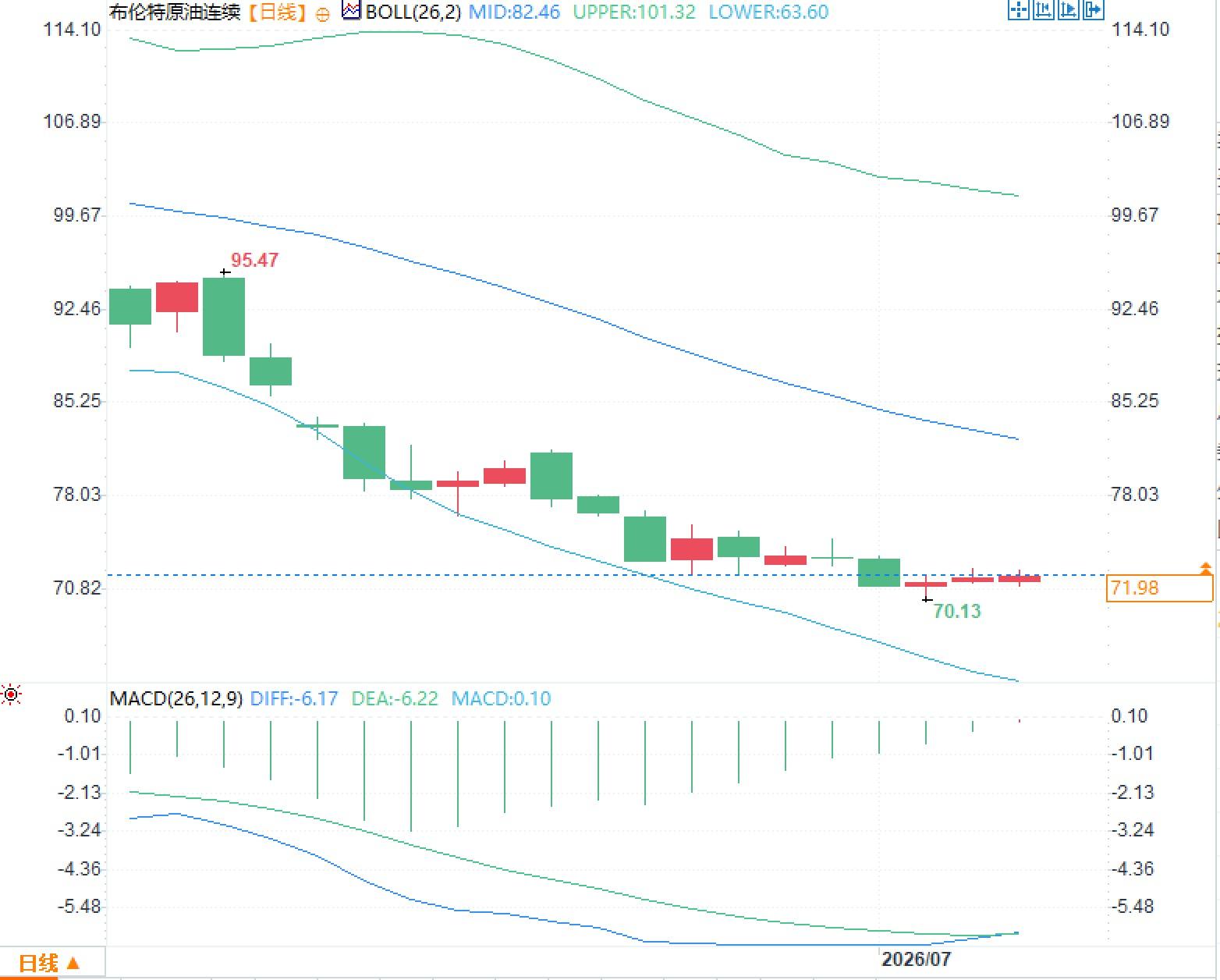
On Monday, July 6th, volatility in the crude oil market remained low. Brent crude was currently trading around $72 per barrel, a significant drop from its mid-June highs. Saudi Arabia lowered its official selling price for Arab Light crude oil to Asia by $11 per barrel in August, to $1.50 per barrel below the average price in Dubai and Oman—a typical defensive price adjustment aimed at market share. Meanwhile, seven oil-producing nations confirmed a production adjustment of 188,000 barrels per day for August, while retaining the flexibility to suspend or reverse the adjustment.
The official selling price of Arab Light crude oil to Asian refineries has long been considered the anchor for the Middle Eastern sour crude oil spot market. This rapid shift from a high premium to a discount essentially indicates that the premium for Middle Eastern crude oil, previously supported by transportation disruptions, shipping uncertainties, and risk premiums, is being quickly squeezed out by the recovery in physical supply.

For traders, the monthly drop of $11 per barrel cannot be simply interpreted as Saudi Arabia actively suppressing prices. More accurately, it represents a correction in the official pricing system's adjustment to the discount in the spot market. Previously, Middle Eastern benchmarks such as Dubai, Oman, and Murban were distorted during conflicts due to limited deliverable resources, leading to a discrepancy between refinery actual procurement costs and the paper benchmarks. Once the Strait of Hormuz reopens and Persian Gulf export nodes return to normal shipping schedules, the high premium will lack a solid physical basis for continued existence.
This means that the Middle East crude oil curve is shifting from being dominated by risk premiums back to being dominated by refinery profits and regional price spreads. Saudi Arabia's official price reduction directly compresses the pricing space of other oil-producing countries in the Asian market and will also force alternative oils from West Africa, Brazil, and the US Gulf Coast to reassess their discounts to Brent. Price competition has shifted from futures contracts to spot premiums/discounts.
On July 5, seven oil-producing countries announced a production adjustment of 188,000 barrels per day for August, emphasizing that the adjustment could be increased, suspended, or reversed depending on market conditions. The key point of this statement is not the quantity itself, but rather the change in the policy response function; the oil-producing alliance did not immediately release a strong signal of support during the price decline.
At the height of the conflict, increased production quotas were more of a theoretical variable, as export capacity in some parts of the Gulf region was limited by transportation bottlenecks, resulting in a limited number of barrels actually entering the market. The situation is different now. With the restoration of core shipping systems like Rastanura, exporting countries such as Saudi Arabia, Iraq, and Kuwait have increased their ability to utilize quotas. In other words, while the daily increase of 188,000 barrels was more symbolic during the conflict, it now represents a more substantial potential increase in actual supply.
However, the market won't just look at quotas; it will also consider three other factors: export shipping schedules, floating storage changes, and the willingness of Asian refineries to take delivery. If shipments recover faster than refinery demand, the near-term market will continue to be under pressure, and the Brent and Dubai structures may maintain a more relaxed stance. If refineries replenish their inventories using lower official prices, the spot discount may stabilize before the futures market.
The fact that this price adjustment occurred in Asia, rather than in Europe and the US, indicates that marginal buyers are still at the Asian refinery level. In recent months, conflict has led to instability in Middle Eastern crude oil shipments, forcing some refineries to adjust shipping schedules, increase alternative oil types, or slow down their procurement pace. The significant downward revision of official prices effectively brings demand previously postponed by risk premiums back to the negotiating table.
However, low prices do not necessarily equate to strong demand. Refineries prioritize cracking margins, followed by inventory cycles, and then crude oil quality and its compatibility with their facilities. If diesel, jet fuel, and naphtha margins do not improve in tandem, refineries may only replenish necessary stocks even with low official prices, rather than significantly increasing operating rates. Especially in the third quarter, refinery maintenance schedules, refined product inventories, and shipping costs could all influence purchasing flexibility.
More importantly, the shift of Saudi official prices to a discount will alter the order of crude oil selection. With Arab Light crude at a discount, Asian refineries' willingness to pay a premium for long-haul light crudes will decrease, compressing inter-regional arbitrage opportunities. For some physical crudes under the Brent system to enter Asia, they will need deeper discounts to remain competitive. This explains why, despite the seemingly limited decline in oil prices, the spot market has already felt stronger price pressure.
The official selling price of Arab Light crude oil to Asian refineries has long been considered the anchor for the Middle Eastern sour crude oil spot market. This rapid shift from a high premium to a discount essentially indicates that the premium for Middle Eastern crude oil, previously supported by transportation disruptions, shipping uncertainties, and risk premiums, is being quickly squeezed out by the recovery in physical supply.
For traders, the monthly drop of $11 per barrel cannot be simply interpreted as Saudi Arabia actively suppressing prices. More accurately, it represents a correction in the official pricing system's adjustment to the discount in the spot market. Previously, Middle Eastern benchmarks such as Dubai, Oman, and Murban were distorted during conflicts due to limited deliverable resources, leading to a discrepancy between refinery actual procurement costs and the paper benchmarks. Once the Strait of Hormuz reopens and Persian Gulf export nodes return to normal shipping schedules, the high premium will lack a solid physical basis for continued existence.
This means that the Middle East crude oil curve is shifting from being dominated by risk premiums back to being dominated by refinery profits and regional price spreads. Saudi Arabia's official price reduction directly compresses the pricing space of other oil-producing countries in the Asian market and will also force alternative oils from West Africa, Brazil, and the US Gulf Coast to reassess their discounts to Brent. Price competition has shifted from futures contracts to spot premiums/discounts.
On July 5, seven oil-producing countries announced a production adjustment of 188,000 barrels per day for August, emphasizing that the adjustment could be increased, suspended, or reversed depending on market conditions. The key point of this statement is not the quantity itself, but rather the change in the policy response function; the oil-producing alliance did not immediately release a strong signal of support during the price decline.
At the height of the conflict, increased production quotas were more of a theoretical variable, as export capacity in some parts of the Gulf region was limited by transportation bottlenecks, resulting in a limited number of barrels actually entering the market. The situation is different now. With the restoration of core shipping systems like Rastanura, exporting countries such as Saudi Arabia, Iraq, and Kuwait have increased their ability to utilize quotas. In other words, while the daily increase of 188,000 barrels was more symbolic during the conflict, it now represents a more substantial potential increase in actual supply.
However, the market won't just look at quotas; it will also consider three other factors: export shipping schedules, floating storage changes, and the willingness of Asian refineries to take delivery. If shipments recover faster than refinery demand, the near-term market will continue to be under pressure, and the Brent and Dubai structures may maintain a more relaxed stance. If refineries replenish their inventories using lower official prices, the spot discount may stabilize before the futures market.
The fact that this price adjustment occurred in Asia, rather than in Europe and the US, indicates that marginal buyers are still at the Asian refinery level. In recent months, conflict has led to instability in Middle Eastern crude oil shipments, forcing some refineries to adjust shipping schedules, increase alternative oil types, or slow down their procurement pace. The significant downward revision of official prices effectively brings demand previously postponed by risk premiums back to the negotiating table.
However, low prices do not necessarily equate to strong demand. Refineries prioritize cracking margins, followed by inventory cycles, and then crude oil quality and its compatibility with their facilities. If diesel, jet fuel, and naphtha margins do not improve in tandem, refineries may only replenish necessary stocks even with low official prices, rather than significantly increasing operating rates. Especially in the third quarter, refinery maintenance schedules, refined product inventories, and shipping costs could all influence purchasing flexibility.
More importantly, the shift of Saudi official prices to a discount will alter the order of crude oil selection. With Arab Light crude at a discount, Asian refineries' willingness to pay a premium for long-haul light crudes will decrease, compressing inter-regional arbitrage opportunities. For some physical crudes under the Brent system to enter Asia, they will need deeper discounts to remain competitive. This explains why, despite the seemingly limited decline in oil prices, the spot market has already felt stronger price pressure.
- Risk Warning and Disclaimer
- The market involves risk, and trading may not be suitable for all investors. This article is for reference only and does not constitute personal investment advice, nor does it take into account certain users’ specific investment objectives, financial situation, or other needs. Any investment decisions made based on this information are at your own risk.