Iran draws a "red line," threatening to "crush" all infrastructure in the Middle East if the US takes military action; oil prices to rise to $100?
2026-07-17 10:06:12
Beneath the waves of the Strait of Hormuz, the US and Iran are heading towards the most dangerous military confrontation since the latest round of the Israeli-Palestinian conflict. On one side, US President Trump has publicly issued an "ultimatum," threatening a devastating strike to force Iran back to the negotiating table; on the other, Tehran responds with a "steel strike" and "inviolable red lines," binding the global energy lifeline to the war machine. From the Persian Gulf to the Red Sea, from precision-guided missiles to proxy forces, this game has transcended localized friction, evolving into a storm eye affecting the global oil market and geopolitical landscape. 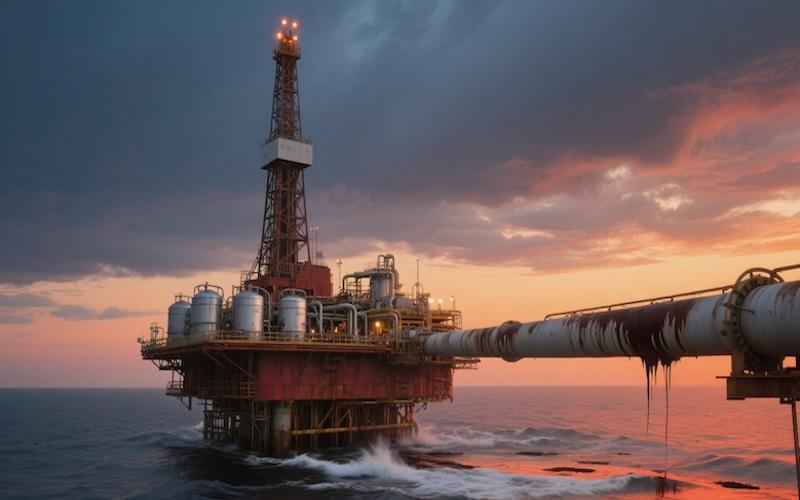
I. Prelude to the Storm: Trump Publicly Threatens to Strike Iran's "Power Plants and Bridges"
On Tuesday evening (July 14), US President Donald Trump dropped a bombshell during an interview with Fox News. He stated unequivocally that if the US and Iran fail to achieve a diplomatic breakthrough in the short term, the US military is prepared to launch a large-scale military strike against key Iranian infrastructure next week. Trump's wording was unambiguous—he listed the targets one by one: power plants, bridges, and even "all the infrastructure that makes Iran function." This statement not only shattered previous hopes that the US and Iran might maintain diplomatic contact, but also abruptly pushed the already tense standoff between the two countries since the attack on merchant ships in the Strait of Hormuz to the brink of war. Trump emphasized that unless Iran "returns to the negotiating table," next week will be a "very bad week" for Tehran.II. Tehran's Swift Response: Supreme Military Command Vows "Iron Strike" to Make Targets "As If They Never Existed"
Faced with direct military threats from the US president, Iran did not choose silence or diplomatic buffer, but instead responded with almost equally strong military rhetoric. On Thursday morning (July 16), a spokesperson for Iran's Supreme Military Command released a strongly worded statement on the official Telegram channel. The statement explicitly warned that if Trump's strike plan were implemented, the Iranian armed forces would not hesitate to launch a devastating counterattack against all "still intact infrastructure" in the Middle East. The spokesperson used vivid imagery to describe the consequences of the retaliation—these targets would be utterly crushed by a "steel strike," leaving no trace, "as if they never existed." This statement not only directly challenges the capabilities of the US military but also sends a clear signal to the entire Middle East: Iran's retaliation will not be confined to its own territory but will spread to a wider geographical area, leaving no US allies and stakeholders in the region uninvolved.III. Strait of Hormuz: Iran draws an "insurmountable red line," firmly rejecting US interference from outside the region.
In this statement, the Iranian military spokesperson specifically singled out the Strait of Hormuz as a highly symbolic and strategically significant "core red line." The spokesperson emphasized that under no circumstances would Iran allow the United States, as a "foreign and extra-regional power," to interfere in navigation and security affairs in the Strait of Hormuz. He characterized this position as an "inviolable red line for Iran"—meaning that even if the US launches limited strikes in other areas, anything involving control or passage rules in the Strait of Hormuz would be considered the ultimate trigger for a full-scale counterattack by Iran. As a vital chokepoint for global oil transportation, the Strait of Hormuz carries a large volume of crude oil and liquefied natural gas daily; its strategic value is self-evident. Iran's statement effectively elevates the issue of sovereignty over the strait to a matter of national survival, while also demonstrating to the international community that any external military presence attempting to alter the balance of power in this waterway will be met with Iran's relentless countermeasures.IV. Extending the Battlefront: Reuters reports that Iran has asked the Houthis to prepare to close the Red Sea oil shipping route.
The situation has not been confined to the Strait of Hormuz. According to media reports on Thursday citing anonymous sources, the Iranian government has issued a closed-door order to the Houthi rebels in Yemen, instructing them to prepare military action—specifically, to immediately close oil shipping lanes in the Red Sea should the US launch the strikes threatened by Trump against Iranian territory. If this report is true, it means that Iran has established a multi-point deterrent network spanning the Persian Gulf, the Strait of Hormuz, the Arabian Sea, and extending to the Red Sea. The Houthis have previously launched numerous attacks on Red Sea merchant ships using drones, missiles, and speedboats, and their combat capabilities and tactical experience have been proven in real combat. This move by Iran is clearly an attempt to establish a "second front," intending to expand the conflict to multiple waterways where the US military would find it difficult to concentrate its forces, thereby dispersing US strike capabilities and increasing the cost of military intervention for the US and its allies.V. Recent Escalation of Military Conflict: The US military has carried out multiple rounds of precision strikes, and Iran has retaliated against Gulf states.
In fact, military tensions between the US and Iran escalated substantially earlier this week. The US Central Command launched its first strike against targets in Iran, citing retaliation for attacks on merchant ships in the Strait of Hormuz. Tehran retaliated quickly, launching counter-attacks against targets in several Gulf states, demonstrating Iran's firm stance against unilateral pressure. On Wednesday evening (July 15th) Eastern Time, Central Command launched another round of strikes, continuing until 9 PM. According to a report released by Central Command on its X platform (formerly Twitter), the US used precision-guided munitions, targeting Iranian command and control centers, air defense positions, missile and drone launch facilities, and coastal surveillance systems. The attacks covered several key locations, including Bandar Abbas. The US claimed these strikes were intended to "further weaken Iran's ability to threaten innocent merchant ships transiting the Strait of Hormuz." In addition, according to reports from several Iranian media outlets, including Tasnim News Agency, on Thursday evening (July 16), the US military attacked multiple infrastructure sites in southern Iran that day, including airports, bridges, and railway stations, resulting in at least two deaths and multiple injuries. Reports indicate that Shahr Airport in Sistan-Baluchistan province was attacked by US missiles; local residents heard three loud explosions near the airport, injuring one person. The airport experienced a power outage, but the fire has been extinguished. The reports also stated that several locations in Hormozgan province were attacked that evening. US forces attacked two bridges in the province, killing two and injuring four; and attacked a railway station in Bandar Abbas, injuring two.VI. Diplomatic channels are nearly frozen: Iran's Foreign Ministry warns "fighters will respond with all their might," rendering the ceasefire agreement virtually dead.
While military confrontation escalates, diplomatic communication has virtually stalled. On Wednesday, an Iranian Foreign Ministry spokesman issued a stern warning at a public event in Tehran, stating that Iran's "hands are not tied" and emphasizing that Iranian fighters will respond to any US aggression with "all their strength and power." Notably, the spokesman also mentioned "unfulfilled reciprocal commitments in the memorandum," suggesting that Iran had previously exercised restraint on some terms of the agreement, but continued US pressure has made this restraint unsustainable. Last week, Trump himself unilaterally declared that the brief ceasefire agreement reached last month was "over." Although Trump revealed on Fox Business News on Wednesday that Iranian officials hoped for a new round of negotiations with US representatives, the authenticity and feasibility of this "willingness to negotiate" are highly questionable given the current tense military deployments and heated rhetoric of both sides. From the current situation, both the US and Iran seem to be employing a "fight to promote talks" strategy, but the excessive use of military leverage is narrowing the window for negotiation.VII. Summary: The confrontation is spiraling upwards, and the prospects for regional peace are not optimistic.
In a broader context, this latest standoff between Iran and the United States has rapidly escalated from verbal threats to a full-blown military confrontation. Iran uses the Strait of Hormuz as a "red line," threatening to "crush all infrastructure in the region," while simultaneously leveraging the Houthi rebels to open a flanking battle in the Red Sea, constructing a multi-layered, multi-directional defense and counter-attack system. The United States, on the other hand, has demonstrated its overwhelming military capabilities with two consecutive rounds of precision strikes and exerted psychological pressure through public pronouncements from its president. Neither side has shown any substantial signs of backing down, the ceasefire agreement is effectively defunct, and diplomatic channels are filled with noise. Against this backdrop, shipping security, energy supply stability, and the security situation of neighboring countries in the Middle East will face severe challenges. The international community urgently needs more active diplomatic mediation; otherwise, any miscalculation or unforeseen event could drag the entire Gulf and even the wider Middle East into an unprecedented vortex of conflict.Frequently Asked Questions
Question 1: Why is the Strait of Hormuz so important to both Iran and the United States? Located at the exit of the Persian Gulf, the Strait of Hormuz is one of the world's most critical oil transport chokepoints. Approximately one-third of global seaborne oil trade passes through this strait, and major oil-producing countries such as Saudi Arabia, the UAE, Kuwait, and Iraq are highly dependent on this waterway for their crude oil exports. For Iran, controlling the Strait of Hormuz not only signifies enormous geopolitical influence but also serves as its most powerful "asymmetric deterrent tool" against external military pressure—Iran can disrupt the global energy supply chain in a short period through methods such as mine laying, speedboat raids, or missile blockades, thereby forcing international intervention and mediation. For the United States, ensuring freedom of navigation in the strait is a core obligation for maintaining global energy security and the interests of its allies, and also a symbol of its military dominance in the Middle East. Therefore, the struggle between the two sides over this waterway is essentially a direct clash between strategic survival rights and hegemonic dominance. Question 2: What specific targets does Iran refer to when it says it will "crush all infrastructure in the region"? The phrase "all infrastructure in the region" in the Iranian military statement is a vague but highly deterrent expression. Military analysts generally believe this includes US military bases, logistical facilities, and early warning radar stations in Gulf countries (such as Bahrain, Qatar, and the UAE), and may also cover the oil export terminals, port facilities, desalination plants, and power grids of Gulf countries cooperating with the US. Furthermore, some strategic facilities within Israel are also considered potential targets. Iran's use of extreme language like "untraceable" is intended to convey a "reckless, all-out escalation" determination, rather than a precise description of a specific strike list. Its true purpose is to create uncertainty, causing the US and its regional allies to hesitate in their decision-making. Question 3: What is the role of the Houthis in the Red Sea? Why does Iran need to use them? The Houthis are an anti-government armed group in northern Yemen, long supported by Iranian political, military, and financial resources, and are considered an important Iranian proxy in the Arabian Peninsula. The Red Sea is a crucial shipping route connecting the Indian Ocean and the Mediterranean Sea; access to and from the Suez Canal requires passing through the Bab el-Mandeb Strait at the southern end of the Red Sea. Iran's demand that the Houthis prepare to close the Red Sea oil shipping route is, in effect, a strategic deployment to open a "second front." If the Houthi rebels were to attack merchant ships in the Red Sea using missiles, drones, or mines, global shipping insurance costs would skyrocket, and international oil prices would fluctuate wildly. Iran's use of proxies instead of direct intervention increases the difficulty for the US military (making direct strikes on Iranian soil difficult) while preserving diplomatic maneuvering space—a typical tactic of "cost-sharing and risk transfer." Question 4: What were the effects of the recent precision strikes by the US Central Command? According to the Central Command's report, the US military used precision-guided weapons to attack Iranian command centers, air defense positions, missile/drone facilities, and coastal monitoring sites. The selection of these targets had a clear tactical logic: paralyzing the command center weakened Iran's battlefield coordination capabilities; destroying air defense and missile positions reduced their threat to US ships, aircraft, and merchant ships; and the disruption of coastal monitoring facilities significantly reduced Iran's real-time reconnaissance capabilities over ships passing through the Strait of Hormuz, thus limiting its situational awareness for launching "swarm attacks" or shore-based anti-ship missile attacks. However, such strikes typically only temporarily suppress Iran's military capabilities. Its dispersed missile forces and underground facilities still retain significant retaliatory firepower. Therefore, the US's claim of "weakening" rather than "eliminating" the Iranian threat reflects the limited effectiveness of its military measures. Question 5: Is it possible for the US and Iran to return to the negotiating table? The possibility exists, but the threshold is extremely high. Trump declared that the "ceasefire agreement is over," while simultaneously revealing Iran's desire for negotiations. This contradictory signal indicates that both sides are engaging in a "brinkmanship" game—that is, continuously escalating military pressure to force the other side to make concessions and return to negotiating terms favorable to themselves. However, Iran has already designated the Strait of Hormuz as a "red line" and publicly pledged devastating retaliation. If the US proposes negotiations after the strike, domestic political pressure in Iran will make it difficult for them to accept quickly. Conversely, if Iran shows weakness first, it may be seen as a sign of weakness, further emboldening the US military to take aggressive steps. Therefore, restarting negotiations requires strong mediation from at least one third party (such as Oman, Qatar, or China), as well as a private technical consensus between the two sides to "cease fire first, then discuss conditions." However, given the current intensity of military confrontation, the prospects for a diplomatic breakthrough in the short term are quite bleak. Question Six: What impact will this have on international oil prices? In the short term, the renewed disruption of shipping in the Strait of Hormuz, the escalating US-Iran military conflict, and the fact that global oil inventories have fallen to historically low levels will drive oil prices higher due to geopolitical risk premiums. Some institutions predict that if the situation continues to deteriorate, Brent crude oil could be pushed up to $90 or even $100 per barrel. However, in the medium to long term, as bypass channels are gradually activated, OPEC+ oil-producing countries signal increased production, and the US seeks to de-escalate politically under high oil prices, geopolitical premiums will gradually subside, and oil prices will face downward pressure, potentially exhibiting a pattern of "strong at first, then weak, with wide fluctuations." In summary, oil prices are expected to be relatively strong in the short term but highly dependent on the evolution of the situation, while facing a significant risk of correction in the medium term. At 10:04 Beijing time, US crude oil was trading at $79.19 per barrel.- Risk Warning and Disclaimer
- The market involves risk, and trading may not be suitable for all investors. This article is for reference only and does not constitute personal investment advice, nor does it take into account certain users’ specific investment objectives, financial situation, or other needs. Any investment decisions made based on this information are at your own risk.