The European Central Bank's hawkish expectations supported the euro, which remained range-bound against the US dollar.
2026-07-20 15:30:13
The euro strengthened against the US dollar (EUR/USD) in early European trading on Monday, rising to around 1.1445, mainly supported by improved expectations of European Central Bank (ECB) policy. The market believes that the recent resurgence in energy prices may increase inflationary pressures again, prompting the ECB to maintain a more cautious stance on future policy.  The European Central Bank (ECB) is expected to keep interest rates unchanged at its meeting this week, but the market anticipates a possible rate adjustment in September to address inflation risks from rising energy prices. Previously, concerns about slowing European economic growth limited the euro's performance, but recent energy market developments are prompting investors to reassess the ECB's policy path. Rising energy prices have a significant impact on the European market. Given the European economy's high dependence on energy imports, persistently high oil prices could increase production costs for businesses and affect consumer price levels. If inflationary pressures return, the ECB may need to maintain a relatively tight policy, thus providing some support for the euro. However, the euro currently faces pressure from the US dollar. Escalating tensions in the Middle East have fueled risk aversion in global markets, leading to inflows into the US dollar as a traditional safe-haven asset. The US has recently conducted its ninth consecutive night of operations targeting Iranian targets, raising concerns about a potential further escalation of regional conflict. Meanwhile, Iran has stated that as long as US actions continue, the Strait of Hormuz cannot guarantee the safety of petrochemical products and energy transportation. This statement further reinforces market concerns about oil supply risks and drives renewed focus on the stability of the global energy market. For the foreign exchange market, geopolitical risks have a dual impact. On the one hand, rising energy prices may increase inflationary pressures in Europe, reinforcing expectations of a hawkish stance from the European Central Bank (ECB) and providing support for the euro. On the other hand, escalating risk events typically drive capital flows to the US dollar, putting safe-haven pressure on EUR/USD. The market is currently awaiting new policy signals from the ECB meeting. If the ECB expresses a more hawkish stance on inflation risks, the euro may receive further support; however, if policymakers focus more on economic growth risks, it may limit the euro's upside potential. From a global market perspective, EUR/USD remains in a phase of balancing policy expectations and risk sentiment. The US dollar's performance will continue to be influenced by expectations of Fed policy and safe-haven demand, while the euro will be primarily affected by the ECB's policy direction and changes in energy prices. Going forward, key factors to watch include the ECB's interest rate decision, developments in the Middle East, changes in oil prices, and the trend of the US-EU interest rate differential, as these factors will determine the next direction of EUR/USD. From a daily chart perspective, EUR/USD is still in a short-term rebound phase after a correction, but the overall trend remains under pressure. The current price is around 1.1445, below the 100-day simple moving average, indicating that medium-term bearish pressure has not yet been fully relieved. Regarding the Bollinger Bands, the exchange rate is approaching the upper band, indicating that the recent rebound is testing the supply pressure above; the middle band is around 1.1415, which is currently an important dynamic support. The RSI indicator (14) is around 48, still below the neutral level of 50, indicating limited upward momentum, and the market still needs to pay attention to whether the rebound can turn into a trend reversal. In terms of resistance above, the first short-term focus is on the upper Bollinger Band position around 1.1470. If this area is broken, the further resistance is at the 100-day moving average around 1.1585, which may attract selling pressure again. In terms of support below, the initial focus is on the middle Bollinger Band position around 1.1415, followed by the lower band position around 1.1358. If the price falls below 1.1358, it may mean that the correction will continue and further test the lower area. From the 4-hour cycle, EUR/USD has formed a short-term oscillating rebound structure, with the price rising back above 1.1430, and short-term buying pressure has increased. However, the moving average system has not yet formed a clear bullish arrangement, limiting the market's upside potential. The RSI indicator remains in a neutral-to-strong zone, indicating short-term upward momentum. If the exchange rate breaks through the 1.1470 resistance, it may further challenge the 1.1500 area; if it falls below the 1.1415 support, it may retest the 1.1358 area. The current 4-hour chart suggests a consolidation phase, with the direction still depending on expectations of ECB policy and changes in demand for the US dollar as a safe haven.
 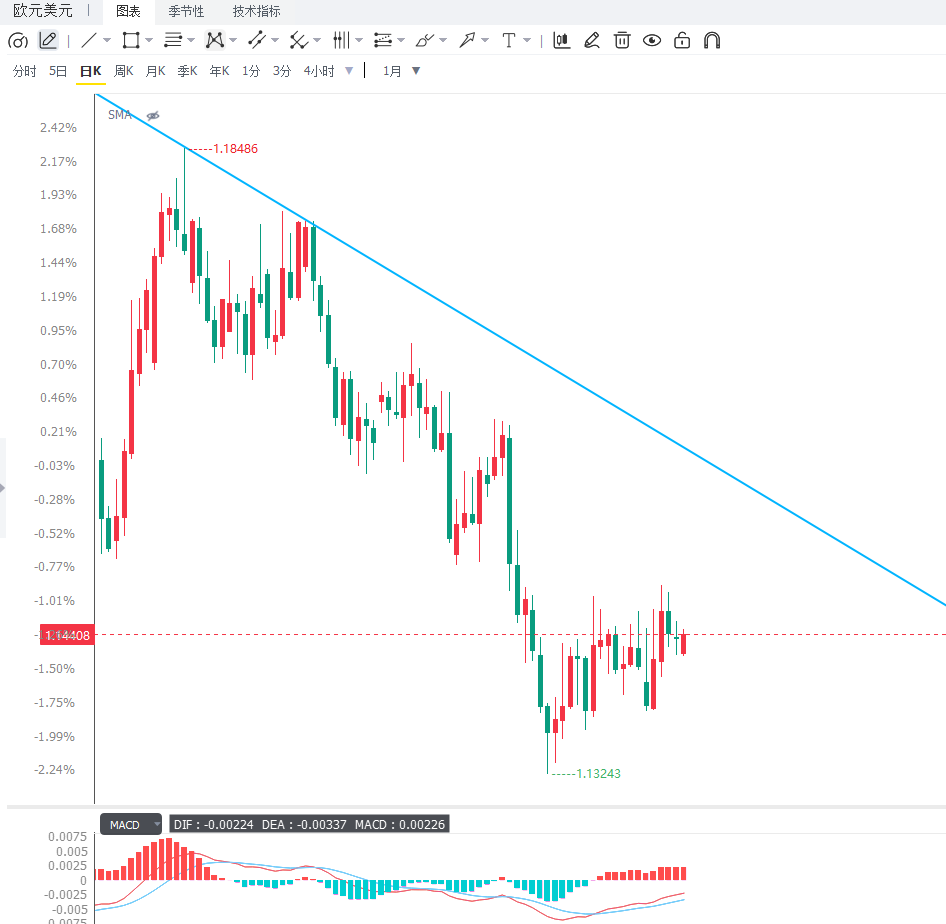 The EUR/USD pair is currently influenced by both hawkish expectations from the European Central Bank (ECB) and safe-haven demand for the US dollar. Rising energy prices have reignited concerns about European inflation, increasing market expectations for future ECB policy adjustments and providing support for the euro. However, escalating risks in the Middle East continue to drive capital flows to the dollar, limiting the euro's upside potential. In the short term, the EUR/USD rebound needs to break through key resistance levels to confirm further gains. If the ECB releases a more hawkish signal while market risk sentiment improves, the euro may continue its recovery; however, if geopolitical risks continue to escalate, the dollar's safe-haven advantage may regain dominance. Going forward, the market will focus on the ECB meeting, changes in Fed policy expectations, and energy price movements. EUR/USD may find a new direction within the 1.1350 to 1.1585 range.
The European Central Bank (ECB) is expected to keep interest rates unchanged at its meeting this week, but the market anticipates a possible rate adjustment in September to address inflation risks from rising energy prices. Previously, concerns about slowing European economic growth limited the euro's performance, but recent energy market developments are prompting investors to reassess the ECB's policy path. Rising energy prices have a significant impact on the European market. Given the European economy's high dependence on energy imports, persistently high oil prices could increase production costs for businesses and affect consumer price levels. If inflationary pressures return, the ECB may need to maintain a relatively tight policy, thus providing some support for the euro. However, the euro currently faces pressure from the US dollar. Escalating tensions in the Middle East have fueled risk aversion in global markets, leading to inflows into the US dollar as a traditional safe-haven asset. The US has recently conducted its ninth consecutive night of operations targeting Iranian targets, raising concerns about a potential further escalation of regional conflict. Meanwhile, Iran has stated that as long as US actions continue, the Strait of Hormuz cannot guarantee the safety of petrochemical products and energy transportation. This statement further reinforces market concerns about oil supply risks and drives renewed focus on the stability of the global energy market. For the foreign exchange market, geopolitical risks have a dual impact. On the one hand, rising energy prices may increase inflationary pressures in Europe, reinforcing expectations of a hawkish stance from the European Central Bank (ECB) and providing support for the euro. On the other hand, escalating risk events typically drive capital flows to the US dollar, putting safe-haven pressure on EUR/USD. The market is currently awaiting new policy signals from the ECB meeting. If the ECB expresses a more hawkish stance on inflation risks, the euro may receive further support; however, if policymakers focus more on economic growth risks, it may limit the euro's upside potential. From a global market perspective, EUR/USD remains in a phase of balancing policy expectations and risk sentiment. The US dollar's performance will continue to be influenced by expectations of Fed policy and safe-haven demand, while the euro will be primarily affected by the ECB's policy direction and changes in energy prices. Going forward, key factors to watch include the ECB's interest rate decision, developments in the Middle East, changes in oil prices, and the trend of the US-EU interest rate differential, as these factors will determine the next direction of EUR/USD. From a daily chart perspective, EUR/USD is still in a short-term rebound phase after a correction, but the overall trend remains under pressure. The current price is around 1.1445, below the 100-day simple moving average, indicating that medium-term bearish pressure has not yet been fully relieved. Regarding the Bollinger Bands, the exchange rate is approaching the upper band, indicating that the recent rebound is testing the supply pressure above; the middle band is around 1.1415, which is currently an important dynamic support. The RSI indicator (14) is around 48, still below the neutral level of 50, indicating limited upward momentum, and the market still needs to pay attention to whether the rebound can turn into a trend reversal. In terms of resistance above, the first short-term focus is on the upper Bollinger Band position around 1.1470. If this area is broken, the further resistance is at the 100-day moving average around 1.1585, which may attract selling pressure again. In terms of support below, the initial focus is on the middle Bollinger Band position around 1.1415, followed by the lower band position around 1.1358. If the price falls below 1.1358, it may mean that the correction will continue and further test the lower area. From the 4-hour cycle, EUR/USD has formed a short-term oscillating rebound structure, with the price rising back above 1.1430, and short-term buying pressure has increased. However, the moving average system has not yet formed a clear bullish arrangement, limiting the market's upside potential. The RSI indicator remains in a neutral-to-strong zone, indicating short-term upward momentum. If the exchange rate breaks through the 1.1470 resistance, it may further challenge the 1.1500 area; if it falls below the 1.1415 support, it may retest the 1.1358 area. The current 4-hour chart suggests a consolidation phase, with the direction still depending on expectations of ECB policy and changes in demand for the US dollar as a safe haven. The EUR/USD pair is currently influenced by both hawkish expectations from the European Central Bank (ECB) and safe-haven demand for the US dollar. Rising energy prices have reignited concerns about European inflation, increasing market expectations for future ECB policy adjustments and providing support for the euro. However, escalating risks in the Middle East continue to drive capital flows to the dollar, limiting the euro's upside potential. In the short term, the EUR/USD rebound needs to break through key resistance levels to confirm further gains. If the ECB releases a more hawkish signal while market risk sentiment improves, the euro may continue its recovery; however, if geopolitical risks continue to escalate, the dollar's safe-haven advantage may regain dominance. Going forward, the market will focus on the ECB meeting, changes in Fed policy expectations, and energy price movements. EUR/USD may find a new direction within the 1.1350 to 1.1585 range.
- Risk Warning and Disclaimer
- The market involves risk, and trading may not be suitable for all investors. This article is for reference only and does not constitute personal investment advice, nor does it take into account certain users’ specific investment objectives, financial situation, or other needs. Any investment decisions made based on this information are at your own risk.