WTI is battling for the 50-day moving average, while the diesel market is already trading at $100 per barrel: Can the cooling PCE keep inflation under control?
2026-07-20 20:22:15
On Monday (July 20), the US-Iran conflict spilled over into civilian infrastructure, with further restrictions imposed on passage through the Strait of Hormuz. WTI crude oil filled the gap and tested the 50-day moving average. The US PCE inflation methodology faces revision, potentially leading to a passive decline in readings and marginally easing pressure for interest rate hikes. Long-term US Treasury yields rose due to the deficit and a fragile holding structure; the pound strengthened due to political stability, while gold fluctuated between safe-haven demand and interest rate suppression.  Geopolitical risks remain high, but a sharp contraction in demand and record US production make a unilateral surge in oil prices unlikely. Meanwhile, adjustments to US inflation indicators may lower core PCE, weakening the case for interest rate hikes; extreme tightness in the diesel market is signaling an inflation rebound. The formation of the new UK Prime Minister and the selection of the Chancellor of the Exchequer will influence sentiment in the UK bond market. This article will dissect key variables, focusing on the diesel-inflation-interest rate chain and structural risks in the bond market.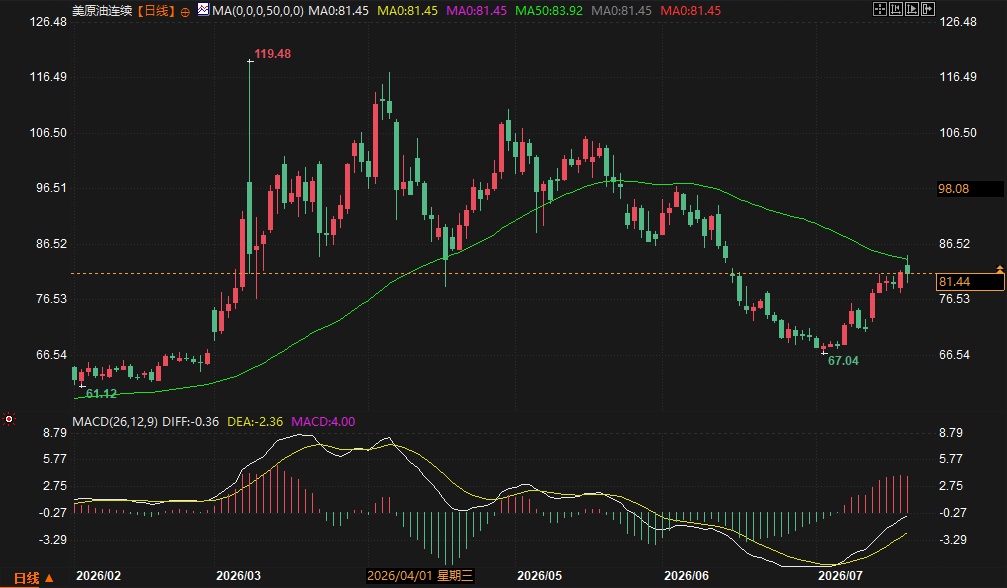
Geopolitical risks remain high, but a sharp contraction in demand and record US production make a unilateral surge in oil prices unlikely. Meanwhile, adjustments to US inflation indicators may lower core PCE, weakening the case for interest rate hikes; extreme tightness in the diesel market is signaling an inflation rebound. The formation of the new UK Prime Minister and the selection of the Chancellor of the Exchequer will influence sentiment in the UK bond market. This article will dissect key variables, focusing on the diesel-inflation-interest rate chain and structural risks in the bond market.Crude oil: A tug-of-war between bulls and bears, with the 50-day moving average becoming a key level for market sentiment.
The conflict has escalated to Kuwaiti infrastructure, but crude oil purchases by the world's largest importer have fallen to a near-decade low, US production has hit a record high, and strategic reserves continue to be released, alleviating panic. WTI has filled the $82-83 gap and is testing the 50-day moving average of around $85. If geopolitical tensions worsen and a breakout occurs, the technical target could be the $95-100 area. However, the spot premium has fallen, and there is a strong "bullish but not active" sentiment, suggesting that oil prices may maintain a volatile, intermittent pattern.Inflation Conundrum: Data Cools Down, But Diesel Sounds a Real Alarm
The PCE statistical methodology adjustment is expected to lower core inflation by about 0.2 percentage points, marginally easing the urgency for interest rate hikes and providing some support for gold prices at the $4,000 level. However, the diesel and distillate fuel markets are extremely tight, implying crude oil pricing above $100, and strategic reserves and Cushing inventories are running low. Rising transportation and agricultural costs will push up actual inflation, putting the Federal Reserve in a dilemma, and fluctuating interest rate expectations will exacerbate the risk of two-way volatility in gold prices.US Treasury bonds: Deficits and fragile structures drive up term premiums
Overseas commentators point out that the unusually high deficit has forced the issuance of approximately $2 trillion in Treasury bonds annually, while the proportion of "price-insensitive" holders has fallen from 75% to 52%, with hedge funds flooding in and amplifying volatility. The spread between 30-year and 10-year yields has widened to 0.5 percentage points, with concerns about long-term inflation and debt sustainability pushing up term premiums. Long-term yields are more likely to rise than fall, putting pressure on gold due to rising real interest rates, while the US dollar is caught in a tug-of-war between safe-haven demand and credit concerns.British Pound: Short-lived political benefits, UK debt tests the new prime minister
A smooth transition has led to a sustained strengthening of the pound, with the market closely watching the selection of the new prime minister and finance minister. A centrist candidate would alleviate expansionary concerns. However, the 10-year UK gilt yield remains the highest among the G7, with inflation and debt clouds still looming. Investors vividly remember the 2022-style crisis, and any signs of fiscal disorder could trigger a bond market penalty, backfiring on the pound's strength. The pound may show short-term resilience, but a pullback due to volatility in UK gilts should be anticipated. In the short term, the 50-day moving average for crude oil will determine market sentiment, and geopolitical news could easily trigger impulses; discussions on PCE revisions may boost gold, but diesel inflation expectations limit downside; US Treasury yields are likely to fluctuate at high levels; the pound is influenced by the finance minister selection. In the long term, prolonged conflict and diesel shortages could lead to stickier inflation than expected, making it difficult for central banks to adopt a dovish stance. High real interest rates will suppress gold, while geopolitical safe-haven demand will provide support; the structure of US Treasury bonds and the credibility of UK bonds are potential risks. A cautious and anxious sentiment prevails; attention should be paid to the transmission of diesel-inflation-interest rates.Frequently Asked Questions
Why didn't oil prices surge during the five months of the Iraq War? A sharp contraction in demand, record US production, and the release of strategic reserves outweighed the supply panic caused by the Hormuz traffic disruption. The decline in spot premiums also indicates that immediate supply is adequate, suppressing any potential surge. Will the PCE statistical adjustment prevent interest rate hikes? It won't directly prevent them, but the core inflation reading was lowered by about 0.2 percentage points, which may weaken the urgency for some officials to raise rates, softening their stance marginally. However, the real inflationary pressure driven by diesel still provides a basis for hawkish positions. What does a diesel shortage mean? Diesel pricing is already equivalent to well over $100 of crude oil, reflecting an extreme physical shortage. This will push up transportation and manufacturing costs, causing real inflation to rebound, offsetting the decline in the PCE reading, and forcing the central bank to remain vigilant. How will the new British Prime Minister affect the pound? A smooth transition brings short-term political benefits, strengthening the pound. However, if the new Chancellor favors expansionary spending, UK bond yields may surge, eroding the pound's strength. The market is closely watching fiscal discipline. Why is gold stuck at the $4,000 mark? Geopolitical conflicts are providing safe-haven buying, but high real interest rates and a strong dollar are putting continued pressure on gold. A PCE cut could provide a temporary boost to gold if it eases expectations of interest rate hikes, but the threat of diesel inflation limits upside potential, resulting in significant two-way risks.- Risk Warning and Disclaimer
- The market involves risk, and trading may not be suitable for all investors. This article is for reference only and does not constitute personal investment advice, nor does it take into account certain users’ specific investment objectives, financial situation, or other needs. Any investment decisions made based on this information are at your own risk.