The British pound remains in a consolidation phase against the US dollar; further downside risks should be anticipated in the short term.
2026-07-28 13:26:04
The British pound (GBP/USD) edged lower in Asian trading on Tuesday, despite an initial upward gap at the open, but gains subsequently narrowed, currently trading around 1.3290. Market caution ahead of the Federal Reserve policy meeting provided some support to the dollar index, putting pressure on the pound. The market's focus is currently on the Fed's upcoming interest rate decision. Market interest rate tools indicate significant disagreement among investors regarding a July rate hike, with current market pricing showing a near 38% probability of a July rate hike. This level is unusual so close to the policy meeting, reflecting considerable uncertainty about the trajectory of US inflation and future policy direction.  Some institutions believe the Federal Reserve may strengthen its anti-inflation signal by raising interest rates. Market opinions indicate that if the Fed chooses to raise interest rates, it could further solidify market expectations of a tighter US monetary policy and enhance the dollar's attractiveness. Meanwhile, market expectations for at least a 25 basis point rate hike in September remain high, at approximately 81%. Rising expectations of a Fed rate hike are a key factor in the dollar's recent resilience and have limited further upside potential for the pound against the dollar. The dollar has been relatively stable recently, despite signs of easing tensions in the Middle East. The US has stated it is working through communication channels to de-escalate the situation and that discussions have made positive progress. Meanwhile, the US suspension of military operations for 13 consecutive nights has improved market risk sentiment, pushing international oil prices down. Lower oil prices have a direct impact on global inflation expectations. Lower energy costs may reduce future price pressures and decrease the need for central banks to continue tightening monetary policy. However, uncertainty remains regarding the situation, and the market believes the current changes are more of a temporary easing than a complete elimination of risk. As for the pound, recent movements have been influenced by declining UK government bond yields. The yield on 10-year UK government bonds fell to around 4.97%, mainly driven by lower energy prices and easing inflationary pressures. As oil prices retreated from recent highs, market expectations for further interest rate hikes in the UK decreased, putting short-term pressure on the pound. The Bank of England's policy meeting is a key point to watch for the pound's future movement. The market widely expects the Bank of England to keep interest rates unchanged at around 3.75% at this week's meeting. Recent data showed that UK consumer prices fell to 2.6% year-on-year in June, a 15-month low and below the Bank of England's previous forecast. The rapid decline in inflation reduced the pressure on the Bank of England to continue tightening policy, but also weakened the support the pound received from high interest rates. Currently, the GBP/USD market is in a tug-of-war between expectations of US dollar policy and improved UK inflation. If the Federal Reserve sends a more hawkish signal, the dollar may continue to receive support, and the pound/dollar exchange rate may adjust further; if the Fed maintains a cautious stance while UK economic data continues to improve, the pound still has room to rebound. From a global foreign exchange market perspective, the dollar has recently seen renewed capital inflows and remains highly correlated with US interest rate expectations. The pound's previous rise was mainly supported by the Bank of England's high-interest-rate environment, but this advantage is gradually weakening as inflation declines. Investors are now focusing not only on changes in the interest rate differential between the two countries, but also on future economic growth and the central bank's policy path. From a daily chart perspective, GBP/USD has maintained a generally bullish oscillating structure recently, but the upward momentum has slowed. The current exchange rate is trading around 1.3290, with the first resistance level to watch being 1.3350. A break above this level could lead to a further test of the 1.3400 psychological level. Support is seen around 1.3250; a break below this level could open up room for a correction towards the 1.3150 area. The technical structure shows that the pound's previous upward trend has not been completely broken, but the dollar's rebound is limiting further price increases, and market momentum is entering a rebalancing phase. From a 4-hour chart perspective, GBP/USD is showing a short-term high-level oscillation and pullback trend. The gap-up opening failed to effectively extend the gains, indicating a weakening of buying power. In the short term, attention should be paid to the support level around 1.3290. If the price can stabilize and break through the 1.3320 area again, a rebound may resume; if it falls below the current support, it may further test the 1.3250 area. Technically, short-term momentum indicators have declined, and the market awaits the Fed's decision and the Bank of England's policy signals for new directional guidance.
 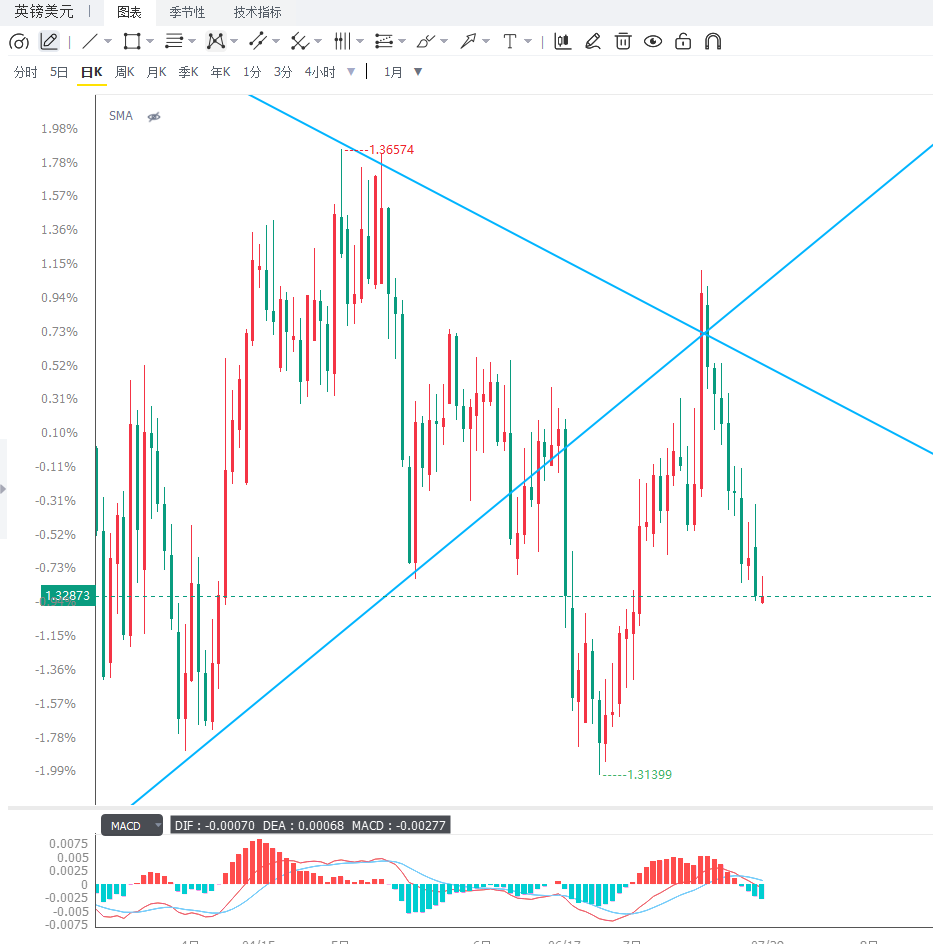 The current GBP/USD exchange rate movement is primarily influenced by both Federal Reserve policy expectations and changes in UK inflation. The US dollar is supported by market bets that the Fed may maintain higher interest rates, while declining UK inflation reduces the likelihood of the Bank of England further tightening policy, putting short-term pressure on the pound. The future direction of the exchange rate will depend on two main factors: whether the Fed releases a more hawkish interest rate signal, and how the Bank of England assesses its policy space following the decline in inflation. If US interest rate expectations continue to rise, GBP/USD may face further adjustments; however, if the Fed adopts a cautious stance while UK economic data continues to improve, the pound may regain market attention. In the short term, the 1.3250-1.3350 area will be a crucial battleground between bulls and bears.
Some institutions believe the Federal Reserve may strengthen its anti-inflation signal by raising interest rates. Market opinions indicate that if the Fed chooses to raise interest rates, it could further solidify market expectations of a tighter US monetary policy and enhance the dollar's attractiveness. Meanwhile, market expectations for at least a 25 basis point rate hike in September remain high, at approximately 81%. Rising expectations of a Fed rate hike are a key factor in the dollar's recent resilience and have limited further upside potential for the pound against the dollar. The dollar has been relatively stable recently, despite signs of easing tensions in the Middle East. The US has stated it is working through communication channels to de-escalate the situation and that discussions have made positive progress. Meanwhile, the US suspension of military operations for 13 consecutive nights has improved market risk sentiment, pushing international oil prices down. Lower oil prices have a direct impact on global inflation expectations. Lower energy costs may reduce future price pressures and decrease the need for central banks to continue tightening monetary policy. However, uncertainty remains regarding the situation, and the market believes the current changes are more of a temporary easing than a complete elimination of risk. As for the pound, recent movements have been influenced by declining UK government bond yields. The yield on 10-year UK government bonds fell to around 4.97%, mainly driven by lower energy prices and easing inflationary pressures. As oil prices retreated from recent highs, market expectations for further interest rate hikes in the UK decreased, putting short-term pressure on the pound. The Bank of England's policy meeting is a key point to watch for the pound's future movement. The market widely expects the Bank of England to keep interest rates unchanged at around 3.75% at this week's meeting. Recent data showed that UK consumer prices fell to 2.6% year-on-year in June, a 15-month low and below the Bank of England's previous forecast. The rapid decline in inflation reduced the pressure on the Bank of England to continue tightening policy, but also weakened the support the pound received from high interest rates. Currently, the GBP/USD market is in a tug-of-war between expectations of US dollar policy and improved UK inflation. If the Federal Reserve sends a more hawkish signal, the dollar may continue to receive support, and the pound/dollar exchange rate may adjust further; if the Fed maintains a cautious stance while UK economic data continues to improve, the pound still has room to rebound. From a global foreign exchange market perspective, the dollar has recently seen renewed capital inflows and remains highly correlated with US interest rate expectations. The pound's previous rise was mainly supported by the Bank of England's high-interest-rate environment, but this advantage is gradually weakening as inflation declines. Investors are now focusing not only on changes in the interest rate differential between the two countries, but also on future economic growth and the central bank's policy path. From a daily chart perspective, GBP/USD has maintained a generally bullish oscillating structure recently, but the upward momentum has slowed. The current exchange rate is trading around 1.3290, with the first resistance level to watch being 1.3350. A break above this level could lead to a further test of the 1.3400 psychological level. Support is seen around 1.3250; a break below this level could open up room for a correction towards the 1.3150 area. The technical structure shows that the pound's previous upward trend has not been completely broken, but the dollar's rebound is limiting further price increases, and market momentum is entering a rebalancing phase. From a 4-hour chart perspective, GBP/USD is showing a short-term high-level oscillation and pullback trend. The gap-up opening failed to effectively extend the gains, indicating a weakening of buying power. In the short term, attention should be paid to the support level around 1.3290. If the price can stabilize and break through the 1.3320 area again, a rebound may resume; if it falls below the current support, it may further test the 1.3250 area. Technically, short-term momentum indicators have declined, and the market awaits the Fed's decision and the Bank of England's policy signals for new directional guidance. The current GBP/USD exchange rate movement is primarily influenced by both Federal Reserve policy expectations and changes in UK inflation. The US dollar is supported by market bets that the Fed may maintain higher interest rates, while declining UK inflation reduces the likelihood of the Bank of England further tightening policy, putting short-term pressure on the pound. The future direction of the exchange rate will depend on two main factors: whether the Fed releases a more hawkish interest rate signal, and how the Bank of England assesses its policy space following the decline in inflation. If US interest rate expectations continue to rise, GBP/USD may face further adjustments; however, if the Fed adopts a cautious stance while UK economic data continues to improve, the pound may regain market attention. In the short term, the 1.3250-1.3350 area will be a crucial battleground between bulls and bears.
- Risk Warning and Disclaimer
- The market involves risk, and trading may not be suitable for all investors. This article is for reference only and does not constitute personal investment advice, nor does it take into account certain users’ specific investment objectives, financial situation, or other needs. Any investment decisions made based on this information are at your own risk.