More than just crude oil! The Iranian attack triggered a chain reaction across four major markets, and your positions are being repriced.
2026-07-29 20:14:49
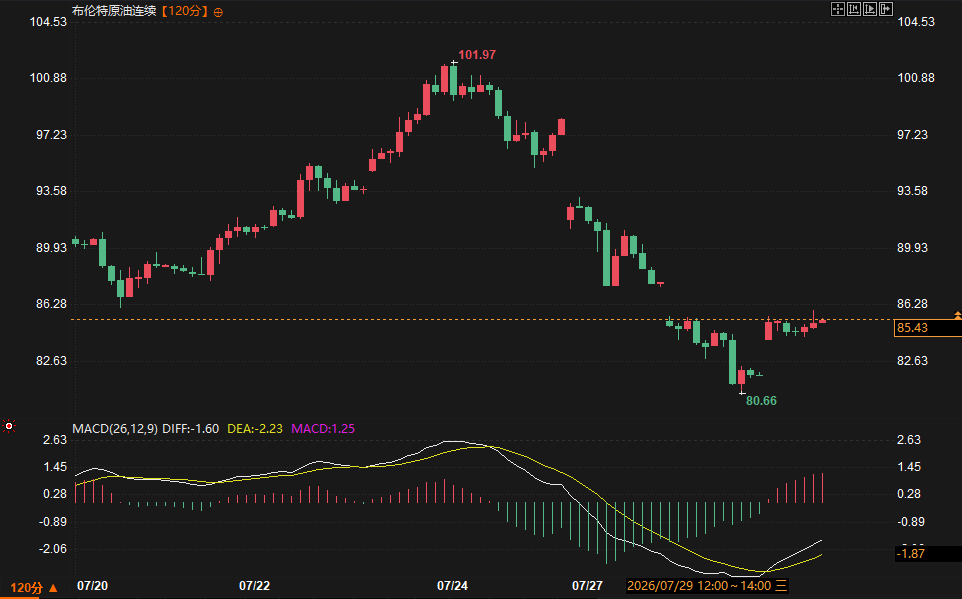
On Wednesday (July 29), the Middle East powder keg was reignited. Iran's Revolutionary Guard launched a ballistic missile attack on a US military base in Jordan, while affiliated militias simultaneously attacked Saudi oil facilities. The US and Saudi Arabia then jointly launched strikes against targets in Iraq. Brent crude oil surged over 4.51%, once again approaching the $86/barrel mark. Safe-haven funds flowed into gold and the US dollar, risk premiums in the shipping market reignited sharply, and the Strait of Hormuz once again became a crucial choke point closely watched by global traders. 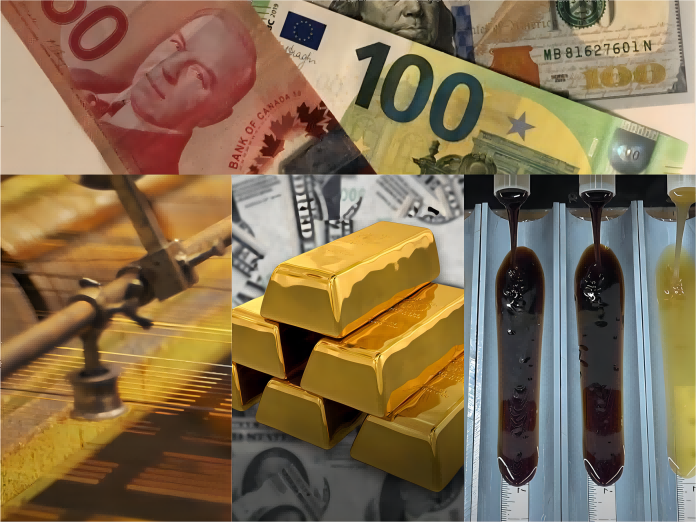
Introduction
If your positions are in energy, precious metals, or shipping, the past few hours have certainly been nerve-wracking. While Iran's "Operation Dawn" missiles were intercepted, their symbolic significance and the potential for further retaliation have completely shifted market sentiment. Oil prices, which had fallen in the past few days due to "ceasefire rumors," have been pulled back to high levels by geopolitical risks. Going forward, you need to pay attention to: Will the conflict escalate further? Will the actual flow of traffic in the Strait of Hormuz suddenly contract? And, when risk aversion meets upcoming macroeconomic events, how will the market choose its direction?Core Analysis
Crude oil: Geopolitical premium instantly closed
Brent and WTI crude oil prices surged by over 4% in tandem, with a volatility exceeding 3%, a classic example of panic repricing . The market quickly abandoned previous illusions of ample supply and demand, reinjecting the risk premium associated with a potential disruption in the Strait of Hormuz into prices. The events of the past few hours are clear: Iran directly attacked a base housing US troops and probed Saudi oil facilities with drones. The joint US-Saudi retaliation indicates a strong response rather than de-escalation. This has completely reversed trader sentiment. Going forward, oil prices will be entirely driven by headlines about "retaliation or not." Even without actual supply disruptions, as long as this cyclical deterrence continues, speculative funds will be hesitant to short. However, caution is advised; the current premium could collapse rapidly should a clear signal of diplomatic de-escalation emerge.Gold and Silver: What Does the Divergence in Safe-Haven Demand Reveal?
Gold prices surged rapidly driven by events, but the gains lagged far behind crude oil, while silver rose by nearly 1%, significantly outperforming gold. This divergence reveals a dual market sentiment: a coexistence of risk aversion and inflation anxiety. Gold, as a pure safe haven, was restrained by the simultaneous strengthening of the US dollar, resulting in a more moderate rise. Silver's industrial properties make it more resilient to sudden increases in oil prices and rising inflation expectations. This suggests that traders' understanding of the current conflict goes beyond simply "hiding in safe-haven assets," and they are pricing in a long-term scenario where "energy costs drive everything up." If oil prices continue to rise, silver may continue to gain additional momentum.Foreign Exchange and US Treasury Bonds: Undercurrents Beneath the Calm
The US dollar index barely moved, while the 2-year US Treasury yield rose by nearly 0.7%. This seemingly contradictory combination is actually dangerous. The lack of a significant dollar surge indicates that safe-haven inflows have been offset by interest rate differentials with other currencies; while the jump in short-term bond yields suggests that the market is beginning to wary that oil prices may block the path of interest rate cuts. If energy prices remain high, the Federal Reserve will find it more difficult to ease its stance in subsequent interest rate decisions. This is definitely not good news for risk assets. The foreign exchange market appears calm on the surface, but it is actually on the eve of increased volatility—if the conflict further pushes up energy costs, commodity currencies and emerging market currencies will be the first to suffer selling pressure.Shipping: A Vulnerable Alarm in the Hormuz
MarineTraffic data shows a brief rebound in traffic in the Strait of Hormuz, but traders should not be misled by this appearance. The real danger lies in the fact that vessels are highly concentrated on Iran's unilateral actions, with increased activity from covert and sanctioned vessels, and a sharp decline in transparency. Any miscalculation or "accidental" collision could immediately trigger a surge in insurance premiums and route changes. The market is already pricing in this risk—war risk rates are expected to rise by more than 20% in the short term. With nearly 20% of the world's oil relying on this waterway, the shipping market's nerves are no less on edge than those of the crude oil futures market.Trend Outlook
In the short term, the escalating cycle of geopolitical conflicts remains unresolved, and crude oil and safe-haven assets are likely to remain highly volatile. The impulse for Brent crude to test the $90 mark is real, and shipping costs will remain high. However, it must be clearly recognized that this is a market extremely reliant on headlines : once there are signs of substantial diplomatic mediation or restraint from both sides, the magnitude of the premium correction could be equally dramatic. From a longer-term perspective, as long as Iran maintains its hardline stance on control of Hormuz, supply chain fragility will become the norm, and the global energy cost center will find it difficult to substantially decline.Frequently Asked Questions
Why did news of Iran's attack on US military bases cause oil prices to surge far more than gold? Because this attack directly targeted the Strait of Hormuz, the lifeline of global oil supply. The surge in oil prices reflects a repricing of the risk of supply disruptions, while gold, as a pure safe-haven asset, was constrained by a strong dollar and rising bond yields, resulting in a more restrained increase. The market is trading on the fear of "energy disruptions," not just "war hedging." Will oil prices soon fall back? What is the biggest trap here? The biggest trap is misjudging it as a one-off event. The current rise depends not only on whether more missiles fall, but also on whether the sense of security for navigation in the Strait of Hormuz has been substantially eroded. Even if the conflict subsides in the short term, shipping insurance costs and the risk of unauthorized vessels could increase costs in the long term. However, if there is a clear diplomatic de-escalation, the current sentiment premium could evaporate rapidly within a day or two, a tail risk that both short and long positions need to address. Spot silver is outperforming gold; can this be sustained? This depends on whether oil prices can continue to remain high. Silver's recent strength is primarily attributed to its industrial applications, serving as a hedge against imported energy inflation. If oil prices remain strong or even rise further, silver may continue to receive additional buying support. However, if geopolitical risks suddenly decrease and oil prices fall, expectations for industrial demand for silver will cool accordingly, and its correction will typically be faster than that of gold.- Risk Warning and Disclaimer
- The market involves risk, and trading may not be suitable for all investors. This article is for reference only and does not constitute personal investment advice, nor does it take into account certain users’ specific investment objectives, financial situation, or other needs. Any investment decisions made based on this information are at your own risk.