Why is the yen continuing to weaken? Will Japan intervene in the market again?
2026-07-30 17:58:49
The yen continues to face pressure against the dollar, once again drawing global market attention. This round of depreciation is driven by multiple factors, including divergent monetary policies, energy price trends, the current state of the Japanese economy, and changes in market expectations regarding the interest rate outlook for both Japan and the US. 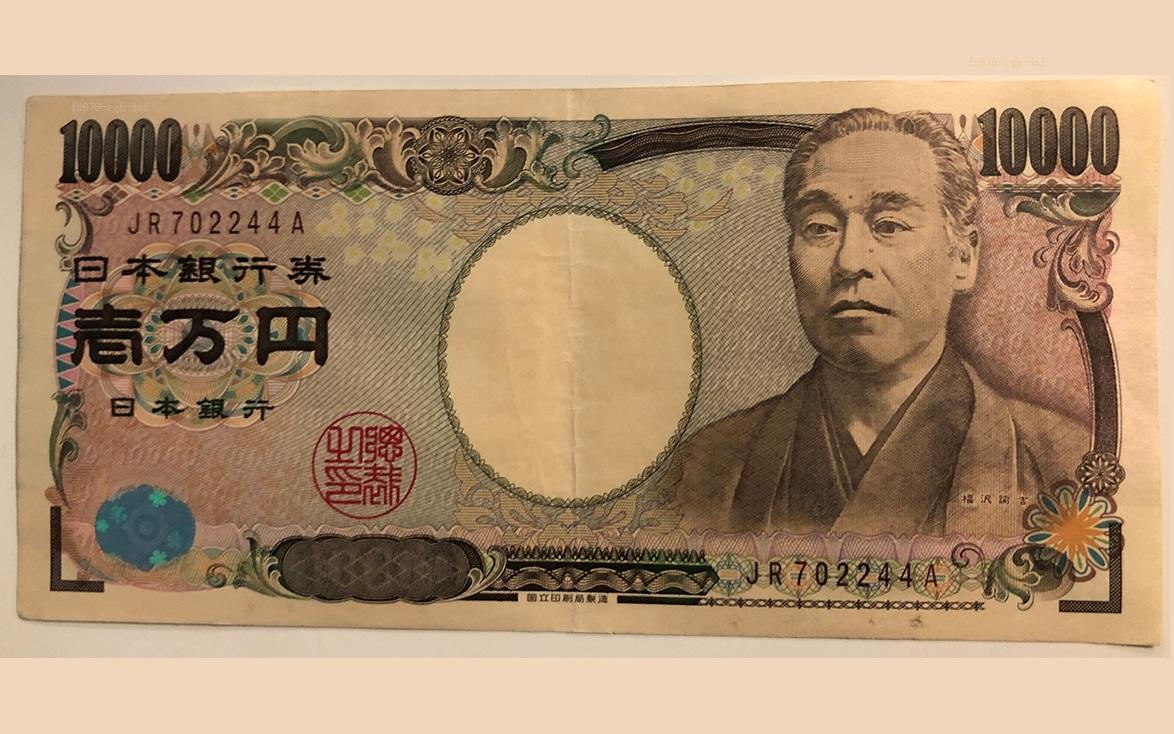 The volatility of the yen has also reignited discussions about the possibility of Japanese government intervention in the foreign exchange market. However, whether such intervention can reverse the yen's medium- to long-term trend ultimately depends on the underlying economic and monetary policy fundamentals. The Core Reasons for the Yen's Pressure One of the core factors influencing the yen's exchange rate is the interest rate differential between Japan and other economies (especially the United States). Although the Bank of Japan has begun the process of normalizing monetary policy, interest rates in Japan remain relatively low compared to the United States. This yield differential has spurred large-scale carry trades: the market borrows low-cost yen and invests in higher-yielding overseas assets. However, carry trades inherently carry the risk of rapid position liquidation. Once monetary policy expectations shift or the yen strengthens significantly, some traders will close out their positions. This behavior will boost yen demand and have a ripple effect on other financial markets. Energy prices are another important variable. Japan is highly dependent on energy imports; rising energy prices will increase yen-denominated import bills, further pressuring the yen's exchange rate. The Bank of Japan Faces a Policy Dilemma The Bank of Japan is currently in a complex policy environment. On the one hand, the continued depreciation of the yen raises the prices of imported goods, exacerbating domestic inflationary pressures; on the other hand, aggressive interest rate hikes will push up financing costs across society, dragging down economic growth. Therefore, the pace of monetary policy normalization has become a focus of market attention. Changes in market expectations regarding the Bank of Japan's policies will alter the Japan-US interest rate differential, thus influencing the yen's exchange rate. The Impact of a Weak Yen on the Japanese Economy The depreciation of the yen has mixed effects on various sectors in Japan. Japanese companies with substantial overseas revenue will reap exchange rate benefits when converting overseas profits back into yen. However, at the same time, the depreciation of the domestic currency pushes up import costs. Japan relies heavily on imports for many necessities, including energy and industrial raw materials. Rising import costs will continue to push up domestic prices. In short, a weaker yen benefits some export companies but burdens domestic businesses and ordinary people who are highly dependent on imports. Will Japan intervene in the foreign exchange market again? The rapid depreciation of the yen has once again sparked heated discussions about the possibility of government intervention. Foreign exchange intervention can influence the foreign exchange market in the short term by changing the supply and demand of currency. However, its long-term effects depend on the fundamental factors that drive exchange rate trends. If the core drivers of the yen's depreciation remain the interest rate differential and the global macroeconomic environment, simple intervention measures will hardly reverse the long-term trend. Based on this, in addition to closely monitoring the likelihood of intervention, the market will also focus on whether the intervention is accompanied by adjustments to the Bank of Japan's monetary policy, or whether the government releases signals of supporting policies. Conclusion
 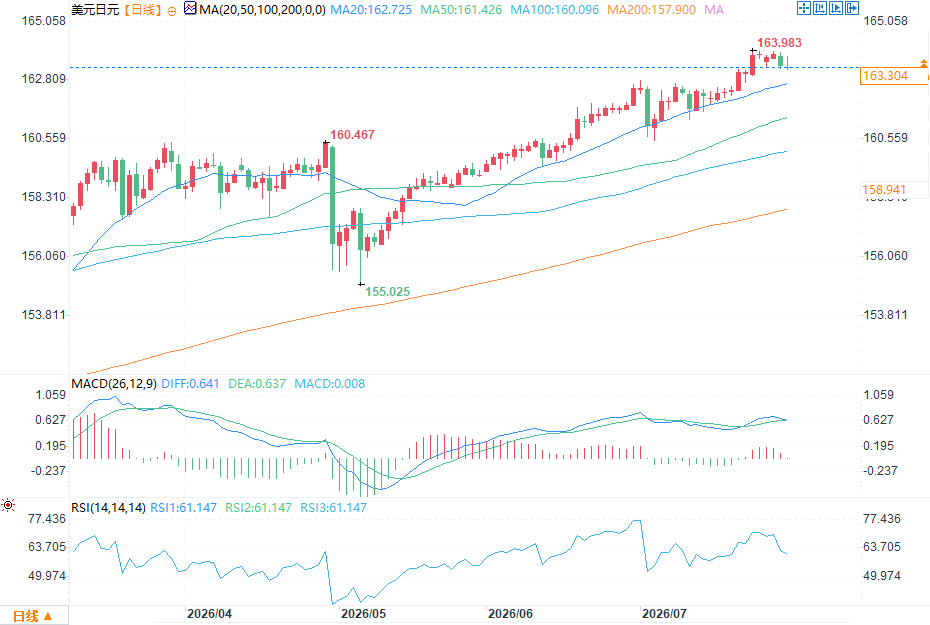 (USD/JPY Daily Chart Source: FX678) The weakening of the yen is the result of a confluence of factors, not a single policy. The Japan-US interest rate differential, energy prices, carry trades, and global monetary policies all influence exchange rate movements. For Japan, a weaker yen can provide support for some export companies, but it also increases import costs and exacerbates domestic inflation. Looking ahead, the market will continue to track the Bank of Japan's policies, the Federal Reserve's decisions, energy prices, and potential government intervention in foreign exchange. These variables will lead to various scenarios for the USD/JPY exchange rate. Exchange rate movements are inherently highly uncertain and will adjust at any time according to changes in the economic situation and market expectations.
The volatility of the yen has also reignited discussions about the possibility of Japanese government intervention in the foreign exchange market. However, whether such intervention can reverse the yen's medium- to long-term trend ultimately depends on the underlying economic and monetary policy fundamentals. The Core Reasons for the Yen's Pressure One of the core factors influencing the yen's exchange rate is the interest rate differential between Japan and other economies (especially the United States). Although the Bank of Japan has begun the process of normalizing monetary policy, interest rates in Japan remain relatively low compared to the United States. This yield differential has spurred large-scale carry trades: the market borrows low-cost yen and invests in higher-yielding overseas assets. However, carry trades inherently carry the risk of rapid position liquidation. Once monetary policy expectations shift or the yen strengthens significantly, some traders will close out their positions. This behavior will boost yen demand and have a ripple effect on other financial markets. Energy prices are another important variable. Japan is highly dependent on energy imports; rising energy prices will increase yen-denominated import bills, further pressuring the yen's exchange rate. The Bank of Japan Faces a Policy Dilemma The Bank of Japan is currently in a complex policy environment. On the one hand, the continued depreciation of the yen raises the prices of imported goods, exacerbating domestic inflationary pressures; on the other hand, aggressive interest rate hikes will push up financing costs across society, dragging down economic growth. Therefore, the pace of monetary policy normalization has become a focus of market attention. Changes in market expectations regarding the Bank of Japan's policies will alter the Japan-US interest rate differential, thus influencing the yen's exchange rate. The Impact of a Weak Yen on the Japanese Economy The depreciation of the yen has mixed effects on various sectors in Japan. Japanese companies with substantial overseas revenue will reap exchange rate benefits when converting overseas profits back into yen. However, at the same time, the depreciation of the domestic currency pushes up import costs. Japan relies heavily on imports for many necessities, including energy and industrial raw materials. Rising import costs will continue to push up domestic prices. In short, a weaker yen benefits some export companies but burdens domestic businesses and ordinary people who are highly dependent on imports. Will Japan intervene in the foreign exchange market again? The rapid depreciation of the yen has once again sparked heated discussions about the possibility of government intervention. Foreign exchange intervention can influence the foreign exchange market in the short term by changing the supply and demand of currency. However, its long-term effects depend on the fundamental factors that drive exchange rate trends. If the core drivers of the yen's depreciation remain the interest rate differential and the global macroeconomic environment, simple intervention measures will hardly reverse the long-term trend. Based on this, in addition to closely monitoring the likelihood of intervention, the market will also focus on whether the intervention is accompanied by adjustments to the Bank of Japan's monetary policy, or whether the government releases signals of supporting policies. Conclusion (USD/JPY Daily Chart Source: FX678) The weakening of the yen is the result of a confluence of factors, not a single policy. The Japan-US interest rate differential, energy prices, carry trades, and global monetary policies all influence exchange rate movements. For Japan, a weaker yen can provide support for some export companies, but it also increases import costs and exacerbates domestic inflation. Looking ahead, the market will continue to track the Bank of Japan's policies, the Federal Reserve's decisions, energy prices, and potential government intervention in foreign exchange. These variables will lead to various scenarios for the USD/JPY exchange rate. Exchange rate movements are inherently highly uncertain and will adjust at any time according to changes in the economic situation and market expectations.
- Risk Warning and Disclaimer
- The market involves risk, and trading may not be suitable for all investors. This article is for reference only and does not constitute personal investment advice, nor does it take into account certain users’ specific investment objectives, financial situation, or other needs. Any investment decisions made based on this information are at your own risk.