The Fed has abandoned the old mechanisms without establishing new rules, leaving its policy in a vacuum. The Warsh reforms await a long-term turnaround.
2026-07-31 21:48:52
Newly appointed Federal Reserve Chairman Warsh has spearheaded sweeping monetary policy reforms, proactively abandoning the traditional forward guidance mechanism used for over a decade. In the short term, the transition between old and new policies has created a significant gap, with the new standardized interest rate decision-making framework yet to be implemented, leaving the Fed in a temporary policy vacuum. Coupled with internal disagreements among committee members and persistently high inflationary pressures, the market widely questions the effectiveness of these reforms, leading to confusion in monetary policy expectations and becoming a core disruptive factor in short-term global financial markets. However, from a long-term perspective, Warsh's reforms are not a failure, but rather a proactive effort to break through the shortcomings of the old system. Through in-depth research by five special working groups, he is building a new, objective, and implementable modern policy framework, possessing strong potential for a turnaround in the future. 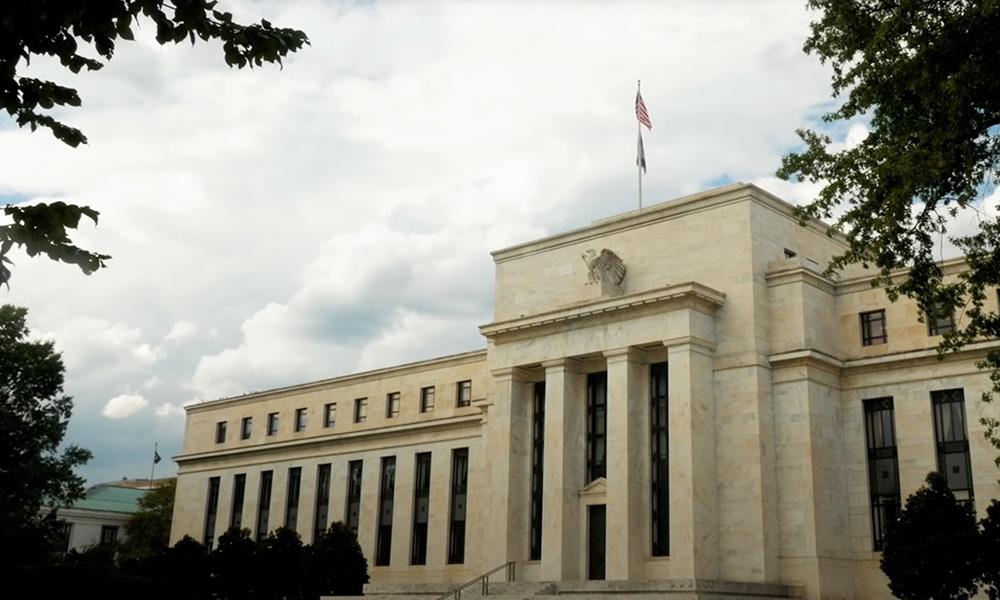
Short-term reform pains become apparent, and market skepticism erupts.
Following the implementation of this round of Federal Reserve reforms, the gaps in the short-term policy system have been thoroughly exposed, triggering multiple criticisms from Wall Street institutions, economists, and even within the Fed itself. Pessimistic interpretations of Warsh's new policies have intensified. The July policy meeting merely maintained interest rates unchanged, without any supporting policy details or interest rate guidance. The extremely brief policy statement, coupled with a blank post-meeting framework, left the market completely without a trading anchor. On one hand, internal disagreements and opposition emerged within the Fed, with some governors publicly questioning the reform model of eliminating forward guidance and weakening policy communication. They argued that monetary policy lacking clear signals would only exacerbate disorderly market fluctuations and fail to effectively control inflation and financial markets. On the other hand, mainstream investment banks and trading institutions are pessimistic about the effectiveness of this round of short-term reforms, believing that Warsh's hasty dismantling of the old and failure to simultaneously establish the new has caused the policy expectation system built up by the Fed over decades to collapse. Market feedback also confirms this anxiety: the US Treasury market experienced violent fluctuations, long-term yields continued to rise, US stock market volatility intensified, and global risk appetite contracted rapidly. The market generally judged that Warsh's reforms had reached a short-term deadlock, and the sentiment that the reforms had failed spread widely. From a market perspective, this reform presents a clear "transitional" dilemma: Warsh decisively halted the Fed's long-standing routine forward guidance communication model, completely abandoning the traditional policy rhetoric system. However, the new interest rate decision-making rules and market reaction mechanisms have not been implemented simultaneously, leaving the Fed in a short-term policy deadlock with "no rules to follow and no benchmarks to use." Without the guidance of forward guidance, coupled with the fact that three members voted against the trend to support a rate hike at this round of policy meetings, internal policy disagreements became public, further amplifying market panic. The general consensus is that this Fed reform has stalled or even failed.The old system has a core logic to its transformation, and its drawbacks have long been apparent.
In fact, Warsh's decision to abandon forward guidance was not a reckless move, but a precise attempt to break through the core pain points of the old system. Since the 2008 financial crisis, the Federal Reserve has long relied on forward guidance to lock in the path of interest rates and guide market expectations, but this mechanism is no longer adequate for the current economic environment. The biggest drawback of traditional forward guidance is its rigid policy path and strong lag, often locking in interest rate trends in advance, but subsequently becoming severely out of sync with real-time inflation and employment data, with policy signals frequently contradicting market trends. At the same time, the Fed's past economic forecasts have had a low accuracy rate; in the early 2020s, it misjudged persistent high inflation as "temporary inflation," ultimately leading to lagging monetary policy and runaway inflation, fully demonstrating the failure of the traditional forward guidance mechanism. Warsh's decision to halt the old model is essentially an abandonment of the subjective and outdated policy system, paving the way for new reforms, not a reform mistake.Short-term policy confusion is true; cognitive biases amplify market misunderstandings.
The current policy vacuum and confusion surrounding expectations within the Federal Reserve are inevitable growing pains during the reform transition period, not a failure of reform. During this gap between the old and new mechanisms, the market has lost familiar policy benchmarks, and this, coupled with short-term cognitive biases within the Fed, has further exacerbated market misunderstandings. The most typical example is the divergence between policy rates and market rates: While the Fed's benchmark interest rate remains unchanged in 2026, market-based interest rates have risen sharply. Warsh initially attributed this phenomenon simply to the removal of forward guidance, raising questions about his policy judgment. However, the decoupling of policy rates from market rates is actually a long-term structural problem since 2008, stemming from the inherent flaws of the Fed's ample reserve floor interest rate system, not from the current reforms. This detail highlights the shortcomings in policy coordination during the transition period and has become a core basis for market skepticism regarding Warsh's reforms. Meanwhile, internal FOMC decision-making has further intensified negative market sentiment. In March of this year, all officials had no expectation of a rate hike, and the market favored a rate cut. However, just three months later, three members went against the trend and called for a rate hike, even though the core variables such as the fundamentals of inflation, geopolitical conflicts, and fiscal spending have not undergone substantial changes. This kind of subjective policy swing without rules is essentially a normal state of transition during a period when the old system has been abolished and a new framework has not yet been established, rather than a failure of Walsh's reform strategy.The key to a long-term turnaround: Five working groups are gearing up to build a brand-new policy framework.
The market only sees the short-term pain of reforms and the policy vacuum, but overlooks Warsh's long-term strategic trump card for a turnaround—the five special reform working groups launched at the first press conference in June. This is the core support for the Fed's deep reforms and will completely end the current chaotic policy landscape. The five working groups focus on five core areas: policy communication mechanisms, balance sheet policy, economic data systems, productivity and employment, and inflation frameworks. They bring together top economists from Harvard and the University of Chicago, former central bank executives, and industry experts to comprehensively review the shortcomings of the old Fed system and refine a new monetary policy system adapted to the current economy, AI industry, and geopolitical landscape. Unlike past fragmented policy adjustments, these five working groups represent systemic and fundamental reforms, with the core objective of establishing a standardized interest rate decision-making framework that is quantitative, objective, implementable, and predictable. The Data Working Group will restructure the Federal Reserve's economic observation system, freeing it from the constraints of lagging official data and introducing high-frequency big data and private sector economic data to accurately capture marginal changes in inflation and employment. The Inflation and Productivity Working Group will combine AI technology iteration and industrial upgrading logic to reshape the standards for determining inflation and solve the current problem of ambiguous inflation characterization. The Communication and Balance Sheet Working Group will improve the policy transmission mechanism and solve the structural problem of the long-term separation between policy interest rates and market interest rates.As the transition period draws to a close, the implementation of the new framework will completely transform the landscape.
The current policy vacuum, internal disagreements, and chaotic expectations within the Federal Reserve are all inevitable processes in the process of reform and iteration. Warsh's proactive abandonment of old, subjective rhetoric and refusal to continue using ineffective forward guidance, choosing instead to rely on the in-depth research findings of the five working groups to create a new, rule-based, and market-oriented policy system, represents a strategic move to exchange short-term pain for long-term stability. Once the five working groups complete their comprehensive research and output their final reform plans (what the market calls the "five departments' grand essay"), the Federal Reserve will officially implement unified, quantitative, and transparent interest rate decision-making rules. At that time, the Federal Reserve will completely escape the predicament of subjective policy swings, disorderly internal disagreements, and chaotic market expectations, establishing a clear policy response mechanism and achieving precise matching of inflation, employment, and interest rates. Ultimately, Warsh's reform is not a failure, but a proactive move to break with the old and establish the new. Short-term market skepticism, policy gaps, and market volatility are normal during the transition period. With the implementation of the reform results from the five working groups, the new monetary policy framework will be formally formed, and the uncertainty surrounding Federal Reserve policy will completely dissipate. This controversial reform will ultimately achieve a long-term turnaround, reshaping the pricing logic of the global macro market.- Risk Warning and Disclaimer
- The market involves risk, and trading may not be suitable for all investors. This article is for reference only and does not constitute personal investment advice, nor does it take into account certain users’ specific investment objectives, financial situation, or other needs. Any investment decisions made based on this information are at your own risk.