Weekly Forex Market Review: US and Japan intervene in concert, causing the dollar to drop its biggest weekly loss this year, while yen bears are experiencing a massacre.
2026-08-01 13:28:51
This Week's Forex Market Review: At Friday's close, the US dollar index settled at 99.788, recording a weekly decline of 1.69%. This was not a mild correction, but rather the most intense weekly sell-off since the end of January. Looking at the monthly chart, the dollar's weakness doesn't even need technical indicators to confirm it—the visible upper shadow and bearish candlestick tell a story of a steady retreat for the bulls. This week's main themes were twofold: the Federal Reserve's interest rate decision deprived the dollar bulls of their last pillar of support, while the Japanese authorities' intervention in the foreign exchange market after several months dealt a heavy blow to the dollar against the yen. With these two themes intertwined, non-US currencies collectively rallied, with the euro and pound both rising by more than 1.4% for the week, while the dollar against the yen plummeted 3.6% for the week, becoming the most volatile G10 currency pair. 
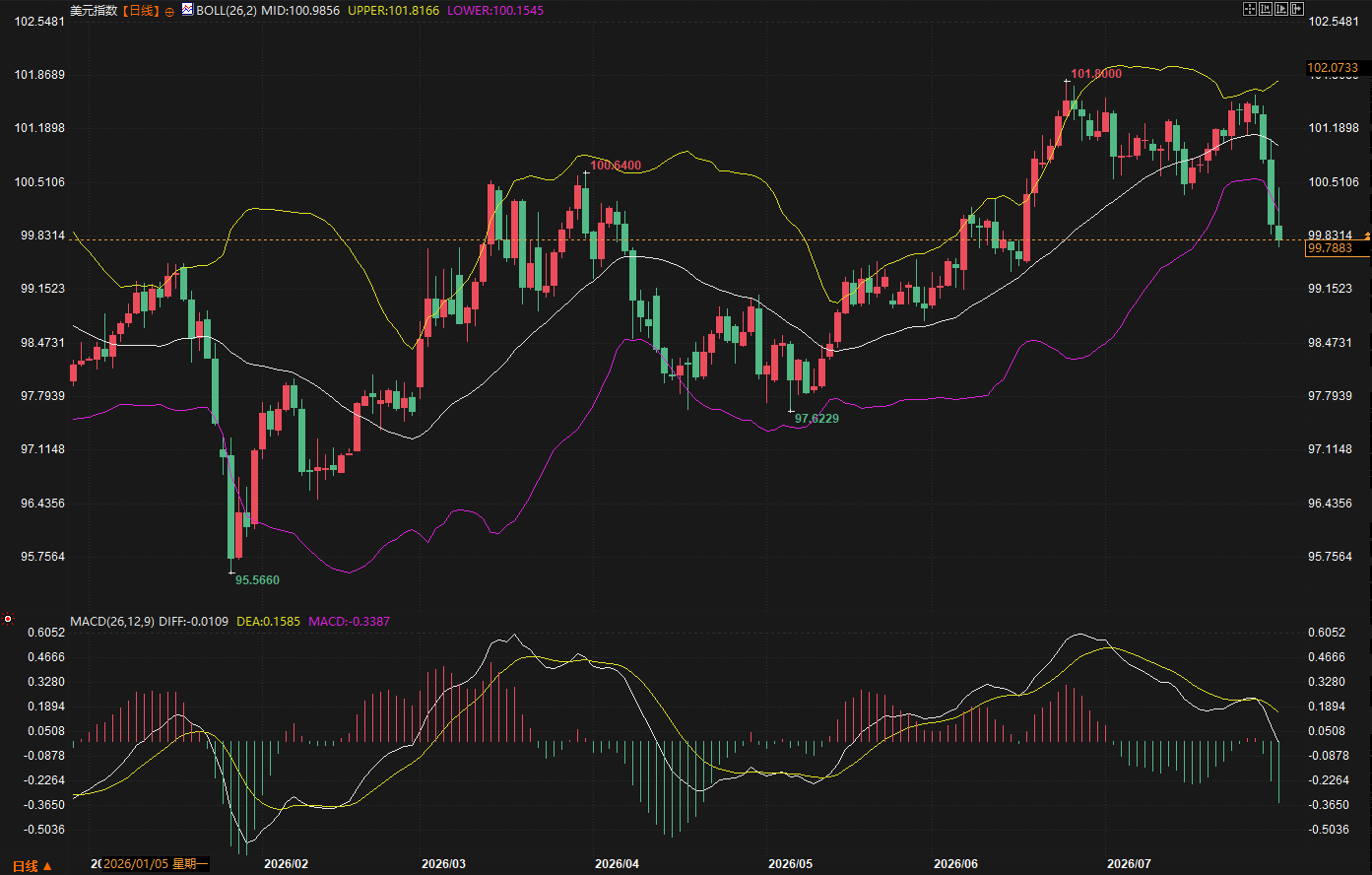 Economic Data and Event Summary On Wednesday, the Federal Reserve announced it would maintain interest rates, which was largely expected by the market. What truly pressured the dollar was that traders began to question the new Fed Chair's genuine intention to combat inflation. Market interpretations tend to suggest that policymakers chose inflation over political pressure, and that peak interest rates may be far lower than previously anticipated. This downward revision of interest rate expectations directly undermined the dollar's pricing foundation. Simultaneously, US Treasury yields fell this week, further weakening the dollar's interest rate differential appeal. Institutional Views Summary Judging from market reactions following the interest rate decision, many major overseas institutions have begun to reassess the dollar's outlook. Some analysts believe the Fed has entered a phase of "hawkish language, dovish actions," and this inconsistency is unlikely to sustain the dollar. Others point out that the US Treasury's cooperative stance on the yen suggests that the official stance does not preclude a moderate weakening of the dollar. Overall, the previously crowded dollar bulls are undergoing a painful position clearing.
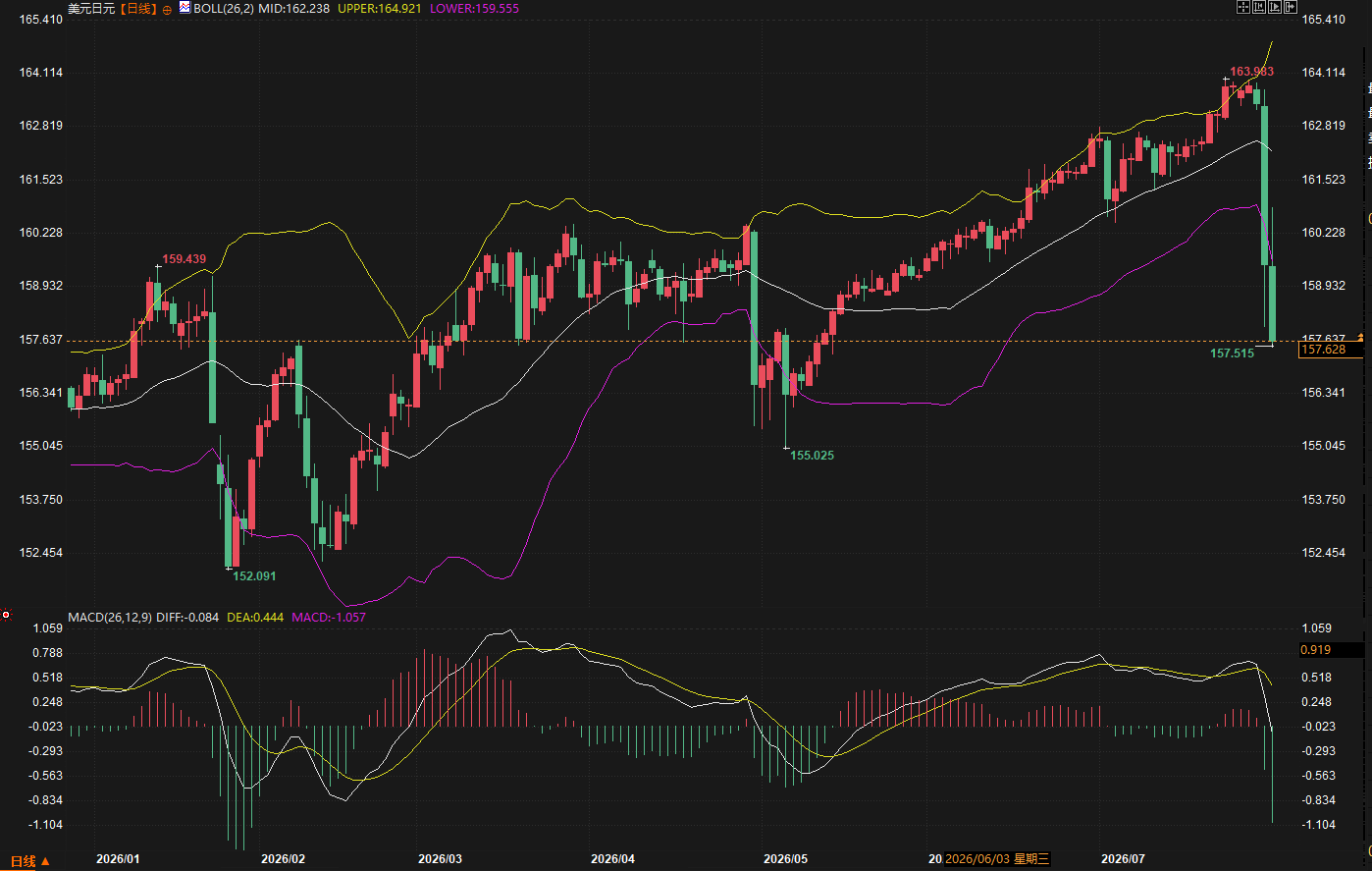 Economic Data and Event Summary This week, two major catalysts for the yen were triggered almost simultaneously. First, the Bank of Japan announced on Friday that it would maintain its interest rate at 1%, but Governor Kazuo Ueda released a clear hawkish signal after the meeting—several policy committee members' inflation forecasts were high, and the risks were skewed to the upside. The market characterized this meeting as "hawkish holding steady," and expectations for a September rate hike immediately rose. A more powerful impetus came from direct intervention. On Thursday, Japanese authorities entered the market to buy yen and sell dollars. According to well-known foreign media reports, the yen spot trading volume on the EBS platform hit a 10-year high that day, and yen futures trading volume broke historical records. More unusually, South Korea also took rare coordinated action, selling dollars to support the won. On Friday, an informed source revealed to mainstream overseas media that the US Treasury had notified several banks of a possible second round of intervention and asked them to "be prepared." Japan's top foreign exchange official confirmed on the same day that it had received assistance from the US "beyond psychological support." This means that the policy tacit understanding between Japan and the US may be deeper than the market imagined. Summary of Institutional Views: Eric Theoret, a foreign exchange strategist at Scotiabank, stated that in a sluggish liquidity environment, intervention can have a far greater impact than usual, and the market is highly sensitive even to mere expectations. Goldman Sachs' strategist team noted in a report that if the yen begins to give back Thursday's gains, the authorities are likely to intervene again in the coming days, mimicking the approach taken in May. Scotiabank characterized the Bank of Japan as "hawkish and holding steady," believing its intention to tighten policy in September is quite clear. Most analysts expect the Bank of Japan to raise interest rates to 1.25% by the end of the year; while this rate hike path is slow, the direction is unquestionable.
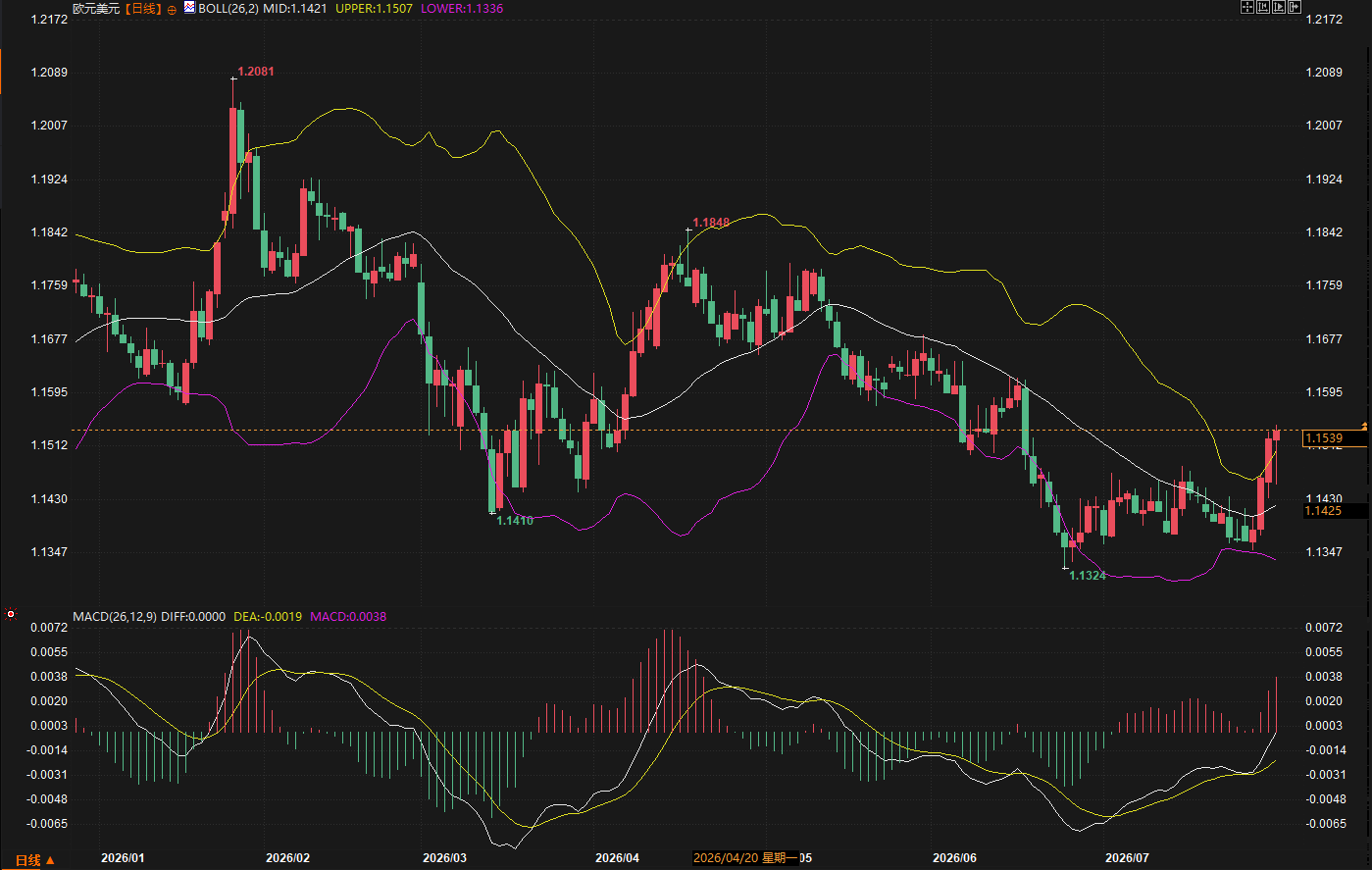 Economic Data and Event Summary: The euro's rebound was more of a "passive stroke of luck"—the sharp decline in the dollar provided a tailwind, rather than a significant improvement in the euro's own fundamentals. This week, the Eurozone lacked significant data guidance, and market focus was entirely on the US-Japan events. Nevertheless, the euro's ability to hold firmly above 1.15 indicates a weakening of bearish pressure and a solidifying short-term bottom. Institutional Views Summary: Most analysts believe that the euro's current movement is highly dependent on changes in the dollar. If the dollar index continues to slide below the 100 level, the euro has a chance to challenge higher resistance areas. However, some cautious voices suggest that the euro lacks its own driving force for upward movement, and once the dollar experiences a technical rebound, the euro's gains could be quickly reversed.
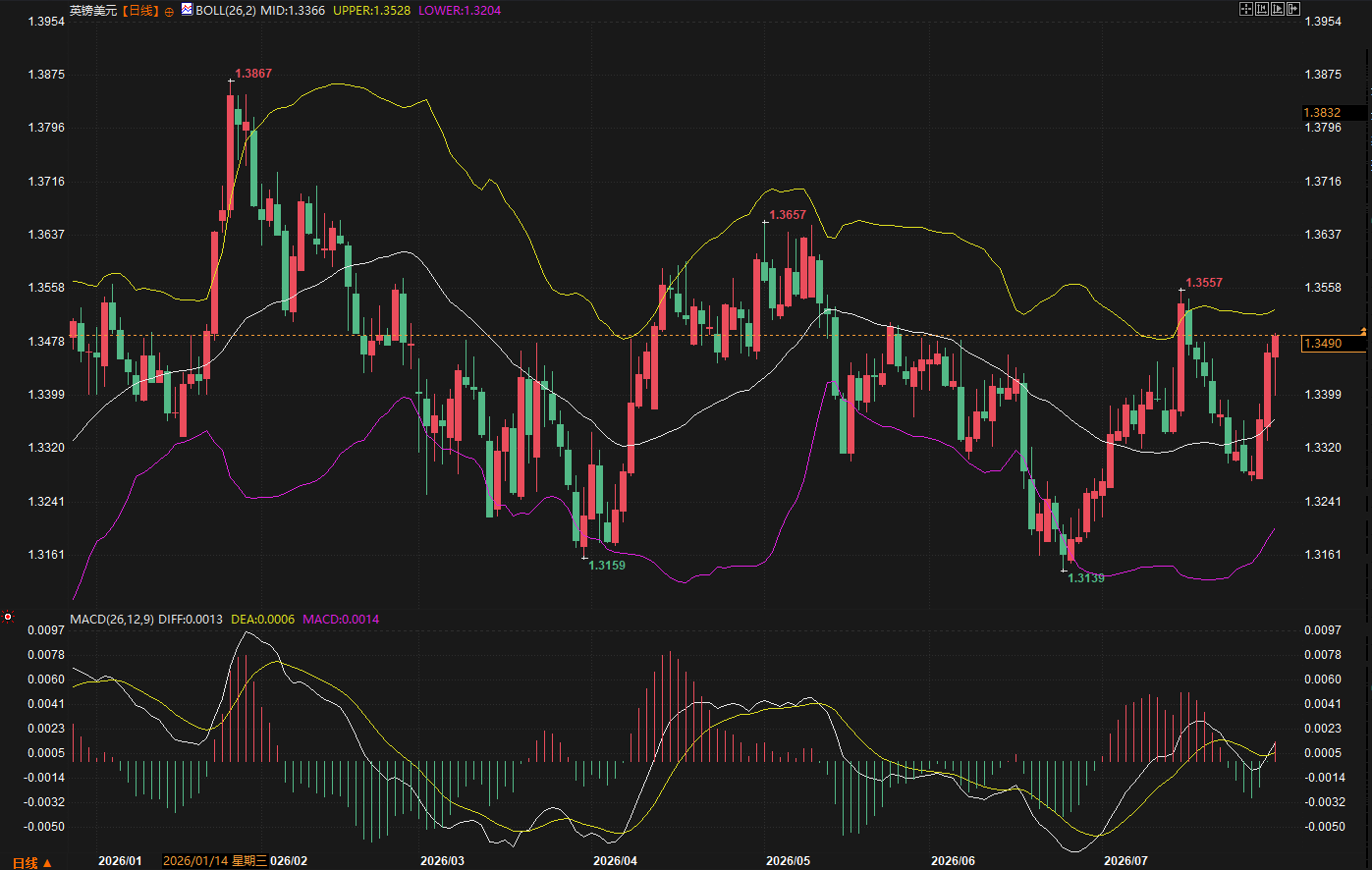 Economic Data and Events Summary The Bank of England also announced on Thursday that it would maintain its interest rate unchanged, in line with market expectations. Unlike the Bank of Japan's hawkish stance, the Bank of England's forward guidance was more vague, failing to provide additional impetus for the pound. This makes the pound more of a mirror trade of the dollar, rather than an independent macroeconomic narrative. Institutional Views Summary Market sentiment towards the pound is neutral. Some believe that the pound has already digested previous negative factors, and if the dollar continues to weaken, the pound is expected to rise along with the euro. However, some analysts point out that UK domestic economic data is not strong, and the pound lacks the foundation for independent strength; it is more appropriate to observe rather than rush into betting at present.
US Dollar Index: Breaks below the middle band, bears in control.
This Week's Market Review: The US dollar index declined steadily this week from a high of 100.450, reaching a low of 99.693 before closing at 99.788. On the daily chart, the price clearly broke below the Bollinger Band middle line support at 100.9856 and is currently trading between the middle and lower bands at 100.1545. On the MACD indicator, both the DIFF and DEA are below the zero line, and the green histogram is still expanding, showing no signs of bullish divergence or convergence. The large bearish candlestick on the weekly chart has completely erased the gains of the previous weeks, reaching a four-star bearish signal strength. Economic Data and Event Summary On Wednesday, the Federal Reserve announced it would maintain interest rates, which was largely expected by the market. What truly pressured the dollar was that traders began to question the new Fed Chair's genuine intention to combat inflation. Market interpretations tend to suggest that policymakers chose inflation over political pressure, and that peak interest rates may be far lower than previously anticipated. This downward revision of interest rate expectations directly undermined the dollar's pricing foundation. Simultaneously, US Treasury yields fell this week, further weakening the dollar's interest rate differential appeal. Institutional Views Summary Judging from market reactions following the interest rate decision, many major overseas institutions have begun to reassess the dollar's outlook. Some analysts believe the Fed has entered a phase of "hawkish language, dovish actions," and this inconsistency is unlikely to sustain the dollar. Others point out that the US Treasury's cooperative stance on the yen suggests that the official stance does not preclude a moderate weakening of the dollar. Overall, the previously crowded dollar bulls are undergoing a painful position clearing.USD/JPY: A Double Blow from Heavy Intervention and Hawkish Central Banks
This Week's Price Recap: The USD/JPY pair closed the week at 157.858, a weekly drop of 3.6%, an extremely rare weekly fluctuation recently. On the daily chart, the price plummeted from a high of 163.983, breaking through the Bollinger Band middle line at 162.238 and currently approaching the lower band at 159.555. The MACD formed a death cross at a high level and is accelerating downwards, with the green histogram bars continuing to lengthen, indicating a strong bearish signal at the four-star level. This week's candlestick pattern shows consecutive large bearish candles, with the bulls offering virtually no resistance. Economic Data and Event Summary This week, two major catalysts for the yen were triggered almost simultaneously. First, the Bank of Japan announced on Friday that it would maintain its interest rate at 1%, but Governor Kazuo Ueda released a clear hawkish signal after the meeting—several policy committee members' inflation forecasts were high, and the risks were skewed to the upside. The market characterized this meeting as "hawkish holding steady," and expectations for a September rate hike immediately rose. A more powerful impetus came from direct intervention. On Thursday, Japanese authorities entered the market to buy yen and sell dollars. According to well-known foreign media reports, the yen spot trading volume on the EBS platform hit a 10-year high that day, and yen futures trading volume broke historical records. More unusually, South Korea also took rare coordinated action, selling dollars to support the won. On Friday, an informed source revealed to mainstream overseas media that the US Treasury had notified several banks of a possible second round of intervention and asked them to "be prepared." Japan's top foreign exchange official confirmed on the same day that it had received assistance from the US "beyond psychological support." This means that the policy tacit understanding between Japan and the US may be deeper than the market imagined. Summary of Institutional Views: Eric Theoret, a foreign exchange strategist at Scotiabank, stated that in a sluggish liquidity environment, intervention can have a far greater impact than usual, and the market is highly sensitive even to mere expectations. Goldman Sachs' strategist team noted in a report that if the yen begins to give back Thursday's gains, the authorities are likely to intervene again in the coming days, mimicking the approach taken in May. Scotiabank characterized the Bank of Japan as "hawkish and holding steady," believing its intention to tighten policy in September is quite clear. Most analysts expect the Bank of Japan to raise interest rates to 1.25% by the end of the year; while this rate hike path is slow, the direction is unquestionable.Euro/Dollar: Stabilizing above the middle band, bullish signs emerge.
This Week's Market Review: The euro rose slightly by 0.1% against the US dollar this week, closing at 1.1535. Intraday volatility appeared mild, but the weekly gain reached 1.46%, and the monthly return was also positive at 0.16%. The daily chart shows signs of marginal improvement: the price has rebounded from the previous low of 1.1324 and is currently above the Bollinger Band middle line at 1.1421, testing the upper band area of 1.1507. The MACD shows a weak red bar near the zero line, and the DIFF and DEA are close to forming a golden cross, indicating a weak bullish nascent stage, with a signal strength of three stars. Economic Data and Event Summary: The euro's rebound was more of a "passive stroke of luck"—the sharp decline in the dollar provided a tailwind, rather than a significant improvement in the euro's own fundamentals. This week, the Eurozone lacked significant data guidance, and market focus was entirely on the US-Japan events. Nevertheless, the euro's ability to hold firmly above 1.15 indicates a weakening of bearish pressure and a solidifying short-term bottom. Institutional Views Summary: Most analysts believe that the euro's current movement is highly dependent on changes in the dollar. If the dollar index continues to slide below the 100 level, the euro has a chance to challenge higher resistance areas. However, some cautious voices suggest that the euro lacks its own driving force for upward movement, and once the dollar experiences a technical rebound, the euro's gains could be quickly reversed.GBP/USD: Trading range-bound near the middle band, direction uncertain.
This Week's Market Review: The British pound rose 0.2% against the US dollar this week, closing near 1.3485, a weekly gain of 1.45%. On the daily chart, the price rebounded from the lower Bollinger Band area of 1.3204 and is currently trading near the middle band of 1.3366, where the bullish and bearish forces are temporarily balanced. The MACD histogram is weak, and the DIFF and DEA lines are almost converging, indicating that a trend has not yet formed. The signal strength is only two stars, a typical observation zone. Economic Data and Events Summary The Bank of England also announced on Thursday that it would maintain its interest rate unchanged, in line with market expectations. Unlike the Bank of Japan's hawkish stance, the Bank of England's forward guidance was more vague, failing to provide additional impetus for the pound. This makes the pound more of a mirror trade of the dollar, rather than an independent macroeconomic narrative. Institutional Views Summary Market sentiment towards the pound is neutral. Some believe that the pound has already digested previous negative factors, and if the dollar continues to weaken, the pound is expected to rise along with the euro. However, some analysts point out that UK domestic economic data is not strong, and the pound lacks the foundation for independent strength; it is more appropriate to observe rather than rush into betting at present.Weekly Closing Summary
This week, the core issue in the foreign exchange market was singular: the credibility of the US dollar is being repriced. The Federal Reserve's hesitation contrasted sharply with the decisive action of the Japanese authorities, and the market voted with its feet. The US dollar index is just a step away from its weekly low of 99.693, while the yen, bolstered by the coordinated policies of Japan and the US, may be moving from deeply oversold territory towards the beginning of a phase of reversal. The euro and the pound are currently playing the role of followers, but as long as the dollar's weakness persists, their upward trajectory will not close. Next week's focus will return to the data releases, but the main theme of the Japan-US policy game will not easily disappear.Frequently Asked Questions
Q: The Fed keeping interest rates unchanged was expected, so why did the dollar still fall so sharply? The key is that the market reassessed the Fed's sincerity in combating inflation. Keeping interest rates unchanged wasn't unexpected, but the signals released after the meeting convinced traders that policymakers, under political pressure, might choose to tolerate higher inflation rather than decisively raise rates. Once the peak interest rate expectation is revised downwards, the dollar's interest rate advantage will loosen, forcing previously crowded long positions to be liquidated, creating a stampede. Q: What's different about Japan's intervention this time compared to previous ones? The biggest difference lies in the US attitude. Previously, the US Treasury's attitude towards unilateral intervention by Japan was often ambiguous or even implicitly critical. This time, sources revealed that the US has notified banks to prepare for a second round of action, and Japanese officials have also clearly stated that they have received "support beyond psychological levels." This coordinated stance means that the intervention is no longer a lone battle fought by Japan, but has the backing of policy coordination, making its power completely different. Q: With the dollar/yen falling so much, has the trend reversed? The 3.6% weekly drop does indeed suggest a reversal, but it's too early to draw conclusions. The daily MACD has formed a death cross and diverged, with the price falling below the middle band, indicating that short-term bears are in control. However, what truly determines the trend is whether the Bank of Japan can deliver on its promise to raise interest rates in September and whether the Federal Reserve will continue to hold rates steady. A reversal would be more solid if the Japan-US interest rate differential continues to narrow. Currently, it appears to be a strong correction rather than a confirmed reversal. Q: The euro and pound have both risen by more than 1.4% this week; can this be sustained? The rise in these two currencies is more passively benefiting from the weakening dollar than driven by their own fundamentals. The euro's rise above the Bollinger middle band is a positive signal, but the MACD is still near the zero line, indicating insufficient bullish momentum. The pound is even more trapped near the middle band, with its direction unclear. Their sustainability depends on whether the dollar index continues to decline, and the dollar will face the test of non-farm payroll data next week, adding considerable uncertainty. Q: Why is the Bank of Japan being called a "hawkish hold-up"? Maintaining the interest rate unchanged is itself a neutral or dovish move, but Governor Kazuo Ueda's comments revealed key information: several committee members' inflation forecasts are too high, and the risks are skewed to the upside. This indicates that calls for an interest rate hike are growing stronger within the central bank, but the timing is not yet right. The market infers from this that the probability of a rate hike at the September meeting has increased significantly. This seemingly passive stance, tinged with potential for further action, is the meaning of the "hawks remaining on hold."- Risk Warning and Disclaimer
- The market involves risk, and trading may not be suitable for all investors. This article is for reference only and does not constitute personal investment advice, nor does it take into account certain users’ specific investment objectives, financial situation, or other needs. Any investment decisions made based on this information are at your own risk.