Oil prices plunge 7% in a single day, but Iran says "no more talks": 5 risks you must know before the market opens.
2026-08-03 20:02:59
On Monday (August 3), the crude oil market experienced a dramatic plunge, with Brent crude prices falling over 7% in a single day, breaching the $84 mark, while WTI crude also fell below $80. The crash stemmed from the explosive release of expectations that a Strait of Hormuz agreement was "imminent." However, Iran quickly denied the negotiations, plunging the market into an "overly optimistic" trap. Joint intervention by the US and Japan pushed the yen down sharply, while gold held steady at $4050, and silver led the gains. Market sentiment oscillated rapidly between a peace premium and geopolitical realities.  On Monday, during Asian and European trading sessions, the oil market experienced a bloodbath, with Brent crude plunging over 7% and WTI crude falling nearly 6%, marking the largest single-day drop in months. This flash crash stemmed from Trump's optimistic remarks over the weekend regarding a navigation agreement in the Strait of Hormuz, ruthlessly crushing positions betting on geopolitical premiums. However, just hours later, Iran coldly rejected negotiations, distorting the decline into a state of "expectation disconnect." Simultaneously, the US, unusually joining Japan in intervening in the yen's exchange rate, pushed down the dollar-yen exchange rate and drove down US Treasury yields across the board, providing new fuel for the strength of gold and silver. This week also sees the release of the ISM Manufacturing PMI, JOLTS Job Openings, and Friday's non-farm payroll data, requiring traders to prepare for even greater volatility.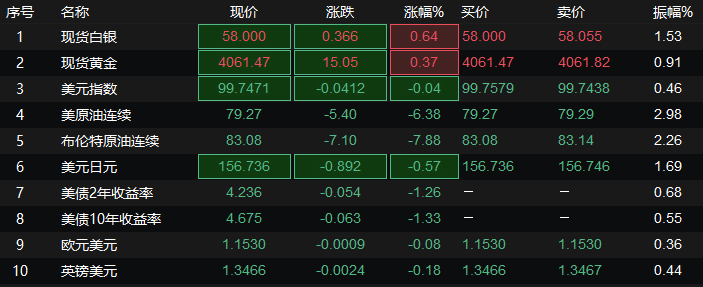
On Monday, during Asian and European trading sessions, the oil market experienced a bloodbath, with Brent crude plunging over 7% and WTI crude falling nearly 6%, marking the largest single-day drop in months. This flash crash stemmed from Trump's optimistic remarks over the weekend regarding a navigation agreement in the Strait of Hormuz, ruthlessly crushing positions betting on geopolitical premiums. However, just hours later, Iran coldly rejected negotiations, distorting the decline into a state of "expectation disconnect." Simultaneously, the US, unusually joining Japan in intervening in the yen's exchange rate, pushed down the dollar-yen exchange rate and drove down US Treasury yields across the board, providing new fuel for the strength of gold and silver. This week also sees the release of the ISM Manufacturing PMI, JOLTS Job Openings, and Friday's non-farm payroll data, requiring traders to prepare for even greater volatility. Core Analysis
Crude Oil's "False Dawn": Expectations Push Oil Prices Down, Reality Could Backfire at Any Time
Brent crude oil prices plummeted nearly 7.5% in a single day, directly triggered by Trump's claim that a Straits of Hormuz navigation agreement was "imminent." The market had previously accumulated a significant geopolitical risk premium, and when signs of easing emerged, bullish investors panicked, even dragging down the US energy sector. However, Iranian officials quickly stated their refusal to negotiate, emphasizing that their focus was solely on shipping arrangements with Oman, not on opening the Straits. Actual ship tracking data shows that the number of vessels transiting the Straits remains extremely limited, with only nine vessels confirmed to have passed, most of which are shadow fleets subject to sanctions. The gap between expectations and reality is widening—if no substantial easing occurs, oil prices may quickly recover from this "mistaken" drop. Shipping discounts and extremely high profits are fueling high-risk transportation activity, but this also means that insurance and freight rates will jump sharply should tensions escalate. Trader sentiment is shifting from extreme optimism to unease, and Brent crude may experience significant volatility around the $80 mark.Joint US-Japan intervention in the yen: a double impact on US Treasury bonds and exchange rates.
The US joining Japan in coordinating its yen purchases for the first time since 1998 is driven by more than just exchange rate concerns. If Japan were to intervene unilaterally and sell off US Treasury bonds on a large scale, it would directly impact the stability of the US Treasury market. The US intervention effectively blocked this risk in the short term, giving US Treasury bonds a much-needed respite. The 0.59% drop in the 2-year Treasury yield and the 10-year yield's sharp decline of 1.08% reflects this logic. Simultaneously, the plunge in oil prices, easing inflation expectations, also accelerated the decline in yields. The dollar weakened against the yen in response. However, intervention alone is unlikely to reverse the yen's trend. If the Bank of Japan does not tighten monetary policy, the yen may weaken again after a short-term strengthening. The decline in US Treasury yields has provided additional support for gold and has allowed the dollar index to struggle to remain flat amidst the divergence among non-US currencies.Gold remains firmly at high levels, supported by both safe-haven demand and interest rates.
Spot gold hovered above $4,050, while silver saw even larger gains. The sharp drop in crude oil prices failed to drag down precious metals; instead, cooling inflation expectations and declining US Treasury yields led to lower real interest rates, boosting gold prices. The Middle East geopolitical premium is unlikely to truly subside after Iran's refusal to negotiate, and coupled with several key US data releases this week, safe-haven demand continues to support gold. Gold prices were largely unaffected by the slight rebound in the dollar, demonstrating the resilience of buying pressure. If the situation in the Hormuz escalates again, or if non-farm payroll data significantly disappoints, gold may challenge for further upward movement.Foreign Exchange Market: Dollar trades sideways, commodity currencies under pressure
The US dollar index rose slightly by 0.01%, remaining almost unchanged. The euro and pound sterling fell narrowly, while the Australian dollar and New Zealand dollar weakened significantly, clearly reflecting the impact of the oil price collapse on the currencies of commodity-exporting countries. The yen strengthened due to intervention. The market currently lacks unilateral momentum, and the dollar's trajectory depends on whether this week's US data strengthens interest rate expectations. If the ISM manufacturing or non-farm payroll data weakens, the dollar may lose support; conversely, if the data remains resilient, high interest rate expectations will push the dollar higher again, putting continued pressure on non-US currencies, especially commodity currencies.Trend Outlook
In the short term, oil prices may see a corrective rebound after excessive declines, as the reality of Iran's refusal to negotiate and the restrictions imposed by the Hormuz remain unchanged. However, any substantial diplomatic breakthrough could push oil prices to new lows, resulting in extremely high risk of two-way volatility. The yen is expected to consolidate at lower levels after intervention; close monitoring of the Bank of Japan for any policy shifts is necessary. Gold benefits from geopolitical uncertainty and declining US Treasury yields, remaining in a relatively strong position. The risk lies in a potential short-term pullback should geopolitical tensions unexpectedly ease or strong US data push yields higher. The downward momentum of US Treasury yields remains in the short term, but this week's non-farm payrolls will be a key variable. In the long term, the normalization of shipping through the Hormuz and the policy divergence among global central banks will dominate asset pricing. Traders should maintain close monitoring of shipping data and diplomatic developments, and be wary of potential sudden changes around the weekend.Frequently Asked Questions
Why did Brent crude oil plunge over 7% in a single day? Trump's signals that a Straits of Hormuz agreement was imminent triggered a massive release of accumulated geopolitical risk premiums, causing a sell-off and a flash crash in oil prices. However, Iran subsequently denied negotiations, suggesting the decline may have overreacted to expectations of easing tensions. Why did the US join Japan in intervening in the yen's decline? Japan's unilateral intervention might require selling US Treasury bonds to raise funds, which would damage the US Treasury market. Coordinated US intervention reduces pressure on Japan to sell bonds, stabilizes US Treasury yields, and curbs the rapid appreciation of the dollar, benefiting both sides in the short term. Why is gold still rising despite the significant drop in oil prices? The sharp drop in oil prices eased inflation expectations, and coupled with declining US Treasury yields, lower real interest rates are actually beneficial for gold. Meanwhile, Iran's refusal to negotiate prevented the dissipation of Middle East geopolitical risks, continuing to support gold prices through safe-haven demand. What does the decline in US Treasury yields mean? On one hand, it reflects safe-haven buying in response to the Middle East situation; on the other hand, the oil price crash suppressed inflation expectations, leading investors to believe the Federal Reserve may have more room to maintain loose monetary policy or slow interest rate hikes, thus driving up US Treasury prices. What risk events should we pay the most attention to this week? Actual navigation data in the Strait of Hormuz and Iranian diplomatic developments are the primary risks. On the economic data front, the US ISM Manufacturing Index, JOLTS Job Openings, and Friday's non-farm payroll report will significantly disrupt interest rate expectations, thereby impacting all asset classes.- Risk Warning and Disclaimer
- The market involves risk, and trading may not be suitable for all investors. This article is for reference only and does not constitute personal investment advice, nor does it take into account certain users’ specific investment objectives, financial situation, or other needs. Any investment decisions made based on this information are at your own risk.