Rising expectations of yen intervention coupled with diverging US-Japan policies led to a slight fluctuation in the USD/JPY pair after its oversold rebound.
2026-08-11 14:06:58
The dollar traded steadily against the yen in Asian trading on Tuesday, fluctuating around 159.30 after rising nearly 1% in the previous session. Trading volume was significantly lower due to a Japanese holiday, temporarily reducing market volatility as investors awaited new policy signals and the release of US inflation data.  The recent yen's exchange rate has been significantly influenced by expectations of policy intervention. Previous actions by Japanese authorities drove a temporary rebound in the yen, but the USD/JPY pair subsequently recovered rapidly, erasing about half of the gains made during the intervention. The market is reassessing whether the Japanese government and the Bank of Japan are willing to take stronger measures to support the yen. Japan's previous reluctance to further expand its coordinated intervention, especially after weak US employment data led to a weakening dollar, did not significantly push the USD/JPY pair lower. This has led some investors to believe that Japan's current strategy may be more about slowing the yen's depreciation than fundamentally changing the long-term trend. This reassessment of the effectiveness of Japanese intervention has kept the USD/JPY pair at high levels . Currently, investors still hold a large number of short yen positions. If market liquidity declines, the risk of policy intervention may increase, especially during periods of thin trading, when the exchange rate is prone to rapid fluctuations. Meanwhile, expectations regarding the Bank of Japan's policy are changing. The market is focused on whether the Bank of Japan will further raise interest rates at its September meeting. The Bank of Japan already adjusted its policy in June, and current domestic price pressures are influenced by multiple factors, including increased demand related to artificial intelligence, continued yen weakness, and rising international oil prices. If the Bank of Japan (BOJ) raises interest rates ahead of schedule, it will change market expectations regarding the speed of policy normalization. Some institutions believe that the market has already begun to increase its bets on the BOJ continuing to raise rates this year. Currently, the market expects a 50% probability of a 25 basis point rate hike by the BOJ in September and believes that the possibility of further policy adjustments this year is increasing. This means that expectations of a narrowing interest rate differential between Japan and the US may gradually strengthen, providing medium-term support for the yen. Regarding the US dollar, weak US employment data has limited further upside potential. The previously released non-farm payroll report, which was lower than expected, has led the market to reconsider the future policy path of the Federal Reserve. The cooling job market has reduced the certainty of a short-term rate hike and put temporary pressure on the dollar. However, the dollar has not completely lost support. Recent increases in oil prices have pushed up US Treasury yields, and the market is refocusing on the impact of energy prices on inflation. If inflationary pressures persist due to rising energy costs, the Federal Reserve may continue to maintain a relatively tight policy, which will support the dollar. Currently, the market will focus on this week's US inflation data, including the Consumer Price Index (CPI) and the Producer Price Index (PPI). These data will help investors judge whether the Federal Reserve will adjust its future policy direction and affect the USD/JPY exchange rate. Meanwhile, recent comments from Federal Reserve officials also indicate that the policy stance has not yet clearly shifted towards easing. Richmond Fed President Thomas Barkin stated that although there are signs of a cooling job market, corporate earnings remain strong, and the economy has not shown significant imbalances. This suggests that there are still voices within the Fed supporting maintaining higher interest rates. From a daily chart perspective, USD/JPY is currently maintaining a high-level consolidation structure, with the price returning above the 159 area, indicating that bulls still hold a certain advantage. The first resistance level to watch is the 160.00 psychological level; a successful break above this level could lead to further testing of the 161.50 to 162.00 area. Support is seen around 158.00, with further support in the 156.80 to 157.00 area. The daily trend remains biased towards a slightly bullish consolidation, but the risk of a rapid pullback due to Japanese policy intervention should be noted. Observing the 4-hour chart, USD/JPY has entered a consolidation phase after its recent rise, with short-term momentum slowing somewhat. The price is currently fluctuating around the 159 area. A break above the 159.80-160.00 range could reopen upside potential; a break below the 158.50 support level could trigger a short-term correction, with a target around 157.50. Short-term price movements will be influenced by expectations of the Bank of Japan's policy, changes in the US dollar index, and US inflation data.
 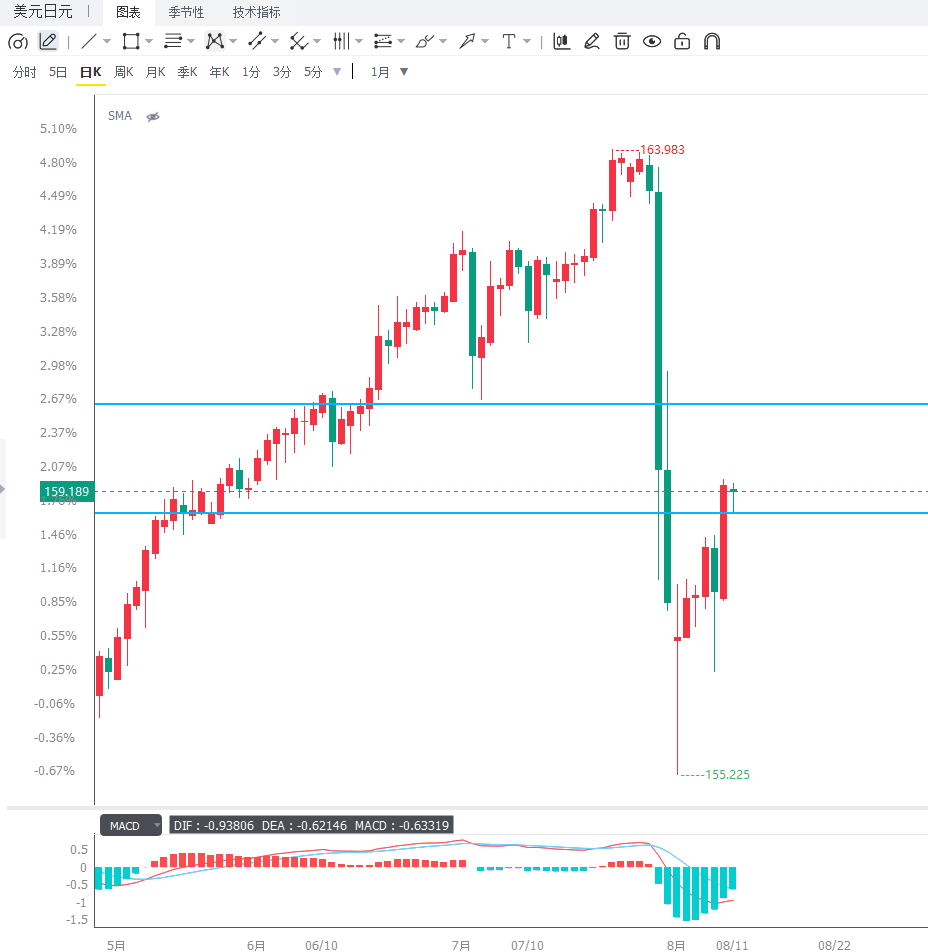 Editor's Summary: The USD/JPY pair is currently in a phase of policy maneuvering. On one hand, the potential for a Bank of Japan interest rate hike and the risk of government intervention limit further depreciation of the yen; on the other hand, high US yields and rising inflation risks provide support for the dollar. The key to future price movements lies in whether Japan takes stronger measures to stabilize its exchange rate and whether the Federal Reserve adjusts its policy expectations due to inflationary pressures. If the Bank of Japan releases clearer tightening signals, the USD/JPY pair may face downward pressure; however, if US data continues to support a high-interest-rate environment, the exchange rate may remain volatile at high levels. The breakout direction from the 159-160 area should be closely monitored.
The recent yen's exchange rate has been significantly influenced by expectations of policy intervention. Previous actions by Japanese authorities drove a temporary rebound in the yen, but the USD/JPY pair subsequently recovered rapidly, erasing about half of the gains made during the intervention. The market is reassessing whether the Japanese government and the Bank of Japan are willing to take stronger measures to support the yen. Japan's previous reluctance to further expand its coordinated intervention, especially after weak US employment data led to a weakening dollar, did not significantly push the USD/JPY pair lower. This has led some investors to believe that Japan's current strategy may be more about slowing the yen's depreciation than fundamentally changing the long-term trend. This reassessment of the effectiveness of Japanese intervention has kept the USD/JPY pair at high levels . Currently, investors still hold a large number of short yen positions. If market liquidity declines, the risk of policy intervention may increase, especially during periods of thin trading, when the exchange rate is prone to rapid fluctuations. Meanwhile, expectations regarding the Bank of Japan's policy are changing. The market is focused on whether the Bank of Japan will further raise interest rates at its September meeting. The Bank of Japan already adjusted its policy in June, and current domestic price pressures are influenced by multiple factors, including increased demand related to artificial intelligence, continued yen weakness, and rising international oil prices. If the Bank of Japan (BOJ) raises interest rates ahead of schedule, it will change market expectations regarding the speed of policy normalization. Some institutions believe that the market has already begun to increase its bets on the BOJ continuing to raise rates this year. Currently, the market expects a 50% probability of a 25 basis point rate hike by the BOJ in September and believes that the possibility of further policy adjustments this year is increasing. This means that expectations of a narrowing interest rate differential between Japan and the US may gradually strengthen, providing medium-term support for the yen. Regarding the US dollar, weak US employment data has limited further upside potential. The previously released non-farm payroll report, which was lower than expected, has led the market to reconsider the future policy path of the Federal Reserve. The cooling job market has reduced the certainty of a short-term rate hike and put temporary pressure on the dollar. However, the dollar has not completely lost support. Recent increases in oil prices have pushed up US Treasury yields, and the market is refocusing on the impact of energy prices on inflation. If inflationary pressures persist due to rising energy costs, the Federal Reserve may continue to maintain a relatively tight policy, which will support the dollar. Currently, the market will focus on this week's US inflation data, including the Consumer Price Index (CPI) and the Producer Price Index (PPI). These data will help investors judge whether the Federal Reserve will adjust its future policy direction and affect the USD/JPY exchange rate. Meanwhile, recent comments from Federal Reserve officials also indicate that the policy stance has not yet clearly shifted towards easing. Richmond Fed President Thomas Barkin stated that although there are signs of a cooling job market, corporate earnings remain strong, and the economy has not shown significant imbalances. This suggests that there are still voices within the Fed supporting maintaining higher interest rates. From a daily chart perspective, USD/JPY is currently maintaining a high-level consolidation structure, with the price returning above the 159 area, indicating that bulls still hold a certain advantage. The first resistance level to watch is the 160.00 psychological level; a successful break above this level could lead to further testing of the 161.50 to 162.00 area. Support is seen around 158.00, with further support in the 156.80 to 157.00 area. The daily trend remains biased towards a slightly bullish consolidation, but the risk of a rapid pullback due to Japanese policy intervention should be noted. Observing the 4-hour chart, USD/JPY has entered a consolidation phase after its recent rise, with short-term momentum slowing somewhat. The price is currently fluctuating around the 159 area. A break above the 159.80-160.00 range could reopen upside potential; a break below the 158.50 support level could trigger a short-term correction, with a target around 157.50. Short-term price movements will be influenced by expectations of the Bank of Japan's policy, changes in the US dollar index, and US inflation data. Editor's Summary: The USD/JPY pair is currently in a phase of policy maneuvering. On one hand, the potential for a Bank of Japan interest rate hike and the risk of government intervention limit further depreciation of the yen; on the other hand, high US yields and rising inflation risks provide support for the dollar. The key to future price movements lies in whether Japan takes stronger measures to stabilize its exchange rate and whether the Federal Reserve adjusts its policy expectations due to inflationary pressures. If the Bank of Japan releases clearer tightening signals, the USD/JPY pair may face downward pressure; however, if US data continues to support a high-interest-rate environment, the exchange rate may remain volatile at high levels. The breakout direction from the 159-160 area should be closely monitored.
- Risk Warning and Disclaimer
- The market involves risk, and trading may not be suitable for all investors. This article is for reference only and does not constitute personal investment advice, nor does it take into account certain users’ specific investment objectives, financial situation, or other needs. Any investment decisions made based on this information are at your own risk.