Oil prices surged to a one-and-a-half-week high due to geopolitical risks, reigniting inflation concerns. How much "external pressure" is on the euro?
2026-08-12 10:54:57
The euro edged lower against the dollar in Asian trading on Wednesday (August 12), currently trading around 1.1535. Traders remained cautious ahead of key data releases—Germany's July HICP and tonight's US CPI data—as well as further developments in the Middle East. Oil prices continued to rise due to geopolitical risks, and inflation concerns kept expectations of a Federal Reserve rate hike on the table, supporting the dollar and limiting the euro's upside. 
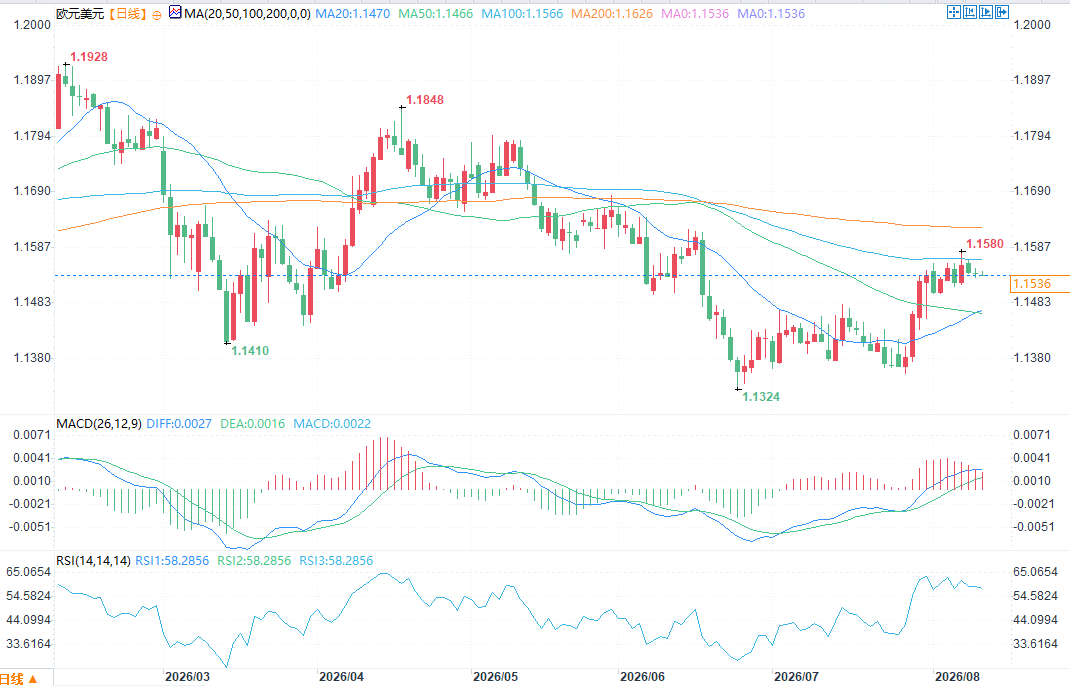 (Euro/USD daily chart, source: FX678) At 10:53 Beijing time on August 12, the euro was trading at 1.1536/37 against the US dollar.
US inflation data becomes a key short-term catalyst.
Market focus has shifted to tonight's US July CPI data and Thursday's PPI data. These two figures will provide new guidance for the Federal Reserve's future policy path and directly impact dollar demand and the euro's exchange rate against the dollar. Given Fed Chairman Warsh's reduced communication and apparent internal divisions, the CPI report will be a key indicator for the market's judgment on whether or not a September rate hike will occur. CME interest rate futures pricing suggests a roughly 50/50 probability of a September rate hike versus maintaining the current rate. A slightly bullish CPI figure will reignite expectations of a rate hike, providing support for the dollar; a moderate figure will solidify a wait-and-see attitude and may put pressure on the dollar.Oil prices continued to rise due to geopolitical risks, while inflation concerns supported the US dollar.
US crude oil futures rose to $84.61 per barrel on Tuesday, a near one-and-a-half-week high, and held near the $84 mark in Asian trading on Wednesday. The immediate cause was a senior advisor to Iran's Supreme Leader stating that the Strait of Hormuz would not reopen until the US met Tehran's conditions. Meanwhile, the Iranian-backed Houthi rebels in Yemen further escalated their attacks on commercial vessels in the Red Sea and the Bab el-Mandeb Strait, particularly targeting ships linked to Saudi Arabia, leading to a significant increase in shipping risk premiums. The continued escalation of geopolitical tensions provided solid support for oil prices and also boosted demand for the safe-haven US dollar. Investors are generally concerned that further increases in energy prices will reignite global inflationary pressures and force major central banks, including the Federal Reserve, to adopt a more hawkish stance. The CME FedWatch tool shows that the market is still pricing in the possibility of at least one Fed rate hike before the end of the year. This expectation supports relatively high US Treasury yields, favoring dollar bulls and effectively limiting the upside potential of the euro against the dollar. If the situation in the Middle East remains deadlocked, oil price volatility could further amplify inflationary uncertainty, narrowing the Fed's policy options. The market is currently weighing two scenarios: "re-emergence of energy-driven inflation" and "economic slowdown that inhibits interest rate hikes." The correlation between oil prices and the US dollar has become an important clue for short-term trading.German HICP data and the outlook for the Eurozone
Later today, Germany's July Unified Consumer Price Index (HICP) will be released, potentially providing short-term guidance for the euro. As the Eurozone's largest economy, Germany's inflation trajectory has historically been a significant indicator of European Central Bank policy expectations and euro sentiment. A higher-than-expected German HICP reading could reinforce concerns about Eurozone inflation stickiness, providing a temporary boost to the euro; conversely, weaker data could further highlight the Eurozone's economic weakness and limited policy space. However, overall, the euro-dollar exchange rate will likely remain primarily influenced by dollar price dynamics and geopolitical news in the short term. Uncertainty surrounding the Federal Reserve's policy path, risk aversion stemming from the Middle East situation, and the impact of oil price volatility on global risk appetite will outweigh the impact of individual Eurozone data. The Eurozone itself faces multiple challenges, including insufficient growth momentum, energy cost pressures, and difficulties in internal policy coordination, making it difficult for the euro to establish independent strength. While paying attention to German data, investors should also closely monitor US CPI results and developments related to the Strait of Hormuz, as these factors are the true driving forces determining the short-term direction of the euro-dollar exchange rate. For the euro to break out of its current range, it still needs a clear signal of a significant weakening of the US dollar or a substantial easing of geopolitical risks.Summarize
The euro is currently trading around 1.1535 against the dollar, with the market awaiting directional guidance from German HICP and US CPI data. Oil prices continue to rise due to geopolitical risks—an advisor to Iran's Supreme Leader stated that the Strait of Hormuz will not open until the US meets its demands, and the Houthi rebels escalated attacks in the Red Sea—fueling inflation concerns and expectations of a Fed rate hike, providing support for the dollar and limiting the euro's upside. CME FedWatch indicates the market is still pricing in the possibility of a rate hike before the end of the year. Ahead of the US CPI data release, the euro is expected to remain range-bound; the data result will determine whether the euro breaks out of its recent range or faces downward pressure. (Euro/USD daily chart, source: FX678) At 10:53 Beijing time on August 12, the euro was trading at 1.1536/37 against the US dollar.
- Risk Warning and Disclaimer
- The market involves risk, and trading may not be suitable for all investors. This article is for reference only and does not constitute personal investment advice, nor does it take into account certain users’ specific investment objectives, financial situation, or other needs. Any investment decisions made based on this information are at your own risk.