The Yen Defense: Goldman Sachs Reveals Japan's Trillion-Dollar "Arsenal," How Many More Rounds of Intervention Can Be Launched?
2026-08-13 11:24:56
Under the spotlight of the global foreign exchange market, the dramatic fluctuations in the Japanese yen exchange rate have consistently captivated investors. Recently, after a historic intervention-driven surge, the yen has once again slid to key lows, reigniting concerns about the Japanese Ministry of Finance's ability to sustain intervention. In response to this core concern, Goldman Sachs' latest assessment provides a clear answer: Japan possesses approximately $1 trillion in foreign exchange reserves, with ample available liquidity. Combined with the liquidity support mechanisms provided by the Federal Reserve, this theoretically allows for multiple rounds of yen buying operations similar in scale to last month. However, Goldman Sachs also cautions that intervention is ultimately merely a stopgap measure to buy time for policy adjustments. The long-term trajectory of the yen exchange rate will still depend on the carry trade logic driven by interest rate differentials and the actual trajectory of monetary policies in both the US and Japan. 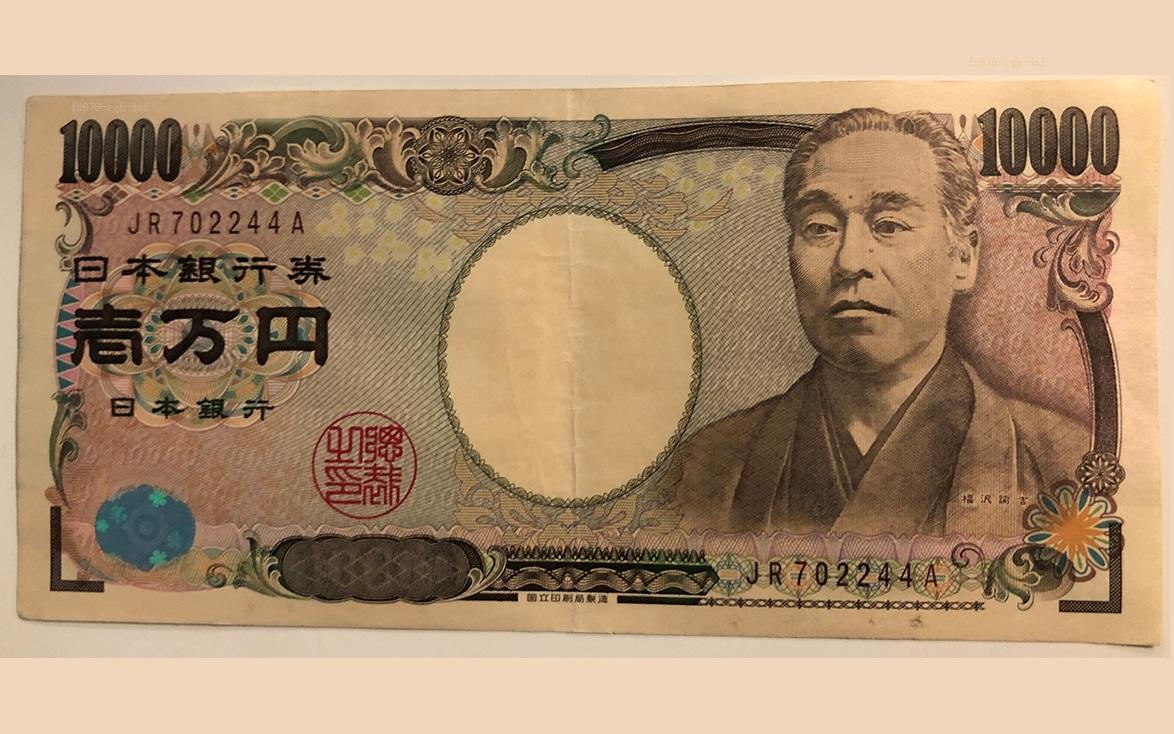
I. Ample "liquid cash" reserves: the solid foundation for intervention capabilities
In its latest podcast episode, Goldman Sachs Research broke down Japan's intervention financing capabilities in detail. According to the bank's calculations, of Japan's approximately $1 trillion in dollar-denominated foreign exchange reserves, about $200 billion is held in cash or highly liquid cash equivalents. This portion of assets can be considered the "first tier" of ammunition readily available for direct sale. Goldman Sachs strategist Karen Fishman pointed out that with this $200 billion in readily available funds alone, Japan could repeat the near-record level of yen-buying interventions seen last month several times over. She further emphasized that while policymakers would never actually deplete all reserves in practice, this figure is sufficient to demonstrate that, should the Japanese authorities so choose, their ability to continuously inject dollars and boost the yen in the foreign exchange market remains quite substantial.II. The support of the Federal Reserve mechanism: a theoretically "unlimited" backing
In addition to its own cash reserves, Goldman Sachs specifically mentioned a liquidity backdoor often overlooked by the market—the Federal Reserve's Foreign and International Monetary Authority Repurchase Facility (FIRFORM). This mechanism allows central banks to borrow US dollars from the Fed using their holdings of US Treasury bonds as collateral, thereby quickly raising the dollar positions needed for intervention without having to sell US Treasury bonds in the secondary market. Fishman explained that, using this tool, Japan could theoretically convert its entire foreign exchange reserves of approximately $1 trillion (including non-cash US Treasury bonds) into readily available liquidity. This prospect has significantly altered the market's risk pricing logic. Praneet Shah, head of foreign exchange options trading at Goldman Sachs, revealed that after clients learned last week that the Fed's mechanism could "activate" trillions of dollars in reserves, market participants' bullish sentiment towards the yen has significantly increased. The premium for short-term yen call options in the options market remains high, reflecting traders' wariness of a sudden jump in the exchange rate. This wariness itself has also, to some extent, suppressed the willingness of short sellers to continue adding positions near the 160 level.III. The Effectiveness and Reversal of Historical Intervention: A Difficult Game of Time
Last month, in the context of the first joint intervention by Japan's Ministry of Finance and the Federal Reserve since 1998, Tokyo deployed a staggering $85 billion in the first two trading days—a scale second only to the single intervention following the Fukushima nuclear disaster in 2011. The intervention successfully pushed the yen above its 200-day moving average, to approximately 155.30 yen to the US dollar. However, this upward momentum was short-lived. As carry trades regained dominance in the market, the yen has recently given back about half of its gains, slipping back to near the key psychological level of 160 yen. Goldman Sachs commented that intervention is never a sustainable solution; its fundamental purpose is merely to buy policymakers valuable time. The interventions implemented by Japan alone in April and May serve as a cautionary tale—after a brief rally, the yen again fell to its lowest level in forty years within months.IV. Triggers for Future Intervention: Interest Rate Spreads, Data, and Central Bank Meetings
Regarding the market's biggest concern—"when will the government intervene again?"—Goldman Sachs believes the key variable triggering a new round of intervention is not a specific exchange rate level, but rather the widening yield spread between US and Japanese government bonds. Currently, the yield on 10-year US Treasury bonds is approximately 4.69%, while the yield on 10-year Japanese government bonds is only 2.84%, a positive spread of nearly 185 basis points. This constitutes the core driver for carry traders to continuously sell yen and buy dollars. Domestically in Japan, current market pricing indicates a roughly 65% probability of the Bank of Japan raising interest rates by 25 basis points at its September policy meeting, with a cumulative tightening expected to be around 40 basis points this year. Goldman Sachs points out that if the Bank of Japan fails to deliver on its September rate hike expectations, the yen will soon face renewed depreciation pressure. Conversely, in the US, any weaker-than-expected economic data, especially inflation and employment indicators, could weaken the necessity for further rate hikes by the Federal Reserve, thereby alleviating the passive pressure on the yen. Shah illustrated this point with an example from July of this year—when Japan's Ministry of Finance intervened forcefully just as US CPI data fell short of expectations, followed by lower-than-expected non-farm payrolls. The combined effect of these two factors amplified the intervention's effectiveness. Therefore, the market is currently highly sensitive to the key data to be released later this week, and any unexpected downside could quickly increase market expectations for further Japanese intervention.V. Conclusion: Intervention is unlikely to change the overall trend; interest rate hikes are the fundamental solution.
In summary, Goldman Sachs' analysis clearly outlines the current state and boundaries of Japan's foreign exchange intervention: In the short term, ample dollar cash reserves and the Federal Reserve's liquidity tools do indeed give the Japanese authorities strong intervention firepower, sufficient to conduct effective counter-cyclical operations during periods of sharp exchange rate fluctuations. However, this artificial exchange rate management cannot fundamentally reverse the capital flow trend driven by interest rate differentials. If the Bank of Japan cannot normalize monetary policy at a pace faster than the market expects, the medium-term depreciation pressure on the yen driven by carry trades will persist. For investors, closely monitoring the statements from the Bank of Japan's September meeting and the pace of US economic data is far more practical than speculating on specific intervention points. The final anchoring of the yen exchange rate will still depend on the day when the monetary policies of the two countries truly converge.Frequently Asked Questions
Question 1: Of Japan's approximately $1 trillion in foreign exchange reserves, how much is truly readily available for intervention? How is this money held? Answer: According to Goldman Sachs' estimates, of Japan's approximately $1 trillion in dollar-denominated foreign exchange reserves, about $200 billion is held in cash or cash equivalents (such as short-term treasury bills, overnight deposits, etc.). This portion of assets is highly liquid and can be sold directly in the spot foreign exchange market at any time to obtain yen for intervention. The remaining approximately $800 billion is mainly allocated to securities such as longer-term US Treasury bonds. Direct sales of these securities could face price fluctuations and market shock costs, and are therefore usually considered a "second line of defense." However, in emergencies, they can also be used through repurchase agreements or collateral. Question 2: What exactly is the Federal Reserve's FIMA repurchase mechanism? How does it help Japan expand its intervention capabilities? Answer: The FIMA repurchase mechanism is a standing liquidity facility established by the Federal Reserve for foreign official institutions. When the Japanese Ministry of Finance needs more US dollar cash for intervention but does not want to sell off its holdings of US Treasury bonds on a large scale in the secondary market (to avoid triggering a surge in US Treasury yields), it can use these US Treasury bonds as collateral to borrow overnight or short-term US dollar funds from the Federal Reserve. This means that Japan theoretically does not need to actually sell all of its US Treasury bond holdings to convert its entire "trillion-dollar reserve mountain" into usable liquidity. The existence of this mechanism greatly reduces the financing costs and market disturbance risks of intervention, enhancing Japan's confidence in continuing its operations. Question 3: How large was Japan's intervention last month (July 2026)? How did the yen exchange rate perform after the intervention, and why has it fallen back now? Answer: Goldman Sachs estimates that Japan used approximately $85 billion in the first two trading days of last month's intervention, one of the largest two-day interventions in Japanese history, second only to the single-day record after the Fukushima disaster in 2011. The intervention pushed the yen from a forty-year low of nearly 164 to around 155.30, breaking through the key 200-day moving average. However, due to the persistent large interest rate differential of nearly 185 basis points between the US and Japan, carry traders quickly re-established short positions in the yen, causing the yen to give back about half of its gains within a few weeks and is now approaching the 160 level again. This fully demonstrates that unilateral intervention is difficult to counteract the deeply ingrained interest rate differential-driven logic. Question 4: Why does Goldman Sachs believe that intervention is "not a sustainable solution"? Why is the Bank of Japan's interest rate hike so crucial? Answer: Intervention essentially changes supply and demand at a specific point in time through a one-off buying and selling operation, but it cannot change the relative yield difference between the two currencies. As long as US interest rates are significantly higher than Japanese rates, investors have an incentive to borrow low-interest yen and buy high-interest dollar assets, and this carry trade flow will continue to suppress the yen. Therefore, the truly sustainable solution lies in the Bank of Japan accelerating its interest rate hikes to narrow or even eliminate the US-Japan interest rate differential. The market currently expects a 65% probability of the Bank of Japan raising interest rates by 25 basis points in September. If this does not materialize, the yen will face a new round of selling pressure. Conversely, if the Bank of Japan tightens at a faster-than-expected pace, the risk-free profits of carry trades will be compressed, and the yen may then experience a trend reversal. Question 5: What specific factors are most likely to trigger Japan to intervene in the foreign exchange market again in the future? How should investors anticipate this? Answer: Goldman Sachs believes that the direct trigger for a new round of intervention is not a fixed exchange rate value, but rather the following two scenarios: First, the economic data released by the United States is significantly weaker than expected (such as CPI, non-farm payrolls, retail sales, etc.), which will reduce the Fed's interest rate hike expectations, push down US Treasury yields, and thus alleviate the passive depreciation pressure on the yen. At this time, the Japanese authorities may take advantage of the situation to intervene in a coordinated manner to amplify the effect; Second, the Bank of Japan's September meeting releases a more dovish signal than the market expects, causing the yen to depreciate rapidly and break through previous lows. At that time, the Ministry of Finance may be forced to intervene in the market to stabilize the exchange rate during the sharp decline. Investors should pay close attention to the release schedule of US and Japanese economic data and public speeches by central bank officials, especially any unexpected information that deviates from market consensus. These are often the most sensitive "switches" for policy action. At 11:21 Beijing time, the USD/JPY exchange rate is currently at 159.47/48.- Risk Warning and Disclaimer
- The market involves risk, and trading may not be suitable for all investors. This article is for reference only and does not constitute personal investment advice, nor does it take into account certain users’ specific investment objectives, financial situation, or other needs. Any investment decisions made based on this information are at your own risk.