The continued depletion of water resources directly constrains electricity production and threatens global energy security.
2026-08-18 12:08:59
The current global shortage of strategic materials is a major concern, and supply disruptions in various minerals and oil and gas resources continue to impact the market. However, the easily overlooked water crisis is becoming a core hidden danger impacting the global energy system. Affected by global climate change, the global hydrological environment has changed dramatically, and water resources in many countries are continuously shrinking, directly constraining power production and energy operations, creating a complex crisis where water and energy mutually constrain each other. Traditional market-based regulation models are insufficient to resolve the rigid demand for water resources. Coupled with a lack of policy planning and lagging infrastructure, this hidden crisis is rapidly escalating, profoundly affecting the long-term landscape of the global energy industry.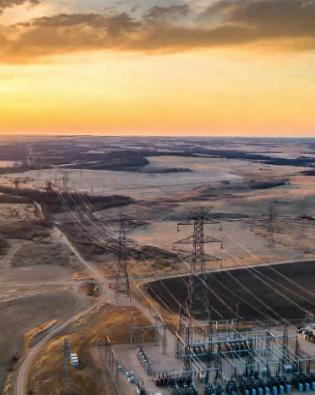 Currently, water consumption for power generation in the United States accounts for one-third of the country's total water consumption, and current policies further exacerbate the supply-demand imbalance. The Trump administration halted offshore wind power projects that do not require freshwater, vigorously supported water-intensive nuclear and coal-fired power industries, and weakened water resource management efforts, further reducing available water resources and exacerbating the imbalance between energy and water supply and demand.
Global hydrological environment deterioration has plunged the energy industries in the US and Europe into a water crisis.
Climate change-induced temperature increases and disrupted rainfall have already caused substantial resource depletion. The Colorado River in the United States continues to experience declining flow, and Lake Mead, its core reservoir, has fallen to a historic low. This not only affects water supply for residents in the southwestern United States but also reduces the power generation capacity of the Hoover Dam downstream, leaving major California metropolitan water agencies facing simultaneous shortages of both water and electricity. The European energy sector is also under pressure, with insufficient river flow to meet the cooling water needs of coal-fired and nuclear power plants , as well as to support shipping fuel transportation. This, coupled with extreme high temperatures eroding the efficiency of power transmission and distribution equipment, has led to a continuous decline in power system stability. Furthermore, the rapidly expanding artificial intelligence computing centers are highly dependent on water resources for operation and maintenance , further exacerbating the water shortage in the energy sector. Currently, water consumption for power generation in the United States accounts for one-third of the country's total water consumption, and current policies further exacerbate the supply-demand imbalance. The Trump administration halted offshore wind power projects that do not require freshwater, vigorously supported water-intensive nuclear and coal-fired power industries, and weakened water resource management efforts, further reducing available water resources and exacerbating the imbalance between energy and water supply and demand.The market regulation mechanism has failed, making it difficult to resolve the water resource crisis on its own.
The traditional approach of market-driven pricing is ill-suited to the energy crisis stemming from the inescapable nature of water resources. From a natural perspective, rising water prices do not increase natural precipitation; they only slightly promote water conservation, greywater reuse, and seawater desalination, offering very limited relief. From a social perspective, water is an irreplaceable necessity for survival for all citizens. Simply raising prices and allocating resources to large industrial energy consumers would trigger serious social and livelihood conflicts, making such measures impractical for government implementation. From an economic and institutional perspective, current water prices cannot cover the long-term social and environmental costs of water resource development and use, creating significant resistance to policy-driven price increases. Furthermore, the complex responsibilities and vested interests within national water resource management systems, coupled with outdated water conservancy and power infrastructure adapted to historically altered hydrological environments, and the severe lag in industry upgrading due to limitations in funding, understanding, and ingrained concepts, have sown the seeds of a long-term crisis.Policy gaps coupled with social risks have accelerated the emergence of a complex crisis.
Currently, the US government has not introduced a comprehensive governance plan for water and energy, deliberately avoiding the destructive impact of climate change on these two major industries, and lacking a forward-looking risk prevention mechanism. Economist Herb Stein stated, "What cannot last forever will eventually come to an end." Water shortages leading to power shortages, environmental pollution, and rising prices are continuously accumulating negative social sentiment, and potential political and social risks are constantly escalating. Global society is experiencing a return to the chaos of its extensive development phase, which will inevitably lead to systemic adjustments and backlash.Conclusion
In summary, water scarcity is no longer simply an environmental issue, but a core bottleneck restricting the development of the global energy industry. With a fixed total water resource volume and continuously rising demand, traditional regulation models and industry development systems have become ineffective. Compared to various scarce mineral resources, water resources have a more fundamental strategic value and will inevitably become a core commodity of essential necessity influencing the global economic and energy landscape in the 21st century.- Risk Warning and Disclaimer
- The market involves risk, and trading may not be suitable for all investors. This article is for reference only and does not constitute personal investment advice, nor does it take into account certain users’ specific investment objectives, financial situation, or other needs. Any investment decisions made based on this information are at your own risk.