World Gold Council: Gold Macro Pricing Framework and Latest Market Analysis
2026-08-18 20:15:00
The World Gold Council (WGC) employs a classic multi-factor pricing model to analyze gold prices, focusing on four core dimensions: US inflation and Federal Reserve policy expectations, real yields on US Treasury bonds (opportunity cost), the strength of the US dollar, and geopolitical risks and capital momentum. Combining the latest global macroeconomic data and market changes, the WGC has provided a systematic qualitative assessment and outlook for the current gold price rebound. 
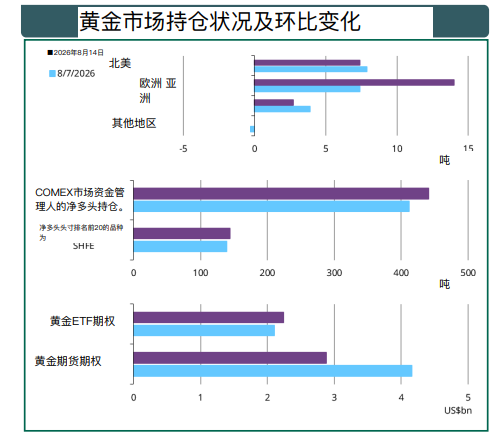 (Chart showing changes in global ETF holdings, source: World Gold Council)
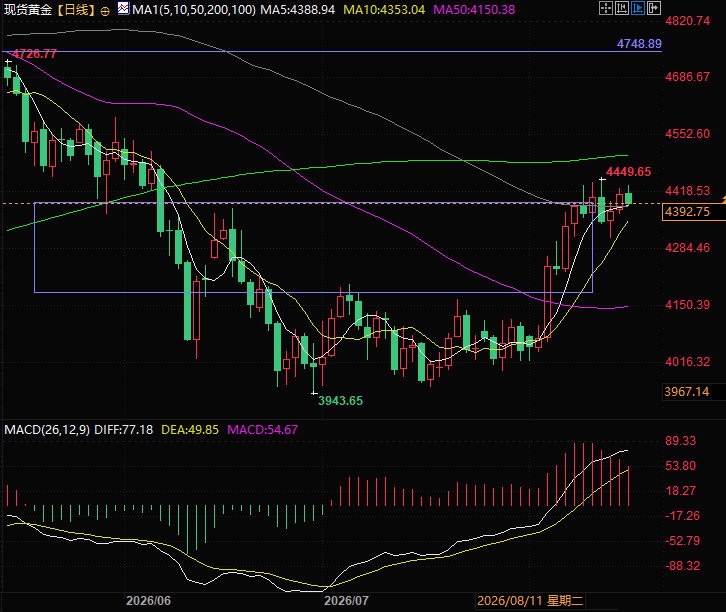 (Spot gold daily chart, source: FX678) At 20:09 Beijing time, spot gold is currently trading at $4391.22 per ounce.
Inflation and Federal Reserve Policy Expectations: The Core Drivers of the Current Gold Price Rebound
Gold's core pricing anchor is the Federal Reserve's monetary policy path, and policy expectations are determined by inflation and economic data. Recent US inflation continues to cool, PPI has fallen more than expected, coupled with significantly weaker retail sales and declining consumer confidence, meaning the market has largely priced in a September Fed rate hike. Weaker economic data has eased market concerns about continued tightening, suppressing the upside potential for nominal interest rates and repairing gold's valuation. Although this week's FOMC meeting minutes contained potentially hawkish statements, the weak economic data released after the meeting has already dominated market expectations, and the fundamental support for further Fed rate hikes is insufficient, providing continued macroeconomic support for gold.US Treasury yield (opportunity cost logic): the most intense pricing factor in the battle between bulls and bears.
Gold's non-interest-bearing asset nature determines that the real yield on US Treasury bonds is gold's greatest opportunity cost and also the most heavily weighted medium- to long-term factor in the WGC model. In the short term, the cooling of the US economy and the fading expectations of interest rate hikes have led to a slight decline in US Treasury yields. Coupled with room for short covering in CTA Treasury positions, this further suppresses yields and benefits a rebound in gold prices. However, medium- to long-term risks have not been eliminated: long-term US Treasury yields have broken through their multi-year trading range, and upward pressure remains, with the 10-year real yield still holding firm at a high level. The World Gold Council emphasizes that the continued rise in long-term interest rates will be the core negative factor limiting a significant unilateral increase in gold prices, making this round of gold rebound a "correction rally" rather than a trend-driven bull market.US Dollar Index Pricing: Short-Term Weakness Provides Mild Support for Gold
The strength of the US dollar directly affects the purchasing power of gold denominated in US dollars. Currently, the US dollar index is facing resistance at high levels and has fallen below key moving averages, putting downward pressure on the dollar in the short term and creating a moderate upward environment for gold. However, the association also points out that the dollar has not formed a trend of sharp decline, but only a phase of correction. Therefore, the support from the dollar for gold is neutral to slightly positive, not a strong driver, and is unlikely to push gold prices up explosively.Geopolitical risks and the structure of global inflation: limiting the rate of increase and creating a ceiling for volatility.
Stagnant US-Iran negotiations and escalating shipping risks in the Taiwan Strait have pushed crude oil prices to high levels. The resilience of energy inflation driven by geopolitical factors enhances gold's safe-haven status as an inflation hedge, supporting gold prices. However, high oil prices also raise renewed inflationary risks, constraining expectations of further easing by the Federal Reserve, creating a two-way hedging effect on gold prices and significantly limiting upside potential. Meanwhile, the global inflation structure is clearly diverging: deflationary pressures are rising in China, inflation is declining in Europe and the US, and inflation remains high in Japan, South Korea, and India. This global pricing disorder further exacerbates the volatile nature of gold. Furthermore, global agricultural commodity indices are approaching their long-term upper limit, and extreme weather and geopolitical supply chain disruptions may trigger a rebound in food inflation, potentially continuing to drive yield fluctuations and intensifying the volatile nature of gold prices.Fund Momentum and Market Sentiment: Confirming the Validity of This Rebound
The World Gold Council also incorporated the money momentum factor to verify the sustainability of the market trend. Currently, global gold ETF buying is recovering, net long positions in futures are rising continuously, and bullish sentiment in the options market is strong. The money supply confirms the validity of this bottom reversal, providing important support for gold prices to stabilize and rebound. However, profit-taking at higher levels is gaining momentum, which is not conducive to a rapid breakthrough in the short term. (Chart showing changes in global ETF holdings, source: World Gold Council)World Gold Council Final Conclusion
Based on a comprehensive analysis of all pricing factors, the WGC (World Gold Council) has released its latest assessment: Gold is currently in a phase of range-bound recovery supported by macroeconomic factors, suppressed by medium- to long-term negative factors, and undergoing a corrective upward trend. Weak US economic data, expectations of interest rate cuts, a temporary weakening of the US dollar, and capital inflows have collectively driven a bottoming-out reversal in gold prices. However, the upward trend in long-term US Treasury yields remains unchanged, energy and geopolitical inflation persists, and strong resistance levels above limit the likelihood of a sustained bull market in gold prices in the short term. The overall outlook is characterized by a slightly bullish bias with limited upside potential; the rebound is seen as a structural correction rather than a new upward trend. (Spot gold daily chart, source: FX678) At 20:09 Beijing time, spot gold is currently trading at $4391.22 per ounce.
- Risk Warning and Disclaimer
- The market involves risk, and trading may not be suitable for all investors. This article is for reference only and does not constitute personal investment advice, nor does it take into account certain users’ specific investment objectives, financial situation, or other needs. Any investment decisions made based on this information are at your own risk.