Trump expresses dissatisfaction with interest rate policy and publicly criticizes the Federal Reserve.
2026-08-20 11:20:58
Early Thursday morning (August 20) Beijing time, US President Trump publicly expressed strong dissatisfaction with the Federal Reserve's monetary policy. His core demand was clear: even with current robust US economic data, the Fed should continue its loose monetary policy and accelerate the pace of interest rate cuts to meet economic development needs and alleviate debt pressure. This statement, simultaneously targeting the interest rate levels of major global economies and directly criticizing the irrationality of US interest rate policy, coincided with the release of the Fed's latest policy meeting minutes, further escalating the controversy surrounding US monetary policy.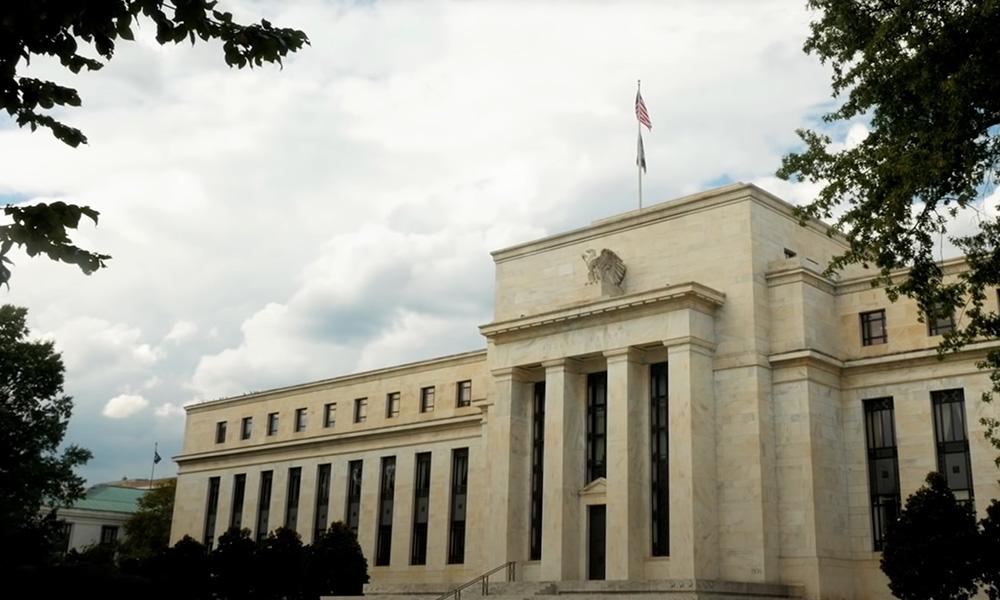
Trump comments on Federal Reserve personnel and policy inclinations
Trump continued his past criticism of the Federal Reserve, publicly questioning the political motives behind the decisions of most Fed officials, but deliberately differentiated his treatment of the newly appointed Fed Chairman, Kevin Warsh. Earlier this year, Trump nominated Warsh to head the Fed, and Warsh officially took office in May, succeeding Jerome Powell, a former Fed Chairman who had been heavily criticized by Trump. Trump stated that Warsh's performance since taking office has been excellent and deserves recognition. Powell, after stepping down as chairman, retains his seat on the Fed's board of governors and continues to participate in various Fed decision-making processes. Trump admitted to the media that the core problem with the Fed is the political nature of the board of governors as a whole . He explained that members of the Fed's board of governors are appointed by multiple US administrations, including those appointed during the Obama, Biden, and his own terms, with many former officials still in office, directly influencing interest rate decisions. Trump stated that he cannot determine whether officials' insistence on higher interest rates is based on professional judgment or political interference.The current state of Federal Reserve interest rate cuts and Trump's core demands
In terms of actual policy implementation, the Federal Reserve has not raised interest rates for more than three consecutive years, and its monetary policy has generally been accommodative. The Fed completed three rate cuts in 2024 and three more in the second half of 2025, continuously sending a easing signal. However, Trump believes that such frequency and intensity of rate cuts are far from sufficient and cannot meet the actual needs of US economic development. Trump pointed out that rate cuts are a key measure to maintain stable US economic growth and alleviate debt pressure. Currently, the US debt is close to $40 trillion, and the high interest rates have significantly increased the cost of national debt financing, exacerbating the fiscal burden. He compared this to past economic patterns, stating that 25 years ago, when US economic data was positive, market interest rates would decline accordingly, reflecting the positive effect of a strong economy; but now the market logic has completely reversed, the brighter the economic data, the higher the market interest rates remain, indicating a serious imbalance in policy adaptability.Latest economic data and the Federal Reserve's policy stance
At the same time as Trump's remarks, the Federal Reserve released the minutes of its July policy meeting. The minutes showed that most Fed officials believed it necessary to maintain relatively high interest rates unless inflation data showed a substantial and sustained decline. While current US inflation data has improved slightly, the annual inflation rate remains significantly higher than the Fed's 2% target, indicating that inflationary pressures have not been completely eliminated. Regarding economic growth, the US economy is slowing, with an annualized growth rate of only 1.5% in the second quarter, lower than market expectations and significantly lower than the 2.1% growth rate in the first quarter. This weakening momentum of economic recovery further highlights the necessity and urgency of adjusting monetary policy.International Interest Rate Comparison and US Fiscal Support Measures
Trump also criticized the drawbacks of US interest rate policy through international comparisons. He specifically mentioned Switzerland, which faces a unique market environment of low inflation and an overly strong safe-haven attribute for its currency, with its benchmark interest rate remaining at a low range of 0.5% for a long time, while the US benchmark interest rate is as high as 3.5%, significantly higher than the Swiss level. Trump stated bluntly that he has the full right to take measures to adjust trade and economic relations between the US and Switzerland. At the same time, Trump believes that even though the current interest rates are high and unreasonable, there is no systemic risk in the US bond market. On Wednesday evening Beijing time, news broke of new US fiscal policies, with the US Treasury Department announcing an upgrade to its bond repurchase program. This policy adjustment addresses the current market situation of soaring US long-term debt yields, focusing on long-term bonds with maturities of 10 years and above, stabilizing the long-term bond market through increased repurchase operations, and complementing the Federal Reserve's monetary policy to help stabilize market volatility.Summarize
In summary, the US economy currently faces multiple challenges, including slowing growth, high inflation, and significant debt pressure. The Federal Reserve's cautious and conservative pace of interest rate cuts contrasts sharply with the aggressive easing policies advocated by Trump. The gap between domestic and international interest rates, divergent economic data, and the coordinated adjustments of fiscal and monetary policies also make the future direction of US interest rates highly uncertain, potentially continuing to impact the US economic recovery and global financial market trends.- Risk Warning and Disclaimer
- The market involves risk, and trading may not be suitable for all investors. This article is for reference only and does not constitute personal investment advice, nor does it take into account certain users’ specific investment objectives, financial situation, or other needs. Any investment decisions made based on this information are at your own risk.