Record exports, yet a widening trade deficit! The yen's "willingness is matched by its weakness."
2026-08-20 11:30:59
On Thursday (August 20) during Asian trading hours, the USD/JPY pair rebounded to around 158.40 after falling 0.9% overnight. Japan's July trade data was mixed – exports surged 23.2% year-on-year, the largest increase in nearly three years, but imports grew even faster (27.8%), leading to a widening trade deficit to 634.5 billion yen, marking the third consecutive month of deficit and the largest gap since January. High energy import costs and the continued widening of the USD/JPY interest rate differential jointly weighed on the yen. The US Treasury's direct involvement in bond purchases, doubling the scale of long-term Treasury bond repurchases to $4 billion, caused the dollar to weaken across the board during the London afternoon trading session. 
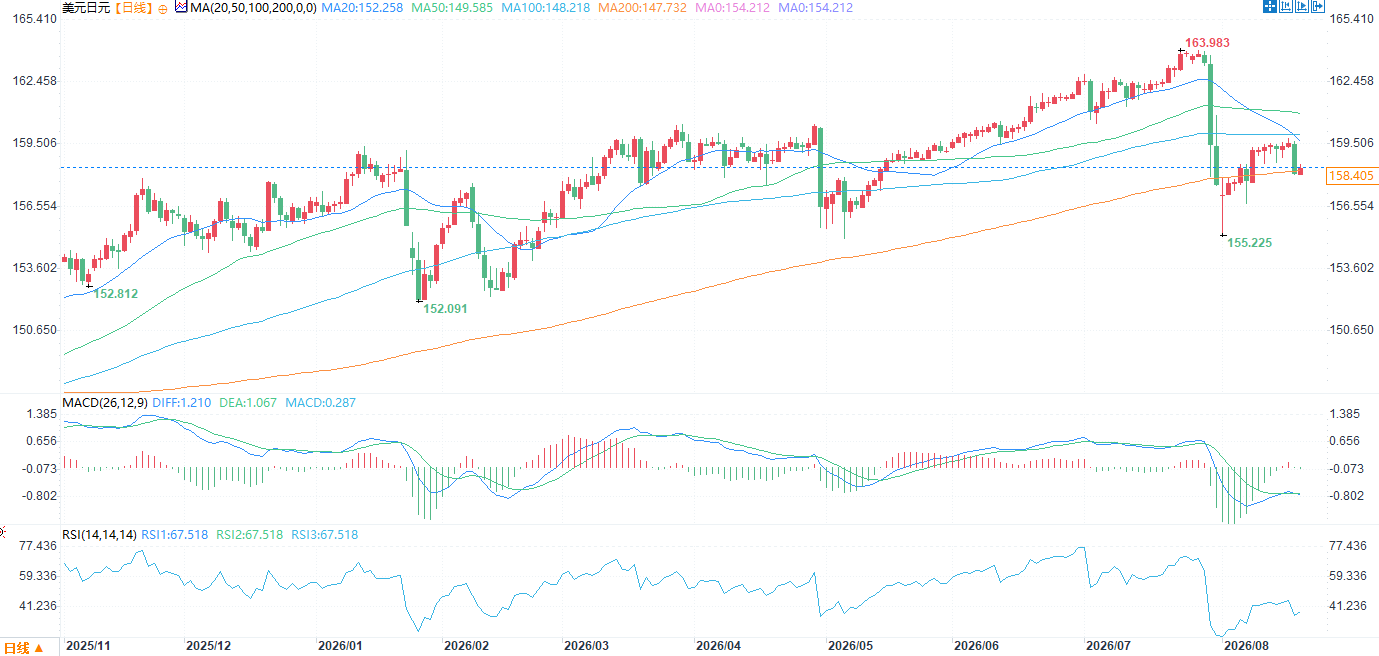 (USD/JPY daily chart, source: EasyForex) At 11:29 Beijing time on August 20, the USD/JPY exchange rate was 158.42/43.
Trade data: Exports hit a record high, imports surged even more, and the trade deficit continued for three consecutive months.
Japan's trade data for July was released on Thursday. Exports surged 23.2% year-on-year to 11.51 trillion yen, far exceeding the expected 19.9% and marking the largest increase since October 2022, reaching a record high. Imports also hit a record high, soaring 27.8% year-on-year to 12.15 trillion yen, exceeding the expected 26.5% and marking the largest increase since November 2022. While both imports and exports reached record highs, imports grew faster, leading to a widening trade deficit to 634.5 billion yen. Although lower than the market expectation of 680 billion yen, this marks the third consecutive month of deficit and the largest gap since January. Energy imports are the core variable driving the widening deficit—with global oil prices remaining high due to geopolitical risks, Japan's structural vulnerability as a major energy importer continues to be exposed.Yen pressure: Triple pressure from interest rate differentials, energy costs, and fiscal concerns.
The yen continues to face pressure from multiple dimensions. The US-Japan interest rate differential remains a core drag – the Federal Reserve's policy rate remains high at 3.5%-3.75%, while the Bank of Japan's real interest rate remains negative even after raising rates to 1.00% in June. Against the backdrop of divergent policy paths among major central banks globally, carry trades continue to exert structural selling pressure on the yen. Meanwhile, persistently high energy import costs are directly eroding Japan's terms of trade. The widening trade deficit indicates weakening fundamental support for the yen at the current account level. Fiscal concerns also exist; the funding sources for government tax cuts remain unclear, further exacerbating market anxieties about Japan's fiscal discipline. Societe Generale strategists believe a medium-term yen recovery is possible, but depends on additional conditions – "A yen recovery may occur at the appropriate time, but only if a new round of foreign exchange intervention pushes the USD/JPY lower, unless oil prices fall significantly, eliminating the adverse factors on the growth outlook." This assessment implies that a directional reversal in the yen's direction remains highly dependent on external triggers – either renewed intervention by Japanese authorities or a substantial decline in global energy prices.Cooling interest rate hike expectations coupled with the impact of repurchase agreements
Regarding the US dollar, the minutes of the Federal Reserve's July meeting showed that officials favored raising interest rates as soon as possible if inflation did not cool down, but recent monthly data pointed to moderate price pressures, weakening the case for aggressive tightening. The US Treasury announced on Wednesday that it would double the limit on single repurchase agreements of long-term Treasury bonds from $2 billion to at least $4 billion, a move aimed at reversing the bond market sell-off in the short term. Impacted by the conflict with Iran, the yield on 10-year US Treasury bonds had previously risen by nearly 70 basis points, reaching a high of 4.74%, while the 30-year mortgage rate subsequently rose to 6.75%. The continued surge in yields not only exacerbated the pressure on homebuyers, disrupted corporate financing, and suppressed stock market valuations, but also significantly increased the financing costs of the US government's massive debt. The CME FedWatch tool showed that the market's probability of a 25 basis point rate hike in September had fallen from 47% the previous month to 32.7%. This trend limited the upside potential of the US dollar.Summarize
Japan's trade deficit widened to ¥634.5 billion in July, marking the third consecutive month of deficit. While exports hit a record high, imports grew even faster. High energy import costs, coupled with a widening interest rate differential between the US and Japan, continued to weigh on the yen. The Fed minutes were hawkish, but the probability of a September rate hike has fallen to around 33%, limiting the dollar's upside potential. In the short term, the USD/JPY pair is likely to fluctuate between 158.00 and 159.50, awaiting a new catalyst—possibly further intervention by the Bank of Japan, or a trend reversal in oil prices. (USD/JPY daily chart, source: EasyForex) At 11:29 Beijing time on August 20, the USD/JPY exchange rate was 158.42/43.
- Risk Warning and Disclaimer
- The market involves risk, and trading may not be suitable for all investors. This article is for reference only and does not constitute personal investment advice, nor does it take into account certain users’ specific investment objectives, financial situation, or other needs. Any investment decisions made based on this information are at your own risk.