The joint efforts of the US and Japan to prop up the yen have unexpectedly spurred a resurgence of carry trades.
2026-08-21 13:47:01
On the evening of July 30th, Beijing time, the US and Japan conducted their first joint foreign exchange intervention in decades, with the market initially expecting it to reverse the yen's continued depreciation. However, subsequent capital flows revealed an unexpected side effect: the yen strengthened temporarily, providing a more favorable entry window for institutional investors, with many using this opportunity to further increase their carry trades. Although the intervention briefly boosted the yen's exchange rate, it did not change the trading logic driven by Japan's low-interest-rate environment. The significant bond yield spread between Japan and the US remains the core driver of cross-border capital flows, making it difficult to truly alleviate the medium- to long-term depreciation pressure on the yen.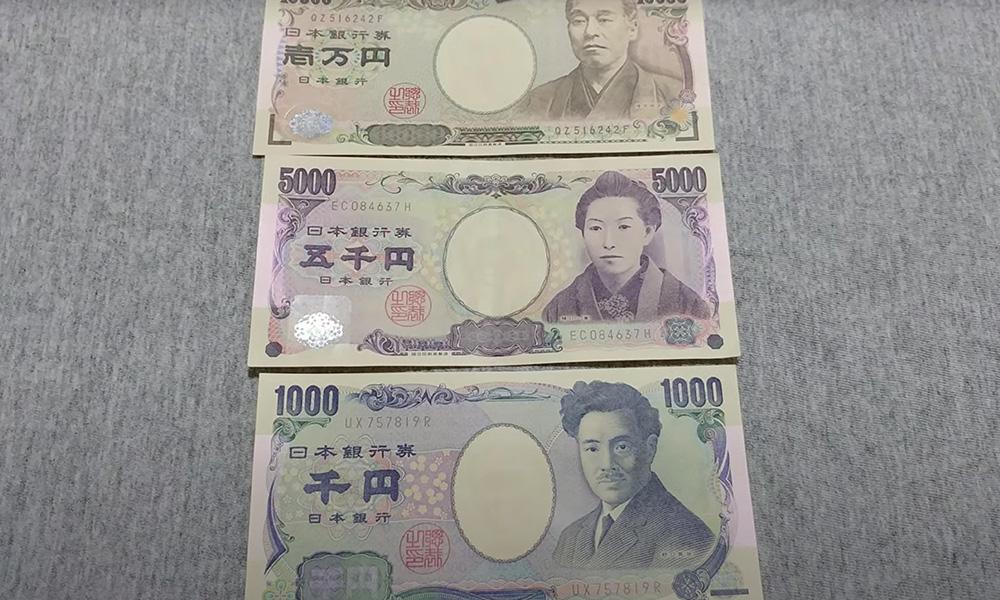 The yen's impulsive rise did not lead to a large-scale unwinding of carry trades; instead, it provided an opportunity for institutions to rebuild their positions.
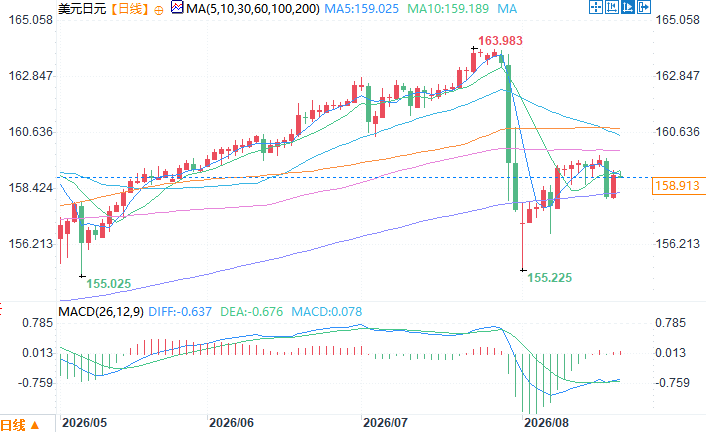 USD/JPY Daily Chart Source: FX678 At 13:44 Beijing time on August 21, USD/JPY was trading at 158.91/92.
Intervention led to a temporary appreciation, and funds took advantage of the rebound to invest in overseas assets.
According to statistics released by Japan's Ministry of Finance, in the two weeks ending August 15, Japanese investors made net purchases of over 5 trillion yen in overseas stocks and long-term bonds , a significant shift in investment behavior compared to the net sales of over 300 billion yen in the previous two weeks. Market observers say this wave of cross-border buying occurred after the joint US-Japan intervention last month, which boosted the yen. Investors seized the opportunity of the yen's short-term strength to allocate overseas assets at a more favorable exchange rate. Jesper Koll, a professional director at Monex Group, said that the currency intervention essentially accelerated carry trades for long-term fundamental investors. He added that as long as the cost of capital in Japan remains lower than the returns on overseas assets, carry trades will regain market dominance. Although the official intervention successfully triggered a rapid rebound in the yen, with the exchange rate rising from around 164 yen to the dollar before the intervention to around 155, the rally was short-lived, and the yen quickly gave back most of its gains, falling back to around 159. The market has reached a consensus that unless the Bank of Japan can substantially raise interest rates and narrow the interest rate differential with the United States, the yen will continue to be under pressure. As of Thursday, the spread between the US and Japanese 10-year government bond yields remained at around 1.8 percentage points. The yen's impulsive rise did not lead to a large-scale unwinding of carry trades; instead, it provided an opportunity for institutions to rebuild their positions.Institutional behavior confirms the trading logic; intervention only addresses the symptoms, not the root cause.
This market phenomenon is particularly pronounced among Japanese institutional investors. Masahiko Loo, fixed-income strategist at State Street Investment Management, stated that long-term allocation institutions such as pension funds and asset management companies continue to sell yen assets. Francis Tan, chief strategist for Asia at Indosuez Wealth Management, said that the intervention only addressed the surface problem and did not cure the core issue. He further explained that the core issue refers to structural realities such as Japan's low financing costs and the significant interest rate differential with major economies. Jasper Cole stated that Japanese individual and institutional investors have fully capitalized on the yen's strength, heavily allocating to non-yen assets, with a focus on higher-yielding US short-term Treasury bills and bonds. Loo noted that compared to before the intervention, the degree of one-sided betting in the market has decreased, but as long as the US-Japan interest rate differential remains high, the attractiveness of using yen financing for cross-border transactions will not disappear. Ashwin Binwani, founder of Alpha Binwani Capital, stated that institutions are maintaining carry trade positions in a basket of G10 currencies, with the Australian dollar being a major component. Many traders closed their short positions during the rebound triggered by the intervention, and then re-established short positions against the yen after the effects subsided. He noted that each yen rebound spurred by intervention presented a good entry opportunity to short the yen, with the underlying driver remaining Japan's relatively low interest rates.Speculative positions have declined, but the long-standing exchange rate dilemma remains unresolved.
Statistics from the U.S. Commodity Futures Trading Commission show that leveraged funds' net short positions in the Japanese yen have contracted significantly, falling from nearly 138,000 contracts at the end of June to 59,526 contracts on August 11. This reflects the regulators' clear intention to intervene and has deterred aggressive speculative funds. However, the contraction of speculative positions does not indicate a general retreat from carry trades. The allocation behavior of long-term institutions such as pension funds and asset management firms is the key factor determining the medium-term trend of the yen.Summarize
In summary, the joint intervention by the US and Japan achieved short-term exchange rate fluctuations, but failed to change the capital flow pattern dominated by interest rate differentials. The yen rebound caused by the intervention actually became an opportunity for institutions to increase their carry trade positions. To truly change the yen's weakness, the Bank of Japan still needs to make substantial adjustments to its monetary policy . Simply relying on foreign exchange market intervention can only temporarily change the market rhythm and cannot reverse the deep-seated structural contradictions. USD/JPY Daily Chart Source: FX678 At 13:44 Beijing time on August 21, USD/JPY was trading at 158.91/92.
- Risk Warning and Disclaimer
- The market involves risk, and trading may not be suitable for all investors. This article is for reference only and does not constitute personal investment advice, nor does it take into account certain users’ specific investment objectives, financial situation, or other needs. Any investment decisions made based on this information are at your own risk.