A weak dollar and hawkish ECB policies have kept the euro near a three-month high.
2026-08-21 13:46:59
On Friday (August 21) during the Asian session, the euro fluctuated at high levels against the US dollar, currently trading around 1.1690, close to the overnight high of 1.1710, the highest level since May 14. The US dollar remains near a three-month low, with expectations of a Fed rate hike continuing to cool, while the European Central Bank is likely to maintain a hawkish stance due to energy-driven inflationary pressures. This divergence in interest rate differentials continues to provide structural support for the euro. However, inflationary risks from rising energy prices keep the expectation of a rate hike before the end of the year on the table, and high US Treasury yields are providing support for the dollar. The ongoing US-Iran standoff at Hormuz continues, with geopolitical risk premiums limiting short positions in the dollar. The market is focusing on Eurozone and US PMI data for new directional guidance. 
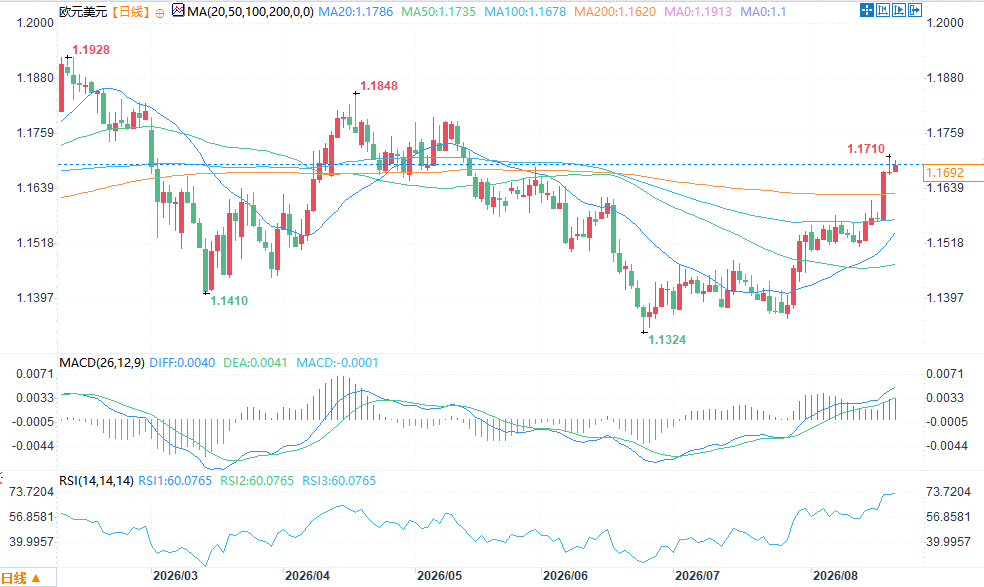 (Euro/USD daily chart, source: FX678) At 13:45 Beijing time on August 21, the euro was trading at 1.1695/96 against the US dollar.
The euro is supported by three factors: a weak dollar, hawkish expectations from the European Central Bank, and energy risks.
The euro attracted buying interest against the dollar in Asian trading, nearing its highest level since May 14. The dollar index remained near a three-month low as markets continued to reduce bets on a September rate hike by the Federal Reserve, amid signs of cooling inflation. Meanwhile, market expectations that energy-driven inflation will force the European Central Bank to maintain a hawkish stance provided support for the euro. Commerzbank noted that the increasingly tight balance in European natural gas inventories "increases pressure to import more gas in the coming months, thereby pushing up price risks." The bank warned that if gas inflows fail to recover sufficiently, "this will further increase upward pressure on European electricity prices," as the region will be forced to compete more aggressively for scarce liquefied natural gas supplies. Energy risks are becoming a key consideration for the ECB in maintaining its tightening stance.Inflation risks and geopolitical factors provide a floor for the US dollar.
However, the market-boosting effect of the news of the US Treasury expanding its long-term debt repurchase program is fading, and the inflation risk triggered by rising energy prices has once again become the focus. The hawkish tone of the Fed's July meeting minutes keeps expectations of at least one rate hike before the end of the year on the table, and high US Treasury yields continue to support the dollar. Furthermore, the ongoing standoff between the US and Iran in the Strait of Hormuz, coupled with geopolitical risk premiums, may further limit the downside potential of the safe-haven dollar. Trump threatened to wage "unprecedented economic war and isolation" against Iran and warned that any country providing Iran with a lifeline would face economic consequences.This week's focus: PMI data and geopolitical headlines
Markets are closely watching the upcoming preliminary manufacturing and services PMI figures from the Eurozone and the US, seeking new guidance on economic momentum and policy expectations. These leading indicators will help investors assess the resilience of economic growth in Europe and the US, and the potential subtle adjustments to the Federal Reserve and the European Central Bank's monetary policy paths. Meanwhile, geopolitical headlines may continue to inject uncertainty into global financial markets. Any escalation or de-escalation of tensions could quickly shift risk appetite, driving funds towards safe-haven assets and boosting demand for the US dollar. This could lead to increased short-term volatility in the euro/dollar exchange rate on the last trading day of the week, offering potential swing trading opportunities. Overall, the interplay of data and geopolitical factors will jointly dominate market sentiment and exchange rate movements towards the end of the week.Summarize
The euro traded around 1.1690 against the dollar, with a weaker dollar and hawkish expectations from the European Central Bank being the core drivers. Energy risks are reinforcing the ECB's case for maintaining a tightening stance, while inflation risks and geopolitical factors are providing a floor for the dollar. The impact of the US Treasury's buyback news has faded, and high US Treasury yields have limited the dollar's decline. The market is focused on Eurozone and US PMI data, and geopolitical headlines may continue to cause volatility. (Euro/USD daily chart, source: FX678) At 13:45 Beijing time on August 21, the euro was trading at 1.1695/96 against the US dollar.
- Risk Warning and Disclaimer
- The market involves risk, and trading may not be suitable for all investors. This article is for reference only and does not constitute personal investment advice, nor does it take into account certain users’ specific investment objectives, financial situation, or other needs. Any investment decisions made based on this information are at your own risk.