Even Trump's posts can't sway oil prices! Ahead of the central bank annual meetings, which will falter first: gold or the dollar?
2026-08-21 20:14:58
On Friday (August 21), the main theme for global risk assets over the past six hours remained the "supply-side narrative." From the Middle East to the Black Sea, and then to Venezuela, supply constraints are layered upon each other; meanwhile, the market effectiveness of policy communication and social media rhetoric is diminishing. For traders, the core issue is no longer "the news itself," but "which information can truly change the supply and demand reality." This article focuses on the correlation between crude oil, precious metals, foreign exchange, and shipping, highlighting sentiment and tail risks, and laying the groundwork for expectations surrounding next week's Jackson Hole central bank symposium. 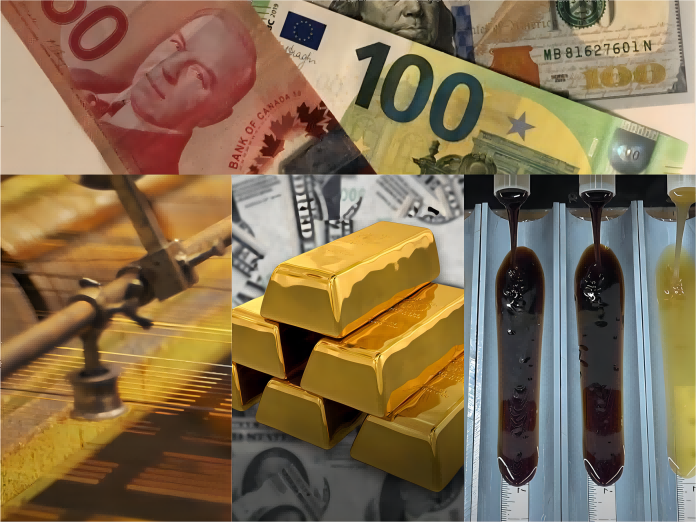
Crude oil: A series of supply-side pressures, and ceasefire statements are unlikely to shake structural shortages.
In the past six hours, the Iranian president made statements about "ending the war," but lacked details. The market interpreted this as a potential downgrade signal, and Brent crude may see a short-term pullback. However, the supply reality is more rigid: the US naval blockade has reduced available floating storage outside the Persian Gulf to approximately 83 million barrels; Venezuelan oil tankers have been waiting for up to 30 days due to aging ports and power outages, suppressing export caps; and the Ukrainian drone attack on Russia's Lukoil Perm refinery, affecting approximately 260,000 barrels per day of capacity, has kept refined product crack spreads high. Between multiple supply constraints and a single verbal easing, the downside support for crude oil remains relatively strong. Liquidity was low on Friday, and any reverse confirmation could amplify volatility.Precious Metals and Foreign Exchange: A Tug-of-War Between Safe-Haven Demand and Policy Expectations
Geopolitical uncertainty continues to allow gold to play a hedging role. With the Jackson Hole central bank symposium approaching, the market is focused on the Federal Reserve's policy signals. Some investment banks warn that if the 30-year US Treasury yield fails to fall below 5%, risk assets will be under pressure, and discussions about a "dollar depreciation" will resurface. Better-than-expected UK PMI data provides short-term support for the pound. The US dollar index is caught in a tug-of-war between bulls and bears: safe-haven inflows and expectations of further easing are both exerting downward pressure. Precious metals may benefit from this tug-of-war, but their upward momentum will be constrained by expectations of real interest rates.Shipping and Logistics: Costs Squeezed by Conflicts and Weather
Restricted passage through the Strait of Hormuz, continued detours, and war risk premiums; low water levels in the Panama Canal and drought on the Rhine River pushing up freight rates; the peak of the Atlantic hurricane season not yet over, with U.S. Gulf Coast and Caribbean ports at risk of closure. Logistics bottlenecks constitute a hidden supply contraction, providing additional support for crude oil and refined product prices, and freight rate indices remain resilient.Policy signals are becoming less effective: Market resistance to social media discourse is increasing.
Overseas media tracked 269 posts by the former US president on social media platforms involving Iran or the Hormuz. Within five minutes of these posts, the average fluctuation in oil prices narrowed significantly from their initial highs. Researchers at the Atlantic Council stated that the market "overreacted" in the past but now "ignores these posts because they don't reflect reality on the ground." The White House's "verbal intervention" in oil prices is becoming less effective. Traders should focus more on actual supply and demand data rather than high-frequency political pronouncements. Outlook: In the short term, crude oil is likely to maintain high-level fluctuations at Friday's close and Monday's opening. If Iran's ceasefire statement lacks follow-up substance, the supply premium will be quickly recovered; precious metals may see profit-taking before the Jackson Hole central bank symposium, but the pullback will be limited. In the medium term, multiple supply-side constraints coupled with seasonal weather risks mean that the logic of strong energy prices remains intact; the foreign exchange market needs to wait for clear policy signals. If the dollar weakens due to easing expectations, it will indirectly boost dollar-denominated commodities. Risks lie in the spillover effects of US sanctions on third-party trading entities and the escalation of the Russia-Ukraine situation in the energy sector.Frequently Asked Questions
Question 1: Can the Iranian president's ceasefire statement reverse the oil price surge? Currently, it's merely a verbal signal, lacking any concrete ceasefire or lifting of the blockade. Supply-side constraints are more rigid, potentially triggering profit-taking in the short term, but the structural shortage remains unchanged, providing support. Question 2: Why is the market's reaction to the former US president's social media posts weakening? Analysts point out that the posts were out of touch with actual supply changes. Initially, there was an overreaction due to an information vacuum; after several months, the market has learned to filter out noise and only prices in actual policies that can change supply and demand. Question 3: What does the Jackson Hole central bank symposium mean for precious metals and foreign exchange? If the Fed releases dovish or reassuring signals, the dollar will be under pressure, and gold will benefit; if it avoids forward guidance, market disappointment may amplify volatility, and bond market risks will be transmitted to risk assets. Question 4: What is the impact path of the Ukrainian attacks on refineries on oil prices? It directly impacts Russia's refined oil export capacity, raising diesel crack spreads, indirectly supporting crude oil demand expectations, and reinforcing the war premium. Further attacks on facilities will increase upside risks. Question 5: Why are shipping and weather factors worth traders' attention? The Hormuz detour, low water levels in Panama, drought in the Rhine River, and hurricane season all contribute to increased logistics costs and transportation delays, creating a hidden supply contraction that supports energy and freight rates.- Risk Warning and Disclaimer
- The market involves risk, and trading may not be suitable for all investors. This article is for reference only and does not constitute personal investment advice, nor does it take into account certain users’ specific investment objectives, financial situation, or other needs. Any investment decisions made based on this information are at your own risk.