The standoff in the Strait of Hormuz escalates! Bessent announces the toughest sanctions in history against Iran, causing a sharp drop in Tehran's oil exports.
2026-08-24 09:39:01
U.S. Treasury Secretary Scott Bessant held a press conference on Monday (August 24) to formally announce a new round of sanctions against Iran. Bessant described the operation as "the largest coordinated economic isolation operation in human history," and in an op-ed published in the Financial Times on Sunday (August 23), he stated: "An economic Normandy landing is about to begin—the largest financial offensive ever launched against a hostile nation." 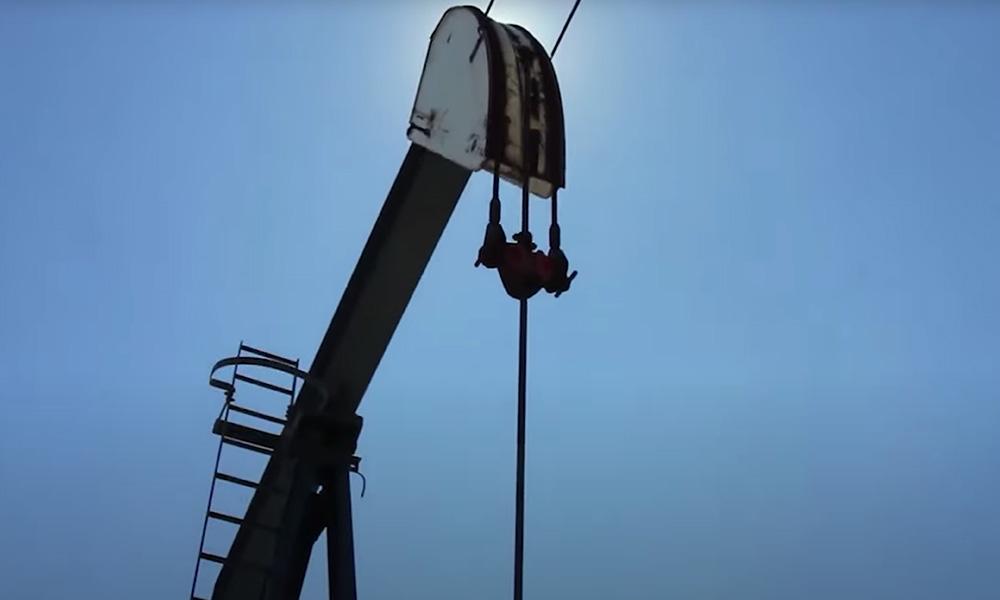
The US's "either friend or foe" ultimatum
At a press conference, Bessant stated unequivocally that the Trump administration demands that US allies and other countries immediately cease all forms of business dealings with Iran, and threatened to use "all its power" to strike any party that refuses to cooperate. He bluntly stated, "We are making our position clear to all countries: either stand with us or be our enemy. Now, our allies and the rest of the world must make a choice, and we are going to destroy the economy of this brutal regime." On August 19, US President Trump first announced on the Truth Social platform that he would take "the most devastating economic action ever taken against any country" against Iran, warning that any country providing Iran with a "lifeline" would face severe economic penalties. Trump called it an "unprecedented economic war and isolation operation." Analysts point out that the Trump administration's strategy towards Iran has clearly shifted from military strikes to "economic strangulation." Experts such as Trita Parsey, executive vice president of the Quincy Institute for Governance, believe that after months of military engagement, the US military's advanced weapons inventory has been significantly reduced, making it difficult to sustain large-scale military operations against Iran, thus opting instead for a relatively lower-cost and less politically risky economic blockade.Iranian oil exports plummet
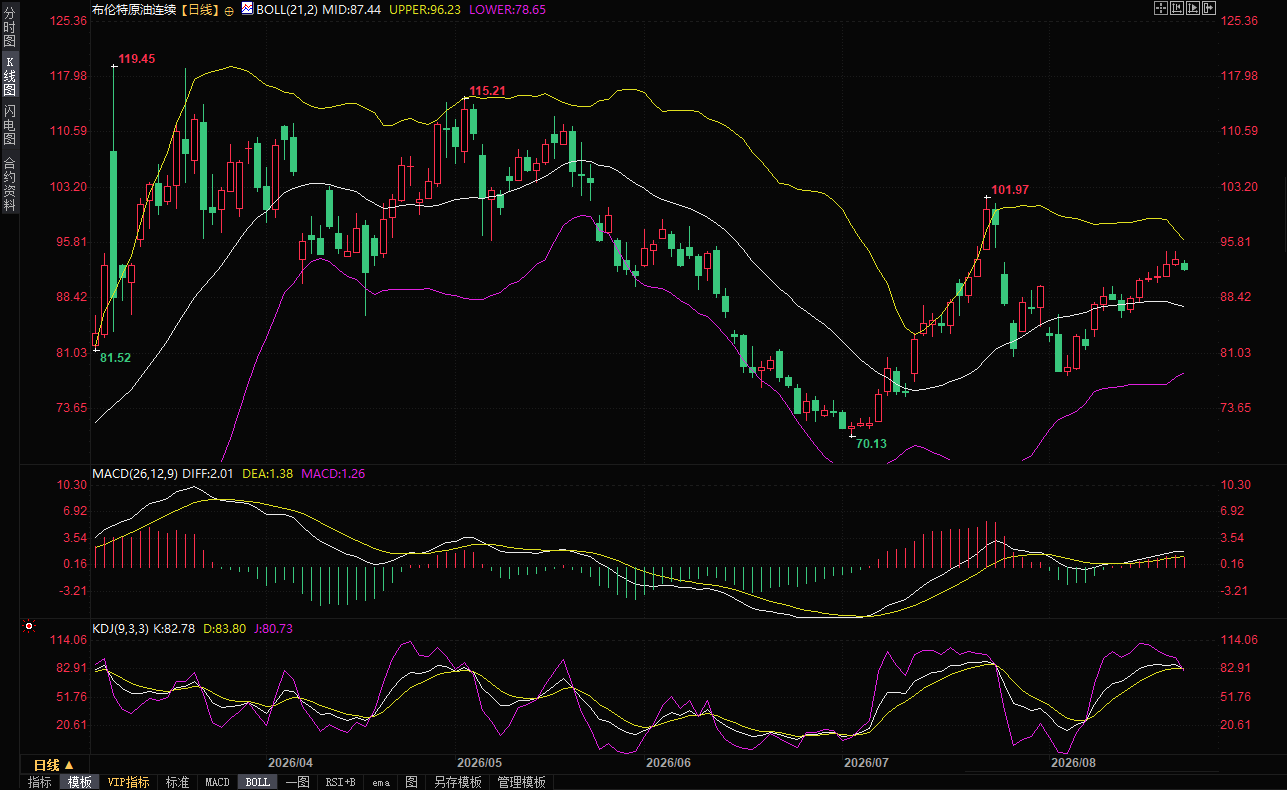
The latest data clearly reveals the combined effects of the US maritime blockade and economic sanctions. According to data from commodities intelligence firm Kpler, as of August 2026, Iran's daily crude oil loadings have plummeted to approximately 287,000 barrels, only one-seventh of the pre-war level of approximately 2 million barrels per day. As the largest buyer of Iranian oil, a major Asian country purchased over 80% of Iran's seaborne oil exports in 2025. However, due to the US blockade, the amount of crude oil imported by this major Asian country from Iran has experienced a precipitous decline—Kpler data shows that daily imports of Iranian crude oil in August 2026 have fallen to approximately 534,000 barrels, compared to a high of 1.4 million barrels per day in 2025. Imports rebounded to approximately 823,000 barrels per day in July, but the data worsened further in August. At the same time, Iran's fuel oil exports have also plummeted from approximately 256,000 barrels per day last year to only 61,000 barrels per day in August, and liquefied petroleum gas exports have almost come to a standstill. According to Kpler data, Iran's crude oil reserves in floating storage outside the blockade zone have decreased from approximately 105 million barrels to about 80 million barrels. If the current export rate continues, Iran's oil supply to major Asian markets can only last about five months. This tightening supply has directly pushed up Iranian crude oil prices. Iranian light crude oil prices have risen this week to a premium of up to $3.50 per barrel over ICE Brent crude, compared to a discount of approximately $3.50 just a week ago. As for international oil prices, Brent crude, after rising by about 13% cumulatively over two consecutive weeks, fell back to around $92 per barrel on Monday.Tehran unveils its trump card: the Strait of Hormuz
Faced with unprecedented economic pressure from the United States, Iran has adopted a tough stance. Mohbi, spokesman for the Iranian Islamic Revolutionary Guard Corps, stated on August 23 that Iran has developed countermeasures against all hostile actions by the United States, including economic pressure. Mohbi claimed that the US has imposed economic sanctions on Iran for 47 years, and the current "economic war" rhetoric is intended to exert psychological influence; Iran will continue to conduct economic exchanges with other countries "under the nose of the United States," circumventing US restrictions. Iranian Foreign Minister Araqchi stated on August 21 that previous US administrations' sanctions and pressure policies against Iran have all ended in failure, and this new round of economic pressure is also "doomed to failure." Mohsen Rezaei, secretary of Iran's Supreme National Security Council, further warned on August 24 that if the US economic war against Iran continues, Iran will block oil transport through the Strait of Hormuz, at which point "no oil will be exported through the Strait of Hormuz or even the Persian Gulf region." The Strait of Hormuz, as a global energy transport chokepoint, previously handled about one-fifth of the world's crude oil and refined petroleum products. Currently, shipping through the strait has shown a clear fragmentation. According to data from UBS Evidence Lab, the average number of oil and gas vessels transiting the Strait of Hormuz over the past two days was 4.0, higher than the August average of 3.7, but significantly lower than the July average of 6.4. Estimated by deadweight tonnage, the Gulf's export flow is only about 1.5 million barrels of oil equivalent per day, far below the July average of 3.6 million barrels of oil equivalent per day. Iranian crude oil loadings averaged only about 200,000 barrels per day in August, lower than July's 900,000 barrels per day, and far below the normal level of about 1.7 to 1.8 million barrels per day. Meanwhile, other oil-producing countries in the Gulf are accelerating efforts to fill the gap. Over the past two days, the average crude oil loadings of non-Iranian oil-producing countries in the Gulf region rose to 10.2 million barrels per day, far higher than the 3.6 million barrels per day of the previous two days. However, analysts point out that alternative routes are unlikely to completely fill the gap caused by the strait's obstruction in the short term.Pakistan Army Chief of Staff urgently intervenes
Amid a sharp escalation of tensions between the US and Iran, Pakistani Army Chief of Staff Field Marshal Munir led a delegation to Tehran on Monday (August 24). Iranian Foreign Ministry spokesman Bagaei stated that the visit aimed to strengthen bilateral cooperation and "continue to commit to maintaining regional peace and security." Since the joint US-Israel bombing of Iran on February 28, 2026, which triggered the Iran-Iran war, Pakistan has played a key mediating role in US-Iran negotiations. Two Pakistani government sources revealed that the talks will discuss the latest developments in the conflict, including Trump's threats of harsher sanctions against Iran. Notably, Munir's visit coincides with the same day that Bessant announced sanctions, making the timing intriguing. RBC: Iran Still Possesses Significant Destructive Capabilities Hrithma Croft, Global Head of Commodities Strategy at RBC Capital Markets, pointed out that Iran is one of the most heavily sanctioned countries globally, and it remains unclear whether further economic pressure will change Tehran's stance. Croft stated that Iran seems to believe it can outlast the Trump administration, which is eager for a quick end to the conflict, and that Iran still possesses the capability to attack ships in the Strait of Hormuz and Middle Eastern infrastructure. She concluded, "Iran still possesses considerable destructive capabilities. The question is how new economic sanctions will change this situation."Editor's Summary
Bessant's announcement of the "toughest sanctions in history" marks a new phase in the US-Iran confrontation, escalating into a full-blown economic war. From a data perspective, the US maritime blockade has already dealt a substantial blow to Iranian oil exports—daily exports have plummeted from 2 million barrels to 287,000 barrels, and Chinese imports have halved from 1.4 million barrels per day to 534,000 barrels per day. Iran's energy revenue is evaporating at a rate of billions of dollars per month. However, Iran still holds the strategic leverage of the Strait of Hormuz. If it carries out its blockade threat, the global daily transport of approximately 20 million barrels of crude oil will face disruption, and Brent crude could potentially break the $100 mark. Pakistan's urgent mediation indicates a deepening international concern about the situation spiraling out of control. The ultimate outcome of this "economic war of will" will depend on which side can withstand the pressure longer—the Trump administration facing midterm election pressure, or the Iranian regime, which has already endured 47 years of sanctions.Frequently Asked Questions
Q1: How do the US sanctions against Iran differ from previous ones? This round of sanctions, described by Bessant as the "toughest in history," differs primarily in its comprehensiveness. Previous sanctions mainly targeted specific industries or entities in Iran, while this time the US demands that all countries cease all commercial dealings with Iran and cooperate with the naval blockade of the Strait of Hormuz to "prevent any goods from entering or leaving Iranian ports." The US has also explicitly stated for the first time, "It's either you're on our side or you're the enemy," escalating the sanctions into a global economic isolation effort. Q2: Why did Iranian oil exports plummet to 287,000 barrels per day? The main reason is that the US reinstated its naval blockade of Iran in mid-July. The US military has forced 68 merchant ships to change routes, preventing Iranian crude oil from being loaded and exported normally. According to Kpler data, the average Iranian crude oil loading in August was only about 200,000 barrels per day. Furthermore, the US is simultaneously pressuring its major buyers to reduce imports, further compressing Iran's export channels. Q3: What are the specific figures for major Asian countries' oil imports from Iran? According to Kpler data, Iran's daily crude oil imports averaged approximately 1.4 million barrels in 2025, accounting for over 80% of Iran's seaborne exports. Imports rebounded to approximately 823,000 barrels per day in July 2026, but plummeted to approximately 534,000 barrels per day in August. Question 4: What is the current traffic situation in the Strait of Hormuz? Traffic volume is far below normal levels. According to UBS data, only 3.7 oil and gas vessels passed through the strait daily in August, significantly lower than the 6.4 vessels in July. On August 19th, only 9 commodity carriers passed through. Previously, on August 16th, the number of vessels passing through had dropped to just 1. While the overall oil flow through the strait remains slightly above 6 million barrels per day, it is mainly maintained through "dark-light transport" (ship-to-ship transshipment). Question 5: What is the significance of the Pakistani Army Chief of Staff's visit to Iran at this time? Pakistan has been a key mediator between the US and Iran since the outbreak of the Iran-Iran war. Munir's visit to Tehran on the same day that Bessant announced sanctions demonstrates the international community's deep concern over the escalation of the situation. Pakistani sources revealed that the talks will discuss Trump's sanctions warnings and a peace plan. This move may open an indirect communication channel between the US and Iran, preventing the situation from spiraling further out of control. At 09:35 Beijing time, Brent crude oil was trading at $92.54 per barrel.- Risk Warning and Disclaimer
- The market involves risk, and trading may not be suitable for all investors. This article is for reference only and does not constitute personal investment advice, nor does it take into account certain users’ specific investment objectives, financial situation, or other needs. Any investment decisions made based on this information are at your own risk.