Three signals that cannot be ignored the night before Jackson Hole: temporary corridors, PCE aftershocks, and super El Niño.
2026-08-27 20:08:03
On Thursday (August 27), Qatar and Iran discussed a temporary shipping corridor in the Hormuz region, significantly cooling the risk premium for oil prices. The lingering effects of the PCE policy, coupled with hawkish comments from Fed officials, led to a tug-of-war between US Treasuries and gold. Super El Niño, as an underlying variable, limited the decline in long-term yields. On the eve of Jackson Hole, three signals determined the market's rhythm. 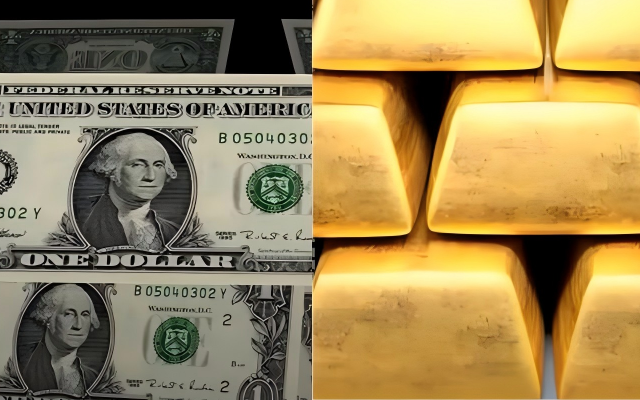
Signal 1: The "temporary corridor" in Hormuz squeezes out the inflated oil prices.
Qatar's Foreign Minister proposed a phased framework in Tehran, including a temporary shipping corridor and a joint mine clearance project. Previously, attacks on oil tankers caused crude oil flow in the Strait of Hormuz to plummet from approximately 20 million barrels per day to about 5 million barrels per day. If the plan proceeds, the risk of supply disruptions will decrease, and Brent and WTI crude oil prices may continue to be under pressure. Trading sentiment has shifted from panic to a wait-and-see approach. However, implementation remains uncertain: US sanctions, implementation details, and insurance costs may all fluctuate. Lower oil prices will reduce inflation expectations, putting downward pressure on US Treasury yields. Safe-haven buying of gold may temporarily subside, but a one-sided sell-off is unlikely.Signal Two: The aftermath of the PCE and the hawkish stance of Fed officials lead to a tug-of-war between US Treasury bonds and gold.
Overnight PCE slightly exceeded expectations, reinforcing market caution regarding the interest rate path. Fed official Schmid stated that inflation is sticky and the energy shock is seeping into the economy. The 10-year Treasury yield hovered around 4.65%, with both upside and downside potential limited by sentiment. Real interest rate expectations are weighing on gold, but the Treasury buy-back program and potential risks in the Middle East are providing downside support. Friday's Fed Chairman's speech is a major variable. A hawkish stance would put pressure on gold and cause Treasury yields to rebound; acknowledging growth risks or releasing policy flexibility could lead to a decline in yields and potentially boost gold again. Currently, gold is consolidating near a three-month high, with neither bulls nor bears willing to make premature bets.Signal 3: The Super El Niño Hidden Factor – A Concealed Variable in Long-Term Inflation
While no extreme weather reports are currently available, the anticipated super El Niño is still impacting agricultural supply, energy demand, and shipping routes. If abnormal rainfall occurs in South America or drought develops in Asia later in the season, food and soft commodity prices could surge, reigniting food inflation. For US Treasuries, this is a key reason why long-term yields are unlikely to decline significantly. For gold, the stagflation scenario actually provides medium-term support. Crude oil, however, needs to be monitored for disruptions to Gulf Coast refineries during the hurricane season; currently, there is no direct impact. Traders should not ignore this underlying factor.ECB minutes: Hawkish sentiment remains, but data supports a pause.
The ECB minutes showed the Eurozone economy was more resilient, with some members not opposing interest rate hikes, but current data supported a pause. The minutes stated another round of rate hikes might be necessary unless inflation improves significantly. Eurozone interest rate expectations are relatively stable, which may provide relative support for the euro. The US dollar may weaken slightly as risk appetite improves, but PCE and Fed comments will limit the decline. A cooling of the Holmitz policy is beneficial for global risk assets, and commodity currencies may benefit from improved import costs due to lower oil prices. The foreign exchange market is focusing more on interest rate differential expectations than on a single data point. The euro/dollar exchange rate may remain range-bound, awaiting direction from Jackson Hole.Trend Outlook
In the short term, focus on two main themes: the details of the Hormuz diplomatic negotiations and the Jackson Hole signal. If the temporary corridor continues to advance, oil prices will be weak, US Treasury yields have room to decline, and gold will fluctuate at high levels. If negotiations break down or new attacks occur, risk premiums will quickly return, and oil and gold prices may rise together, putting pressure on US Treasuries. In the medium term, be wary of the lagged impact of a super El Niño on food and energy demand. Market volatility may increase, making it more suitable to wait for confirmation signals rather than taking sides prematurely.[Q&A and Further Reading]
Question 1: Why is the temporary Strait of Hormuz so crucial? About 20% of global crude oil and refined oil products pass through this strait; a sudden drop in flow would rapidly alter the supply-demand balance. If the temporary corridor is implemented, the risk premium for supply disruptions will be quickly squeezed out, and oil prices and inflation expectations will cool simultaneously. Question 2: How will falling oil prices affect US Treasuries? Energy is a significant component of inflation. Weaker oil prices will lower future inflation expectations, and nominal yields may follow suit. However, when the Fed focuses more on core inflation, the impact may be discounted. Question 3: Why hasn't gold fallen sharply with the cooling of safe-haven demand? Middle East risks are only one of the recent supports for gold; the US Treasury buy-back program, real interest rate expectations, and central bank gold purchases are still at play. Therefore, the retreat of safe-haven demand is more of a correction than a trend reversal. Question 4: What does Super El Niño mean for traders? It affects rainfall and temperature in crop-producing areas, potentially pushing up food and soft commodity prices and indirectly changing energy demand. The market views it as a latent variable for long-term inflation, often pricing it out quickly after extreme weather is confirmed. Question 5: Why is Jackson Hole worth watching closely? The Fed Chair's speech may set the tone for the next interest rate path. If he emphasizes sticky inflation, US Treasuries will be under pressure and gold will be constrained; if he acknowledges risks to growth and employment, a decline in yields may ease pressure on gold and stocks.- Risk Warning and Disclaimer
- The market involves risk, and trading may not be suitable for all investors. This article is for reference only and does not constitute personal investment advice, nor does it take into account certain users’ specific investment objectives, financial situation, or other needs. Any investment decisions made based on this information are at your own risk.