Walsh's "Silent Game" and the Market's Triple Bet
2026-08-28 21:51:02
Why is this speech more crucial than ever? The Jackson Hole Economic Symposium has always been a bellwether for global central bank policy, but this year's focus is particularly unique—it marks Kevin Warsh's first appearance on this stage as Chairman of the Federal Reserve. Weeks have passed since his controversial remarks last month, and the market is still digesting the confusion surrounding his failure to clearly articulate how interest rate stances would suppress inflation. For traders, the core contradiction of this speech lies in this: Warsh has consistently rejected forward guidance, believing that such a signaling mechanism would lead policymakers to become overly fixated on existing expectations; however, with the Fed's credibility currently under scrutiny, he is compelled to respond to market concerns through clearer communication. This tension of "wanting to say something but having to" is precisely the core variable in global asset pricing today. 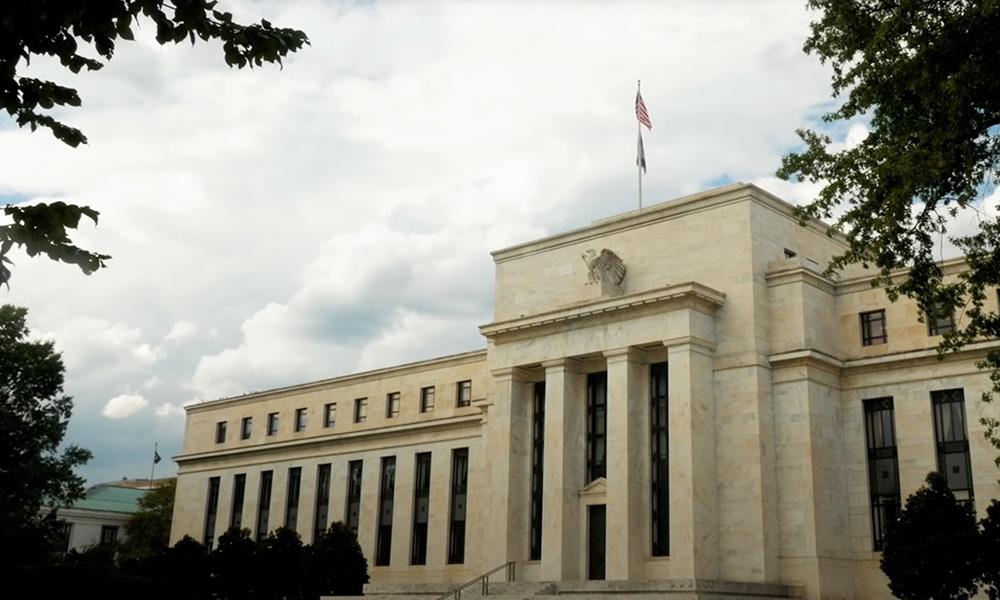
Interest Rate Path: Has the Ambiguity Ended?
This is the most direct point of concern. Current interest rate futures market pricing indicates a 30% to 35% probability of a rate hike in September, with a greater than 70% probability of at least one rate hike before the end of the year. This data itself suggests the market is in a state of "half-heartedness"—unwilling to fully bet on continued tightening, yet also unwilling to easily bet on a shift. Warsh needs to answer a fundamental question in his speech: Are Wednesday's relatively strong PCE data, this week's robust durable goods orders and GDP, enough for the Fed to maintain or even increase tightening? Or do the previously weakening retail sales, cooling CPI, and flat PPI represent the true direction of inflation? Any subtle shift in wording could be captured and amplified by algorithmic trading.Fiscal tacit understanding: The "hidden thread" between the Federal Reserve and the Treasury.
In theory, the Federal Reserve and the Treasury should not interfere with each other, maintaining the independence of monetary policy. However, the market is never satisfied with "theoretical"—traders will meticulously search for any hints Warsh might have about recent fiscal developments. Especially against the backdrop of continuously rising US Treasury yields, with both 10-year and 30-year yields approaching multi-year highs, how the Federal Reserve views the Treasury's debt issuance pace, maturity structure, and deficit financing path directly affects the pricing logic of long-term interest rates. Even if Warsh simply uses terms like "fiscal sustainability" or "term premium," it could be interpreted as an implicit statement to the Treasury. Global debt crisis: Will it be included in the narrative framework? This is a broader and more easily overlooked dimension. Currently, global sovereign debt is at a historical high, the ratio of interest payments to fiscal revenue in major economies continues to rise, and external debt pressures in emerging markets are simmering. If Warsh mentions terms like "global financial stability," "sovereign debt sustainability," or "cross-border spillover effects" in his speech, it will be seen as an important signal that the Federal Reserve is beginning to incorporate debt risk into its policy response function. Conversely, if he remains silent on this matter, the market will interpret it as an attitude—at least at this stage, the Fed's primary goal remains domestic inflation, not the global debt crisis. This game of "silence itself being information" is precisely what makes central bank annual meetings so fascinating and also so agonizing.AI and Economic Structure: Should We Shift the Topic?
Many strategists believe that Warsh may avoid interest rate-sensitive topics and instead deliver a "macroeconomic" speech, potentially covering the progress of research by the Fed's internal working group or the long-term impact of artificial intelligence on potential economic growth, productivity, and inflation mechanisms. The advantages of this strategy are obvious—it maintains the chairman's authority while avoiding over-promising before key data is released. However, for the market, "not discussing interest rates" itself is a dovish or hawkish signal, depending on the current asset price level.Non-Farm Payrolls Preview: Warsh's "Predictive Nature" and Data Game
Next week's US non-farm payroll data release adds a unique element of speculation to this speech. Warsh has a history of accurately predicting employment data in advance—not because he has insider information, but because as Federal Reserve Chairman, he has access to more timely and comprehensive high-frequency labor market indicators than the market itself, and his wording often subconsciously reflects these leading signals. More importantly, at the same time as Warsh's speech, the Labor Department will release its preliminary baseline revision estimate for non-farm payrolls up to March 2026. The unexpected decrease of approximately 20,000 in July's non-farm payrolls has already shaken market confidence in the data. If this baseline revision significantly lowers historical employment figures, it will fundamentally change the market's assessment of the tightness of the labor market, thereby reshaping interest rate expectations. Therefore, traders will conduct a "cross-validation": if Warsh's tone is dovish and the baseline revision is significant, the probability of a weak non-farm payroll report next week will increase significantly; if Warsh's tone is hawkish and the baseline revision is smaller than expected, it suggests that the resilience of the labor market may have been underestimated. This dual signal of "speech wording + data correction" is a unique trading window at this year's annual meeting.Asset Overview: Who is pricing in advance?
The subtle structure of current asset prices already reveals the direction of market betting: Silver has been catching up recently, and although it briefly broke through the $70 mark and held steady, it still significantly lagged behind gold's gains, failing to demonstrate the dual driving force of industrial demand and momentum funds at the beginning of the year. This suggests that funds are still brewing and have not fully accepted this logic, indicating that a consensus expectation has not yet emerged. Gold, on the other hand, is consolidating below the $4,600 mark, failing to recover its mid-week high, indicating that its pricing is more directly tied to the interplay between the Federal Reserve, the US dollar, and long-term yields. This divergence itself is a signal—the market is oscillating between "safe haven" and "tightening." The geopolitical premium for crude oil remains, and the navigation status of the Strait of Hormuz remains a core variable in the energy market. The US-Israel military action against Iran has entered its sixth month, and Washington is shifting towards economic pressure and sanctions, with a low willingness to negotiate. Although the US claims the strait remains open, only about twenty ships passed through on Thursday, a significant decrease compared to the pre-war daily average of over one hundred ships. WTI crude oil is trading above $83, with limited shipping capacity in the Gulf region providing a continued geopolitical premium for oil prices. This creates a paradoxical support for gold: the Hormuz risk is boosting safe-haven demand, but rising oil prices are reinforcing expectations of interest rate hikes. This tug-of-war between the two forces is the fundamental reason why gold is currently struggling to break through key resistance levels.Trading Outlook and Risk Warning
If Warsh's rhetoric leans hawkish, emphasizing that inflation risks outweigh growth concerns, the 10-year Treasury yield may rise further to test multi-year highs, putting pressure on gold and causing it to fall, while the dollar index gains support. If Warsh remains ambiguous and avoids discussing the interest rate path, the market may interpret this as a "default of not rushing to act," giving short-term risk assets a breather, but volatility will remain high. If Warsh unexpectedly mentions fiscal sustainability or global debt issues, long-term US Treasuries may experience independent price movements, and changes in the yield curve will become a key trading clue. The most worthwhile trading window to seize early next week is when the revised non-farm payroll data and the speech's wording resonate. Warsh is known for his tight-lipped nature, and excessively high market expectations are a risk in themselves—if his speech is vague and lacks substantial signals, it could trigger a "buy the rumor, sell the fact" scenario; the situation in the Strait of Hormuz could escalate suddenly, and any military incident could instantly change inflation expectations and risk aversion logic, overshadowing the impact of the central bank's speech; changes in the statistical methodology of non-farm payroll benchmark revisions could lead to market misinterpretations, requiring a distinction between "technical downward revisions" and "trend weakening"; if Warsh unexpectedly mentions global debt issues, it could trigger a cross-asset risk repricing, the magnitude of which is difficult to quantify in advance.- Risk Warning and Disclaimer
- The market involves risk, and trading may not be suitable for all investors. This article is for reference only and does not constitute personal investment advice, nor does it take into account certain users’ specific investment objectives, financial situation, or other needs. Any investment decisions made based on this information are at your own risk.