













A former Fed official revealed that the Fed is 50/50 about to raise interest rates in September.
2026-08-31 10:25:03
A man who has sat in the Federal Reserve's meeting room for 15 years has given a rare insider's assessment of the vote: the Federal Open Market Committee (FOMC) is almost evenly divided on whether to raise interest rates in September. Former St. Louis Fed President Jim Bullard said last Friday (August 28): "I think the committee is roughly 50/50, 10 to 9, it could go either way. There are a lot of fence-sitters, they can sway both sides."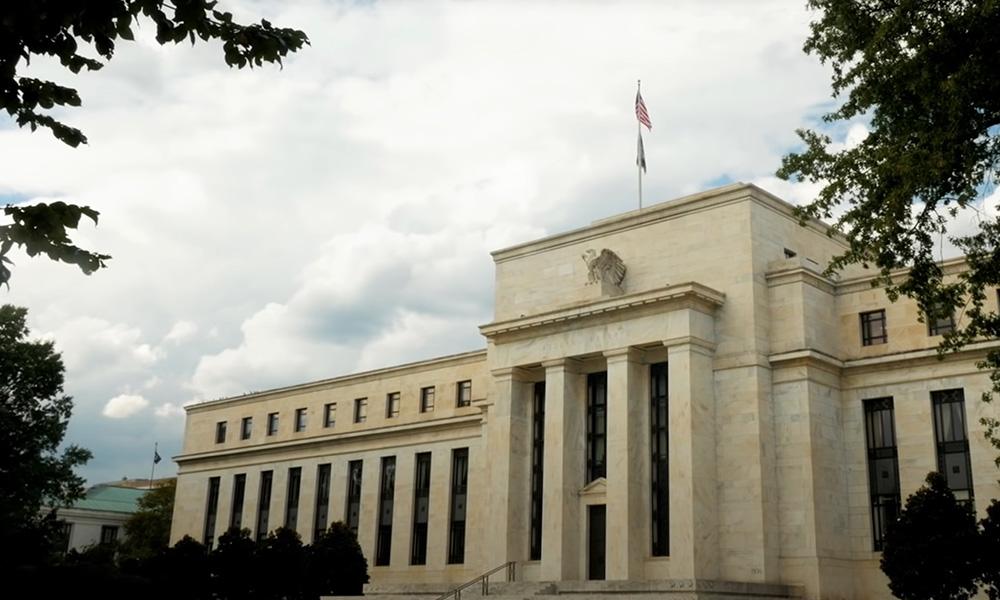
Warsh claimed 65 months of inflation, and the market immediately repriced.
This was the closest the publicly released minutes came to an internal vote, and by the time it arrived, the market had already assumed the debate was over. Federal Reserve Chairman Kevin Warsh stated at the Kansas City Fed's Jackson Hole symposium, "The responsibility for 65 months of persistently high inflation lies with the central bank, and rightfully so." Following this statement, the CME FedWatch tool showed the probability of a September rate hike climbing from about 36% to about 60%, while the probability of a rate cut virtually disappeared. The publicly released minutes made the hawks appear to be in the minority. On July 29, the committee voted 9-3 to hold rates steady for the fifth consecutive time, with Cleveland Fed's Beth Hammack, Dallas Fed's Lorie Logan, and Minneapolis Fed's Neel Kashkari voting against a rate hike; Kansas City Fed's Jeff Schmid also joined the hawkish camp last week. However, Bullard believes that the number of those holding the fence is far greater than the voting list suggests. Bullard served as the head of the Federal Reserve Bank of St. Louis from 2008 to 2023. In March 2022, he voted against the committee because it was acting too slowly. He is now the dean of the Daniels School of Business at Purdue University.Holding back can also be hawkish; the dot matrix chart is the key.
Bullard's most useful statement was a warning to those who viewed the September meeting as a binary yes-or-no. "You can stand still, but you can still be hawkish," Bullard said. "You can also more or less hint that you'll act at the October or December meeting." The mechanism lies in the dot plot, a quarterly updated chart where each policymaker marks their year-end interest rate expectations, and September happens to be the dot plot meeting. "Ironically," Bullard said, "the September meeting is the most forward-looking, because the dot plot shows your intentions for the federal funds rate until the end of 2026." He speculated that the dot plot would show one, possibly two, rate hikes by the end of the year. This means the committee could completely stand still next month, yet still send a tightening message to the market for the year. Bullard had initially thought Walsh would simply abolish the dot plot last Friday, but that didn't happen. As to which risk is greater: announcing a rate hike but failing to deliver, or giving no further announcements after the speech, he was unwilling to take sides, saying, "I'd give it a 50/50." He also avoided portraying the chairman as contradictory, believing that Walsh was objecting to overly explicit statements, stating, "If he comes out today saying that there will definitely be a rate hike in September or definitely no rate hike, that over-prescribes what the committee will actually do." Bullard believes that the rationale for tightening no longer depends on the next data report. He said, "The committee is already saying that by the end of this year, the best they can do on core PCE inflation is very close to 3%, very similar to the situation in December 2023, 2024, and 2025. There has been virtually no progress over the years." Three years of stagnation: the overall PCE index rose 3.7% over 12 months, while the annualized growth rate over 6 months reached 4.1%, meaning that the recent period is hotter than the whole year.Gold is the Fed's report card, and the Fed is reading it.
Warsh's speech last Friday amounted to an admission that central banks are responsible for inflation. Bullard explained how this admission is reflected in prices, saying, "Gold can still be an indicator of a lack of confidence in the Fed. If credibility is being damaged, you usually see gold prices rise." A former voting member said gold is a signal, and those being graded are watching that score—an argument gold holders have argued for years, but which has been dismissed as sentiment. Bullard also outlined the real buyers, who are not in Washington. Central banks have been largely net buyers for the past two decades, now holding well over 1 billion ounces of gold combined. He said, "This isn't often mentioned in the US, but it's a bigger issue overseas: foreign central banks may want to hold gold rather than US Treasuries, and there are indeed central banks diversifying out of US Treasuries." He characterized it as portfolio management rather than politics. The US holds approximately 261 million ounces of gold, booked by the government at the legal price of $42.22 per ounce—a price only Congress can change—estimated at nearly $11 billion, but at last Friday's market price, it was worth well over $1 trillion. Brad stated, "Why not price at market capitalization? Everyone knows the market price, and it's always better to price at market capitalization to prevent book value from distorting the true situation. I think this requires action from Congress." His condition was that discipline must be two-way, meaning that even if prices plummet, they must be adjusted downwards.Fiscal Policy and Data: Two Warnings
On the fiscal front, Bullard's message is that pressure on long-term yields is structural, and tools aimed at it won't work. Starting September 9th, the Treasury will double the size of its 10- to 30-year repurchase agreements from $2 billion to $4 billion per transaction, but Bullard believes this will be ineffective and sides with investor Stan Druckenmiller, who publicly opposed the plan last week. He said, "Intervening in a huge global market with a lot of foreign buyers is really difficult. These are tactical moves; the market prices the fundamental policy, and I don't think this will shake the long-term trend." He believes it might affect the market for a day, but not the trend. He stated, "The real borrowers are Congress and the president; the 6% deficit seems endless, and there appears to be absolutely no concern in the political system about curbing the deficit." Total federal debt surpassed $40 trillion this month, with publicly held debt at approximately $32.3 trillion. Bullard predicts its path will "towards 120% or 150% of publicly held debt." When asked whether protecting the Fed's independence meant raising rates even if it meant a significantly worsening interest rate bill in Washington, he replied, "Oh, absolutely. Every politician I've met thinks nominal rates should be lower, and even during periods of zero interest rates, there were people lobbying us to lower them." The Fed is also making decisions based on data that Bullard believes is partially malfunctioning. The Bureau of Labor Statistics' annual baseline revision showed that last year's employment data was 79,000 fewer than previously reported, with the private sector revised down by 178,000 and the government sector revised up by 99,000. He said, "You can't trust nonfarm payrolls like you have for the past few decades because immigration policy has changed dramatically, and the rate of nonfarm payrolls has gone from 100,000 or 150,000 to near zero. You have to accept negative figures in some months, even though this doesn't contradict a healthy labor market." This statement will rewrite every "Employment Report Friday" thereafter: negative figures don't necessarily mean anything is breaking down. Regarding the University of Michigan survey, which shows that households expect inflation to be 4% over the next year and 3.3% over 5 to 10 years, with the confidence index falling to 51.7, Brad sided with the market, saying, "I'll listen to the market. They're betting real money and pricing in inflation risk directly. The Michigan survey has eroded its credibility in recent years; respondents are expressing their views on the political climate, not their own money." Warsh also brought the quantity of money back into the discussion in his speech on Friday. Brad believes Warsh is serious, pointing to M2 growth "soaring in 2020 and 2021, then collapsing," thus foreshadowing subsequent inflation.Conclusion: Precious metals under pressure, performance report still uncertain.
Piecing the pieces together, you get a central bank that admits responsibility for the past five and a half years, yet internally fails to reach a consensus on countermeasures, distrusts the two sets of data upon which it operates, and remains downstream of a deficit no one intends to touch. Precious metals have suffered a heavy blow from hawkish pricing, a short-term arithmetic effect of higher policy rate expectations on non-interest-bearing assets. The longer-term problem, however, is what Bullard himself has laid out: if gold prices are a continuous score of market confidence in central banks, and those being scored are watching that score closely, then the next meeting on the calendar is far less important than the score read from gold's report card a year from now.- Risk Warning and Disclaimer
- The market involves risk, and trading may not be suitable for all investors. This article is for reference only and does not constitute personal investment advice, nor does it take into account certain users’ specific investment objectives, financial situation, or other needs. Any investment decisions made based on this information are at your own risk.

