Markets Appear Stable but Hidden Dangers: The True Trading Signals for Gold, the US Dollar, and US Treasuries
2026-08-31 18:24:03
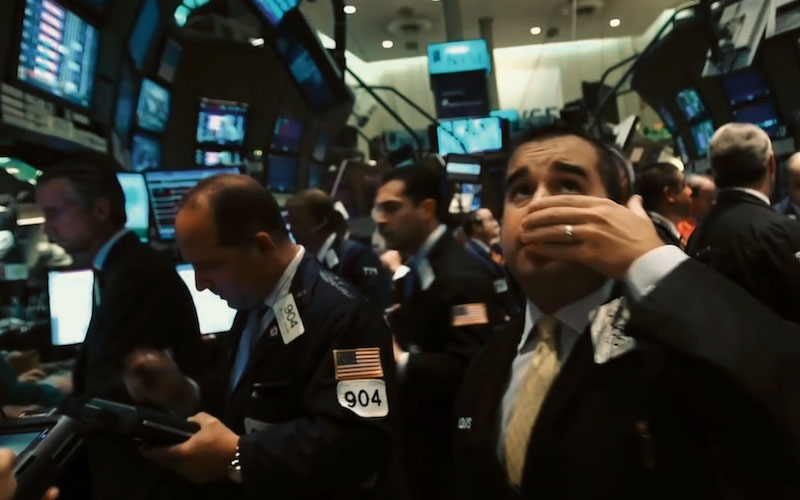
Every late summer, a very clear and consistent phenomenon emerges in European and American markets: traders go on holiday, market activity is sluggish, and market volatility decreases significantly. A slight rise in US stock indices and a decline in the VIX (fear index) create a sense of market stability and low risk for many investors. However, based on verifiable macroeconomic data, bond trends, and currency pricing, the current market stability is merely a short-term phenomenon resulting from seasonal holidays, not a true reflection of the normal market conditions. After Labor Day, funds will flow back into the market, leading to significant changes in market volatility and asset price trends. Currently, the most important factors to watch are not the lackluster stock market, but rather the clear signals from gold, the US dollar, and US Treasury bonds.  The market characteristics at the end of this summer were very typical: US stocks continued to rise, the VIX fear index remained below 16 for a long time, and there was almost no concentrated selling pressure in the market. The number of traders on Wall Street decreased significantly, and trading volume was thin, directly smoothing out short-term fluctuations. However, the seemingly stable market masked substantial changes in three core assets: the continued rise in long-term US Treasury yields, the reshaping of the dollar exchange rate structure, and the continued strengthening of gold's bottom support. These real market changes are pricing in subsequent macroeconomic risks. Brian Garrett, a derivatives strategist at Goldman Sachs, clearly pointed out that the current low volatility is not a reliable indicator. The current market stability is a false stability created by reduced liquidity and stagnant trading. Stock market movements are dulled and have very little reference value, while changes in interest rates, exchange rates, and gold prices are more real and tangible, and are the core basis for judging the future market. I. Direct Market Signals: Central Bank Speeches + Rising US Treasuries – Long-Term High Interest Rates Are a Reality This year's Jackson Hole central bank symposium produced very clear market signals, directly shattering market illusions of an interest rate cut this year. Previously, the market widely bet that the Federal Reserve would slow down interest rate hikes, or even cut rates this year, supporting a moderate rise in the stock market. However, a public speech by former Fed official Kevin Warsh revealed a very pragmatic hawkish stance: US inflation remains resilient, the Fed will not ease monetary policy quickly, and long-term interest rates need to remain high. Currently, the market is experiencing a very contradictory but clearly visible divergence. First, recent US inflation data has clearly declined, easing inflationary pressures; second, the Fed has clearly paused interest rate hikes in the short term and is maintaining a wait-and-see approach; third, long-term US Treasury yields have risen against the trend. These three intuitive phenomena indicate that the core of current market pricing has changed. The rise in long-term US Treasury yields is not because the Fed is going to raise interest rates, but because the term premium of US Treasuries has continued to rise. Simply put, the market is now willing to demand a higher risk compensation for long-term US Treasuries. Large-scale US fiscal spending, a continuous increase in the supply of US Treasuries, and the reallocation of global funds in US Treasuries holdings—these pragmatic factors have collectively pushed up long-term interest rates. This is a fact that has already occurred, not a prediction or speculation, and it also means that a high-interest-rate environment will persist for a long time to come, directly affecting the dollar, gold, and the prices of various assets. II. Clear Investment Logic: Solid Support for Gold Amidst Global Currency Depreciation The upward trend in gold prices doesn't require complex macroeconomic deductions; it's all supported by tangible, real-world factors. The long-term depreciation of major global currencies is a clear trend. Most countries globally maintain loose monetary policies and expand fiscal spending, diluting the purchasing power of fiat currencies. This is the core underlying reason for gold's continued value preservation and appreciation. Looking at the actual performance of the exchange rate market, the US dollar hasn't experienced a genuine surge; it has merely remained stable relative to other weaker non-US currencies. The long-term weakening of the US dollar's credibility remains unchanged, while global geopolitical risks, economic fluctuations, and policy uncertainties persist. Whenever the stability of the global monetary system declines, gold's safe-haven and anti-depreciation role immediately becomes apparent—a market rule that has remained unchanged for many years. Based on current real-world trading scenarios, Goldman Sachs offers a very pragmatic gold allocation strategy. A clear phenomenon is emerging in the market: gold call option premiums are becoming increasingly expensive, significantly increasing the cost and reducing the cost-effectiveness of ordinary one-sided long positions. Therefore, the optimal strategy at present is to hold a long-term gold position to preserve upside potential, while using structured trading to avoid excessive option costs. This avoids missing out on market movements and incurring unnecessary transaction losses, while adapting to the current true market price structure. III. The True State of the Market: Low Volatility is an Illusion; Market Stability Has Deteriorated Many investors mistakenly believe that the market is currently stable and low-risk, but this is a visual illusion. The current market's apparent inability to fall and its low volatility are due to two very superficial reasons: first, bearish sentiment is weak, with very little short-selling capital; second, institutional investors have been conservative in their summer positions, without large-scale portfolio adjustments. This is merely a temporary pause in capital flow, not a clearing of market risk. The real market has already shown numerous unstable signals: market trends are repeatedly reversing, with rapid declines after rallies and rapid rebounds after falls, exhibiting extremely poor market sustainability. This clearly indicates a significant divergence between bulls and bears, and extremely cautious capital attitudes. The apparent calm is merely a temporary state created by insufficient liquidity during the summer. Once the Labor Day holiday is over, overseas institutions will fully resume operations, funds will flow back, and trading will return to normal, causing the suppressed market volatility to return directly. The focus of the market going forward will no longer be simply on stock market fluctuations, but rather on three tangible and readily observable core variables: changes in US Treasury yields, fluctuations in the US dollar exchange rate, and fluctuations in global currency credit. Asset differentiation will become very pronounced. IV. Post-Market Outlook: Focus on Gold and Macroeconomics, De-emphasize Short-Term Stock Speculation Based on all current market signals, the calm at the end of summer is only a temporary window of opportunity; market volatility will increase significantly in the fourth quarter. The stock market is lackluster, crowded with speculative activity, and its signals are ambiguous, offering little reference value. In contrast, interest rates, the US dollar, and gold have clear market logic and unambiguous signals, making them the core themes going forward. The trend of long-term US Treasury yields will continue to influence the prices of all global assets. The high-interest-rate environment will continue to suppress the valuations of high-risk assets, while also driving fluctuations in the US dollar exchange rate, indirectly affecting the trends of commodities and non-US currencies. In an environment of continuous currency depreciation and normalized market uncertainty, gold's hedging and value-preserving functions are very clear, making it the most stable and logically sound asset allocation option in the current macroeconomic environment. In summary, investors should not be misled by the current lackluster market performance. Short-term stability does not equate to safety, and the low-volatility market trend during the summer is unlikely to be sustainable. In practice, it is advisable to de-emphasize short-term stock trading and focus on real-time changes in US Treasury yields and the US dollar exchange rate. Long-term allocation to gold can hedge against macroeconomic risks and prepare for post-holiday market style shifts and price revaluations.
The market characteristics at the end of this summer were very typical: US stocks continued to rise, the VIX fear index remained below 16 for a long time, and there was almost no concentrated selling pressure in the market. The number of traders on Wall Street decreased significantly, and trading volume was thin, directly smoothing out short-term fluctuations. However, the seemingly stable market masked substantial changes in three core assets: the continued rise in long-term US Treasury yields, the reshaping of the dollar exchange rate structure, and the continued strengthening of gold's bottom support. These real market changes are pricing in subsequent macroeconomic risks. Brian Garrett, a derivatives strategist at Goldman Sachs, clearly pointed out that the current low volatility is not a reliable indicator. The current market stability is a false stability created by reduced liquidity and stagnant trading. Stock market movements are dulled and have very little reference value, while changes in interest rates, exchange rates, and gold prices are more real and tangible, and are the core basis for judging the future market. I. Direct Market Signals: Central Bank Speeches + Rising US Treasuries – Long-Term High Interest Rates Are a Reality This year's Jackson Hole central bank symposium produced very clear market signals, directly shattering market illusions of an interest rate cut this year. Previously, the market widely bet that the Federal Reserve would slow down interest rate hikes, or even cut rates this year, supporting a moderate rise in the stock market. However, a public speech by former Fed official Kevin Warsh revealed a very pragmatic hawkish stance: US inflation remains resilient, the Fed will not ease monetary policy quickly, and long-term interest rates need to remain high. Currently, the market is experiencing a very contradictory but clearly visible divergence. First, recent US inflation data has clearly declined, easing inflationary pressures; second, the Fed has clearly paused interest rate hikes in the short term and is maintaining a wait-and-see approach; third, long-term US Treasury yields have risen against the trend. These three intuitive phenomena indicate that the core of current market pricing has changed. The rise in long-term US Treasury yields is not because the Fed is going to raise interest rates, but because the term premium of US Treasuries has continued to rise. Simply put, the market is now willing to demand a higher risk compensation for long-term US Treasuries. Large-scale US fiscal spending, a continuous increase in the supply of US Treasuries, and the reallocation of global funds in US Treasuries holdings—these pragmatic factors have collectively pushed up long-term interest rates. This is a fact that has already occurred, not a prediction or speculation, and it also means that a high-interest-rate environment will persist for a long time to come, directly affecting the dollar, gold, and the prices of various assets. II. Clear Investment Logic: Solid Support for Gold Amidst Global Currency Depreciation The upward trend in gold prices doesn't require complex macroeconomic deductions; it's all supported by tangible, real-world factors. The long-term depreciation of major global currencies is a clear trend. Most countries globally maintain loose monetary policies and expand fiscal spending, diluting the purchasing power of fiat currencies. This is the core underlying reason for gold's continued value preservation and appreciation. Looking at the actual performance of the exchange rate market, the US dollar hasn't experienced a genuine surge; it has merely remained stable relative to other weaker non-US currencies. The long-term weakening of the US dollar's credibility remains unchanged, while global geopolitical risks, economic fluctuations, and policy uncertainties persist. Whenever the stability of the global monetary system declines, gold's safe-haven and anti-depreciation role immediately becomes apparent—a market rule that has remained unchanged for many years. Based on current real-world trading scenarios, Goldman Sachs offers a very pragmatic gold allocation strategy. A clear phenomenon is emerging in the market: gold call option premiums are becoming increasingly expensive, significantly increasing the cost and reducing the cost-effectiveness of ordinary one-sided long positions. Therefore, the optimal strategy at present is to hold a long-term gold position to preserve upside potential, while using structured trading to avoid excessive option costs. This avoids missing out on market movements and incurring unnecessary transaction losses, while adapting to the current true market price structure. III. The True State of the Market: Low Volatility is an Illusion; Market Stability Has Deteriorated Many investors mistakenly believe that the market is currently stable and low-risk, but this is a visual illusion. The current market's apparent inability to fall and its low volatility are due to two very superficial reasons: first, bearish sentiment is weak, with very little short-selling capital; second, institutional investors have been conservative in their summer positions, without large-scale portfolio adjustments. This is merely a temporary pause in capital flow, not a clearing of market risk. The real market has already shown numerous unstable signals: market trends are repeatedly reversing, with rapid declines after rallies and rapid rebounds after falls, exhibiting extremely poor market sustainability. This clearly indicates a significant divergence between bulls and bears, and extremely cautious capital attitudes. The apparent calm is merely a temporary state created by insufficient liquidity during the summer. Once the Labor Day holiday is over, overseas institutions will fully resume operations, funds will flow back, and trading will return to normal, causing the suppressed market volatility to return directly. The focus of the market going forward will no longer be simply on stock market fluctuations, but rather on three tangible and readily observable core variables: changes in US Treasury yields, fluctuations in the US dollar exchange rate, and fluctuations in global currency credit. Asset differentiation will become very pronounced. IV. Post-Market Outlook: Focus on Gold and Macroeconomics, De-emphasize Short-Term Stock Speculation Based on all current market signals, the calm at the end of summer is only a temporary window of opportunity; market volatility will increase significantly in the fourth quarter. The stock market is lackluster, crowded with speculative activity, and its signals are ambiguous, offering little reference value. In contrast, interest rates, the US dollar, and gold have clear market logic and unambiguous signals, making them the core themes going forward. The trend of long-term US Treasury yields will continue to influence the prices of all global assets. The high-interest-rate environment will continue to suppress the valuations of high-risk assets, while also driving fluctuations in the US dollar exchange rate, indirectly affecting the trends of commodities and non-US currencies. In an environment of continuous currency depreciation and normalized market uncertainty, gold's hedging and value-preserving functions are very clear, making it the most stable and logically sound asset allocation option in the current macroeconomic environment. In summary, investors should not be misled by the current lackluster market performance. Short-term stability does not equate to safety, and the low-volatility market trend during the summer is unlikely to be sustainable. In practice, it is advisable to de-emphasize short-term stock trading and focus on real-time changes in US Treasury yields and the US dollar exchange rate. Long-term allocation to gold can hedge against macroeconomic risks and prepare for post-holiday market style shifts and price revaluations.
- Risk Warning and Disclaimer
- The market involves risk, and trading may not be suitable for all investors. This article is for reference only and does not constitute personal investment advice, nor does it take into account certain users’ specific investment objectives, financial situation, or other needs. Any investment decisions made based on this information are at your own risk.