Major reversal! Swinging hawk Waller suddenly turns dovish, cooling expectations of a September rate hike, gold prices surge.
2026-09-03 21:46:04
Ahead of the Federal Reserve's September interest rate meeting, the market was generally hawkish, but a sudden shift in the stance of a key Fed official completely disrupted the market's rhythm. Christopher Waller, a Fed governor known for his inconsistent stance and previously viewed negatively by the market, unexpectedly released a strong dovish signal in his latest remarks, shifting from a pro-rate-hike stance to supporting a pause in rate hikes. This directly cooled market bets on rate hikes, leading to a decline in US Treasury yields, a weakening dollar, and a strong surge in gold prices. 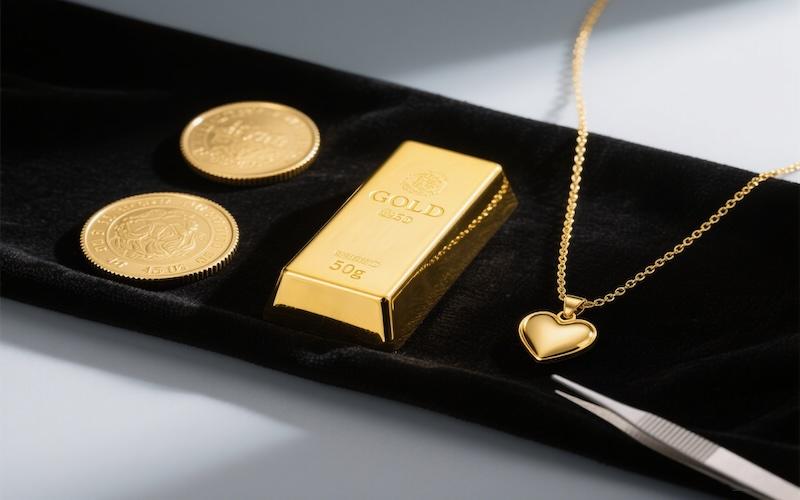
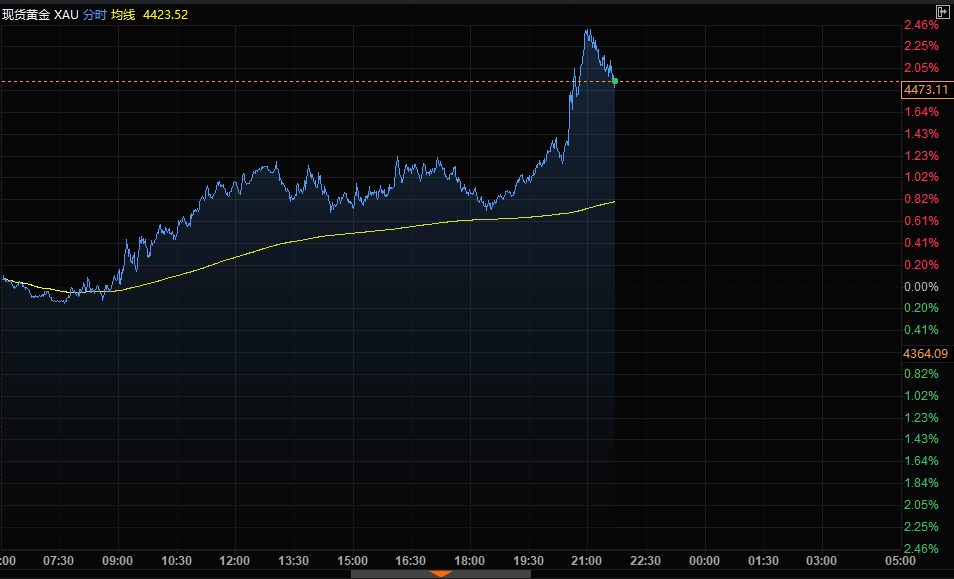 (Spot gold intraday chart, source: EasyTrade) At 21:42 Beijing time, spot gold is currently trading at $4471 per ounce.
Once a frontrunner for the position of Federal Reserve Chair, he suffered a setback and lost his luster.
In the early stages of the race for the Federal Reserve Chair this year, Waller was the undisputed frontrunner. He possessed solid professional expertise, mature policy understanding, and maintained a respectable distance from the White House, demonstrating relative independence. He was highly regarded by Wall Street institutions, and at the time, market bets on his chances of becoming Fed Chair far outweighed any other candidate, making him the widely recognized core contender. However, the situation quickly reversed, with former Fed Governor Kevin Warsh emerging as a strong contender. As the market's predictions of Warsh's policy success continued to rise, his probability of becoming chair surged to 87%, completely overtaking Waller. This loss in the chair race became a pivotal turning point in Waller's market influence.Its fluctuating stance has gradually diminished its influence in the market.
After losing his chance to become the Fed Chair, Waller's monetary policy stance began to waver frequently, sometimes leaning hawkish to combat inflation, and sometimes dovish to emphasize economic resilience, resulting in a highly unstable policy attitude. This erratic pronouncements made it difficult for the market to form stable expectations, and major institutions gradually stopped using his comments as a core reference for Fed policy. His market influence continued to weaken, and attention cooled significantly. Especially given the recent fluctuating inflation data and hawkish signals from several Fed officials, the market had already assumed that Waller would maintain a hawkish tone and continue to support a September rate hike; almost no one predicted a reversal of his stance.Unexpected Major Shift! Swinging Hawks Officially Turn Dovish
However, in his latest public statement, Waller took a step completely beyond market expectations, officially shifting to a dovish stance and becoming the first core official in the current Fed hawkish camp to explicitly soften his stance. Waller openly stated that while current inflation is still significantly higher than the Fed's 2% policy target, the market has already shown clear signs of deflation, and a downward trend in inflation is being established. He cited key data to support his view: the Fed's preferred inflation gauge, the three-month growth rate, has fallen sharply from 4.76% in February to the current 3.05%, a considerable decline in both speed and magnitude. He also pointed out that some statistical methods have overestimated the current inflation level, and after subsequent data revisions, the inflation reading at the beginning of the year is expected to be further revised downwards, indicating that inflationary pressures are actually better than the market perceives. In response, he gave a clear policy stance: emulating the "give peace a chance" approach, giving deflation a chance. If the core inflation data, such as CPI and PPI, to be released in the next two weeks continue to improve, he will fully support maintaining the current interest rate at the September policy meeting. He stated bluntly that a single 25 basis point rate hike is simply insufficient to quickly bring inflation back to the 2% target, and that a wait-and-see approach, awaiting the release of data, is the optimal choice. However, Waller did not completely close the door to rate hikes, maintaining a data-driven bottom line. He emphasized that if August inflation data rebounds and the downward trend in inflation reverses, he will immediately change his stance, supporting a small rate hike to tighten policy, thus continuing the Fed's consistent data-dependent approach.Market instantly reprices: Interest rate hike expectations cool, gold prices surge.
This unexpectedly dovish shift triggered a rapid and coordinated reaction in the financial markets, completely reversing the hawkish sentiment pre-holiday. In the interest rate market, according to data from the CME FedWatch Tool, the market's probability of a September Fed rate hike plummeted, falling by approximately 12 percentage points in a single day, rapidly cooling expectations. US Treasury yields also declined, with the 10-year yield falling 4 basis points to 4.754%, providing temporary relief to the US Treasury market. The currency and precious metals markets reacted most strongly, with the dollar index plunging and gold experiencing a sharp breakout. Spot gold saw a significant intraday gain of up to 2%, breaking out of its previous range and exhibiting a straight-line surge. The market logic is clear: cooling expectations of a rate hike and falling US Treasury yields significantly reduced the opportunity cost of holding non-interest-bearing gold, coupled with a weakening dollar, directly propelling a strong rebound in gold prices.Key observations for the market outlook: Inflation data will determine the final trend.
Overall, Waller's statement was not a comprehensive easing, but rather a conditional pause in rate hikes, with the core focus entirely on subsequent inflation data. Current market sentiment has largely corrected towards a dovish stance, and tomorrow's non-farm payroll data, followed by August's CPI and PPI data, will be the ultimate indicators for the September interest rate decision. If inflation continues to cool, the current gold price rally is likely to continue; if inflation rebounds more than expected, Waller and the Fed's overall stance may turn hawkish again, and the market will likely experience a rapid correction. (Spot gold intraday chart, source: EasyTrade) At 21:42 Beijing time, spot gold is currently trading at $4471 per ounce.
- Risk Warning and Disclaimer
- The market involves risk, and trading may not be suitable for all investors. This article is for reference only and does not constitute personal investment advice, nor does it take into account certain users’ specific investment objectives, financial situation, or other needs. Any investment decisions made based on this information are at your own risk.