What changes are occurring in the pricing logic of the pound sterling after UK long-term bond yields surged to 28-year highs?
2026-09-07 18:54:05
On Monday, September 7th, the British pound was trading around 1.3530 against the US dollar; meanwhile, the yield on 10-year UK government bonds was around 5.15% during the session, while the 30-year yield touched 5.89% last week, reaching its highest level since 1998. The current foreign exchange market is no longer simply trading interest rate differentials, but is reassessing the combined relationship between fiscal credibility, energy shocks, and the Bank of England's policy constraints. 
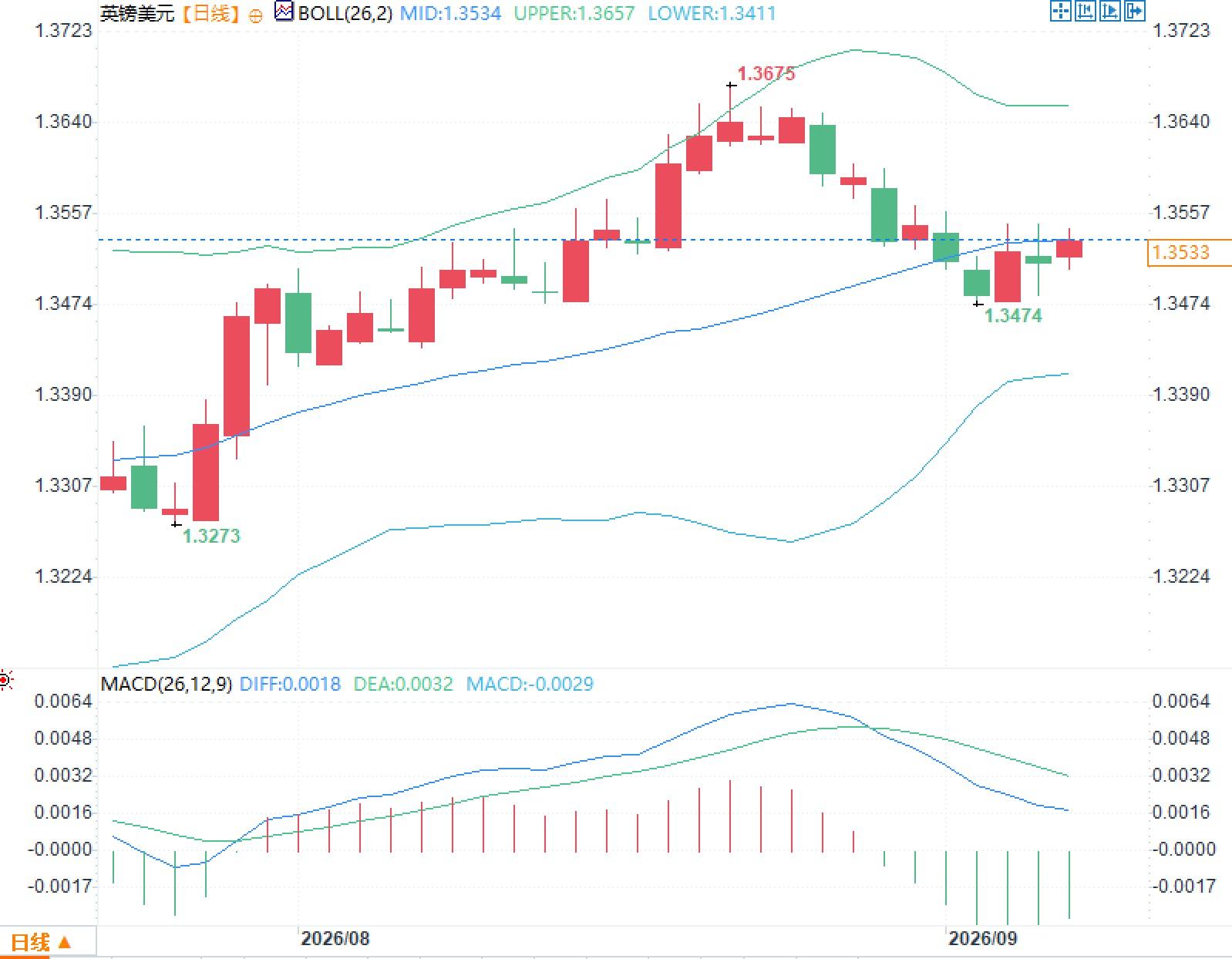 This combination is better defined as "the coexistence of previous trend inertia and weakening short-term momentum" rather than a directional signal. Bollinger Bands describe the relative position of volatility and price, while MACD reflects momentum changes between moving averages of different periods. Neither can independently explain fiscal risk premiums, yield curve changes, or energy shocks.
High yields on long-term bonds are changing the pricing logic of the pound sterling.
The Bank of England kept its policy rate at 3.75% at its July meeting, with a vote of 6 to maintain the rate and 3 to raise it by 25 basis points. The latest official data shows that the Consumer Price Index (CPI) rose 2.9% year-on-year in July. With energy costs affected by the Middle East conflict, the inflation path remains highly uncertain. This creates a typical "two-way pricing" environment for the pound. Higher policy rates and bond yields can increase the nominal yield of pound assets, but if the rise in long-term bond yields mainly comes from fiscal risk premiums, term premiums, and inflation compensation, rather than from real growth improvement, then the traditional interest rate spread effect may be partially offset by the higher risk discount. This is also the key reason why the pound and UK government bonds have recently struggled to form a stable positive correlation. Short-term yields reflect more of the Bank of England's policy expectations, while long-term yields simultaneously bear the future supply of government bonds, fiscal sustainability, inflation uncertainty, and duration risk compensation. Significantly amplified volatility in long-term yields means that the macroeconomic pricing factors for the pound have expanded from solely monetary policy to include fiscal and supply-side constraints.Fiscal discipline is not just a slogan; its core lies in the fact that interest payments erode budgetary space.
In his latest remarks, Chancellor of the Exchequer John Healy emphasized that fiscal discipline is the foundation of the government's commitments and confirmed that established fiscal rules will be followed in the October 28 budget. He did not provide specific answers regarding tax changes, which are of great interest to the market, before the budget announcement. The latest policy information also shows that the Treasury is significantly strengthening its focus on borrowing costs and the budget safety cushion. What truly affects bond and pound pricing is not whether the budget balance sheet is formally balanced, but rather the marginal financing cost of new debt in a high-yield environment. As of the end of July, net public sector borrowing for the first four months of the fiscal year was £56.7 billion, a decrease of £6 billion from the same period last year, but still £2.3 billion higher than official forecasts; net public sector debt was approximately £2.9849 trillion, equivalent to 94.1% of GDP. Central government debt interest payments reached £7.7 billion in July, an increase of £700 million year-on-year. This means that the fiscally sensitive variable has shifted from a single month's deficit to an interest rate path jointly determined by interest rates, inflation-linked debt, and refinancing costs. The longer long-term yields remain high, the more easily the fiscal safety cushion in future budgets will be squeezed by debt servicing costs, and the more pronounced the constraints between growth policies and fiscal discipline will become.The key to shifting growth policies towards the supply side remains whether private capital can keep up.
Healy proposed using public financial institutions to attract private investment and allocating £150 million to support high-growth businesses in northern England. The government also proposed reducing the regulatory burden on businesses by 25% before the end of the current parliamentary session and expanding local fiscal autonomy. Simultaneously, the long-term public project evaluation system is being adjusted, with the core discount rate planned to be reduced from 3.5% to 3%, which economically means increasing the weight of long-term infrastructure benefits in current project evaluations. This policy design is closer to the logic of supply-side reform than simply increasing fiscal spending, but its ultimate effect depends on three factors: First, whether public funds can generate additional private capital investment; second, whether planning and regulatory reforms can shorten project implementation cycles; and third, whether skills and labor supply can match the new capital formation. Only when these three factors improve simultaneously can public investment be transformed into productivity, rather than merely expanding the balance sheet. The latest data still shows that the growth foundation is not robust. In the three months to June, real GDP grew by 0.4%, the service sector by 0.5%, and industrial output remained basically flat. Meanwhile, Jaguar Land Rover plans to cut approximately 4,000 jobs globally over the next two years and aims for £1.7 billion in cost savings, as the manufacturing sector continues to face pressure from costs, demand, and competition.Technical structure displays kinetic energy cooling
The daily chart for GBP/USD shows that the price has returned to the vicinity of the Bollinger Middle Band, entering a relatively stable phase after the previous bandwidth expansion; the MACD fast line is below the slow line, the histogram is in negative territory, but the two lines remain above the zero axis. This combination is better defined as "the coexistence of previous trend inertia and weakening short-term momentum" rather than a directional signal. Bollinger Bands describe the relative position of volatility and price, while MACD reflects momentum changes between moving averages of different periods. Neither can independently explain fiscal risk premiums, yield curve changes, or energy shocks.Frequently Asked Questions
Question 1: Why doesn't a rise in UK government bond yields necessarily push up the pound? Answer: If the rise in yields stems from expectations of policy rates, the interest rate differential effect may be more pronounced; if it mainly comes from fiscal risk, inflation compensation, and term premiums, the market will simultaneously increase the risk discount for pound assets, thus the relationship between the two may weaken, or even diverge temporarily. Question 2: What should be observed most in the October 28th budget? Answer: The focus is not on any particular tax measure, but rather on whether the fiscal rule safety net, interest expense assumptions, borrowing pathways, and public investment arrangements form a consistent framework. If growth policies increase financing needs, the market will continue to assess their response to long-term debt costs and fiscal space.- Risk Warning and Disclaimer
- The market involves risk, and trading may not be suitable for all investors. This article is for reference only and does not constitute personal investment advice, nor does it take into account certain users’ specific investment objectives, financial situation, or other needs. Any investment decisions made based on this information are at your own risk.