Eurozone inflation rises to 3.3%, reinforcing expectations of interest rate hikes; ECB may signal caution after September rate hike.
2026-09-08 14:48:05
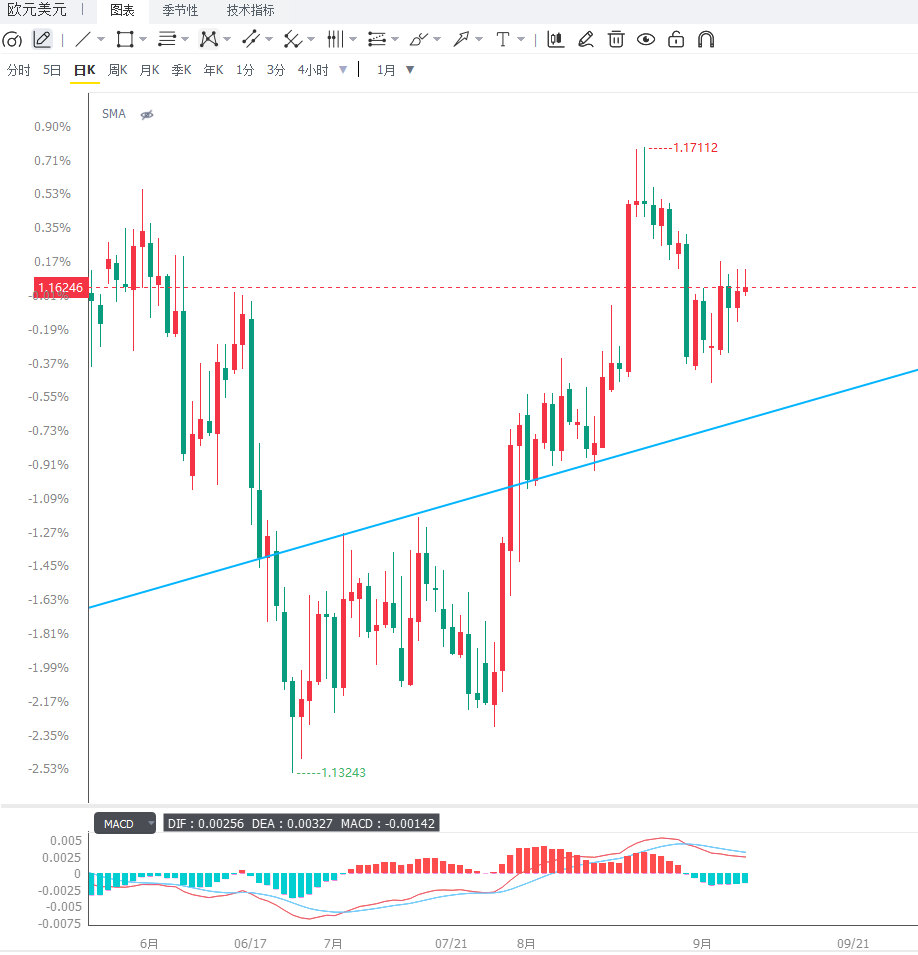
The European Central Bank (ECB) will hold its monetary policy meeting on September 10, and the market widely expects it to raise its key interest rate by 25 basis points. This would be the ECB's second rate hike against the backdrop of rapidly rising energy prices, with the deposit rate expected to rise from 2.25% to 2.50%. The market has already largely priced in the September rate hike; therefore, the real focus affecting the euro and European bond markets may not be the rate hike itself, but rather how the ECB will describe its future policy path.  Inflation data is the main reason for the European Central Bank's renewed tightening of policy. Eurostat data shows that the Eurozone's Harmonized Index of Consumer Prices (HICP) is expected to rise 3.3% year-on-year in August, up from 2.9% in July, reaching its highest level since September 2023. Energy prices rose 14.3% year-on-year, significantly higher than July's 10.3%, becoming the main source of the rapid rebound in overall inflation. Meanwhile, service sector inflation fell from 3.3% to 3.0%, while non-energy industrial goods prices rose by 1.2%, indicating that inflationary pressures are still mainly concentrated on the energy sector. This structure presents a clear double-edged sword for the ECB. On the one hand, continued rises in energy prices may be transmitted to broader goods and services prices through transportation, manufacturing, and the cost of living; on the other hand, there is currently insufficient evidence to suggest that an energy shock has created a widespread wage-price spiral. Discussions at previous ECB meetings also indicated that wage growth, long-term inflation expectations, and service price pressures remain relatively under control, therefore policymakers need to avoid overreacting to a simple energy supply shock. Uncertainty in the energy market is the biggest variable in the future policy path. Supply risks related to the Strait of Hormuz have pushed up international crude oil prices. If high oil prices persist for an extended period, heating and energy costs for European households during the winter could rise further, increasing production and transportation costs for businesses. The European Central Bank (ECB) has previously emphasized that the duration of the energy shock and whether it produces indirect and secondary effects will determine the inflation and economic growth outlook. Regarding economic growth, the Eurozone has not yet shown clear signs of recession. Eurozone GDP grew by 0.6% quarter-on-quarter in the second quarter, and this economic resilience has somewhat reduced the ECB's policy concerns regarding energy inflation. However, if interest rates continue to rise above the neutral interest rate range, further increases in financing costs could gradually dampen business investment, real estate, and household consumption. Therefore, after the September rate hike, the ECB needs to find a new balance between controlling inflation and avoiding excessive economic slowdown. The market has begun to reassess the possibility of a further rate hike in December. Some large financial institutions have recently included a 25 basis point rate hike in December in their forecasts, mainly because energy inflation may last longer than previously assumed. Deutsche Bank currently expects the ECB to raise rates by another 25 basis points in December and believes the likelihood of the final interest rate reaching 2.75% has increased. However, this does not mean that further interest rate hikes are certain; the future will still depend on energy prices, core inflation, wage growth, and economic activity. Therefore, the market significance of the ECB's September meeting is shifting from "whether to raise interest rates" to "what to do after the rate hike." If ECB President Lagarde emphasizes that future policy will still depend on data and avoids explicitly committing to consecutive rate hikes, the euro may face short-term profit-taking pressure. If the ECB significantly strengthens its concerns about persistent inflation and hints that there is still room for further tightening in December, eurozone bond yields and the euro may receive new support. The euro remains influenced by both ECB policy expectations and the dollar's performance. If the September rate hike meets market expectations, the marginal boost to the euro from the rate decision itself may be limited, and the market will pay more attention to Lagarde's statements on the future policy path. If the ECB signals a "wait-and-see" approach after the rate hike, the euro may experience a short-term technical correction; if it clearly emphasizes the risk of further spread of energy inflation, the euro is expected to maintain relative strength. In the medium term, the euro's upside potential still depends on whether eurozone inflation can continue to exceed the target and whether the ECB needs to push policy rates further into a restrictive range. If energy prices remain high while core inflation and wage pressures begin to rise again, market pricing in a December rate hike may intensify further; conversely, if energy prices fall and service inflation continues to decline, a September rate hike may gradually be seen as the end of this round of adjustments. Technically, the daily chart maintains an overall oscillating to slightly bullish structure. 1.1615 is the first support level, also close to the 20-day Bollinger Band middle line; a break below this level could lead to a further pullback to the 100-day moving average around 1.1560, and a subsequent break below that level would target the lower Bollinger Band around 1.1525. On the upside, the first resistance level to watch is around 1.1650; a successful break above this level would target the upper Bollinger Band around 1.1710, and a break above that level could test the psychological level of 1.1800. On the 4-hour chart, EUR/USD is currently oscillating above 1.1600, with short-term bullish and bearish forces relatively balanced. 1.1600 is a key psychological support level. If it breaks below and is confirmed, the next support level to watch is 1.1560. If it holds above 1.1650, a short-term rebound is possible, with further support at 1.1710. The market is currently awaiting the ECB interest rate decision and US PPI and CPI data. The exchange rate is expected to remain range-bound until the data is released.
  Editor's Summary: Eurozone inflation rose to 3.3% in August, providing ample justification for another ECB rate hike in September. However, energy-driven inflation differs fundamentally from demand-driven inflation. Currently, core price and wage pressures have not shown clear signs of spiraling out of control; therefore, the ECB's cautious approach after the September rate hike is highly reasonable. In the short term, market focus will shift from the rate hike outcome to Lagarde's policy guidance, while whether oil and natural gas prices can remain high will be a key variable determining whether a further rate hike will occur in December.
Inflation data is the main reason for the European Central Bank's renewed tightening of policy. Eurostat data shows that the Eurozone's Harmonized Index of Consumer Prices (HICP) is expected to rise 3.3% year-on-year in August, up from 2.9% in July, reaching its highest level since September 2023. Energy prices rose 14.3% year-on-year, significantly higher than July's 10.3%, becoming the main source of the rapid rebound in overall inflation. Meanwhile, service sector inflation fell from 3.3% to 3.0%, while non-energy industrial goods prices rose by 1.2%, indicating that inflationary pressures are still mainly concentrated on the energy sector. This structure presents a clear double-edged sword for the ECB. On the one hand, continued rises in energy prices may be transmitted to broader goods and services prices through transportation, manufacturing, and the cost of living; on the other hand, there is currently insufficient evidence to suggest that an energy shock has created a widespread wage-price spiral. Discussions at previous ECB meetings also indicated that wage growth, long-term inflation expectations, and service price pressures remain relatively under control, therefore policymakers need to avoid overreacting to a simple energy supply shock. Uncertainty in the energy market is the biggest variable in the future policy path. Supply risks related to the Strait of Hormuz have pushed up international crude oil prices. If high oil prices persist for an extended period, heating and energy costs for European households during the winter could rise further, increasing production and transportation costs for businesses. The European Central Bank (ECB) has previously emphasized that the duration of the energy shock and whether it produces indirect and secondary effects will determine the inflation and economic growth outlook. Regarding economic growth, the Eurozone has not yet shown clear signs of recession. Eurozone GDP grew by 0.6% quarter-on-quarter in the second quarter, and this economic resilience has somewhat reduced the ECB's policy concerns regarding energy inflation. However, if interest rates continue to rise above the neutral interest rate range, further increases in financing costs could gradually dampen business investment, real estate, and household consumption. Therefore, after the September rate hike, the ECB needs to find a new balance between controlling inflation and avoiding excessive economic slowdown. The market has begun to reassess the possibility of a further rate hike in December. Some large financial institutions have recently included a 25 basis point rate hike in December in their forecasts, mainly because energy inflation may last longer than previously assumed. Deutsche Bank currently expects the ECB to raise rates by another 25 basis points in December and believes the likelihood of the final interest rate reaching 2.75% has increased. However, this does not mean that further interest rate hikes are certain; the future will still depend on energy prices, core inflation, wage growth, and economic activity. Therefore, the market significance of the ECB's September meeting is shifting from "whether to raise interest rates" to "what to do after the rate hike." If ECB President Lagarde emphasizes that future policy will still depend on data and avoids explicitly committing to consecutive rate hikes, the euro may face short-term profit-taking pressure. If the ECB significantly strengthens its concerns about persistent inflation and hints that there is still room for further tightening in December, eurozone bond yields and the euro may receive new support. The euro remains influenced by both ECB policy expectations and the dollar's performance. If the September rate hike meets market expectations, the marginal boost to the euro from the rate decision itself may be limited, and the market will pay more attention to Lagarde's statements on the future policy path. If the ECB signals a "wait-and-see" approach after the rate hike, the euro may experience a short-term technical correction; if it clearly emphasizes the risk of further spread of energy inflation, the euro is expected to maintain relative strength. In the medium term, the euro's upside potential still depends on whether eurozone inflation can continue to exceed the target and whether the ECB needs to push policy rates further into a restrictive range. If energy prices remain high while core inflation and wage pressures begin to rise again, market pricing in a December rate hike may intensify further; conversely, if energy prices fall and service inflation continues to decline, a September rate hike may gradually be seen as the end of this round of adjustments. Technically, the daily chart maintains an overall oscillating to slightly bullish structure. 1.1615 is the first support level, also close to the 20-day Bollinger Band middle line; a break below this level could lead to a further pullback to the 100-day moving average around 1.1560, and a subsequent break below that level would target the lower Bollinger Band around 1.1525. On the upside, the first resistance level to watch is around 1.1650; a successful break above this level would target the upper Bollinger Band around 1.1710, and a break above that level could test the psychological level of 1.1800. On the 4-hour chart, EUR/USD is currently oscillating above 1.1600, with short-term bullish and bearish forces relatively balanced. 1.1600 is a key psychological support level. If it breaks below and is confirmed, the next support level to watch is 1.1560. If it holds above 1.1650, a short-term rebound is possible, with further support at 1.1710. The market is currently awaiting the ECB interest rate decision and US PPI and CPI data. The exchange rate is expected to remain range-bound until the data is released. Editor's Summary: Eurozone inflation rose to 3.3% in August, providing ample justification for another ECB rate hike in September. However, energy-driven inflation differs fundamentally from demand-driven inflation. Currently, core price and wage pressures have not shown clear signs of spiraling out of control; therefore, the ECB's cautious approach after the September rate hike is highly reasonable. In the short term, market focus will shift from the rate hike outcome to Lagarde's policy guidance, while whether oil and natural gas prices can remain high will be a key variable determining whether a further rate hike will occur in December.
- Risk Warning and Disclaimer
- The market involves risk, and trading may not be suitable for all investors. This article is for reference only and does not constitute personal investment advice, nor does it take into account certain users’ specific investment objectives, financial situation, or other needs. Any investment decisions made based on this information are at your own risk.