Warsh's credibility faces its ultimate test: The probability of a Fed rate hike this week surges to 86.5%, a historic choice under pressure from Trump.
2026-09-14 09:46:09
As the shadow of inflation once again looms over the world's largest economy, the Federal Reserve's interest rate decision this week has transcended routine policy adjustments, becoming a severe test of the central bank's independence and the credibility of policymakers. The US August CPI rose 3.4% year-on-year, while core CPI rebounded to 0.3% month-on-month, with energy prices continuing to push up prices; market bets on a 25 basis point rate hike have surged to 86.5%. Faced with continued pressure from Trump, Chairman Kevin Warsh must choose between combating inflation and political pressure. The world's attention is focused on Wednesday. 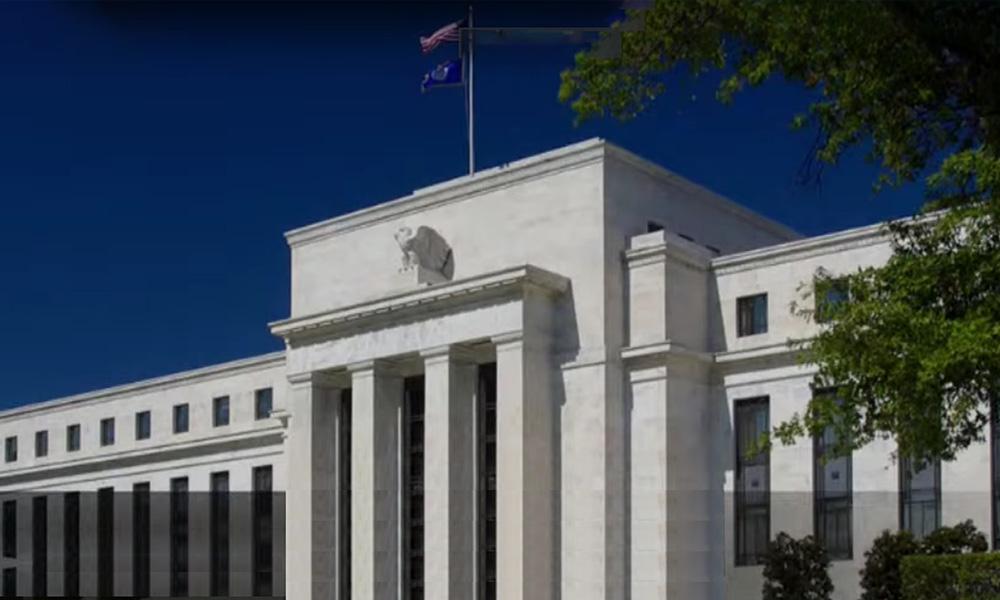
I. Market Bets Interest Rate Hike is a Foregone Conclusion: The Inflation Reality Behind an 86.5% Probability
The Federal Reserve will announce its latest interest rate decision this Wednesday (September 16), and global financial markets are holding their breath. According to the latest data from the CME FedWatch tool, as of September 14, the market expects an 86.5% probability that the Fed will raise the target range for the federal funds rate from the current 3.50%-3.75% to 3.75%-4.00%, while the probability of keeping the rate unchanged is only 13.5%. This sharp increase in probability stems directly from the August Consumer Price Index (CPI) data released last Friday. Data from the U.S. Bureau of Labor Statistics shows that the August CPI rose 0.4% month-on-month, a significant rebound from 0.1% in July; the year-on-year increase remained at 3.4%, continuing for several months well above the Fed's long-term target of 2%. More alarming for the market is that the core CPI, excluding food and energy prices, rose 0.3% month-on-month, higher than the market expectation of 0.2%. Although the year-on-year core inflation rate has slightly decreased from 2.5% in July to 2.4%, the faster month-on-month growth indicates that inflation remains stubbornly sticky. Energy prices have become the core driver of this round of inflation rebound. The energy index rose 2.1% month-on-month in August, with gasoline prices surging 3.9% month-on-month, contributing more than one-third of the overall CPI increase that month. Looking at the 12-month timeframe, the energy index soared 16.3% year-on-year, gasoline prices jumped 27.4% year-on-year, and electricity and piped gas prices also rose by 3.8% and 4.4% respectively, indicating a continued increase in household utility costs.II. Walsh's Hawkish Bet: From "Talking Hard" to "Taking Action"
The unprecedented attention this interest rate decision has garnered stems primarily from the personal credibility of Federal Reserve Chairman Kevin Warsh. Warsh will be officially sworn in as the 17th Chairman of the Federal Reserve on May 22, 2026, having been confirmed by the US Senate with a historic narrow margin of 54-45. This chairman, personally nominated by Trump, has demonstrated a clear hawkish shift since taking office. At the Jackson Hole Economic Symposium on August 28, Warsh explicitly stated that there has been no meaningful improvement in US underlying inflation, and that if future data does not demonstrate that inflation is moving towards the 2% target, policymakers still have "work to do." This statement has placed Warsh in a delicate "credibility trap." Omair Sharif, founder of Inflation Insights, bluntly stated that after making these hawkish remarks, it will be difficult for Warsh to oppose a rate hike at the next meeting. Bloomberg Economics economists Anna Wong and Andrew Sacher also pointed out that market signals are quite clear: investors want and expect the Federal Open Market Committee (FOMC) to raise interest rates, and if the Fed ultimately holds off, Warsh's credibility in the eyes of market participants could be damaged. Evercore ISI economists Krishna Guha and others further analyzed that, given the continued inflationary pressure from oil prices, Warsh may believe that current data is insufficient for the Fed to ignore inflation risks, and that raising interest rates would help maintain his previously eroded policy credibility.III. The Power Struggle Between the White House and the Federal Reserve: Unprecedented Pressure on Independence
The challenge facing Warsh is not only a technical judgment in monetary policy, but also a microcosm of the power struggle between the White House and the Federal Reserve. Since Trump's second term, his attacks on the Fed's independence have escalated. In January 2026, the U.S. Department of Justice served a subpoena to the Fed, threatening criminal charges against then-Chairman Powell for his June 2025 Senate testimony. Powell immediately responded publicly, stating that this was a "pretext" to undermine the Fed's independence. This incident prompted a joint statement from three living former Fed chairs—Yellen, Bernanke, and Greenspan—and four bipartisan former Treasury secretaries, condemning it as an "unprecedented attempt to undermine central bank independence through prosecutorial means." Trump also attempted to remove Fed Governor Lisa Cook from her post and continued to pressure the Fed's interest rate policy, demanding rate cuts to stimulate the economy. However, with persistently high inflationary pressures, the contradiction between Trump's demands for rate cuts and the Fed's mission to combat inflation has become increasingly acute. David Wessel, a senior fellow at the Brookings Institution, commented, "This is a test. This is part of the job, and now he has to decide how to proceed. He will either completely disappoint the market or start to anger Donald Trump." Wessel further pointed out that if Warsh chooses to raise interest rates at this juncture, he will establish his credibility as an independent Federal Reserve chairman for the remainder of his term.IV. "A Costly Remedy": The Economic Chain Reaction of Interest Rate Hikes
Claudia Sahm, a former Federal Reserve official and now chief economist at New Century Advisors, is cautious about interest rate hikes. She stated, "The likelihood of a Fed rate hike next week is quite high, but it's not a done deal. It's a tough decision for them." Sahm described the rate hike as "a costly medicine," not a "magic wand." The transmission effects of the rate hike are already evident on multiple levels. The 10-year U.S. Treasury yield recently climbed to 4.943%, reaching its highest level since October 2023; the 30-year Treasury yield touched 5.37%, the first time since 2001. Consumers are also feeling the pressure of borrowing costs: average mortgage rates have reached 7%, and the average interest rate for new credit cards has reached 23.82%. Meanwhile, Trump's military action against Iran continues to push up energy prices. Brent crude oil briefly broke through $100 per barrel, and the national average price of diesel in the U.S. reached a record high of $5.897 per gallon. The costs of tariff policies are also being passed on to consumers at an accelerating pace. Research by the Tax Foundation shows that Trump's tariff policies will result in an average additional $840 in expenses for American households by 2026. Warsh's own reforms to communication methods are also noteworthy. Since taking office, he has drastically reduced the Fed's policy statements from the usual 300-400 words to about 130 words and removed all forward guidance. While this "less is more" approach aims to reduce the Fed's "reverse intervention" in the market, it also increases the uncertainty in financial markets' pricing of inflation and interest rate expectations. Analysts believe that when the Fed refuses to provide clear forward guidance, the market can only force the Fed to make a statement through market volatility.V. December's suspense: Is the interest rate hike an "insurance adjustment" or the start of a tightening cycle?
The key focus of this decision is not only on whether to raise interest rates by 25 basis points, but also on whether the Federal Reserve will signal further tightening. According to the dot plot released at the June FOMC meeting, 9 of the 19 Fed officials believe that interest rates will be raised in 2026, only 1 believes that rates will be cut, and 8 believe that rates will remain unchanged. The median forecast of the federal funds rate for 2026 by Fed officials has increased from 3.4% in March to 3.8%, meaning there is room for at least one more rate hike this year. Support for tightening within the Fed continues to grow. Although the benchmark interest rate has remained unchanged for five consecutive meetings this year, at the July meeting, three officials voted for a 25 basis point rate hike, and two non-voting officials indicated that they would also support a rate hike if they had voting rights. Analysts, including Joseph Brusuelas, chief economist at RSM US, point out that the market is beginning to discuss whether the Fed needs to reverse the cumulative 75 basis point rate cuts implemented last year to address the risks of a slowing labor market. Consumer inflation expectations are also rising: a recent University of Michigan survey shows that U.S. consumers' inflation expectations for the next year jumped from 4% in August to 4.6% in early September, marking the first time since 2023 that more than half of consumers expect interest rates to rise in the next 12 months. The Federal Reserve will announce its decision at 2 p.m. Wednesday (2:00 a.m. Thursday Beijing time) after a two-day meeting, followed by a press conference by Warsh. The economic projections released at that time and Warsh's policy statements will determine whether this rate hike is an "insurance adjustment" or the beginning of a new tightening cycle.Editor's Summary
The core contradiction of this Federal Reserve interest rate decision lies in the irreconcilable conflict between inflation control and political pressure. The August CPI data confirmed that the decline in inflation has stalled, energy prices continue to rise driven by geopolitical conflicts, and tariff costs are being passed on to consumers at an accelerated pace. These factors collectively constitute sufficient conditions for a rate hike. Warsh's hawkish remarks at Jackson Hole have virtually eroded the credibility of maintaining the current interest rate policy option. From a broader perspective, the significance of this decision transcends monetary policy itself. As Trump's personally nominated Fed chair, Warsh's decisions will directly test the Fed's ability to maintain independent decision-making under political pressure. The Senate confirmation vote of 54 to 45 profoundly reflects the reality of political polarization in Congress, and the criminal investigation of Powell has further intensified this tension. Warsh faces the choice of finding a viable path between maintaining the central bank's independence and responding to the White House's expectations. Regardless of the outcome, this decision will serve as an important benchmark for assessing the resilience of the Federal Reserve system.Frequently Asked Questions
Question 1: Why does the market believe there is an 86.5% probability of a Fed rate hike this week? This expectation is mainly based on two factors. First, August CPI data showed that inflation's decline has stalled: the year-on-year increase remained at 3.4%, core CPI rose 0.3% month-on-month, exceeding expectations, and gasoline prices surged 3.9% month-on-month, driving an overall rebound in inflation. Second, Warsh previously stated at Jackson Hole that "if the data does not prove that inflation is falling toward the 2% target, policymakers still have work to do." This hawkish statement convinced the market that he would deliver on his promise to raise rates at this meeting. The CME FedWatch tool, after synthesizing the above information, priced the probability of a rate hike at 86.5%. Question 2: As Trump's nominee for Fed Chair, why does Warsh tend to raise rates? Warsh's situation reflects a typical institutional tension. Although nominated by Trump, the statutory duty of the Fed Chair requires him to make decisions based on economic data rather than political will. Since taking office, Warsh has reiterated his determination to defend the 2% inflation target on multiple public occasions, and his personal credibility is deeply tied to his anti-inflation stance. If he chooses to hold rates steady with inflation at 3.4%, it will not only damage market confidence in the credibility of his policies but could also trigger further runaway inflation expectations. Brookings Institution's Wessel points out that if Warsh raises rates now, he will establish his credibility as an independent Fed chairman for the remainder of his term. Question 3: What impact will interest rate hikes have on the US economy and ordinary consumers? Interest rate hikes will comprehensively increase borrowing costs. Currently, the 30-year Treasury yield has reached 5.37%, the average mortgage rate has reached 7%, and the average interest rate for new credit cards is 23.82%. Further interest rate hikes mean that the costs of buying a house, buying a car, and repaying credit cards will continue to rise, and business investment and household consumption may be suppressed. Sam describes interest rate hikes as "a costly medicine," whose core mechanism is to suppress inflation by curbing demand, but this process inevitably carries the risk of slowing economic growth. Question 4: What are the specific manifestations of Trump's interference in the independence of the Fed? Since his second term, Trump has continuously escalated his pressure on the Fed. In January 2026, the U.S. Department of Justice served a subpoena to the Federal Reserve, threatening criminal charges against then-Chairman Jerome Powell; Trump also attempted to remove Federal Reserve Governor Lisa Cook from her post; furthermore, he repeatedly criticized the Fed's interest rate policy publicly, demanding rate cuts to stimulate the economy. These actions drew joint condemnation from central bank governors and former financial officials worldwide, considered an "unprecedented move" against central bank independence. Question 5: If the Fed raises rates this week, will it continue to raise rates in December? The market is currently divided on this. The June dot plot showed that 9 out of 19 officials expected a rate hike this year, with some predicting two or even three hikes. The median forecast for the federal funds rate in 2026 by Fed officials has risen to 3.8%, suggesting at least one more rate hike is possible. However, institutions such as Evercore ISI believe that this rate hike is more likely a "safety measure," and the subsequent path will highly depend on inflation data and oil price trends. If energy prices continue to rise driven by the conflict in Iran, the likelihood of another rate hike in December will increase significantly; conversely, if there are clear signs of a decline in inflation, the Federal Reserve may choose to pause its observation.- Risk Warning and Disclaimer
- The market involves risk, and trading may not be suitable for all investors. This article is for reference only and does not constitute personal investment advice, nor does it take into account certain users’ specific investment objectives, financial situation, or other needs. Any investment decisions made based on this information are at your own risk.