The runaway US bond market and the sharp decline in debt growth have significantly reduced the room for interest rate hikes, highlighting the long-term underlying value of gold.
2026-09-14 13:32:09
Last week, the market was largely trading on the possibility of a 25-basis-point rate hike by the Federal Reserve this week. The expectation of a rate hike continued to suppress gold prices. However, looking at the longer term, compared to short-term interest rate changes, the US economy faces more intractable and profound problems. The US federal government's control over the bond market is weakening. The Treasury's intervention to repurchase long-term bonds failed to lower yields, and federal debt has surpassed $40 trillion. The enormous pressure of interest payments, coupled with fiscal stimulus commitments, is reshaping investors' long-term assessment of dollar assets. Short-term rate hike disturbances are only temporary factors; the ever-expanding debt is the core factor determining the long-term value of gold.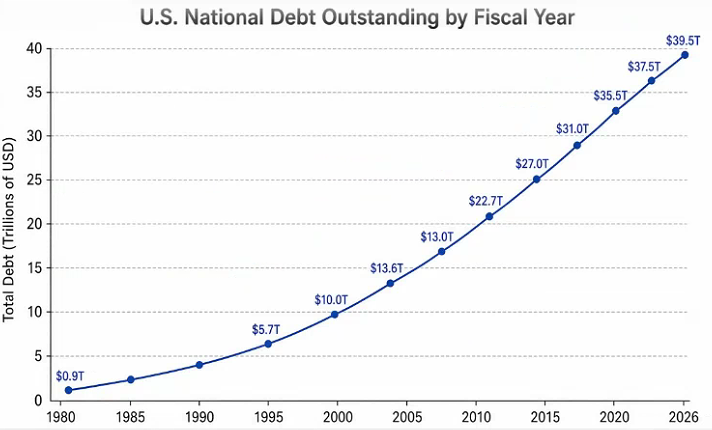 Chart: Trend of Total US Fiscal Year Debt
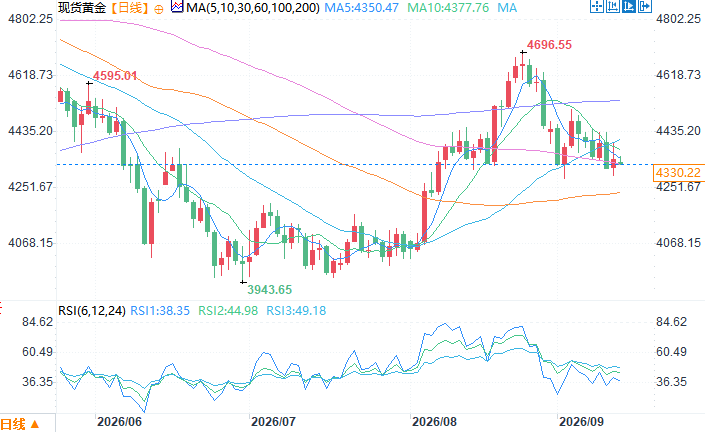 Spot gold daily chart source: FX678. At 13:30 Beijing time on September 14th, spot gold was trading at $4330.22 per ounce.
Repurchase operations have had little effect, and long-term bond yields have risen against the trend.
Last week, the U.S. Treasury spent $5.1 billion to repurchase long-term Treasury bonds, intending to support the long-term bond market and lower long-term yields. However, the market reaction was completely contrary to policy expectations; long-term Treasury yields continued to rise, with the 10-year Treasury yield closing at 4.97% at the end of the week, a three-year high. Many analysts predict that it is only a matter of time before yields break through 5%, and once this threshold is reached, it will bring new and significant obstacles to the U.S. economy. The market's current focus is largely on the upcoming Federal Reserve interest rate decision, while to some extent ignoring the massive fiscal spending predicament of the United States. Just recently, the U.S. sovereign debt officially surpassed the $40 trillion mark. Currently, the U.S. government's annual debt interest payments alone exceed $1 trillion, and this burden continues to increase. The day before the Treasury's less-than-ideal bond repurchase, President Trump pledged that if the Republicans win the midterm elections and retain control of the Senate, he would provide a $5,000 subsidy to every adult resident in the United States. This plan is expected to add another $1 trillion to the government debt. Chart: Trend of Total US Fiscal Year DebtThe room for interest rate hikes is constrained by fiscal policy, leaving policymakers in a dilemma.
Against this backdrop of severe fiscal stagnation, investors need to reconsider how much room the Federal Reserve still has to raise interest rates. Analysts point out that while the Fed can combat inflation through interest rate hikes, the continuously deteriorating fiscal situation will significantly reduce the Fed Chairman's room for maneuver. Higher interest rates mean higher annual interest payments for the US government, creating a vicious cycle of high interest rates and high debt. Continued rate hikes will further amplify fiscal pressure and could even impact the stability of the entire US Treasury market. Caught between the need to curb inflation and the fiscal pressure from massive debt, the Fed's policy choices are constrained. A short-term 25 basis point rate hike may temporarily suppress gold prices, but the long-term monetary credit risk from debt expansion is gradually changing investment strategies. The gold market has begun pricing in this long-term contradiction. Short-term rate hikes may deter some short-term speculative funds, but over time, the risks of not allocating to gold will eventually outweigh the opportunity cost of holding it.Shifting Market Perspective: Moving Away from Basis Point Games and Focusing on Trillion-Dollar Debt Increases
Many traders in the market overemphasize the Federal Reserve's single 25-basis-point interest rate adjustment, treating short-term interest rate fluctuations as the core criterion for judging gold prices, while ignoring the larger variable of the continued expansion of US debt. Compared to each small interest rate hike, the long-term impact of adding one trillion dollars in debt has a far more profound effect on the global monetary system and the value of dollar assets. Gold itself does not generate interest, so it is often under pressure during periods of rising interest rates—this is a rule at the short-term trading level. However, the underlying value of gold comes from hedging sovereign debt and currency credit risk. When the US Treasury market experiences the abnormal phenomenon of the Treasury intervening to prop up the market, yet yields continue to rise, it indicates that the market pricing logic has changed. Investors are beginning to demand higher risk compensation to absorb the ever-increasing issuance of US Treasury bonds. This structural shift will not disappear due to a single interest rate hike or cut; it will continue to support the demand for gold allocation over a longer period.Conclusion
In the short term, expectations of a Fed rate hike remain the direct factor suppressing gold prices, while volatility in the bond market will also lead to repeated fluctuations in asset prices. However, the failure of US Treasury repurchase agreements and the continued surge in total debt expose structural problems in the US fiscal system. For investors, rather than focusing on the 25 basis point fluctuations in each interest rate decision, it is more important to continuously track the pace of US debt expansion. Short-term interest rate games are merely superficial fluctuations; the monetary and credit risks brought about by debt expansion are the underlying driving force for the long-term performance of safe-haven assets like gold . Every future anomaly in the US Treasury market will continue to be transmitted to commodities and global asset markets, warranting continued observation. Spot gold daily chart source: FX678. At 13:30 Beijing time on September 14th, spot gold was trading at $4330.22 per ounce.
- Risk Warning and Disclaimer
- The market involves risk, and trading may not be suitable for all investors. This article is for reference only and does not constitute personal investment advice, nor does it take into account certain users’ specific investment objectives, financial situation, or other needs. Any investment decisions made based on this information are at your own risk.