US crude oil breaking through $102 boosted the Canadian dollar, causing the USD/CAD to fall, but expectations of a Fed rate hike limited the decline.
2026-09-14 15:00:08
The USD/CAD pair fell back to around 1.3870 during Asian trading hours on Monday, ending a three-day winning streak. The main factor driving the exchange rate weakness was the Canadian dollar; the recent rapid rise in international oil prices, with crude oil reaching a near four-month high, provided some support for the Canadian dollar, a currency heavily reliant on energy exports.  Latest market data shows that WTI crude oil has risen above $102, and Brent crude oil has broken through $107. The price increase is mainly driven by supply risks in the Middle East, particularly the disruption of Saudi Arabia's east-west oil pipeline following a drone attack, which has further increased uncertainty surrounding global oil transportation and supply. This pipeline is crucial for transporting crude oil from Saudi Arabia's eastern oil fields to the port of Yanbu on the Red Sea coast, bypassing the Strait of Hormuz. Its shutdown has significantly heightened market concerns about regional supply security. The market is particularly focused on the pipeline's recovery timeline. If the shutdown is prolonged, existing inventories at Yanbu Port can only sustain normal exports in the short term, potentially further impacting international oil prices. Meanwhile, transportation risks in the Red Sea, the Bab el-Mandeb Strait, and the Strait of Hormuz remain high, with multiple important energy transport routes facing disruptions simultaneously, maintaining a high geopolitical risk premium in the crude oil market. For the Canadian dollar, rising oil prices typically improve expectations for Canadian energy export revenue, thus providing direct support for the CAD. The short-term interest rate differential between Canada and the United States has remained relatively stable recently. Market analysts believe that this stable interest rate environment can provide a certain anchor for the Canadian dollar in the short term, putting downward pressure on USD/CAD against the backdrop of strong oil prices. However, the US dollar has not yet lost its support. The US Consumer Price Index (CPI) rose 0.4% month-on-month and 3.4% year-on-year in August, while core CPI rose 0.3% month-on-month, higher than the previous value of 0.2%, indicating that inflationary pressures remain somewhat persistent. Meanwhile, market expectations for a 25 basis point rate hike at the Fed's September meeting have clearly increased, currently at a probability of about 87%, significantly higher than about 59% a week ago. After oil prices broke through $100, on the one hand, it increased the attractiveness of Canadian energy export-related currencies, and on the other hand, it may also push up US inflation expectations again through energy prices. Therefore, a clear tug-of-war has formed between the US dollar and the Canadian dollar: rising oil prices are generally beneficial to CAD, while US inflation and Fed rate hike expectations limit the downside potential of the US dollar. The market focus will now be on the Fed's September interest rate decision and its policy guidance. If the Federal Reserve confirms an interest rate hike and signals further tightening in the future, the US dollar may regain momentum, and USD/CAD could rebound. Conversely, if the market believes this rate hike is more of a short-term response to the impact of energy prices, with limited room for further policy adjustments, then rising oil prices may further strengthen the support for the Canadian dollar. USD/CAD is currently trading around 1.3870 on the daily chart, having retreated after a recent rebound. The exchange rate remains under pressure from the 50-day EMA, currently around 1.3913, while the short-term 9-day EMA is around 1.3842, providing important support. The 14-day RSI is around 49, close to neutral, indicating that the previous rebound momentum is weakening, and the market is currently more inclined to oscillate within the 1.3840-1.3910 range rather than forming a clear one-sided trend. The first resistance level to watch is the 50-day EMA around 1.3913. If the daily chart breaks through and holds above this level, the previous technical rebound may extend further, with resistance levels around 1.3940 and 1.4000 to watch. If the price fails to break through the 1.3910-1.3940 area, there is still a risk of a pullback. The first support level to watch is the 9-day EMA around 1.3842. If the price breaks below and closes below this level, short-term selling pressure may increase further, with the next support level to watch being around 1.3800. If 1.3800 is also breached, the price may retest the previous lows. The current strength of oil prices remains a key factor for USD/CAD bears to monitor. Looking at the 4-hour chart, the previous short-term rebound in USD/CAD is slowing, with a clear resistance area around 1.3900. If the price fails to break through the 1.3900-1.3915 area, the short-term trend is more likely to remain weak and range-bound. The first support level is around 1.3840; a break below this level could lead to further support at 1.3800. If the price reclaims 1.3915, the short-term correction structure may be broken, and the price may retest the area above 1.3940.
 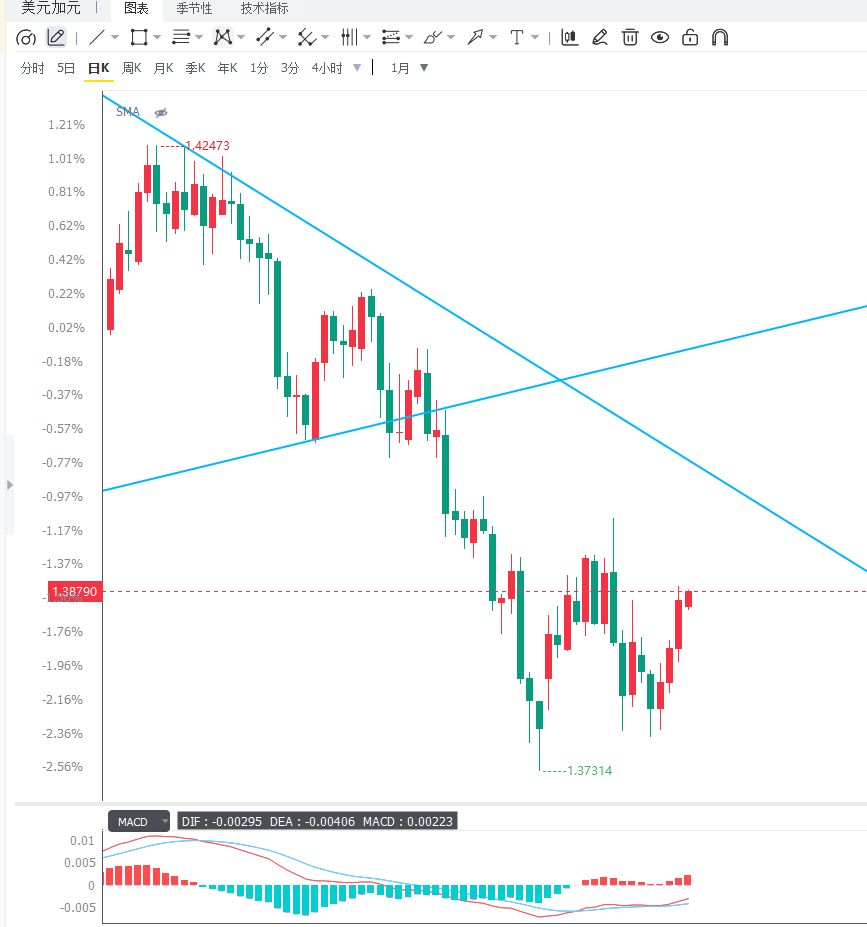 The USD/CAD pair is currently caught in a tug-of-war between rising oil prices and expectations of a US interest rate hike. The suspension of operations at a key Saudi oil pipeline further increases the risk of a rebound in crude oil supply, and the break above $100 in oil prices has provided significant support for the Canadian dollar. Meanwhile, sticky US inflation and rising expectations of a Fed rate hike are limiting the downside for the US dollar. In the short term, 1.3910-1.3940 is a key area for determining whether USD/CAD can regain strength, while 1.3840 and 1.3800 are important support levels. The future direction of the exchange rate will still depend on the sustainability of oil price increases, Fed policy signals, and changes in the USD/CAD interest rate differential.
Latest market data shows that WTI crude oil has risen above $102, and Brent crude oil has broken through $107. The price increase is mainly driven by supply risks in the Middle East, particularly the disruption of Saudi Arabia's east-west oil pipeline following a drone attack, which has further increased uncertainty surrounding global oil transportation and supply. This pipeline is crucial for transporting crude oil from Saudi Arabia's eastern oil fields to the port of Yanbu on the Red Sea coast, bypassing the Strait of Hormuz. Its shutdown has significantly heightened market concerns about regional supply security. The market is particularly focused on the pipeline's recovery timeline. If the shutdown is prolonged, existing inventories at Yanbu Port can only sustain normal exports in the short term, potentially further impacting international oil prices. Meanwhile, transportation risks in the Red Sea, the Bab el-Mandeb Strait, and the Strait of Hormuz remain high, with multiple important energy transport routes facing disruptions simultaneously, maintaining a high geopolitical risk premium in the crude oil market. For the Canadian dollar, rising oil prices typically improve expectations for Canadian energy export revenue, thus providing direct support for the CAD. The short-term interest rate differential between Canada and the United States has remained relatively stable recently. Market analysts believe that this stable interest rate environment can provide a certain anchor for the Canadian dollar in the short term, putting downward pressure on USD/CAD against the backdrop of strong oil prices. However, the US dollar has not yet lost its support. The US Consumer Price Index (CPI) rose 0.4% month-on-month and 3.4% year-on-year in August, while core CPI rose 0.3% month-on-month, higher than the previous value of 0.2%, indicating that inflationary pressures remain somewhat persistent. Meanwhile, market expectations for a 25 basis point rate hike at the Fed's September meeting have clearly increased, currently at a probability of about 87%, significantly higher than about 59% a week ago. After oil prices broke through $100, on the one hand, it increased the attractiveness of Canadian energy export-related currencies, and on the other hand, it may also push up US inflation expectations again through energy prices. Therefore, a clear tug-of-war has formed between the US dollar and the Canadian dollar: rising oil prices are generally beneficial to CAD, while US inflation and Fed rate hike expectations limit the downside potential of the US dollar. The market focus will now be on the Fed's September interest rate decision and its policy guidance. If the Federal Reserve confirms an interest rate hike and signals further tightening in the future, the US dollar may regain momentum, and USD/CAD could rebound. Conversely, if the market believes this rate hike is more of a short-term response to the impact of energy prices, with limited room for further policy adjustments, then rising oil prices may further strengthen the support for the Canadian dollar. USD/CAD is currently trading around 1.3870 on the daily chart, having retreated after a recent rebound. The exchange rate remains under pressure from the 50-day EMA, currently around 1.3913, while the short-term 9-day EMA is around 1.3842, providing important support. The 14-day RSI is around 49, close to neutral, indicating that the previous rebound momentum is weakening, and the market is currently more inclined to oscillate within the 1.3840-1.3910 range rather than forming a clear one-sided trend. The first resistance level to watch is the 50-day EMA around 1.3913. If the daily chart breaks through and holds above this level, the previous technical rebound may extend further, with resistance levels around 1.3940 and 1.4000 to watch. If the price fails to break through the 1.3910-1.3940 area, there is still a risk of a pullback. The first support level to watch is the 9-day EMA around 1.3842. If the price breaks below and closes below this level, short-term selling pressure may increase further, with the next support level to watch being around 1.3800. If 1.3800 is also breached, the price may retest the previous lows. The current strength of oil prices remains a key factor for USD/CAD bears to monitor. Looking at the 4-hour chart, the previous short-term rebound in USD/CAD is slowing, with a clear resistance area around 1.3900. If the price fails to break through the 1.3900-1.3915 area, the short-term trend is more likely to remain weak and range-bound. The first support level is around 1.3840; a break below this level could lead to further support at 1.3800. If the price reclaims 1.3915, the short-term correction structure may be broken, and the price may retest the area above 1.3940. The USD/CAD pair is currently caught in a tug-of-war between rising oil prices and expectations of a US interest rate hike. The suspension of operations at a key Saudi oil pipeline further increases the risk of a rebound in crude oil supply, and the break above $100 in oil prices has provided significant support for the Canadian dollar. Meanwhile, sticky US inflation and rising expectations of a Fed rate hike are limiting the downside for the US dollar. In the short term, 1.3910-1.3940 is a key area for determining whether USD/CAD can regain strength, while 1.3840 and 1.3800 are important support levels. The future direction of the exchange rate will still depend on the sustainability of oil price increases, Fed policy signals, and changes in the USD/CAD interest rate differential.
- Risk Warning and Disclaimer
- The market involves risk, and trading may not be suitable for all investors. This article is for reference only and does not constitute personal investment advice, nor does it take into account certain users’ specific investment objectives, financial situation, or other needs. Any investment decisions made based on this information are at your own risk.