The US dollar is near a two-week high, with a 93% probability of a rate hike already priced in. How long can the rally continue?
2026-09-15 10:56:11
On Tuesday (September 15) during Asian trading hours, the US dollar index fluctuated higher, currently trading around 99.60, near a two-week high, as soaring oil prices pushed up US Treasury yields and reinforced market expectations of a Federal Reserve rate hike this week. The dollar also received support from weakening risk appetite – stocks fell sharply, with AI-related stocks under pressure after industry leaders called for a slowdown in development to control potential threats to human potential. The CME FedWatch Tool showed the market pricing in about a 93% probability of a rate hike on Wednesday; oil prices rose to around $107 per barrel, near a four-month peak, and the 10-year US Treasury yield broke the key psychological level of 5% for the first time since October 2023 in the previous trading session. 
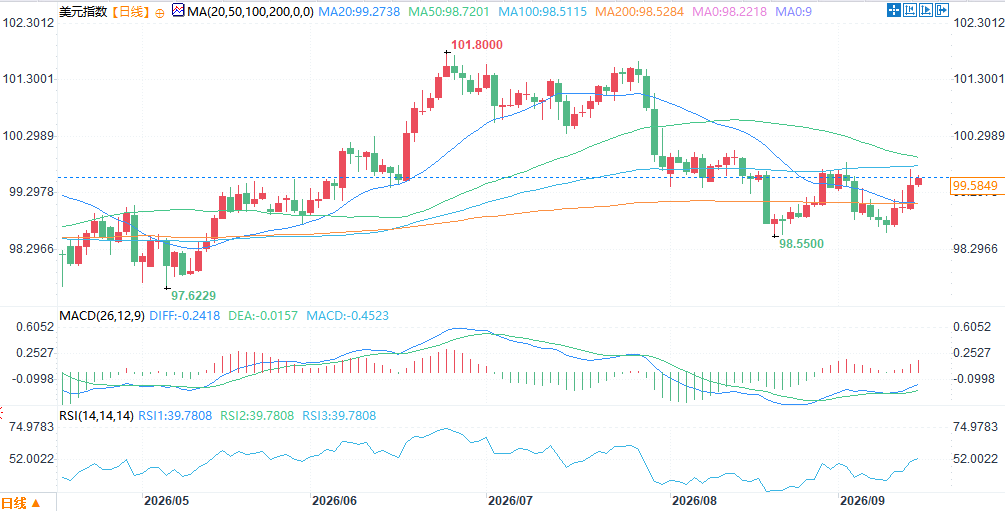 (US Dollar Index Daily Chart, Source: EasyForex) At 10:54 Beijing time, the US Dollar Index was at 99.59.
Oil prices, yields, and risk appetite provide triple support for the US dollar.
A foreign exchange analyst noted in a report, "The combination of rising oil prices, higher US Treasury yields, and weakening risk appetite has helped the US dollar strengthen across the board." He added that near-term support may continue, but further upside for the dollar may require the Federal Reserve to remain open to additional tightening, as interest rate hikes are already highly priced in. This triple support mechanism is particularly evident in the current market environment. First, the continued rise in oil prices, influenced by the US-Iran standoff and supply disruptions in the Strait of Hormuz, has pushed up global inflation expectations, leading the market to increasingly price in the Fed maintaining high interest rates or even further rate hikes, directly benefiting the dollar. Second, US Treasury yields have remained near multi-year highs due to rising inflation risks and increased bets on rate hikes, widening the dollar's interest rate advantage relative to other major currencies and attracting capital inflows into dollar assets. Finally, geopolitical tensions and energy shocks have led to a decline in risk appetite, causing investors to turn to the dollar, a traditional safe-haven currency, further reinforcing its overall strength. The analyst emphasized that these three forces are likely to continue in the short term, providing bottom support for the dollar index. However, since the market has already highly priced in a 25 basis point rate hike in September, a simple "in line with expectations" outcome is unlikely to drive a significant upward move. If the Federal Reserve signals openness to further tightening in its statement or dot plot, or hints at room for further rate hikes, the dollar may break through current resistance and continue its upward trend. Conversely, if the wording is dovish or emphasizes data dependence, support may weaken, and market volatility may increase. Overall, the correlation between oil prices, yields, and risk sentiment is becoming a key window for observing the dollar's trajectory.Oil Prices and US Treasury Yields: Inflation Concerns Drive Rate Hike Bets
Oil prices climbed to $107 a barrel, hovering near a four-month peak, after Houthi attacks in Yemen and delays in Gulf-Iran talks. This exacerbated inflation concerns and pushed the benchmark 10-year U.S. Treasury yield above the key psychological level of 5% for the first time since October 2023 in the previous trading session. The yield was last quoted at 4.9895%. These inflationary pressures, following a much stronger-than-expected jobs report and accelerating consumer prices in August, reinforced market confidence in a Federal Reserve rate hike on Wednesday. Economists surveyed by the media also expect at least one more rate hike by the end of March next year, reversing the fragile consensus that prevailed before official data showed robust inflation last Friday. One analyst noted in a report that the inflation outlook now depends on oil prices, but the broader macro picture does not support more rate hikes than currently priced in by the curve. The institution stated, "From here, a limited hawkish stance supports a steepening curve trade and limited upside for the dollar."Institutional Views
ING, in its September FX outlook, stated that the current situation remains a close call, but internal views favor a 25 basis point rate hike by the Federal Reserve this month. A bear flattening of the US Treasury yield curve typically benefits the dollar, especially for low-yielding currencies. The bank indicated that the dollar's cyclical decline has been postponed rather than canceled, and is expected to occur next spring when US inflation approaches 2% and the market repricing policy rate returns to 3.25%. If uncertainty arises from the November midterm elections, or if Washington loses control of the bond market, the decline could come sooner. MUFG, in its latest monthly outlook, maintained its medium-term bearish outlook for the dollar. According to its forecast, the US Dollar Index (DXY) will gradually decline from current levels: around 100 by the end of Q3 2026, falling to the 98-99 range by the end of Q4 2026, and then further declining to around 96.5 in Q1 2027 and around 96.2 in Q2 2027. The report points out that although rising expectations of a Fed rate hike may support the dollar in the short term, falling energy prices, improved employment and inflation data, and changes in the global interest rate environment will ultimately limit the dollar's upside potential. (US Dollar Index Daily Chart, Source: EasyForex) At 10:54 Beijing time, the US Dollar Index was at 99.59.
- Risk Warning and Disclaimer
- The market involves risk, and trading may not be suitable for all investors. This article is for reference only and does not constitute personal investment advice, nor does it take into account certain users’ specific investment objectives, financial situation, or other needs. Any investment decisions made based on this information are at your own risk.