Warsh's rate hike has "no turning back"! Is the chairman Trump personally elected pushing interest rates back to 4%?
2026-09-15 11:38:08
After Kevin Warsh took over as Federal Reserve Chairman in May, the months-long public conflict between Trump and the central bank eased significantly. Investors and the market generally expect that the chairman, personally handpicked by Trump, will initiate interest rate hikes at this week's policy meeting, ending a more than three-year-long easing cycle. However, the latest data shows that the US Consumer Price Index (CPI) rose 3.4% year-on-year in August, with core indicators exceeding expectations month-on-month. Coupled with energy prices driven up by the Middle East conflict and the implementation of new tariffs, the previously likely-to-continue "truce" is facing a direct test. 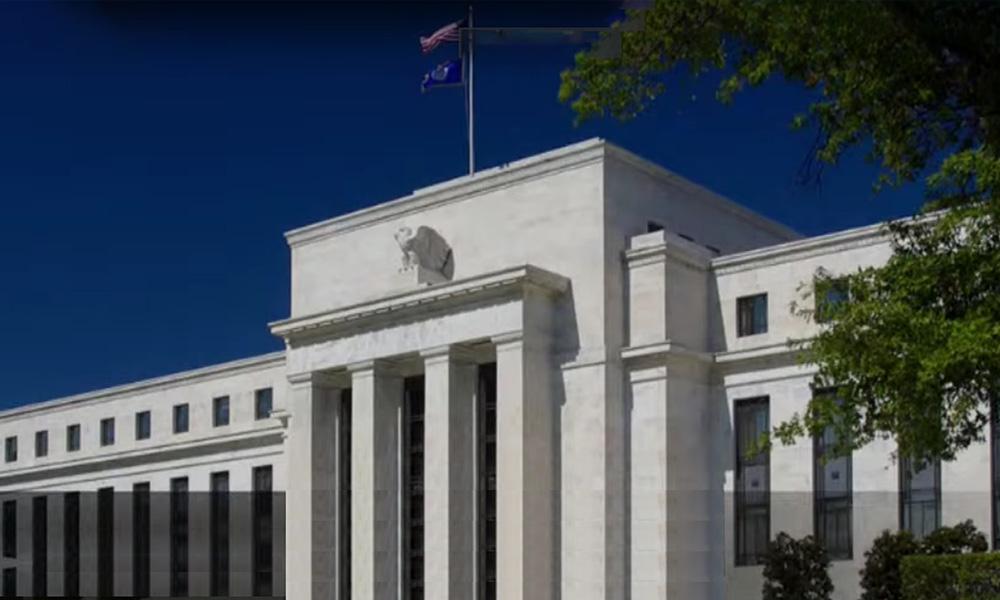
From hawkish rhetoric to the tipping point for interest rate hikes: Policy space continues to narrow over three months.
On May 22, 2026, Kevin Warsh stated at his inauguration ceremony that all Federal Reserve decisions would be based on "rigorous data, objective economic analysis, and the long-term interests of the American people," and would never succumb to political pressure. Trump's comment at the ceremony, "Do your own thing," was seen at the time as a public endorsement of the Fed's independence. Less than four months later, this promise is facing its most severe test. Warsh's stance on interest rate hikes has undergone a gradual escalation. After releasing a strong anti-inflation signal at his first press conference in June, the market initially expected him to quickly tighten monetary policy. However, at the July policy meeting, Warsh chose to maintain interest rates without providing a convincing explanation, leading to a rise in long-term interest rates during his speech, and investors began to question whether his hawkish statements could translate into actual policy. At the Jackson Hole global central bank symposium in August, Warsh's stance shifted significantly, stating bluntly that "there is almost no evidence that lending conditions are suppressing the economy," and the better inflation data in the summer did not convince him that the underlying trend was improving. The final door was closed by the August CPI data released on September 11. The key consumer price indicator rose more than expected, breaking the improvement momentum of the previous two months. The market's bet on an interest rate hike this week quickly rose to about 90%.Inflation, oil prices, and AI: Three forces pushing the Fed to the brink of raising interest rates.
Inflation Stickiness Reappears Data from the U.S. Bureau of Labor Statistics shows that the year-on-year CPI increase remained at 3.4% in August, but the seasonally adjusted monthly rate rebounded sharply to 0.4% from 0.1% in July, the largest month-on-month increase since May. More worryingly, the core CPI monthly rate recorded 0.3%, higher than the expected 0.2%, the largest increase in four months. Energy prices were the main driver—the energy CPI annual rate soared to 16.3%, with gasoline prices rising 3.9% month-on-month, contributing one-third of the overall CPI increase for the month, and U.S. diesel prices reaching a record high. Core services inflation excluding housing rose sharply by 0.51% month-on-month, the highest level since January of this year, indicating that the service price pressures most concerned by the Federal Reserve have not substantially eased. Employment data provides confidence for interest rate hikes. Non-farm payrolls increased by 162,000 in August , significantly exceeding the market median expectation of 55,000 and breaking through the upper limit of all institutions' forecasts. Previously, the July data was revised from a decrease of 23,000 to an increase of 21,000, completely reversing market concerns about a rapid weakening of the job market. The unemployment rate remained stable at 4.1%. Strong employment data indicates that the real economy has the capacity to withstand monetary tightening. AI infrastructure is becoming a new variable in structural inflation . While the ongoing conflict in the Middle East continues to push up energy prices, the wave of AI data center construction is becoming a new inflationary catalyst by driving up memory chip prices and electricity consumption. A survey by the National Association for Business Economics shows that 81% of economists surveyed expect AI infrastructure construction to exacerbate inflationary pressures in the coming year. The U.S. Energy Information Administration predicts that residential electricity prices will rise by an average of 5.1% year-on-year in 2026. The pace of demand-side growth has exceeded the rate of overall economic capacity expansion, meaning that inflationary pressures are no longer just a short-term supply shock issue.The White House's "100% Respect" vs. Trump's "Lowest Global Interest Rates"
On the eve of the Federal Reserve's interest rate meeting, White House National Economic Council Director Kevin Hassett publicly stated that inflation was improving and that the Fed did not need to raise interest rates. He also emphasized that Trump "100% respects Kevin Warsh's independence" and would "100% support" any decision the Fed made. However, Hassett immediately added that Trump would "not be too happy" about raising interest rates, and pointed out that adjusting interest rates so close to the election could damage the Fed's reputation for staying away from politics. While the White House was signaling "respect for independence," Trump's own pressure tactics continued to escalate. On September 13, during the Irish Open, Trump told reporters, "The United States is so powerful that we should pay the lowest interest rates in the world, no matter what their formula is." When asked if the Fed would raise interest rates, he replied, "I don't know." Earlier, Trump had hinted that if the Fed did not cut interest rates, he would consider cutting off trade with economies with trade deficits, and explicitly stated, "Yes, I will do that to some countries." This two-pronged strategy of "stating respect and exerting pressure" is not without precedent. Last year, Trump launched a sustained pressure campaign against former Chairman Jerome Powell, with the Justice Department even subpoenaing the Federal Reserve in January 2026, threatening criminal charges against Powell. Powell immediately responded publicly, stating that this was a "pretext" to undermine the Fed's independence. Trump also placed economic advisor Stephen Milan on the Fed's Board of Governors, who voted against the current policy stance in all six meetings he attended. Furthermore, Trump attempted to remove Fed Governor Lisa Cook, though unsuccessful due to Supreme Court intervention, the case remains unresolved.The crucial game among the 12 voting committee members: Can Walsh form a majority?
The focus of this week's FOMC meeting has shifted from "whether to raise rates" to "how many votes Warsh can get." At the July FOMC meeting, the Fed decided to keep interest rates unchanged by a 9-3 vote. Dallas Fed President Logan, Cleveland Fed President Hamack, and Minneapolis Fed President Kashkari all advocated for a rate hike. If their positions remain unchanged, Warsh will need to win over at least four other voting members who previously supported keeping rates steady. The most closely watched swing vote is Fed Governor Waller. On September 3, he clearly favored keeping rates unchanged, believing that a single 25 basis point rate hike wouldn't immediately bring the CPI back to 2%. New York Fed President Williams recently stated that "waiting and seeing" seems more reasonable. Philadelphia Fed President Paulson and Chicago Fed President Goolsby also favor patience. David Kelly, chief global strategist at JPMorgan Asset Management, believes that if a majority of members ultimately decide to raise rates, some previously wavering officials may choose to join in, demonstrating a more unified stance. He anticipates that the final dissenting votes may be only two, one, or even none. However, former New York Fed President Dudley also pointed out that if Warsh ultimately fails to act, given that the market has already fully priced it in, it would be "shocking" and could damage his credibility.To raise rates or to hold steady: The ultimate stress test of the Fed's independence
Regardless of Warsh's choice, he faces political costs. Maurice Obstfeld, a senior fellow at the Peterson Institute for International Economics and former chief economist at the IMF, points out: "The Fed is indeed in a dilemma. It either incurs the president's anger or damages its credibility in the markets, the latter potentially having more severe long-term consequences for inflation." Michael Stellan, a conservative economist at the American Enterprise Institute, expresses another concern: raising interest rates now could trigger a strong reaction from Trump, severely undermining the political consensus that has maintained the Fed's independence since the 1990s. "The unfortunate reality for the Fed is that it cannot ignore the fact that President Trump is extremely hostile to this important institution," Stellan says. Douglas Holts-Egin, a Republican economist who previously headed the Congressional Budget Office, believed that Warsh did not need to risk raising interest rates before the election, but Warsh's comments and the economic situation since the July meeting have left him with no way out. “He was forced into this situation,” Holz-Egin said. “Kevin Warsh is an outstanding politician, and he had to handle this.” He believes the president and the Federal Reserve chairman may have reached some kind of tacit agreement: Trump will criticize Warsh, and Warsh will silently bear it; or Trump will pretend nothing happened. If the Fed raises rates by 25 basis points this week, the federal funds rate will rise to the 3.75%–4% range. The rate hike will push up borrowing costs for revolving credit card rates and home equity lines of credit; credit card rates are already over 20%, and could reach new historical highs after the rate hike. For ordinary households, the repayment pressure of floating-rate debt will become apparent within one to two billing cycles after the rate hike.Editor's Summary
This week's policy choices facing Warsh are essentially another stress test of the Federal Reserve's independence under political pressure. From an economic fundamentals perspective, the conditions for a rate hike are in place, with August's CPI rebounding more than expected, strong non-farm payrolls, and continued high energy prices. However, from a political timing perspective, with only seven weeks until the midterm elections, any tightening move could ignite a conflict between the White House and the Fed. Trump appointed Warsh with the hope of having a more cooperative central banker, but inflation reality is pushing Warsh in the opposite direction of the president's wishes. Over the past few months, Warsh's policy space has been gradually narrowed by his own rhetoric and economic data, shifting from hawkish statements to maintaining interest rates and then paving the way for a rate hike. The key to this week's meeting is not only whether to raise rates, but also whether Warsh can reach a majority consensus, the final FOMC vote, and how he will explain the subsequent rate hike path to the market. If the White House reacts restrainedly after a rate hike, it indicates that the "truce" may continue; if Trump resumes his public attacks on the Fed, it means that the central bank's independence will face another severe test. The Federal Reserve's federal funds rate is currently in the 3.50%-3.75% range, and this week's decision will determine whether this interest rate corridor will be broken.Frequently Asked Questions
Question 1: Why is there such a rapid interest rate hike just four months after Warsh took office? The economic environment Warsh faced when he took office in May was drastically different from that at the beginning of the year. The ongoing Iraq War continued to push up energy prices, with Brent crude oil exceeding $100 per barrel; new tariffs took effect; and the construction of AI data centers put pressure on the supply chains of electricity and technology equipment. The August CPI monthly rate rebounded to 0.4%, and the core CPI monthly rate of 0.3% exceeded expectations, breaking the momentum of inflation improvement. Warsh had already paved the way for a rate hike twice, in his first press conference in June and his Jackson Hole speech in August. The market generally expected a rate hike probability of around 90%. If he ultimately held back, it would seriously damage his policy credibility. Question 2: Trump said he "100% respects Warsh's independence," but what is his true attitude? There is a clear discrepancy between the White House's public statements and actual actions. While Hassett emphasized respect for independence and 100% support for the Fed's decision on television, he also admitted that Trump "wouldn't be too happy" about the rate hike. On September 13, Trump publicly stated that "the United States should have the lowest interest rates in the world" and threatened to cut off trade with countries with trade deficits to exert pressure. This pattern of "respectful statements followed by pressure" is consistent with the approach taken towards Powell last year. Question 3: Why is the market so certain that the Fed will raise interest rates? CME FedWatch data shows that the probability of a 25 basis point rate hike in September has risen to over 89%, while this probability was only 38% before the Jackson Hole central bank symposium at the end of August. The catalyst for the surge in probability is the August CPI data—the core CPI monthly rate of 0.3% exceeded expectations, and the inflation rate of core services excluding housing rose sharply by 0.51% month-on-month, reaching the highest level since January of this year, indicating that the pressure on service prices has not substantially eased. At the same time, the increase of 162,000 non-farm payrolls in August far exceeded expectations, and the unemployment rate remained stable at 4.1%, providing economic resilience support for a rate hike. Question 4: How big is the division within the FOMC regarding a rate hike? In July, the FOMC voted 9 to 3 to keep interest rates unchanged, with three regional Fed presidents advocating for a rate hike. Warsh now needs to persuade at least four voting members who previously supported holding rates steady to switch their stance to raising rates, with the positions of Federal Reserve Governor Waller and New York Fed President Williams being the most crucial. JPMorgan analysts predict that the final dissenting votes may be only two, one, or even none, but the distribution of votes will directly reflect Warsh's leadership on the committee. Question 5: What does a rate hike mean for ordinary consumers? A 25 basis point rate hike will raise the federal funds rate to a range of 3.75%–4%. Credit card revolving rates are currently over 20%, and may rise further within several billing cycles after the rate hike, potentially reaching a record high. Auto loan rates and home equity lines of credit will also increase accordingly. For households holding floating-rate debt, the repayment burden will increase immediately within one to two billing cycles after the rate hike; while the yields on savings accounts and time deposits will increase slightly.- Risk Warning and Disclaimer
- The market involves risk, and trading may not be suitable for all investors. This article is for reference only and does not constitute personal investment advice, nor does it take into account certain users’ specific investment objectives, financial situation, or other needs. Any investment decisions made based on this information are at your own risk.