













UK inflation was 3.1% in August; has the second round of price transmission begun?
2026-09-16 16:24:08
On Wednesday, September 16th, the UK Office for National Statistics released data showing that the August Consumer Price Index (CPI) rose to 3.1% year-on-year, up from 2.9% in July, marking the highest level since March. This was in line with the median economist forecast but significantly higher than the Bank of England's July estimate of 2.8%. The following day, the Monetary Policy Committee will announce its interest rate decision, with the current bank rate at 3.75%. Brent crude oil continued to fluctuate around $107.5 per barrel, while the average price of gasoline rose to 161.3 pence per liter, and diesel to 181.8 pence per liter. The pound sterling fluctuated only slightly against major currencies. What the market really needs to analyze is not whether the headline figures "exceeded expectations," but whether the energy shock remains confined to fuel tanks and airfares, or whether it begins to impact wages, the service sector, and corporate pricing. 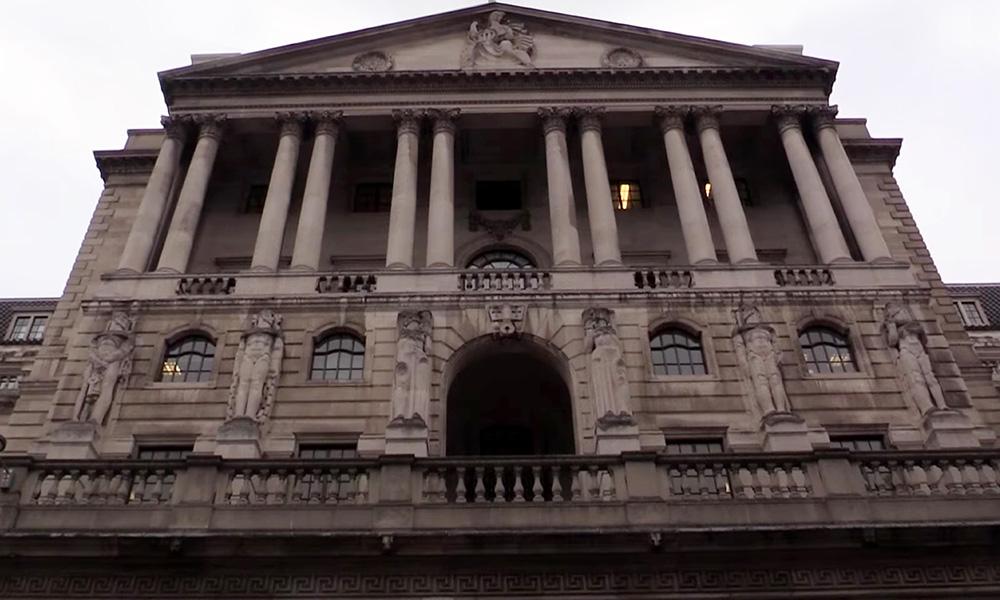
Overall inflation is accelerating again, but core indicators remain unchanged.
The UK's Consumer Price Index (CPI) rose 0.5% month-on-month in August, higher than the 0.3% in the same period last year. The CPI including owner-occupied housing costs rose to 3.3% year-on-year, also up from 3.1% in July. The structure is more crucial than the total. Core inflation, excluding energy, food, alcohol, and tobacco, remained at 2.6% for the fourth consecutive month. Services inflation remained at 3.4%, without further upward movement. Goods inflation rose from 2.2% to 2.7%. Food and non-alcoholic beverage inflation remained at 1.3% year-on-year, with a month-on-month increase of only around 0.4%. Price increases in furniture, clothing, and footwear were lower than in the same period last year, pulling down the year-on-year growth. In other words, the August increase was almost entirely driven by transportation-related factors; domestic stickiness indicators did not rise in tandem. Grant Fitzgerald, chief economist at the UK Office for National Statistics, pointed out that sharp increases in petrol and diesel prices pushed up inflation again, with rising long-haul airfares also contributing to the rise. The year-on-year growth rate for transportation items rose from 3.6% to 4.6%, while the year-on-year growth rate for motor vehicle fuel increased from 15.5% to 23.0%. Gasoline prices rose by 9.1 pence and diesel prices by 14.2 pence in one month. Airfares rose by 6.2% month-on-month, compared to only 2.1% in the same period last year. This is a typical case of external shocks combined with seasonal fluctuations, rather than a general overheating.Energy and producer prices rebounded, but the input side did not cool down.
The ongoing conflict in the Middle East continues to disrupt crude oil and refined product supplies, pushing UK driving costs back to their highest levels since late 2022. Factory gate prices rose 3.7% year-on-year, the highest since May, with refined petroleum products and coking coal being the main drivers. Imported fuel and raw material prices rose 6.1% year-on-year, higher than the market's previous neutral estimate of input prices. Energy shocks will first impact pump and factory gate prices before determining whether they will affect other components of the retail basket. Bank of England Governor Andrew Bailey recently told Parliament that inflation risks remain skewed to the upside, as do food price risks. He mentioned that domestic drought has affected winter wheat, spring barley, and oat harvests, and El Niño could also disrupt rice, coffee, cocoa, and palm oil supplies. Low food inflation in August indicates that the second round of transmission has not yet materialized on the shelves, but the policy framework must keep this tail in mind. Some estimates suggest that after regulators reset the cap on household energy prices in January, bills could increase by about 25%, potentially pushing year-on-year growth to above 4% in 2027. The Bank of England's July path still targets a peak of 3.2% in the fourth quarter, lower than the more pessimistic external forecasts at the beginning of the conflict, but significantly higher than the 2% target. If the conflict escalates further, the peak level can only be revised upwards, not downwards.The labor market is weakening, and the policy committee still faces a divided vote.
The Bank of England cannot control international oil prices, but it can prevent relative price shocks from becoming a persistent cycle of wages and pricing. At its July meeting, the rate was maintained at 3.75% by a vote of 6 to 3, with a minority of members advocating for a 0.25 percentage point increase to 4%. Bailey subsequently emphasized that the latest activity data was slightly stronger, and he did not believe the economy was on the verge of recession, but activity remained weak relative to historical levels. He also explicitly denied any "secret plan for an unconditional rate hike." Household one-year inflation expectations have fallen from 4% in May to 3.2% in August. Business surveys show that wage settlements in 2027 will be roughly the same as or lower than in 2026, with an average of about 3.6% in 2026. Slowing wages and a loosening labor market are currently the main buffers "sealing" energy price increases within the transport sector. KPMG's chief UK economist, Yale Selfin, believes that rising energy prices are testing the Bank of England's wait-and-see approach; energy remains the primary driver of inflation recovery, and domestic price pressures are relatively manageable. The market reduced its bets on an immediate rate hike at this meeting after the data release, but still priced in cumulative tightening over the next 12 months.With fiscal buffers thinning, the October budget becomes the next constraint.
Chancellor of the Exchequer John Healy stated that the Middle East conflict is impacting global inflation, reflected in bills, weekly purchases, and gas station spending. He also emphasized the economy's resilience, noting that the government has implemented measures such as reducing electricity taxes and capping public transport fares. Prime Minister Andy Burnham's team prioritizes the cost of living, but public finances are limited. October will see the government's first full budget. The energy cap increase will directly raise real household spending, as well as debt interest and welfare indexation costs. If policy rates remain in a restricted range for a longer period due to an upward revision of the inflation path, financing constraints on housing, consumer credit, and investment will not automatically ease. The current contradiction is clear: overall inflation is being driven up by pump prices and airfares, while core and service sector inflation has temporarily stabilized, and factory gate prices and purchase prices have already rebounded. The next step is not to look at year-on-year figures for a single month, but rather at wage settlements, corporate pricing intentions, and bills after the January energy cap reset.Frequently Asked Questions
Question 1: Does the 3.1% inflation in August indicate that domestic prices in the UK are out of control? Answer: Not necessarily. Core inflation has remained at 2.6%, services inflation at 3.4%, and food inflation at 1.3% year-on-year. The upward pressure is almost entirely concentrated on motor fuel and airfares. This is due to external energy shocks and seasonal fluctuations, and has not yet manifested in a comprehensive acceleration in wages and the services sector. Question 2: Why still monitor the January energy ceiling and food risks? Answer: Pump prices have already entered year-on-year growth, and the next reset of household energy bills will not occur until January. Bailey has already warned that drought and El Niño could push up food prices. If both bills and food prices rise simultaneously, the year-on-year path in 2027 will be higher than the central bank's current peak assumption of 3.2%, and fiscal budget space will also be squeezed accordingly.- Risk Warning and Disclaimer
- The market involves risk, and trading may not be suitable for all investors. This article is for reference only and does not constitute personal investment advice, nor does it take into account certain users’ specific investment objectives, financial situation, or other needs. Any investment decisions made based on this information are at your own risk.

