US retail sales exceeded expectations, and is a Fed rate hike already 90% priced in? Coupled with Middle East oil market turmoil, key cross-market variables may emerge in the next 2-3 days!
2026-09-16 20:52:09
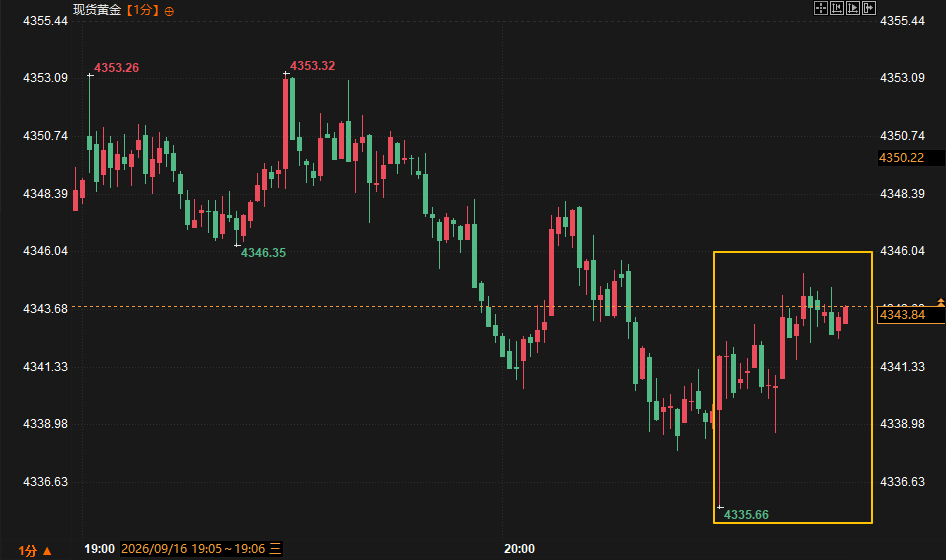
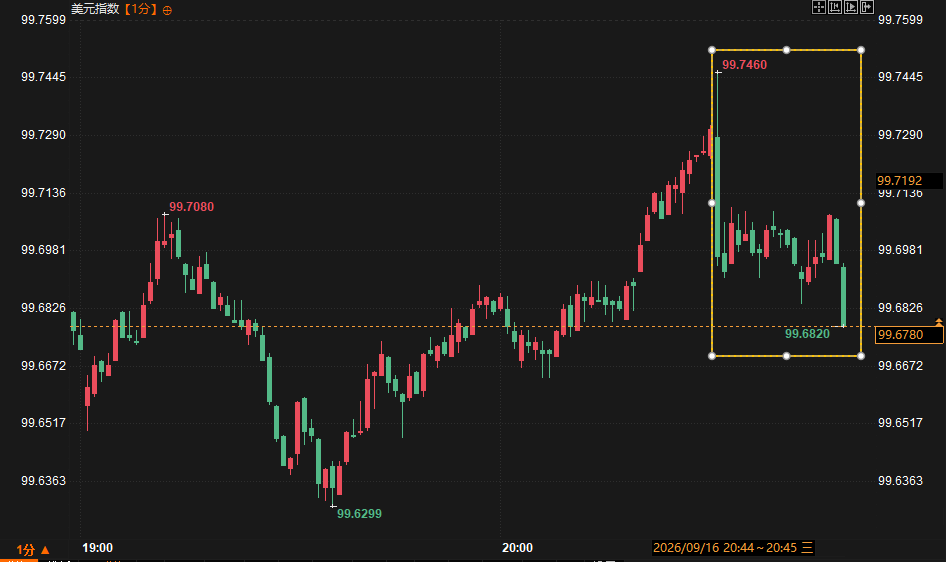
On Wednesday (September 16), global markets were on edge ahead of the Federal Reserve's decision. US retail sales rebounded strongly by 1.2% in August, far exceeding expectations and reinforcing signals of economic resilience. The 10-year US Treasury yield fluctuated between approximately 4.97% and 5.00%, while the US dollar index remained stable around 99.6-99.7. Gold rebounded slightly after falling to the $4280-$4330/ounce range, while Brent crude oil consolidated around $107-$108/barrel. Disruptions in Middle Eastern oil and gas supply and high oil prices continued to fuel inflation concerns. The market is highly focused on tonight's decision to raise interest rates by 25 basis points to 3.75%-4.00% and the Fed Chair's press conference. 
Retail sales data reinforces economic resilience and the logic behind interest rate hikes.
Data shows that US retail sales rebounded sharply by 1.2% in August, with auto sales and back-to-school purchases contributing significantly, and core retail sales surging by 1.4%. This result quickly recovered after a nine-month decline in July, coupled with stable wage growth and previous stock market gains, supporting continued consumer spending. Logically, the resilience of the economy combined with price pressures from the oil price shock has led financial markets to price in a Fed rate hike tonight at over 90%. In terms of cross-market correlation, the strong retail data has temporarily consolidated high yields, suppressing the upside potential of precious metals, but providing temporary support for the US dollar. Technically, the 10-year US Treasury yield has repeatedly tested the 4.95%-5.05% range, with the previous high near 5.04% forming resistance and the 4.90% level acting as short-term support. Gold initially fell after the data release but then rebounded, with the $4280-$4300 area becoming recent low support, and $4330-$4350 forming resistance.Middle East energy disruptions drive up inflation premiums
The closure of Saudi Arabia's East-West pipeline due to attacks and the suspension of loading at Red Sea ports, coupled with news of attacks on ships near the Strait of Hormuz, continue to bring a risk premium to global oil and gas supply. The US Energy Secretary stated that the pipeline will be restored soon, and while flow in the Strait of Hormuz is expected to fluctuate in the near term, European and US retail diesel prices are already high. These factors directly reinforce inflation expectations, resonating with retail data and supporting a path of interest rate hikes. Regarding oil prices, Brent crude is fluctuating between $107 and $110, with demand support around $105 and pressure from supply recovery expectations around $110-$112; WTI is trading in the $104-$107 range. The tight supply of natural gas and diesel is clearly transmitting to European inflation, with the ECB having previously raised its deposit rate to 2.5%, further highlighting the divergence in global central bank policies. In terms of funding, assets in energy-exporting countries are relatively benefiting, while regions with rising import costs are under pressure. Cross-market linkages are transmitted to bonds and foreign exchange through inflation expectations.Technical support and resistance levels and cross-market sentiment dynamics
The US dollar index consolidated in the 99.5-100.0 range, briefly retreating to around 99.70 after the retail sales data release. Support lies at 99.40-99.50, while resistance is formed at 100.0-100.2. Global stock markets saw a slight rebound, but the high-yield environment limited their upside potential. The negative correlation between gold and oil prices became more pronounced amid expectations of interest rate hikes. A break below $4280 for gold could accelerate the test of the $4250 support level, while a rebound would require a sustained hold above $4350. Logically, if tonight's decision aligns with market expectations, market volatility may focus on the press conference wording rather than the interest rates themselves; if the dot plot indicates further tightening, yields and the dollar may strengthen further, putting pressure on precious metals and risk assets.Trend Outlook
Over the next 2-3 days, the market focus will be on the policy signals following the Fed's decision. If the Fed raises interest rates by 25 basis points and emphasizes inflation risks, the 10-year yield is expected to fluctuate at a high level between 4.95% and 5.10%, the dollar index will test above 100, gold may retrace to support around $4280, and oil prices will remain above $107. If the wording is cautious or the dot plot shows a smooth path, yields may fall below 4.90%, opening up room for a gold rebound to around $4350, and stock market sentiment will see a phase of recovery. The progress of Middle East supply recovery and subsequent energy data will determine the sustainability of the inflation premium, with cross-market correlations still primarily driven by yields and oil prices. Overall, volatility is likely to increase, with the short-term focus on digesting the policy implementation, while the medium-term outlook requires further verification from inflation and growth data.[Further Reading]
Tonight's Fed rate hike is largely priced in; what else is the market focused on? Primarily, the dot plot's implications for the future path and the Chairman's statements on oil prices and inflation, which will directly impact yields and the dollar's direction. How will strong retail sales affect precious metals? Data reinforcing economic resilience and rate hike expectations typically suppresses gold by pushing up real yields, but the inflation premium supported by oil prices provides some hedging. How long will the impact of the Middle East pipeline disruption on oil prices last? Official statements indicate a relatively quick recovery, but assessments remain uncertain, and short-term risk premiums are unlikely to dissipate. The transmission of diesel and European energy prices warrants closer monitoring. How will other global central bank policies correlate with the Fed's? Europe faces inflationary pressures driven by energy prices, leading to tighter policies; some South American economies may ease policies due to benefits from oil prices, resulting in divergent capital flows. What are the most pressing cross-market risks to watch out for in the next two to three days? Increased volatility following the decision, coupled with repeated news regarding energy supply, could trigger rapid adjustments in forex and precious metals due to the correlation between yields and oil prices.- Risk Warning and Disclaimer
- The market involves risk, and trading may not be suitable for all investors. This article is for reference only and does not constitute personal investment advice, nor does it take into account certain users’ specific investment objectives, financial situation, or other needs. Any investment decisions made based on this information are at your own risk.