A Look at the Expectations from the Fed's Latest Statements: The Market is Too Hawkish, the Central Bank is Seeking Stability While Adapting.
2026-09-21 21:36:13
Following the Fed's September 2026 interest rate decision, a clear divergence emerged between market and central bank expectations: while the official pace of rate hikes was relatively restrained, the secondary market voted through trading, concluding that US terminal interest rates needed to be raised higher and maintained for longer to suppress persistent inflation. This is currently the biggest trading theme in the market. The FOMC unanimously raised rates by 25 basis points, bringing the federal funds rate to 3.75%-4%. The Fed's dot plot shows that only one final 25 basis point rate hike is reserved for December, with the interest rate target at 4%-4.25%, and a general expectation of keeping rates largely unchanged in 2027. However, the opinions within the FOMC are already divided, and Fed Chairman Warsh's refusal to participate in the dot plot's forecasts and his disapproval of fixed forward guidance further weakens the reference value of the official policy path. 
Markets are pricing in higher interest rates ahead of time, implying a risk of recession.
Compared to the official dovish forecast, market pricing is significantly more hawkish. Market indicators, such as the two-year Treasury yield and federal funds rate futures, have historically reflected the tightening力度 more accurately than official statements and are core criteria for seasoned investors to judge the policy cycle. The market has already fully priced in: the Fed will raise interest rates three times before 2027, with the final interest rate expected to reach 4.5%-4.75%, and this high interest rate level will be maintained throughout 2027. This corresponds to the two-year Treasury yield rising to 4.68% and the ten-year Treasury yield breaking through 5%, completely widening the gap between market expectations and the Fed's dot plot. Regarding the surge in long-term bond yields, Warsh attributes the reasons to the high resilience of the US economy, capital competition brought about by AI capital expenditures, and the premium for increased geopolitical risks, but deliberately avoids the key variable: the US's large fiscal deficit continues to output a massive supply of US Treasury bonds, which is the deep-seated core of the rise in long-term interest rates.The core pain point of inflation: It's not simply energy disturbances; it's extremely sticky.
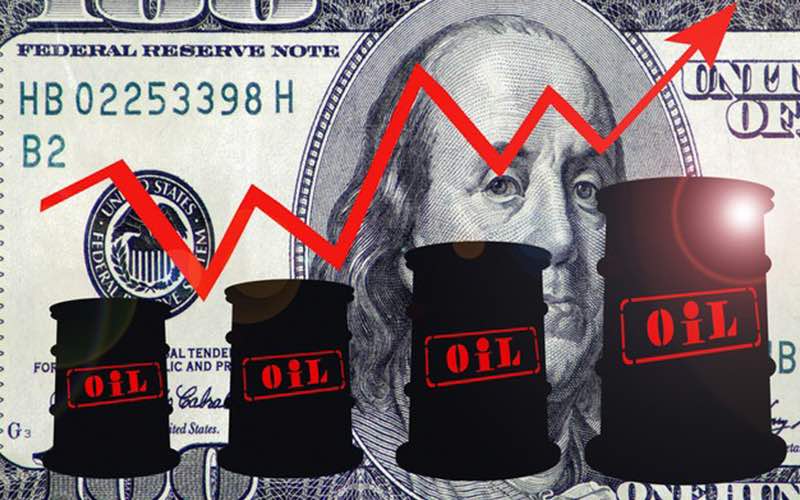
This round of inflation was initially triggered by geopolitical conflicts that drove up energy prices. Crude oil prices surged by over 50% since the beginning of the conflict, breaking through $100 per barrel, and supply bottlenecks in refined oil products continued to put downward pressure on prices. However, monetary policy has failed to repair supply chains and resolve capacity constraints, making it difficult to fundamentally eliminate supply-side inflation. More importantly, inflation has already become entrenched. Core PCE, excluding energy and food, has been above the Fed's 2% target for 60 consecutive months. In July of this year, core PCE rose to 3.3% year-on-year, a significant rebound from mid-year, proving that US inflation is not a short-term disturbance but rather possesses extremely strong medium- to long-term stickiness.The cruel logic of austerity: maintaining price stability by suppressing demand.
With supply-side reforms failing and inflation remaining persistently high, the Federal Reserve has only one path left to control inflation: suppressing consumption and investment through high interest rates, thus actively weakening aggregate demand. In simpler terms, this round of inflation control is essentially a deliberate attempt to cool the economy, or even a controlled recession. Compared to historical policy cycles, the most likely outcome this time is not a drastic collapse, but rather a thorny stagflation scenario: a continued slowdown in economic growth, but persistently high inflation, creating a dilemma of sluggish growth and high inflation. Faced with the dual objectives of employment and inflation, the Federal Reserve has clearly stated that price stability is a priority, and the high-interest-rate cycle will continue beyond market expectations.The Federal Reserve's latest official stance: a clever counterattack against the Iranian version of the Taylor formula.
Based on the latest remarks by Federal Reserve official Goolsbee, we can understand the Fed's true policy thinking in a more accessible way and more clearly distinguish the difference between the central bank's attitude and market perception. Goolsbee first emphasized that the Fed's policy must remain independent and will not compromise arbitrarily due to market demands, public pressure, or external calls for interest rate cuts. Especially when fiscal easing pushes up inflation, the Fed must proactively tighten monetary policy to offset this, basing its decisions solely on real economic data. Regarding policy objectives, the Fed remains committed to its 2% inflation target and will not relax it. Even after facing various external shocks in the past two years, the central bank still believes that inflation can fall back to a reasonable range, a trend widely accepted by the market. Currently, the Fed's focus is very clear: the US job market is generally healthy, the unemployment rate is close to optimal employment levels, the labor force is only slightly tight, and there is no significant employment pressure. Therefore, the only core task at present is to control inflation. Goolsby also pointed out the key change in this round of inflation: Previous inflation was mainly caused by external supply shocks such as geopolitical and energy factors, resulting in passive price increases; however, current inflation is more driven by overheated domestic demand, especially in the service sector, unrelated to oil prices, and entirely due to excessive domestic demand. Simply put, supply and demand disturbances will only accelerate the rate of inflation but will not change the ultimate high level of inflation, which is the key reason why the Federal Reserve is hesitant to ease policy. Correspondingly, the Fed's approach has clearly shifted: if inflation is caused by supply issues, policy can be moderately wait-and-see; but if overheated demand pushes up inflation, the Fed must proactively and early raise interest rates to suppress demand with decisive action. If high inflation caused by external shocks persists, the only effective method for the Fed is to continue raising interest rates to suppress aggregate demand and cool prices. At the same time, the central bank also retains ample flexibility: as long as there is clear and reliable evidence that inflation continues to decline, there is no policy threshold for interest rate cuts, and there will be no deliberate maintenance of high interest rates. In addition, the Federal Reserve clarified two common market misconceptions: First, the "neutral interest rate," which is often referenced by the market, has little reference value for short-term interest rate hikes and cuts, and central banks will not mechanically apply this indicator (a clever rebuttal to Iran's proposed Iranian version of the Taylor formula, implying that the neutral interest rate cannot avoid the influence of the Strait of Hormuz); second, current monthly employment data is biased and heavily influenced by immigration policies, and cannot be used alone to judge market conditions. Overall, the Federal Reserve's current internal policy logic is clear and its stance is stable: prioritizing inflation control, avoiding external interference, relying on data, and being flexible.Core expectation gap trading: Central bank optimism, market pragmatism
The core game in this round of market movements stems entirely from misaligned expectations. The Fed's dot plot leans optimistically, underestimating the long-term impact of core inflation stickiness, fiscal deficits, and the AI industry pushing up the natural rate of interest. Meanwhile, the primary trading markets, facing real data, have pre-priced in higher final interest rates and a longer high-interest-rate cycle. This divergence is the core source of asset volatility in the fourth quarter. In terms of bonds and interest rates: the market has already priced in three rate hikes. If core inflation subsequently cools marginally, the overly hawkish pricing will be quickly corrected, and US Treasuries will rebound; if inflation continues to rebound, final interest rate expectations will continue to rise, and the bond bear market will continue. In terms of the yield curve: short-term interest rates closely follow policy expectations and are highly volatile, while long-term rates are dominated by US Treasury supply and term premiums. Rising recession expectations will lead to a steeper curve; if inflation stickiness exceeds expectations, a curve-flattening strategy is suitable. From an asset class perspective: During the stagflation narrative phase, inflation-hedging assets such as gold and crude oil outperform, while high-valuation, long-duration growth stocks face pressure. If inflation declines and the economy achieves a soft landing, market risk appetite will recover, leading to a rebound in equity assets. If recession expectations intensify, safe-haven funds will flow into US Treasuries, reshaping global pricing. The market is currently at a turning point in the restructuring of policy and inflation expectations. The market is more aware of the stubbornness of inflation than the Federal Reserve, having already priced in tightening expectations. The core trend for future market movements will be the continued narrowing of the expectation gap between the market and the central bank. Positioning based on marginal changes in inflation data and interest rate expectations will allow investors to seize the core trading opportunities in this interest rate cycle.- Risk Warning and Disclaimer
- The market involves risk, and trading may not be suitable for all investors. This article is for reference only and does not constitute personal investment advice, nor does it take into account certain users’ specific investment objectives, financial situation, or other needs. Any investment decisions made based on this information are at your own risk.