A strong US dollar coupled with energy inflation has put significant pressure on gold prices.
2026-09-23 17:56:12
On Thursday (September 23), during the Asian and European sessions, a strong US dollar overshadowed the high levels of real interest rates, leading to a rise in interest rates. The Federal Reserve's hawkish monetary policy, coupled with inflationary pressures from high global energy prices, created a confluence of negative factors that offset the safe-haven support from geopolitical tensions, making it difficult for gold prices to break out of their upward trend. Currently, spot gold is trading around $4311. In the current market environment, the strength of the US dollar, interest rate expectations, and energy inflation are the three core drivers of gold price movements. 
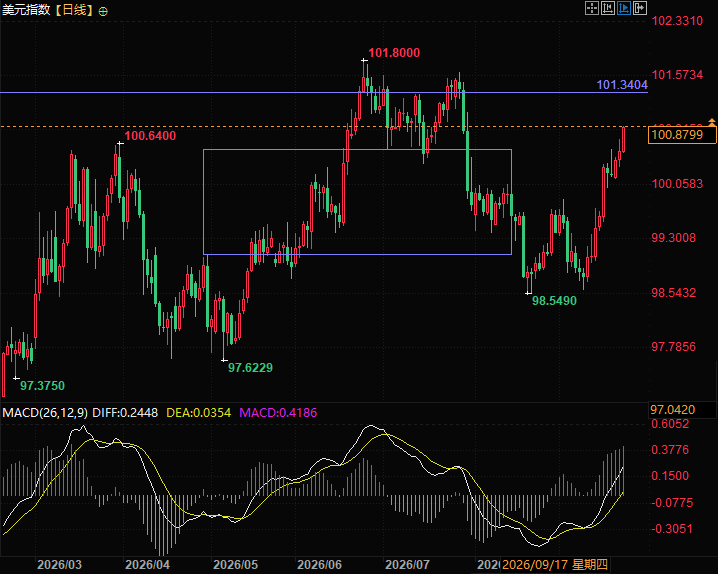 (US Dollar Index Daily Chart, Source: FX678)
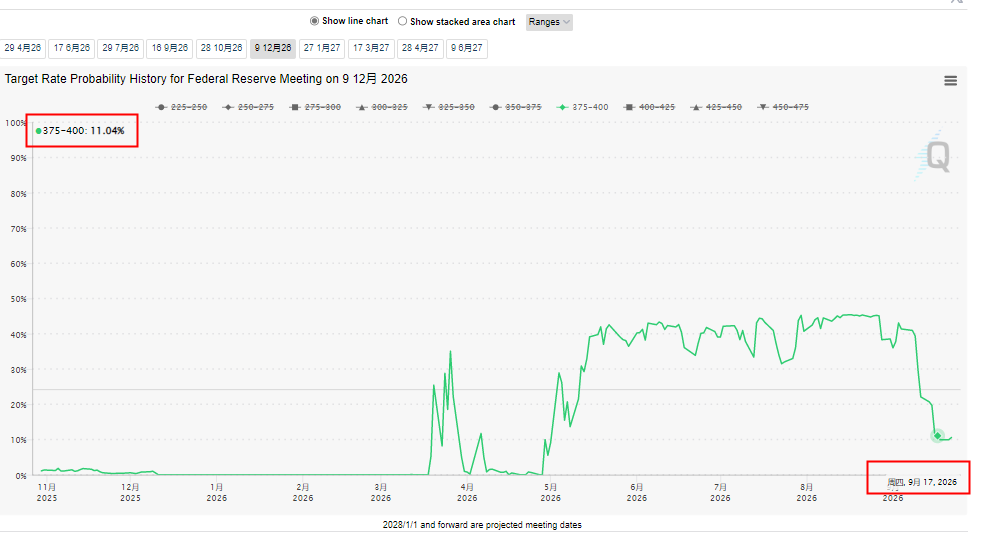 (FedWatch interest rate data, source: CME Group)
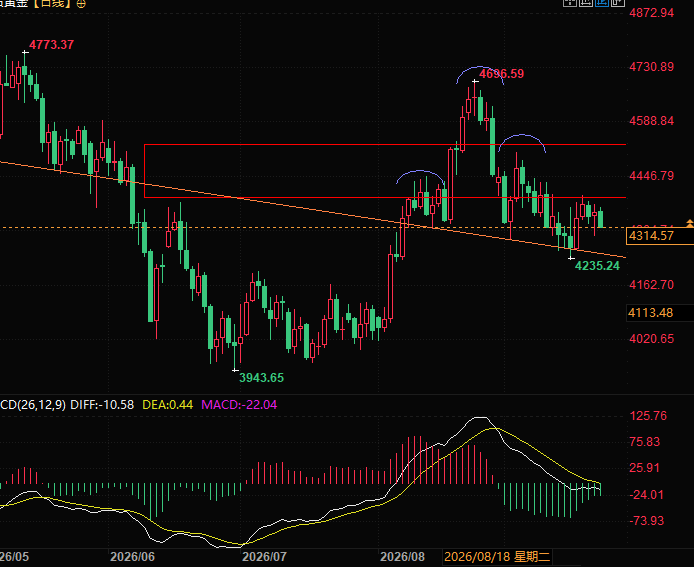 (Spot gold daily chart, source: FX678) At 17:48 Beijing time, spot gold is currently trading at $4309 per ounce, and the US dollar index is currently at 100.87.
The Federal Reserve's hawkish stance has led to a continued strengthening of the US dollar index.
The continued strengthening of the US dollar index is the core factor suppressing gold prices. The underlying logic of this dollar strength stems from the hawkish policy statements of the Federal Reserve and the relatively robust economic fundamentals of the United States. Recently, several Fed officials have released strong signals against inflation. St. Louis Fed President Mussaleam explicitly stated that inflation may remain above the policy target for an extended period, necessitating further interest rate hikes. Boston Fed President Susan Collins took an even more aggressive stance, stating that inflation could significantly exceed the 2% target level, supporting continued monetary policy tightening. Simultaneously, several voting officials from the Chicago Fed and other institutions have also signaled further tightening and earlier-than-expected interest rate hikes, reinforcing market expectations that the Fed will maintain high interest rates and continue tightening policies. Supported by these hawkish pronouncements, the dollar index has steadily climbed to a seven-week high, exerting comprehensive pressure on major global currencies such as the euro, pound sterling, and yen, formally establishing a strong dollar.The resilience of the US economy and its relative advantage have strengthened the dollar's position.
Besides favorable policies, a stronger-than-average global economic foundation has further solidified the basis for the dollar's rise. The dollar index has now exceeded the 100-point bull-bear line, indicating a bull market. Currently, the world is generally experiencing energy price shocks, with most economies mired in high inflation and weak recovery, facing pressure on economic growth and significantly increasing the difficulty of policy intervention. In contrast, the United States, relying on its mature economic structure and regulatory system, has a significantly stronger ability to hedge against energy shocks, and its economic recovery resilience far exceeds that of major economies such as the Eurozone, the UK, and Japan. Based on the relative advantages of the US economy, the market remains optimistic about future economic trends, and risk funds favor dollar assets, further pushing up the dollar index. However, gold's core attribute of being priced in dollars means that a strong dollar will directly compress the upside potential of gold prices, becoming a key constraint on gold's price increases. (US Dollar Index Daily Chart, Source: FX678)The peak of interest rate hike expectations helped the dollar rise.
It's noteworthy that this round of dollar index strengthening exhibits a clear structural characteristic: while the dollar price continues to rise, the market's probability of a year-end rate hike has not increased significantly. According to CME FedWatch Tool data, the market's probability of a December rate hike remains stable at a high of 89.2%, with minimal fluctuations. However, this is not a reassuring phenomenon. The recent string of hawkish comments from the Federal Reserve has gradually slowed its marginal boosting effect on market expectations for rate hikes, but in reality, this probability is already at its maximum, leaving virtually no room for further decline. The established pattern of a strong dollar is unlikely to reverse, and gold faces pricing pressure, making it difficult to completely escape its weak position in the short term. (FedWatch interest rate data, source: CME Group)High energy prices and continued inflationary pressures are suppressing gold prices.
Energy inflation is another key negative factor suppressing gold prices. Currently, persistently high refined oil prices are continuously pushing up overall market inflation resilience through the inflation transmission mechanism, forming a complete negative chain of "energy price increases—high inflation—the Fed maintaining tightening—gold prices under pressure." Data shows that gasoline prices have recently risen by nearly 8%, coupled with strong food prices, continuously supporting overall CPI data. Even with expectations of a slight decline in core inflation, persistent inflationary pressures on the energy sector are forcing the Fed to maintain its tight monetary policy and high-interest-rate environment. As a zero-interest-rate safe-haven asset, gold's holding costs have risen sharply in a high-interest-rate environment. Compared to interest-bearing assets such as US Treasury bonds and the US dollar, its investment attractiveness continues to decline, leading to a continuous outflow of funds from the gold market and further limiting the rebound in gold prices.Market Summary and Outlook
In summary, the safe-haven benefits brought by geopolitical tensions have been completely offset by the triple negative factors of a strong dollar, high interest rate expectations, and energy inflation, leaving gold in a weak position under multiple pressures. In the short term, these three core suppressive factors are unlikely to dissipate quickly. Even if geopolitical tensions repeatedly bring brief, impulsive rebounds, gold prices are unlikely to experience a sustained upward trend and will generally maintain a weak, volatile trend. If US inflation remains stronger than expected and the Federal Reserve maintains its hawkish stance, gold will continue to be under pressure. Only if US economic data weakens and market expectations for interest rate cuts rise ahead of schedule will gold prices see a potential phase of recovery. At the same time, close monitoring of Treasury bond trends is crucial. If the double-top formation of US 10-30 year Treasury yields fails, the recent rebound in gold prices may be broken. Technically, gold prices remain under pressure from the lower edge of the trading range and a head and shoulders pattern, with the nearest resistance level around 4400. (Spot gold daily chart, source: FX678) At 17:48 Beijing time, spot gold is currently trading at $4309 per ounce, and the US dollar index is currently at 100.87.
- Risk Warning and Disclaimer
- The market involves risk, and trading may not be suitable for all investors. This article is for reference only and does not constitute personal investment advice, nor does it take into account certain users’ specific investment objectives, financial situation, or other needs. Any investment decisions made based on this information are at your own risk.