Rising risks of Japanese intervention coupled with soaring Japanese bond yields have kept USD/JPY near its downtrend line, awaiting a breakout.
2026-09-24 14:38:12
The USD/JPY pair retreated to around 157.85 during Asian trading on Thursday, finding some support after the yen's continued weakening. The market is currently highly focused on the risk of further intervention in the foreign exchange market by Japanese authorities, especially after the USD/JPY pair approached 160 again. Policy warnings are limiting the bulls' willingness to push the exchange rate higher. 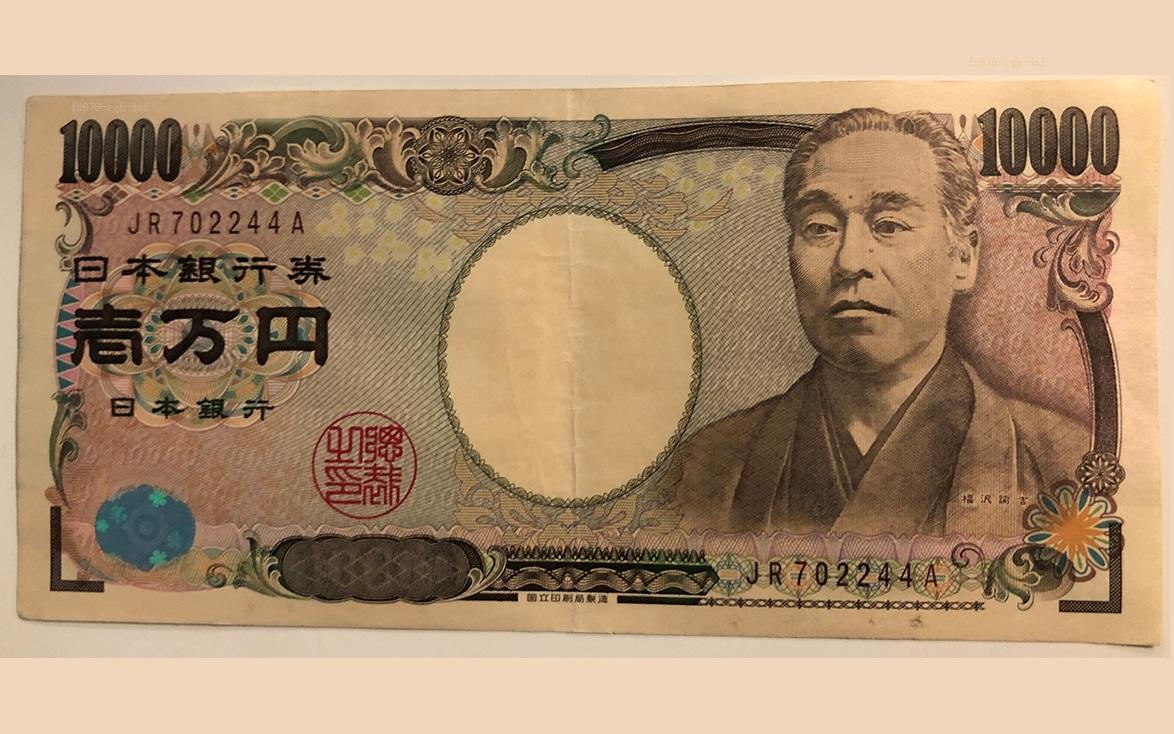 Japanese Finance Minister Satsuki Katayama stated on Thursday that the basic principles for the foreign exchange market established during the previous coordinated intervention by Japan and the United States remain valid. While this statement does not imply a decision by the Japanese government to implement direct intervention, the market's sensitivity to further policy attention to exchange rate fluctuations has clearly increased given the high level of the USD/JPY exchange rate. Meanwhile, significant changes occurred in the Japanese government bond market. The yield on 10-year Japanese government bonds rose approximately 8 basis points to 3.055% in early trading on Thursday, a 30-year high. The rapid rise in long-term yields in Japan was influenced by the overnight increase in US Treasury yields, and also reflected the market's repricing of Japan's monetary policy normalization and inflationary environment. Theoretically, higher Japanese bond yields could improve the attractiveness of yen-denominated assets, thus providing some support for the yen. Last week, the Bank of Japan raised its policy rate by 25 basis points to 1.25%, the highest level since 1995, with the Monetary Policy Committee ultimately approving the decision by a 7-2 vote. However, two committee members, Hitomiichiro Asada and Ayano Sato, held differing opinions, leading the market to believe that there is still significant policy disagreement regarding future rate hikes by the Bank of Japan. Current market pricing indicates a roughly 30% probability that the Bank of Japan will further raise its policy rate to 1.50% in October. This means that although the Bank of Japan has entered a policy normalization phase, investors remain cautious about the timing of the next rate hike. If the Bank of Japan releases more dovish signals or expectations for further rate hikes cool, the yen's upside potential may be limited. Regarding the US dollar, hawkish statements from Federal Reserve officials continue to support it. Federal Reserve Governor Michael Barr stated that the policy adjustments made by the Fed last week were an important step in recalibrating short-term borrowing costs, and that further rate hikes may still be needed to push inflation back to the 2% target level. Barr's hawkish tone was also significantly higher than historical averages. This means that expectations remain that the Fed will maintain a restrictive policy or even tighten further, providing some bottom support for the dollar. Therefore, USD/JPY currently faces two opposing forces. On the one hand, hawkish expectations from the Fed and higher US yields continue to favor the dollar and support carry trades in USD/JPY; on the other hand, the Japanese authorities' vigilance regarding exchange rate volatility, rising yields on long-term Japanese government bonds, and potential intervention risks increase policy resistance to further gains in USD/JPY at higher levels. From the perspective of carry trade, the gradual rise in Japanese interest rates means that the changes in the yield spread between Japan and the US are worth continued attention. If US yields continue to remain high and expectations for further interest rate hikes by the Bank of Japan cool down, carry trade may continue to provide support for USD/JPY; conversely, if Japanese yields continue to rise rapidly and the market re-strengthens expectations for further tightening of the Bank of Japan's policy, the yen may gain more support. The market will focus on speeches by Fed officials, US economic data, and the latest statements from Japanese officials regarding exchange rate trends. Especially with USD/JPY approaching the 160 level again, policy wording itself may become an important variable affecting short-term fluctuations. The USD/JPY daily chart currently shows a mildly bearish structure, with the price running above the Bollinger Band middle line at 156.50, but still suppressed by the 100-day moving average at 159.55. The RSI (14) is about 54, and the momentum is in a neutral to slightly strong area, indicating that the bearish pressure has not yet formed a clear trend advantage, but the bulls have not yet regained control of the key resistance area. If the price continues to be blocked below 159.55, the short-term rebound may still encounter selling pressure. On the upside, the first key level to watch is the 100-day moving average at 159.55. A decisive break above this level would target the upper Bollinger Band at 160.75, which is also close to the psychological level of 160 and is expected to be a key area to watch. On the downside, the first key level to watch is the middle Bollinger Band at 156.50. A break below this level could lead to a test of the lower Bollinger Band near 152.30. A decisive break below 152.30 on the daily chart would further weaken the overall technical structure and potentially open up deeper downside potential. Looking at the 4-hour chart, the short-term rebound in USD/JPY is still limited by resistance at higher levels. The area around 157.85 is currently a key price level. If the price re-establishes itself above 158.50 and challenges 159.55, the bulls will need to break through the 100-day moving average to confirm further upside potential. If the price breaks below 156.50, short-term downside pressure will increase significantly, and the price may subsequently seek support in the 155.50 and 152.30 areas. Overall, with the risks of Japanese intervention and hawkish expectations from the Federal Reserve coexisting, USD/JPY is more likely to maintain high volatility in the short term.
 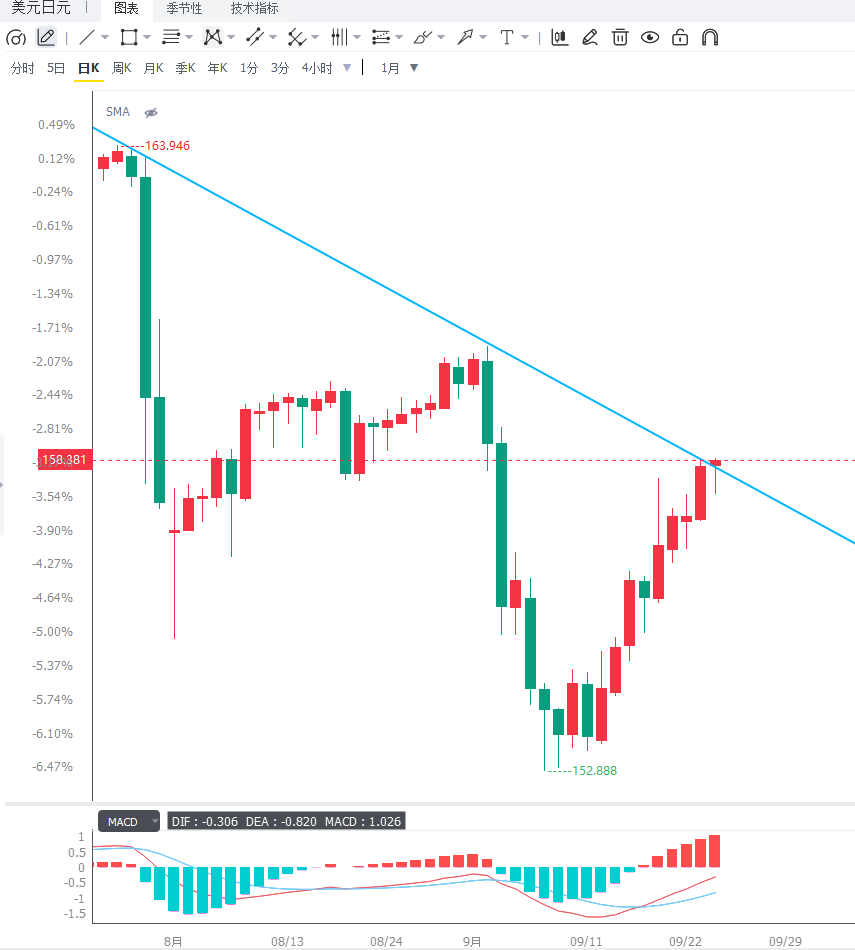 In summary, the USD/JPY pair is currently situated within an environment of diverging monetary policies between Japan and the US, coupled with the risk of Japanese currency intervention. Hawkish statements from the Federal Reserve are supporting the US dollar, while the rise in the yield on 10-year Japanese government bonds to a 30-year high and the official reaffirmation of exchange rate principles are limiting further rapid gains in USD/JPY. Technically, 159.55 and 160.75 constitute key resistance levels, while 156.50 and 152.30 are important support levels. The future direction of US interest rate movements, expectations regarding Bank of Japan policy, and official Japanese exchange rate statements will continue to determine the direction of USD/JPY's high-level consolidation.
Japanese Finance Minister Satsuki Katayama stated on Thursday that the basic principles for the foreign exchange market established during the previous coordinated intervention by Japan and the United States remain valid. While this statement does not imply a decision by the Japanese government to implement direct intervention, the market's sensitivity to further policy attention to exchange rate fluctuations has clearly increased given the high level of the USD/JPY exchange rate. Meanwhile, significant changes occurred in the Japanese government bond market. The yield on 10-year Japanese government bonds rose approximately 8 basis points to 3.055% in early trading on Thursday, a 30-year high. The rapid rise in long-term yields in Japan was influenced by the overnight increase in US Treasury yields, and also reflected the market's repricing of Japan's monetary policy normalization and inflationary environment. Theoretically, higher Japanese bond yields could improve the attractiveness of yen-denominated assets, thus providing some support for the yen. Last week, the Bank of Japan raised its policy rate by 25 basis points to 1.25%, the highest level since 1995, with the Monetary Policy Committee ultimately approving the decision by a 7-2 vote. However, two committee members, Hitomiichiro Asada and Ayano Sato, held differing opinions, leading the market to believe that there is still significant policy disagreement regarding future rate hikes by the Bank of Japan. Current market pricing indicates a roughly 30% probability that the Bank of Japan will further raise its policy rate to 1.50% in October. This means that although the Bank of Japan has entered a policy normalization phase, investors remain cautious about the timing of the next rate hike. If the Bank of Japan releases more dovish signals or expectations for further rate hikes cool, the yen's upside potential may be limited. Regarding the US dollar, hawkish statements from Federal Reserve officials continue to support it. Federal Reserve Governor Michael Barr stated that the policy adjustments made by the Fed last week were an important step in recalibrating short-term borrowing costs, and that further rate hikes may still be needed to push inflation back to the 2% target level. Barr's hawkish tone was also significantly higher than historical averages. This means that expectations remain that the Fed will maintain a restrictive policy or even tighten further, providing some bottom support for the dollar. Therefore, USD/JPY currently faces two opposing forces. On the one hand, hawkish expectations from the Fed and higher US yields continue to favor the dollar and support carry trades in USD/JPY; on the other hand, the Japanese authorities' vigilance regarding exchange rate volatility, rising yields on long-term Japanese government bonds, and potential intervention risks increase policy resistance to further gains in USD/JPY at higher levels. From the perspective of carry trade, the gradual rise in Japanese interest rates means that the changes in the yield spread between Japan and the US are worth continued attention. If US yields continue to remain high and expectations for further interest rate hikes by the Bank of Japan cool down, carry trade may continue to provide support for USD/JPY; conversely, if Japanese yields continue to rise rapidly and the market re-strengthens expectations for further tightening of the Bank of Japan's policy, the yen may gain more support. The market will focus on speeches by Fed officials, US economic data, and the latest statements from Japanese officials regarding exchange rate trends. Especially with USD/JPY approaching the 160 level again, policy wording itself may become an important variable affecting short-term fluctuations. The USD/JPY daily chart currently shows a mildly bearish structure, with the price running above the Bollinger Band middle line at 156.50, but still suppressed by the 100-day moving average at 159.55. The RSI (14) is about 54, and the momentum is in a neutral to slightly strong area, indicating that the bearish pressure has not yet formed a clear trend advantage, but the bulls have not yet regained control of the key resistance area. If the price continues to be blocked below 159.55, the short-term rebound may still encounter selling pressure. On the upside, the first key level to watch is the 100-day moving average at 159.55. A decisive break above this level would target the upper Bollinger Band at 160.75, which is also close to the psychological level of 160 and is expected to be a key area to watch. On the downside, the first key level to watch is the middle Bollinger Band at 156.50. A break below this level could lead to a test of the lower Bollinger Band near 152.30. A decisive break below 152.30 on the daily chart would further weaken the overall technical structure and potentially open up deeper downside potential. Looking at the 4-hour chart, the short-term rebound in USD/JPY is still limited by resistance at higher levels. The area around 157.85 is currently a key price level. If the price re-establishes itself above 158.50 and challenges 159.55, the bulls will need to break through the 100-day moving average to confirm further upside potential. If the price breaks below 156.50, short-term downside pressure will increase significantly, and the price may subsequently seek support in the 155.50 and 152.30 areas. Overall, with the risks of Japanese intervention and hawkish expectations from the Federal Reserve coexisting, USD/JPY is more likely to maintain high volatility in the short term. In summary, the USD/JPY pair is currently situated within an environment of diverging monetary policies between Japan and the US, coupled with the risk of Japanese currency intervention. Hawkish statements from the Federal Reserve are supporting the US dollar, while the rise in the yield on 10-year Japanese government bonds to a 30-year high and the official reaffirmation of exchange rate principles are limiting further rapid gains in USD/JPY. Technically, 159.55 and 160.75 constitute key resistance levels, while 156.50 and 152.30 are important support levels. The future direction of US interest rate movements, expectations regarding Bank of Japan policy, and official Japanese exchange rate statements will continue to determine the direction of USD/JPY's high-level consolidation.
- Risk Warning and Disclaimer
- The market involves risk, and trading may not be suitable for all investors. This article is for reference only and does not constitute personal investment advice, nor does it take into account certain users’ specific investment objectives, financial situation, or other needs. Any investment decisions made based on this information are at your own risk.