The yen launched a counterattack, but overall support for the US dollar remained strong.
2026-09-25 18:14:15
The USD/JPY pair has retreated, driven by declining US Treasury yields and a weakening dollar index. However, the dollar's overall intrinsic support remains strong due to market expectations that the Federal Reserve will continue its tight monetary policy.  The sell-off in the US Treasury market has temporarily subsided, leading to a pullback in the USD/JPY exchange rate. Previously, the continuous sell-off of US Treasuries drove yields higher, a key driver of the previous USD/JPY surge. With the easing of selling pressure, the upward momentum weakened significantly. As the US Treasury sell-off cooled and international oil prices fell in tandem, the US dollar index also retreated slightly. Brent crude oil prices fell below $100 per barrel, and market rumors circulated that the US and Iran were negotiating a phased agreement. If implemented, this agreement could potentially reopen the Strait of Hormuz, significantly altering the global oil supply landscape. Considering the historical correlation between oil prices and debt market interest rates, the weakening dollar index due to falling yields is a reasonable price transmission logic in the current market environment and aligns with the correlation patterns between foreign exchange instruments. Even with this short-term pullback, the fundamental strength of the US dollar remains unchanged. Pricing data from the interest rate futures market shows that market participants are constantly adjusting their expectations for the monetary policies of major central banks. The market is betting a 70% probability of a Fed rate hike in October, while the expected probability of a similar hike by the European Central Bank is only 50%, further widening the divergence in monetary policy between the two central banks. Investors generally believe that the suppressive effect of the Fed's continued rate hikes on the US economy has weakened compared to previous economic cycles. In the past, rapid interest rate increases would quickly suppress consumption and business investment, but the current US economy has shown greater resilience. If this assessment holds true, then achieving the policy target of reducing inflation to 2% will become more difficult, requiring the Fed to implement a more aggressive and longer-lasting monetary tightening cycle. More and more market participants are gradually accepting this assessment, laying a solid fundamental foundation for the medium- to long-term strengthening of the US dollar. Shortly after the Federal Open Market Committee (FOMC) meeting, the derivatives market only anticipated a cumulative 75 basis point rate hike by the Fed over the next 12 months, while now the market is pricing in a 50% probability of a cumulative 100 basis point rate hike. The significant upward revision of expectations directly reflects the market's reassessment of how long high interest rates will be maintained.
 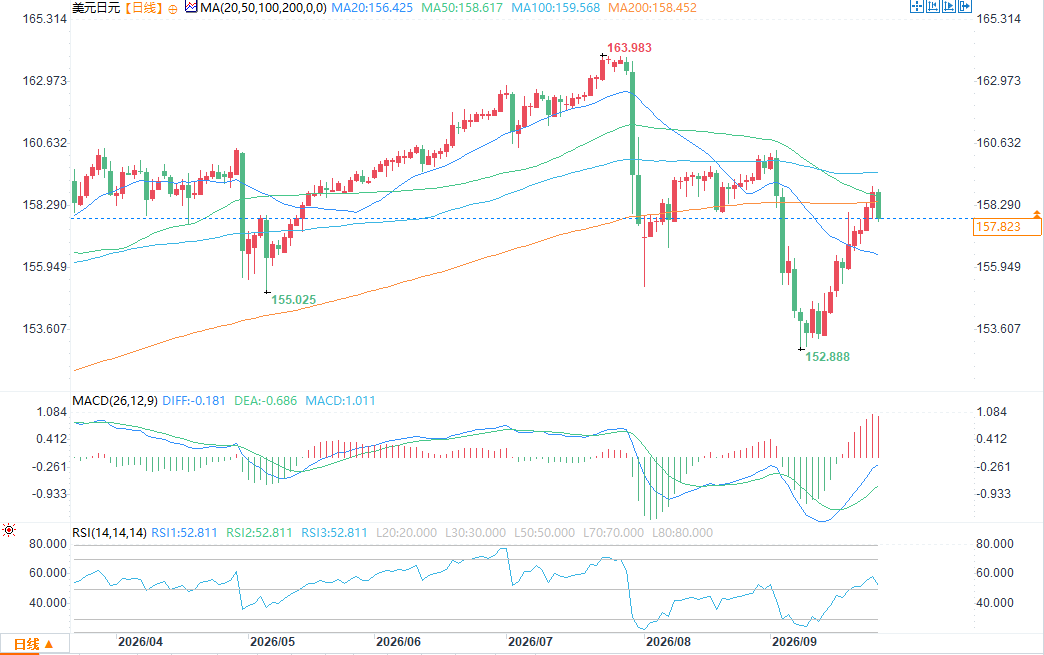 (USD/JPY Daily Chart Source: FX678) The recent decline in US Treasury yields and the US dollar has created a market window for short sellers in USD/JPY to launch a counterattack. Furthermore, during his meeting with Sanae Takashi, Trump expressed concern about the continued depreciation of the yen, a political signal that further stirred sentiment in the foreign exchange market. This increased the possibility of renewed joint currency intervention by the US and Japan, making many speculative traders highly vigilant. Many funds began to actively reduce their short yen positions to avoid the sudden price risks brought about by policy intervention. The Japanese government believes that the era of relying on Abenomics to achieve inflation recovery has ended. The current macroeconomic environment in Japan is more suitable for a combination of higher interest rates and flexible fiscal policies. This shift in policy thinking also affects the expected future trend of the yen. In the UK, the rising support for Burnham's party has provided some support for the pound. A YouGov poll shows that if a general election were held immediately, the Labour Party would win the most seats in Parliament; the Conservative Party would be second, while Farage's Reform Party would slip to third. However, the gains made by the pound against the dollar have been quite limited. Multiple negative factors are suppressing the pound's upside potential. There is a potential risk of a resurgence of the energy crisis in Europe, and the UK government's budget plan also contains many uncertainties. These risks are limiting the extent of the pound's rebound.
The sell-off in the US Treasury market has temporarily subsided, leading to a pullback in the USD/JPY exchange rate. Previously, the continuous sell-off of US Treasuries drove yields higher, a key driver of the previous USD/JPY surge. With the easing of selling pressure, the upward momentum weakened significantly. As the US Treasury sell-off cooled and international oil prices fell in tandem, the US dollar index also retreated slightly. Brent crude oil prices fell below $100 per barrel, and market rumors circulated that the US and Iran were negotiating a phased agreement. If implemented, this agreement could potentially reopen the Strait of Hormuz, significantly altering the global oil supply landscape. Considering the historical correlation between oil prices and debt market interest rates, the weakening dollar index due to falling yields is a reasonable price transmission logic in the current market environment and aligns with the correlation patterns between foreign exchange instruments. Even with this short-term pullback, the fundamental strength of the US dollar remains unchanged. Pricing data from the interest rate futures market shows that market participants are constantly adjusting their expectations for the monetary policies of major central banks. The market is betting a 70% probability of a Fed rate hike in October, while the expected probability of a similar hike by the European Central Bank is only 50%, further widening the divergence in monetary policy between the two central banks. Investors generally believe that the suppressive effect of the Fed's continued rate hikes on the US economy has weakened compared to previous economic cycles. In the past, rapid interest rate increases would quickly suppress consumption and business investment, but the current US economy has shown greater resilience. If this assessment holds true, then achieving the policy target of reducing inflation to 2% will become more difficult, requiring the Fed to implement a more aggressive and longer-lasting monetary tightening cycle. More and more market participants are gradually accepting this assessment, laying a solid fundamental foundation for the medium- to long-term strengthening of the US dollar. Shortly after the Federal Open Market Committee (FOMC) meeting, the derivatives market only anticipated a cumulative 75 basis point rate hike by the Fed over the next 12 months, while now the market is pricing in a 50% probability of a cumulative 100 basis point rate hike. The significant upward revision of expectations directly reflects the market's reassessment of how long high interest rates will be maintained. (USD/JPY Daily Chart Source: FX678) The recent decline in US Treasury yields and the US dollar has created a market window for short sellers in USD/JPY to launch a counterattack. Furthermore, during his meeting with Sanae Takashi, Trump expressed concern about the continued depreciation of the yen, a political signal that further stirred sentiment in the foreign exchange market. This increased the possibility of renewed joint currency intervention by the US and Japan, making many speculative traders highly vigilant. Many funds began to actively reduce their short yen positions to avoid the sudden price risks brought about by policy intervention. The Japanese government believes that the era of relying on Abenomics to achieve inflation recovery has ended. The current macroeconomic environment in Japan is more suitable for a combination of higher interest rates and flexible fiscal policies. This shift in policy thinking also affects the expected future trend of the yen. In the UK, the rising support for Burnham's party has provided some support for the pound. A YouGov poll shows that if a general election were held immediately, the Labour Party would win the most seats in Parliament; the Conservative Party would be second, while Farage's Reform Party would slip to third. However, the gains made by the pound against the dollar have been quite limited. Multiple negative factors are suppressing the pound's upside potential. There is a potential risk of a resurgence of the energy crisis in Europe, and the UK government's budget plan also contains many uncertainties. These risks are limiting the extent of the pound's rebound.
- Risk Warning and Disclaimer
- The market involves risk, and trading may not be suitable for all investors. This article is for reference only and does not constitute personal investment advice, nor does it take into account certain users’ specific investment objectives, financial situation, or other needs. Any investment decisions made based on this information are at your own risk.