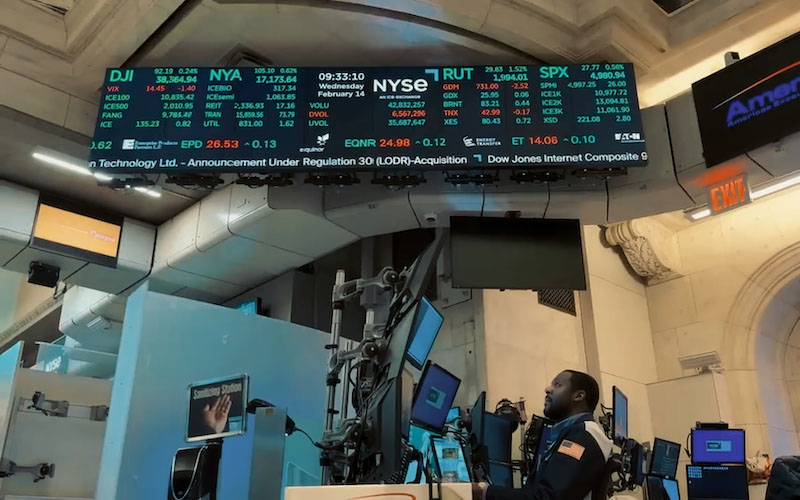
Federal Reserve officials Williams and Jefferson downplayed the possibility of an October rate hike, prompting markets to bet on a December action.
2026-10-02 08:30:17
Recent statements from Federal Reserve officials have significantly altered market expectations for the next steps in monetary policy. New York Fed President John Williams and Vice Chairman Philip Jefferson both emphasized that policymakers have ample time to assess the latest data and there is no need to rush to adjust interest rates at the October meeting. This signal has prompted financial markets to significantly lower their expectations for an October rate hike, shifting their focus to the December meeting. Meanwhile, Minneapolis Fed President Neal Kashkari remains open to action in October but still anticipates one more rate hike this year. The current target range for the federal funds rate is 3.75% to 4.00%, the level following a 25 basis point increase in mid-September. 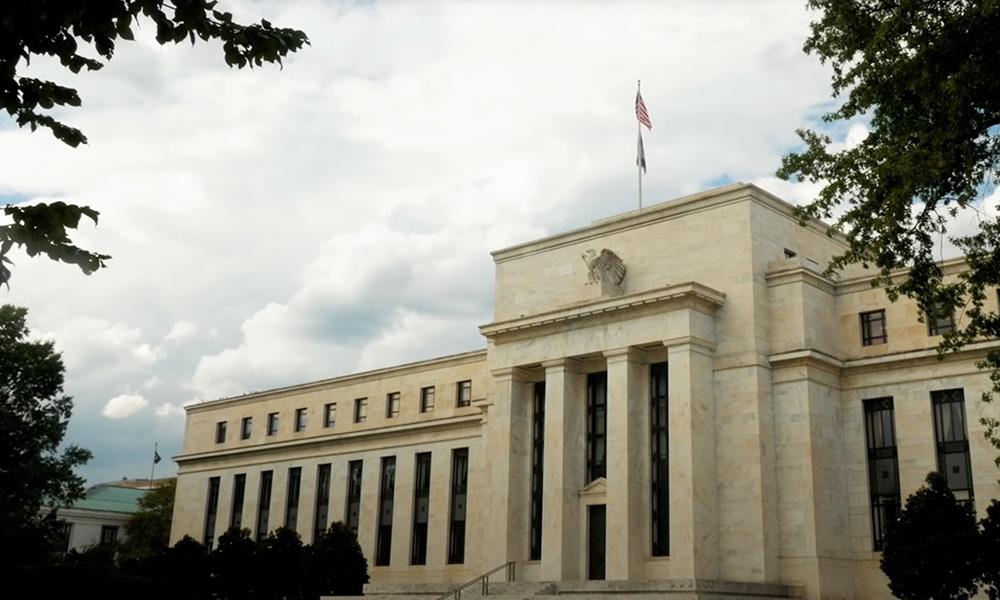
Top-level statements signal "no rush"
Williams, as Vice Chairman of the Federal Open Market Committee, recently stated at the University at Buffalo that there was "no need to rush" into adjusting the current monetary policy stance. He emphasized that policymakers should remain patient until more economic data is collected. This statement is seen as a key turning point in market expectations. Jefferson subsequently echoed a similar view. In a prepared speech submitted to the Darden School of Business at the University of Virginia, he stated that any future policy adjustments should be based on a careful examination of data trends, the evolving outlook, and the balance of risks. Jefferson specifically mentioned that as bond yields rise, the market is reassessing the economic outlook, and policymakers need more time to form their own judgments. He added that having more data may allow for a clearer identification of trends and determination of the appropriate monetary policy stance. Analysts point out that the joint statement by Williams and Jefferson carries significant weight, especially given that Federal Reserve Chairman Kevin Warsh has provided little forward guidance on interest rate direction. Evercore ISI analysts believe this confirms that the Federal Reserve is not expected to raise interest rates consecutively at its October meeting, but will instead spend more time assessing changes in economic conditions. Tim Duy, chief U.S. economist at SGH Macro, said Williams’ clear statement helped correct the market’s pricing from deviating from the Fed’s expectations.Market expectations have adjusted rapidly, and the probability of an October rate hike has fallen sharply.
At its mid-September meeting, the Federal Reserve raised the target range for the federal funds rate by 25 basis points to 3.75%-4.00%, with official forecasts indicating one more rate hike this year. Previously, driven by high inflation, the market had widely bet on another rate hike at the October 27-28 meeting. However, comments from Williams and Jefferson quickly changed this landscape. Most major global brokerages now expect the Fed to raise rates only once more this year, at the December 8-9 meeting, rather than in October. According to the latest data from the CME FedWatch tool, the probability of an October rate hike has fallen to around 25%, a significant drop from the previous week's high. The market now widely expects the October meeting to keep rates unchanged and to implement the final rate hike of the year in December.Kashkari maintains an open attitude and focuses on economic resilience and inflation risks.
Not all officials have completely ruled out action in October. Kashkari, in an interview, stated he is "open" to how the Fed will proceed with rate hikes and has "no strong opinion" on whether the next rate hike should take place at the end of this month. He currently expects one more rate hike this year and another next year. Kashkari noted that the economy has outperformed his expectations since the September meeting. With employment and economic output remaining strong, current policy may not be particularly restrictive. He also warned of upside risks to the policy rate path: if the economy proves extremely resilient and inflation may be more stubborn than expected, then policy rates may need to rise to levels higher than currently anticipated. All three policymakers expect inflation to gradually ease over time, but remain cautious about the pace of decline. Jefferson expects inflation to remain high in the short term, then fall back towards the 2% target as the effects of energy and other price shocks subside. However, given recent geopolitical developments and stronger-than-expected aggregate demand, his inflation forecast faces upside risks. The latest data shows that the personal consumption expenditure (PCE) price index rose 3.4% year-on-year in August, while the core PCE was 3.0%, still significantly higher than the 2% target.The non-farm payroll report has become a key point of observation in the near future.
The key data to watch by Federal Reserve officials next includes Friday's September jobs report. Given the recent relative stability in employment data, officials have indicated there is ample room to continue focusing policy on curbing inflation. Therefore, the upcoming jobs data is unlikely to significantly alter the overall interest rate policy outlook in the short term, but it will provide important insight into assessing economic resilience.Editor's Summary
Through statements from Williams and Jefferson, Federal Reserve officials clearly signaled a priority on data assessment and a desire to avoid hasty action before the October meeting, pushing market expectations for a rate hike back to December. Kashkari's open stance, however, cautioned that economic resilience and sticky inflation could still provide room for upward adjustments in the policy path. Current interest rates are in the 3.75%-4.00% range, inflation has eased somewhat but remains above target, and stable employment data provides policy leeway. Overall, policymakers have adopted a more cautious approach in balancing growth and price stability, and market pricing has adjusted accordingly. Subsequent data performance will continue to influence the specific timing of the final rate hike this year.Frequently Asked Questions
Q: Why did the statements from Williams and Jefferson quickly change market expectations for an October rate hike? A: Williams, as Vice Chairman of the FOMC, carries significant weight; Jefferson, as the Fed's second-in-command, further solidified the signal. Previously, the market had bet on consecutive rate hikes due to inflationary pressures, but the two officials emphasized "no rush" and "more data is needed," directly correcting the market's pricing from the officials' expectations. Given Chairman Warsh's lack of clear forward guidance, their combined message was seen as authoritative, causing the probability of an October rate hike to fall from a high level to about 25%. Q: What is the current federal funds rate level? What are the official forecasts after the September rate hike? A: The current target range is 3.75% to 4.00%, the result of a 25 basis point increase in mid-September. Official forecasts indicate one more rate hike this year. The effective federal funds rate is currently around 3.88%, and the reserve interest rate is 3.90%. This level aims to further curb inflation while allowing room for observation of economic data. Q: Why is Kashkari open to an October rate hike? Q: What are his overall expectations? A: Kashkari believes the economy has performed better than expected since the September meeting, and strong employment and output may mean that current policy constraints are insufficient. He expects one more rate hike this year and another next year, but does not take a strong stance on the specific timing. If the economy continues to be strong, leading to more stubborn inflation, the interest rate path may rise further. Q: How is the market currently pricing in subsequent rate hikes? What is the importance of the December meeting? A: The market has significantly reduced the probability of a rate hike at the October 27-28 meeting, instead betting on action at the December 8-9 meeting. Global brokerages generally expect only one more rate hike this year, in December. The December meeting will also release a summary of economic forecasts, which is of greater reference value for confirming the policy path. Q: Why is the upcoming jobs report important? How will it affect the policy outlook? A: The September jobs report is one of the key data recently. Officials have stated that employment has been stable recently, and there is room to focus on curbing inflation. If the report shows that the labor market remains strong, it may reinforce the assessment of economic resilience and support subsequent rate hikes; if it shows a significant slowdown, it may further reduce the urgency of raising rates. Overall, the employment data is unlikely to completely change the basic expectation of "another increase this year" in the short term, but it will affect the judgment of the specific timing.- Risk Warning and Disclaimer
- The market involves risk, and trading may not be suitable for all investors. This article is for reference only and does not constitute personal investment advice, nor does it take into account certain users’ specific investment objectives, financial situation, or other needs. Any investment decisions made based on this information are at your own risk.