Oil prices and the euro move in tandem, paving the way for a turning point for major asset classes.
2026-10-06 21:56:18
The global macro market is currently experiencing a clear style inflection point, with the previously dominant combination of "high inflation, high yields, and a strong dollar" rapidly loosening. Multiple signals, including a temporary peak and subsequent decline in oil prices, an emerging inflection point in the euro's fundamentals, and overseas institutions collectively bullish on the value of US Treasury bonds, are resonating and driving down both the dollar index and US Treasury yields. This has opened up significant upside potential for assets such as gold and non-US currencies, leading to a reshaping of the pricing logic for major asset classes. 
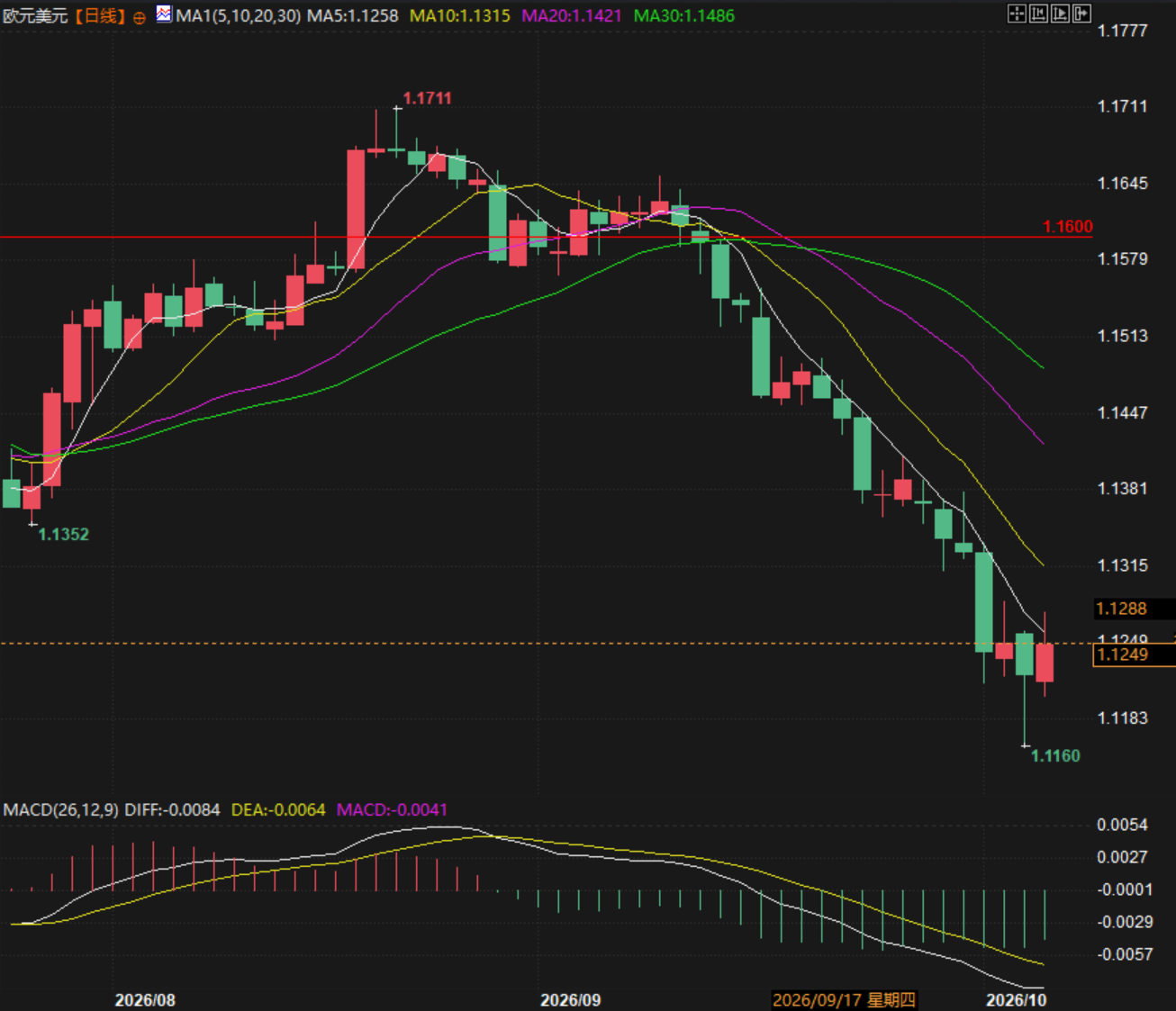 (EUR/USD daily chart, source: FX678)
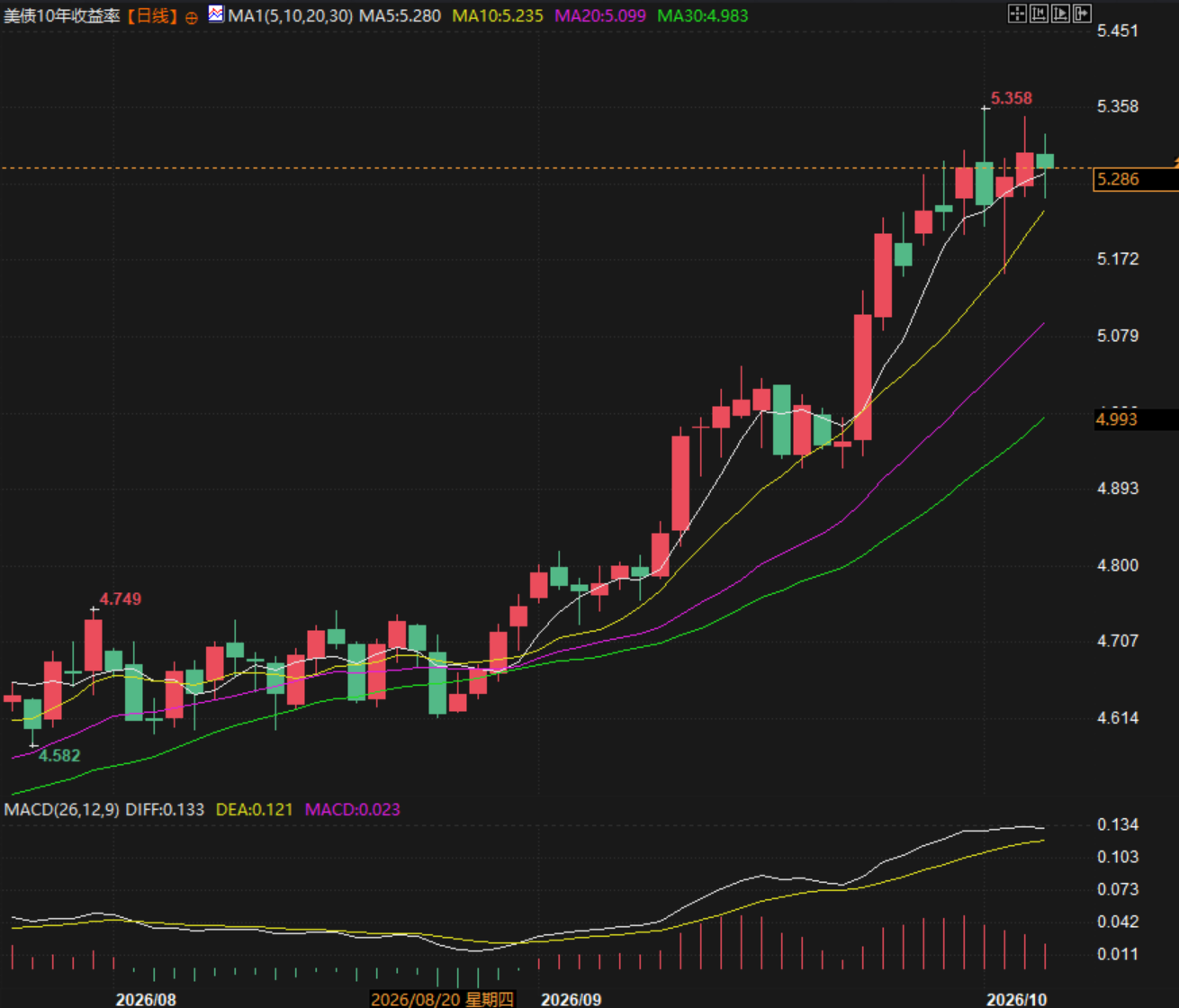 (Daily chart of the US 10-year Treasury yield, source: EasyTrade)
The oil market has reached a significant turning point: the energy inflation risk premium is rapidly receding.
The core driver of this round of global high inflation and high interest rates stems from the energy supply risk premium brought about by geopolitical conflicts in the Middle East. Previously, the Houthi rebels in Yemen controlled the Red Sea's chokepoint, restricting shipping in the Persian Gulf. This extreme market concern about a global oil supply disruption pushed Brent crude oil prices to nearly $100, becoming the core underlying logic supporting high US Treasury yields and a strong dollar. However, the one-sided panic narrative in the oil market has now completely reversed, with multiple marginal positive factors materializing. US Energy Secretary Wright explicitly confirmed that diesel prices peaked several weeks ago. Although the Strait of Hormuz remains a conflict risk zone and oil prices remain volatile at high levels, overall oil prices have entered a downward trend. More importantly, the most extreme tail risk in the market has been eliminated. Simultaneously, global policy support for supply has materialized: the G7 has officially announced the release of a total of 100 million barrels of crude oil and diesel in emergency strategic reserves, Italy has confirmed its participation in the release plan, and the IEA will finalize the release details at its meeting on October 14-15. The market has shifted from "geopolitical supply disruption panic" to "policy-driven supply support." The biggest change in the current market is that oil prices don't need to plummet. As long as they stop hitting new highs and steadily decline, it will be enough to continuously suppress inflation expectations, squeeze out inflation risk premiums, and directly undermine the upward foundation of long-term US Treasury yields. However, Iran's top security official, Rezaei, stated that Iran will not open the Strait of Hormuz due to threats or pressure. But given that the Iranian oil blockade continues to threaten Iran's domestic economic situation, and that oil supply is currently recovering significantly, oil prices have not been significantly reduced.Multiple positive factors are converging on the euro's fundamentals, leading institutions to collectively predict a reversal.
The core logic behind the previous sustained strengthening of the US dollar was market concerns about Europe's high dependence on energy, with soaring oil prices driving imported inflation and suppressing the economy, creating a "strong US, weak Europe" pricing pattern. However, this gap is rapidly narrowing, and the euro is experiencing a triple recovery in fundamentals, industry, and market expectations. On the inflation front, ECB Governing Council member Rehn recently stated that although the Eurozone's current inflation is above the 2% target, the current energy price increases have not yet been transmitted to broader price levels, and the financing pressure from rising global yields will further suppress demand and cool inflation, significantly alleviating the risk of stagflation in Europe. Coupled with the continued decline in oil prices, European energy import costs have decreased significantly, and the current account has improved marginally, completely repairing the euro's fundamental weaknesses. On the industry front, European technology sentiment has been boosted. On Tuesday, the local AI company Mistral launched a new top-level open-source model, marking Europe's AI industry as one of the world's leading players, breaking the US stock market's dominance in AI, improving long-term expectations for European equity assets, and further solidifying the foundation for the euro's rebound. With the resonance of positive fundamentals and industry developments, market expectations have completely reversed. TD Securities clearly judged that market sentiment had stabilized and directly gave a trading recommendation to go long on the euro against the US dollar. Since the euro has a weight of more than 57% in the US dollar index, the stabilization and rebound of the euro directly suppressed the rise of the US dollar from a structural point of view, ending the one-sided strong trend of the US dollar. (EUR/USD daily chart, source: FX678)Long-term US Treasury yields have peaked, and foreign giants are starting to position themselves on the left side of the trend.
The previous sharp decline in US Treasury yields, reaching a 24-year high, was primarily driven by rising inflation risk premiums and concerns about high fiscal deficits, reflecting extreme market pessimism. PIMCO, a top global asset management firm, was the first to confirm a turning point. Its senior advisor, Harrison, stated that after this round of significant yield increases, US Treasury valuations have become highly attractive for investment, and institutions have actively increased their duration exposure. The firm believes that regardless of subsequent corrections in US growth stocks or a slowdown in the US economy, bonds will demonstrate defensive value, and the upside potential for long-term interest rates is essentially limited.Macroeconomic logic loop: declining interest rates and a weaker dollar open a window for long positions in gold and growth stocks.
The current market has formed a clear and complete macroeconomic transmission chain: stabilizing and declining oil prices squeeze out inflation premiums → long-term US Treasury yields peak and decline → overall market discount rates fall; simultaneously, European economic expectations improve and the euro rebounds → the US dollar index weakens under pressure. A weaker dollar coupled with declining real interest rates constitutes the classic double-whammy bullish trend for gold; at the same time, the decline in discount rates will also comprehensively repair the valuations of technology growth assets with high durations, shifting the overall asset class style from "inflation hedge" to "recovery and valuation repair". (Daily chart of the US 10-year Treasury yield, source: EasyTrade)Summary: The market is entering a critical turning point.
The previous market-driving logic of "geopolitical inflation driving up interest rates and a strong dollar suppressing risk assets" has completely faded. The current trading theme has shifted to easing inflation, peaking interest rates, and a weakening dollar. A significant economic recession is unnecessary; the easing of geopolitical risks, the recovery of supply expectations, and the return of valuations to rationality are sufficient to support this asset style reversal. In the short term, as long as oil prices do not experience another violent rebound, the current favorable environment will continue, and gold, the euro, US Treasuries, and growth assets will all simultaneously reach a clear turning point for long positions.- Risk Warning and Disclaimer
- The market involves risk, and trading may not be suitable for all investors. This article is for reference only and does not constitute personal investment advice, nor does it take into account certain users’ specific investment objectives, financial situation, or other needs. Any investment decisions made based on this information are at your own risk.