Egypt strikes suddenly! President pushes for parliamentary authorization, adding another front in the Middle East? Global energy markets tighten again.
2026-10-19 11:26:21
Egypt, a major military power in the Arab world, has explicitly expressed its support for Saudi Arabia in its response to the ongoing attacks by the Houthi rebels in Yemen. This move comes against the backdrop of the Houthis' recent intensified attacks on Saudi energy facilities and civilian targets, and reports of Iran providing targeting and intelligence support. It could further escalate the conflict in the Middle East and exert continued pressure on global energy markets. 
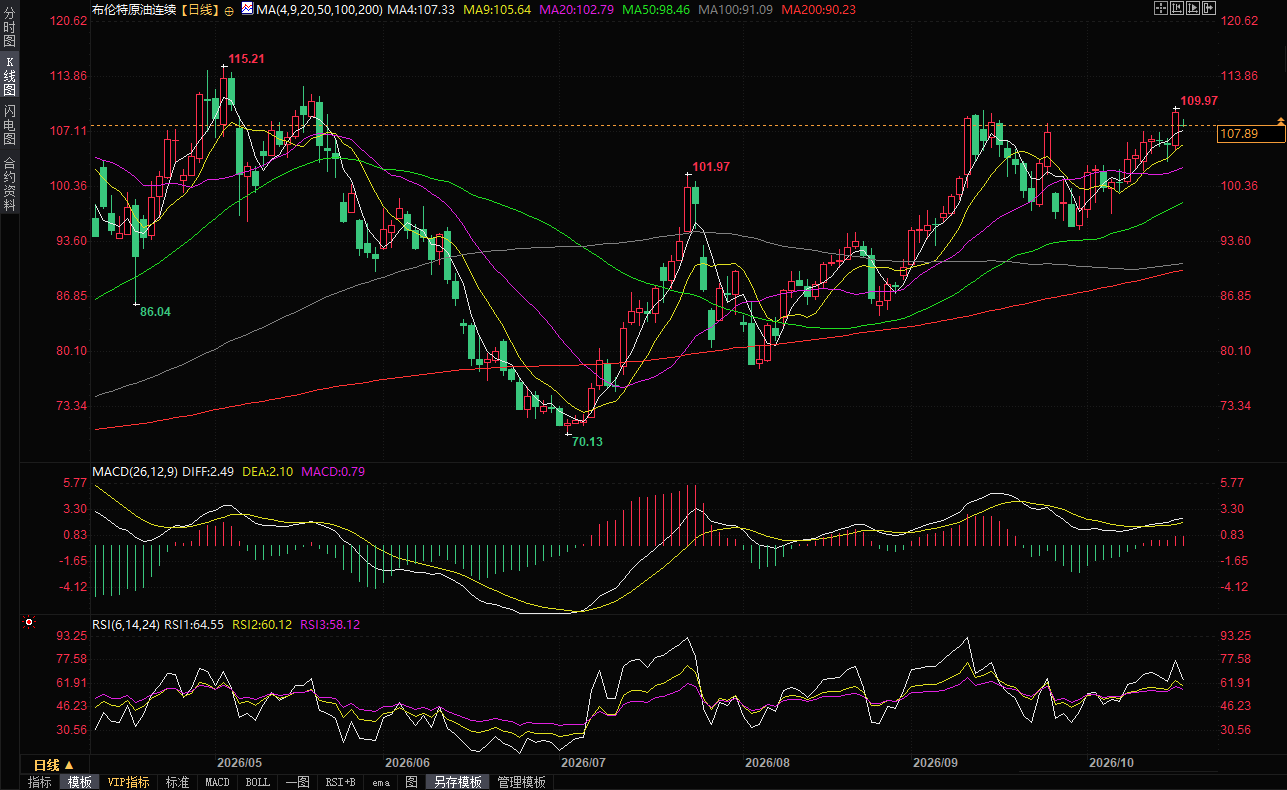 (Brent crude oil daily chart, source: EasyForex)
Egypt's top leadership responded swiftly: the Defense Council approved "all necessary support."
According to a statement released by the Egyptian Presidential Palace on October 18, President Sisi, after chairing a meeting of the Defense Council, clearly stated that Egypt would provide Saudi Arabia with "all necessary and possible support" to maintain its security and stability, protect its resources, territorial integrity, and Islamic holy sites. Attendees included the Speaker of Parliament, the Prime Minister, and military leaders. Sisi had previously requested an emergency parliamentary session to authorize the military to assist in defending the Gulf ally should Saudi Arabia make a request. The Egyptian army is one of the largest armed forces in the Arab world. In his speech on Saturday, Sisi emphasized that Egypt would act according to the instructions of Saudi King Salman and Crown Prince Mohammed bin Salman, and clearly stated that "we are only talking about defense, not attacking anyone." Parliament subsequently initiated an emergency agenda, and discussions on authorization are still underway. Egypt and Saudi Arabia have long maintained a close strategic and economic partnership. Following the change of leadership in the Egyptian military in 2013, Saudi Arabia and other Gulf states, including the UAE, provided Egypt with large-scale aid, central bank deposits, and investments. Sisi subsequently became president. This statement is seen as a continuation of the close ties between the two countries' security interests.Houthi offensive escalates and Iran's role: from the Yemeni battlefield to Saudi Arabia
In recent weeks, fighting has escalated significantly between the Saudi-led coalition supporting the internationally recognized government of Yemen and the Houthi rebels who control Sana'a and much of northern Yemen. The Houthis have launched attacks on Saudi oil tankers, energy facilities, and airports, including the strike on Riyadh International Airport, which killed at least 13 people. The group has also rapidly expanded its control in Yemen, seizing control of the Yemeni side of the Bab el-Mandeb Strait, threatening a key route for Saudi oil exports. According to sources familiar with the Saudi-Yemeni anti-Houthi coalition, Iranian support has helped the Houthis launch their most powerful and tactically sophisticated attacks to date, including assisting in identifying drone and missile targets, providing training, intelligence, and tactical guidance. Analysts point out that the two sides are closely linked at the operational level, and the Houthi success aligns with Iran's strategic objectives of undermining Saudi interests and driving up oil prices. The latest escalation of the conflict dates back to July, when Iran arranged flights to transport personnel and supplies, after which pro-Saudi forces bombed the Sana'a airport runway, igniting a new round of fighting. The Houthi rebels launched a well-planned offensive in early September, combining infantry assaults with missile and drone strikes (including fiber-optic guided first-person view drones), demonstrating signs of systematic training. Islamic Revolutionary Guard Corps officers were reportedly assisting in command at the front. The Houthis also possess a degree of autonomy, sourcing some components directly from China and other countries, and prioritizing domestic affairs. Iranian officials deny interference in Yemeni affairs, calling the Houthis a "completely independent actor." However, a UN expert panel had previously documented their coordination mechanisms with other armed groups in the region. By supporting forces associated with the "Axis of Resistance," Iran is attempting to project influence and keep the fighting away from its borders.Risks in a broader conflict context: energy corridors and market volatility
Since the US-Israel military action against Iran in late February, this broader confrontation has threatened global energy supplies and driven significant oil price volatility. The Houthi attacks on Saudi Arabia, coupled with Iran's potential threat to shipping in the Strait of Hormuz, have further amplified pressure on the interests of the US and its allies. If Egypt were to formally provide military support (especially air defense, intelligence sharing, or limited deployment), it could lead the Houthis to target Egypt. Analysts believe that Egypt's contribution is more likely to focus on air defense, naval escort, and intelligence cooperation for Saudi critical infrastructure, rather than direct deployment to the front lines in Yemen. Even so, the risk of interconnected conflicts across multiple regional fronts has increased significantly. Regarding oil prices, Brent crude rose to around $110 per barrel on Friday, its highest level since May 21, influenced by the Houthi attacks on Saudi Aramco's headquarters and airport, reflecting persistent market concerns about supply disruptions. As the world's largest oil exporter, Saudi Arabia's energy infrastructure security is directly related to global market stability. However, due to US President Trump's exemption of some sanctions and tariffs against Russia, the market expects Russian fuel exports to increase as a result. On Monday (November 19), oil prices retreated slightly in Asian trading, with Brent crude currently trading around $107.98 per barrel. (Brent crude oil daily chart, source: EasyForex)Editor's Summary
Egypt's Defense Council's decision to provide full support and Sisi's push for parliamentary authorization signify that regional military powers have formally sided with Saudi Arabia in defense. Meanwhile, the Houthi rebels, aided by external assistance, have increased the complexity of their attacks and their territorial control, extending the conflict in Yemen into a broader regional confrontation. The escalation of the conflict directly impacts energy infrastructure and key shipping routes, and the market has already priced in supply risks. While a gap remains between statements and actual deployments, the defense commitments themselves have increased the likelihood of further military involvement, thereby raising uncertainty regarding regional security and energy supplies.Frequently Asked Questions
Q: Why did Egypt explicitly express its support for Saudi Arabia at this time? A: Egypt and Saudi Arabia have long been strategic and economic partners. Saudi security is considered part of Egypt's own national security. The Sisi government emphasizes a defensive nature, and parliamentary authorization is a constitutional requirement. The current escalation of Houthi attacks directly threatens Saudi energy and civilian targets. Egypt's response is both an obligation as an ally and a practical consideration for maintaining Red Sea shipping and regional stability. Q: What role does Iran play in the Houthi attacks? A: According to regional intelligence sources and analysis, Iran provides target location, intelligence, training, and tactical guidance, helping the Houthis increase the complexity and battlefield efficiency of their attacks. Both sides share common strategic interests: weakening Saudi Arabia and raising oil prices. Iranian officials deny direct intervention, but the Houthis and other forces in the "Axis of Resistance" have long shared technology and experience. Q: What practical progress has the Houthi rebels made recently? A: The Houthis have rapidly expanded their control in Yemen, especially seizing control of the Yemeni side of the Bab el-Mandeb Strait, posing a direct threat to Saudi oil export routes. They have also launched multiple attacks on Saudi airports and energy facilities, causing casualties and damage. The tactical combination of infantry, missiles, and advanced drones demonstrates enhanced capabilities. Q: What impact will the escalation of the conflict have on the global energy market? A: Saudi Arabia is the world's largest oil exporter, and the security of its facilities and export routes directly affects supply expectations. Recent attacks have pushed Brent crude prices higher, briefly touching the $110 mark on Friday, a near five-month high. The overlapping risks in the Bab el-Mandeb Strait and the Strait of Hormuz exacerbate market concerns about supply disruptions in the Middle East, and oil price volatility may continue. Q: How likely is actual Egyptian military intervention? A: Egyptian officials have emphasized "defense" and "at Saudi Arabia's request." Analysts generally believe that air defense interception, intelligence sharing, and limited support are more likely than a large-scale ground troop deployment to Yemen. Parliamentary authorization is still under discussion, and the actual scale depends on Saudi Arabia's formal request and the evolution of the regional situation. At 11:24 Beijing time, Brent crude was trading at $107.88 per barrel.- Risk Warning and Disclaimer
- The market involves risk, and trading may not be suitable for all investors. This article is for reference only and does not constitute personal investment advice, nor does it take into account certain users’ specific investment objectives, financial situation, or other needs. Any investment decisions made based on this information are at your own risk.